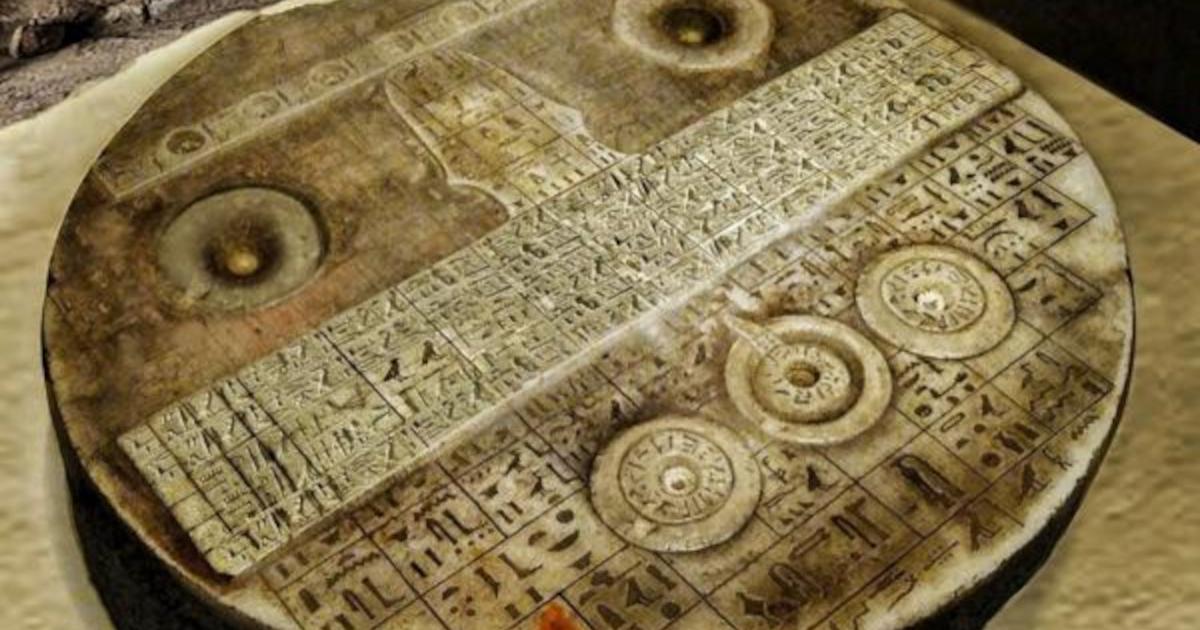
 For decades, a remarkable ancient Egyptian artifact has fueled fascination among historians, archaeologists, and enthusiasts of ancient mysteries alike. At first glance, the intricately carved stone object appears strikingly modern, leading some observers to compare it to a control panel filled with buttons, dials, and switches.
Yet according to Egyptologists, the artifact tells a very different story—one rooted not in lost technology, but in the sophisticated spiritual traditions of ancient Egypt.
A 4,400-Year-Old Artifact That Continues to Spark Curiosity
Known as the “Offering Table of Defdji,” the artifact dates to Egypt’s Old Kingdom, around 2400 BC. Carved from a single block of fine white alabaster, the circular stone measures roughly 49 centimeters in diameter and is considered one of the most elaborate offering tables ever discovered from the period.
Its unusual appearance has made it a favorite subject in books, documentaries, and online discussions focused on unexplained ancient artifacts.
The surface is covered with circular depressions, raised elements, channels, and geometric patterns arranged with remarkable precision. To modern eyes, the design can appear surprisingly similar to mechanical interfaces or instrument panels.
However, researchers emphasize that understanding the artifact requires viewing it through the lens of ancient Egyptian religion rather than modern technology.
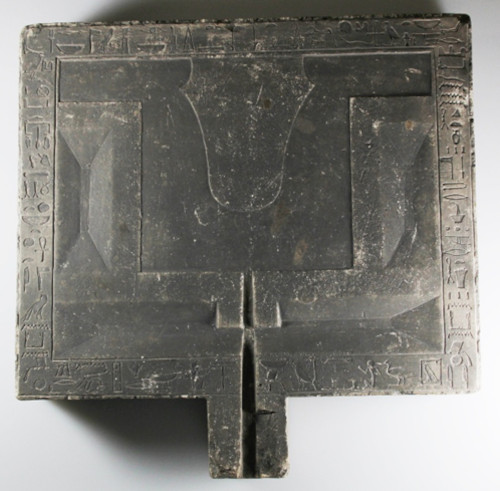
The Tomb Owner Behind the Artifact
The object is associated with Defdji, an elite official who lived during the Old Kingdom.
Ancient Egyptians believed that life continued after death and that the deceased required food, drink, and ritual offerings to sustain them in the afterlife. Offering tables served as symbolic gateways through which these provisions could be transferred from the world of the living to the spiritual realm.
The Offering Table of Defdji was designed specifically for this sacred purpose.
The Meaning Behind the Intricate Design
According to Egyptologists, the circular cavities that often attract attention were not decorative features or mechanical components. Instead, they functioned as reservoirs for sacred oils and ritual liquids used in funerary ceremonies.
At the top of the artifact are seven carefully carved depressions that once held the “Seven Sacred Oils,” substances considered essential during burial rites.
These oils were used in the famous “Opening of the Mouth” ceremony, a ritual intended to restore the senses of the deceased so they could see, hear, breathe, and speak in the afterlife.
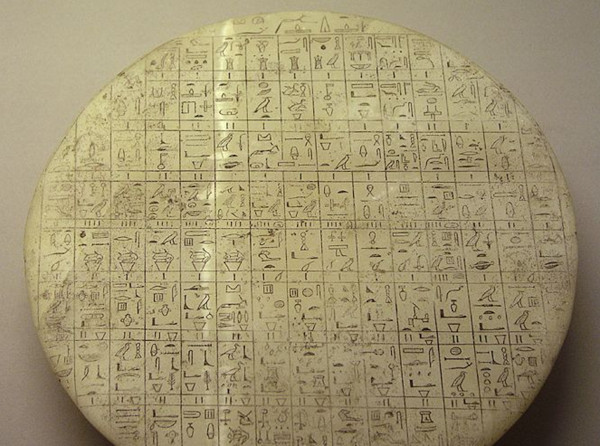
The artifact also features the ancient Egyptian hetep symbol, a hieroglyph representing offerings, peace, and spiritual fulfillment. Surrounding this symbol are dozens of inscriptions naming foods, drinks, and ritual substances dedicated to Defdji.
Researchers have identified more than 90 individual offerings represented on the table, creating what has been described as an eternal menu intended to sustain the deceased forever.
A Masterpiece of Ancient Egyptian Craftsmanship
Far from being evidence of advanced machinery, scholars view the artifact as an extraordinary example of Old Kingdom stoneworking and religious symbolism.
The precision of the carvings reflects the skill of Egypt’s finest artisans, while the complexity of the layout demonstrates the importance of funerary rituals among the elite.
Only high-ranking individuals could afford such elaborate ceremonial objects, making the table both a religious instrument and a symbol of social status.
Why the Artifact Still Captivates People Today
The Offering Table of Defdji continues to capture public imagination because its appearance feels unexpectedly modern. Removed from its historical context, the artifact can easily seem mysterious or even futuristic.
Yet archaeologists argue that its true significance may be even more impressive.
Rather than showcasing advanced technology, the artifact reveals the depth of ancient Egyptian beliefs about death, eternity, and the spiritual journey beyond life. It stands as a reminder that ancient civilizations often expressed complex ideas through symbolism that can appear unfamiliar—or surprisingly familiar—to modern observers.
More than 4,000 years after it was created, the Offering Table of Defdji remains one of the most fascinating examples of how ancient craftsmanship and religious tradition can still inspire debate and wonder today.