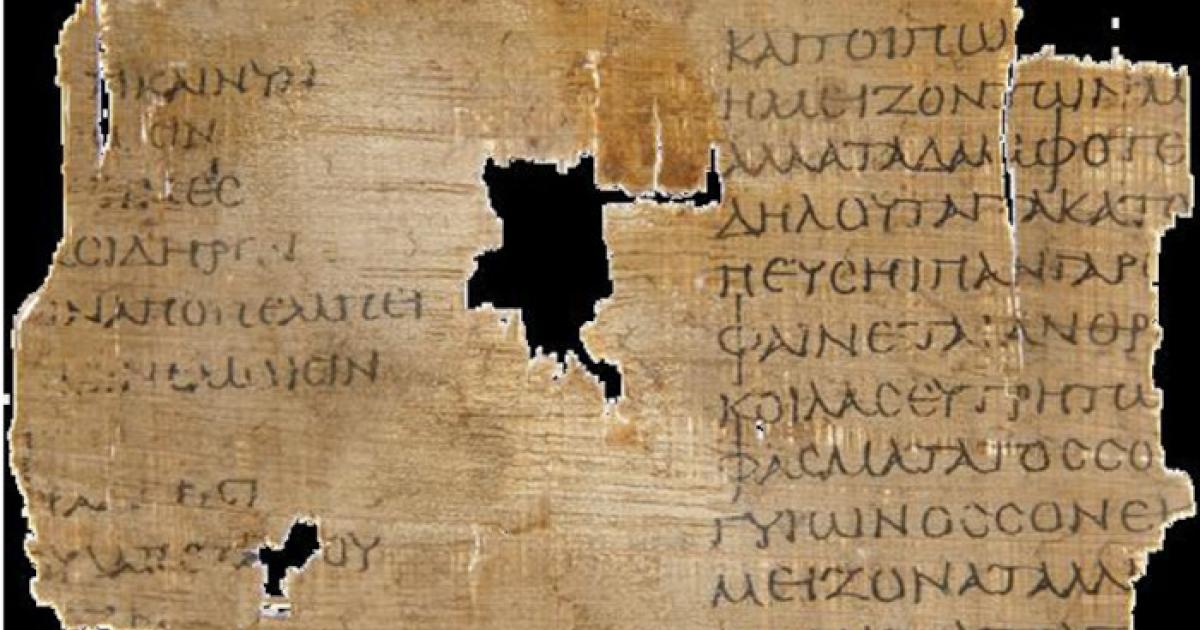
 More than two thousand years after they were written, previously unknown verses attributed to one of the ancient world’s most influential philosophers may have resurfaced from an overlooked papyrus preserved in Egypt.
Researchers have identified thirty previously unpublished lines believed to belong to Empedocles, the celebrated Greek thinker whose ideas helped shape Western philosophy, natural science, and cosmology.
The discovery was made on a fragment known as P.Fouad 218, housed within the archives of the Institut Français d’Archéologie Orientale in Cairo.
Scholars say the find offers a rare opportunity to hear the voice of a philosopher whose original writings have survived only in fragments.
An Ancient Manuscript Hidden in an Archive
The papyrus had reportedly remained largely unnoticed among thousands of ancient documents stored in Cairo for decades.
Only during a recent reexamination of the collection did researchers recognize distinctive poetic features associated with Empedocles’ works.
The fragment dates to approximately the first century AD, indicating that copies of the philosopher’s writings continued to circulate centuries after his death.
Using advanced imaging techniques, scholars were able to recover faded portions of text and reconstruct verses that had been lost for generations.
The work was carried out by researchers from University of Liège, who identified linguistic and stylistic characteristics consistent with Empedocles’ surviving poetry.
The Philosopher Behind the Four Elements
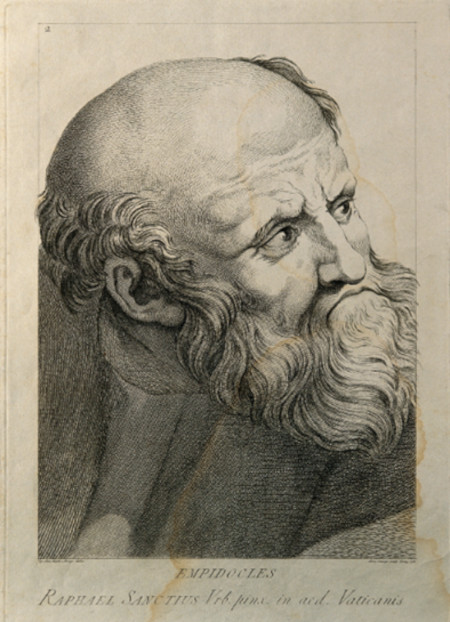
Empedocles, who lived in the Greek city of Acragas in Sicily during the fifth century BC, is best known for proposing that all matter consists of four fundamental elements:
- Earth
- Air
- Fire
- Water
According to his philosophy, these elements are constantly influenced by two opposing cosmic forces:
- Love, which brings things together
- Strife, which pulls them apart
Although modern science has moved beyond this model, the concept represented one of humanity’s earliest attempts to explain the structure of the natural world through rational principles rather than mythology alone.
His ideas would later influence philosophers including Plato and Aristotle.
What the Newly Recovered Verses Reveal
Researchers believe the newly identified lines belong to Empedocles’ philosophical poem On Nature, one of the most important but fragmentary works of early Greek thought.
While only portions of the original poem survive today, the newly recovered verses appear to focus on themes central to his philosophy:
- The cyclical nature of the cosmos
- The interaction of the four elements
- The forces of Love and Strife
- Humanity’s relationship with the natural world
Scholars also note that the verses contain vivid imagery and poetic language characteristic of Empedocles’ writing style.
The discovery may help researchers better understand how early Greek philosophers combined science, religion, and poetry into a unified vision of the universe.
A Legend as Famous as His Philosophy
Empedocles is remembered not only for his ideas but also for the legends that surrounded his life.
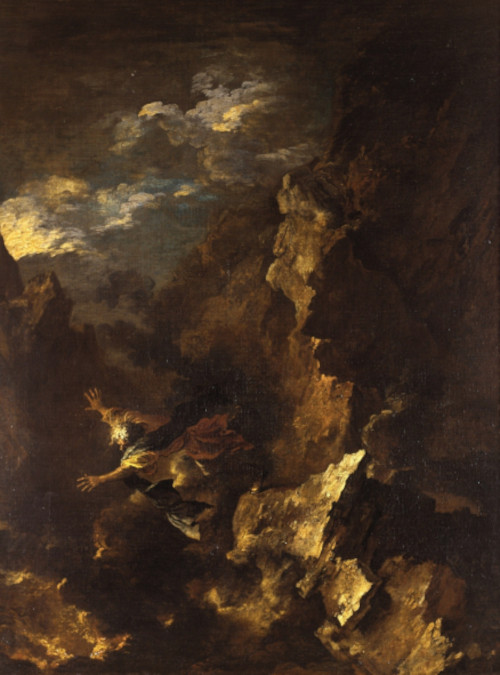
Ancient sources claim he leapt into the crater of Mount Etna in an attempt to prove his immortality. According to the famous story, the volcano later revealed the truth by ejecting one of his bronze sandals.
Most modern historians regard the tale as legendary rather than historical, but it illustrates the extraordinary reputation Empedocles enjoyed in antiquity.
The newly recovered verses offer something far more valuable than myth: a direct connection to the philosopher’s own words.
Why Egypt Continues to Transform Ancient History
The discovery also highlights the crucial role Egypt plays in preserving classical literature.
Thanks to the region’s dry climate, countless ancient papyri have survived for centuries when similar documents elsewhere deteriorated long ago.
Collections such as the famous Oxyrhynchus Papyri have already transformed historians’ understanding of the ancient Mediterranean world.
Experts believe thousands of papyrus fragments in archives and museums remain only partially studied, raising the possibility that more lost texts could still be waiting to be identified.
A Voice Returning After Two Millennia
For scholars of ancient philosophy, the discovery is more than an archaeological curiosity.
Every newly recovered line helps reconstruct the intellectual foundations of Western thought and provides a clearer picture of how early thinkers attempted to explain the universe.
More than 2,000 years after his death, Empedocles continues to inspire debate, research, and fascination. Thanks to a forgotten papyrus preserved in Cairo, part of his voice may now be heard once again.