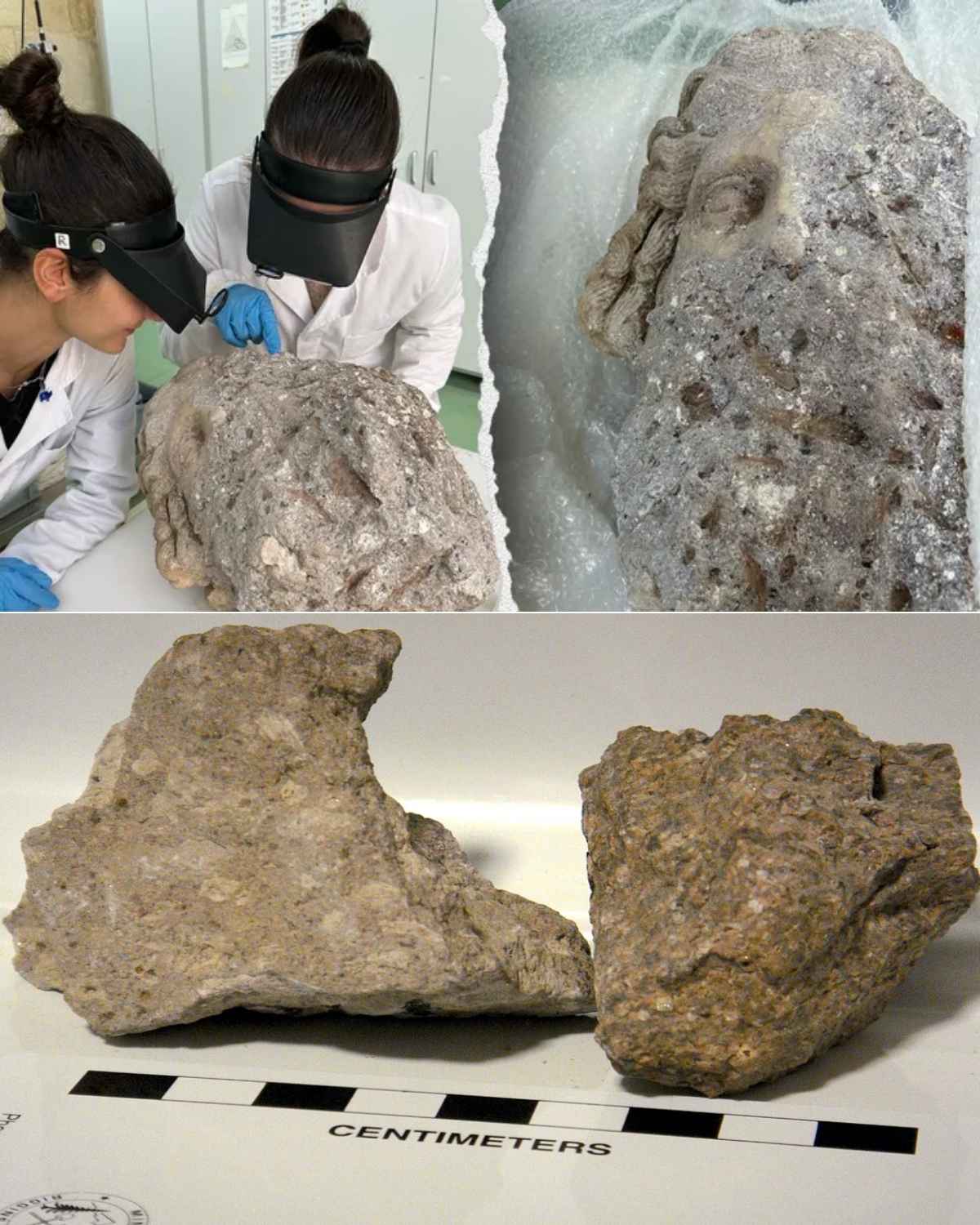
Deep beneath the foundations of a 5th-century Christian basilica in Rome, archaeologists have uncovered a mysterious relic from an even older religious world — the weathered stone head of what experts believe may represent a Roman deity.
The remarkable discovery was made during excavations at the Basilica of St. Stephen on Caelian Hill, one of Rome’s oldest Christian churches. While the basilica itself dates to the fifth century A.D., the newly discovered artifact appears to belong to a much earlier period, offering a rare glimpse into the complex layers of religious history buried beneath the Eternal City.
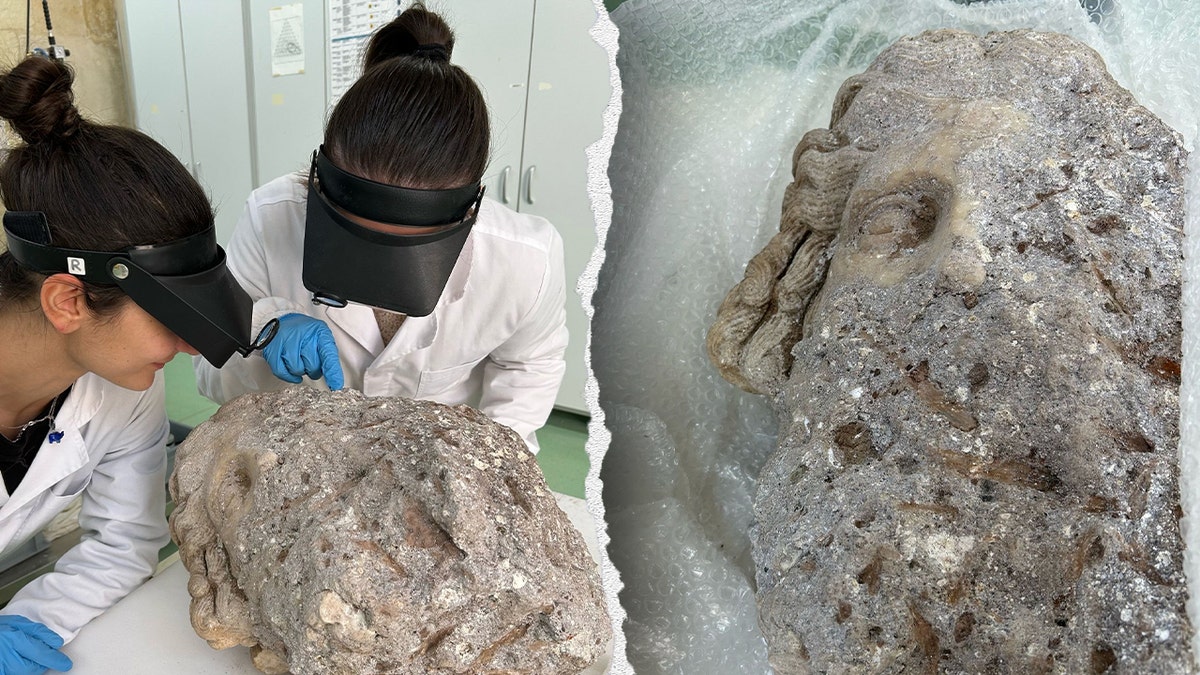
The find was announced by the Appian Way Regional Park, which oversees many of Rome’s most important archaeological sites. Officials described the object as a beautifully carved stone head that was recently uncovered within the archaeological area surrounding the Tombs of Via Latina, a region already known for preserving evidence of ancient Roman life.
Photographs released by archaeologists reveal a bearded male figure with thick, curly hair. Although centuries underground have severely eroded the facial features, specialists believe the sculpture likely depicts a divine figure rather than an ordinary individual. Its artistic style and iconography suggest a connection to the Roman religious world that existed long before Christianity became dominant throughout the empire.
What makes the discovery especially intriguing is where the artifact was found.
The stone head was embedded within the foundations of the Basilica of St. Stephen itself. Archaeologists noted that the sculpture is covered by substantial layers of mortar, indicating it was reused as construction material during the church’s construction. This practice was common in Late Antiquity, when builders frequently incorporated older pagan monuments, statues, and architectural fragments into new Christian structures.
The reuse of ancient religious objects often reflected more than simple practicality. Throughout the transition from the Roman pagan world to the Christian era, temples, statues, and sacred monuments were frequently dismantled, repurposed, or incorporated into new buildings. As a result, discoveries like this provide valuable evidence of the cultural transformation that reshaped the Roman Empire between the fourth and sixth centuries.
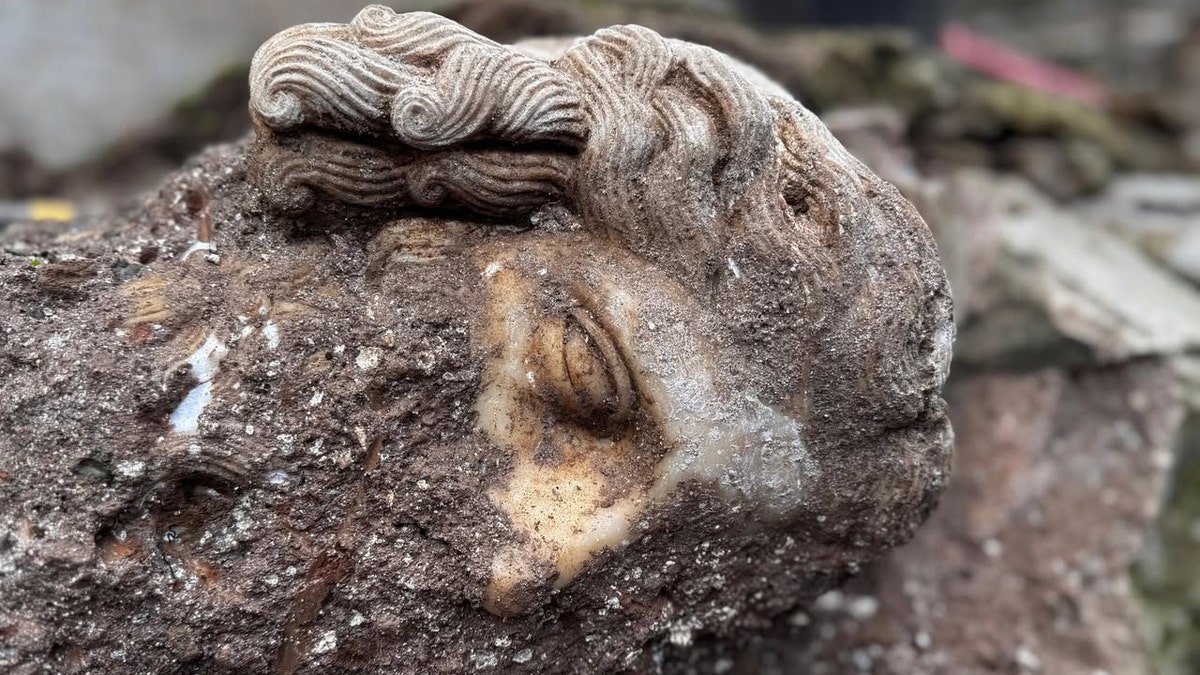
Researchers are now hoping advanced scientific analysis will reveal the statue’s true identity.
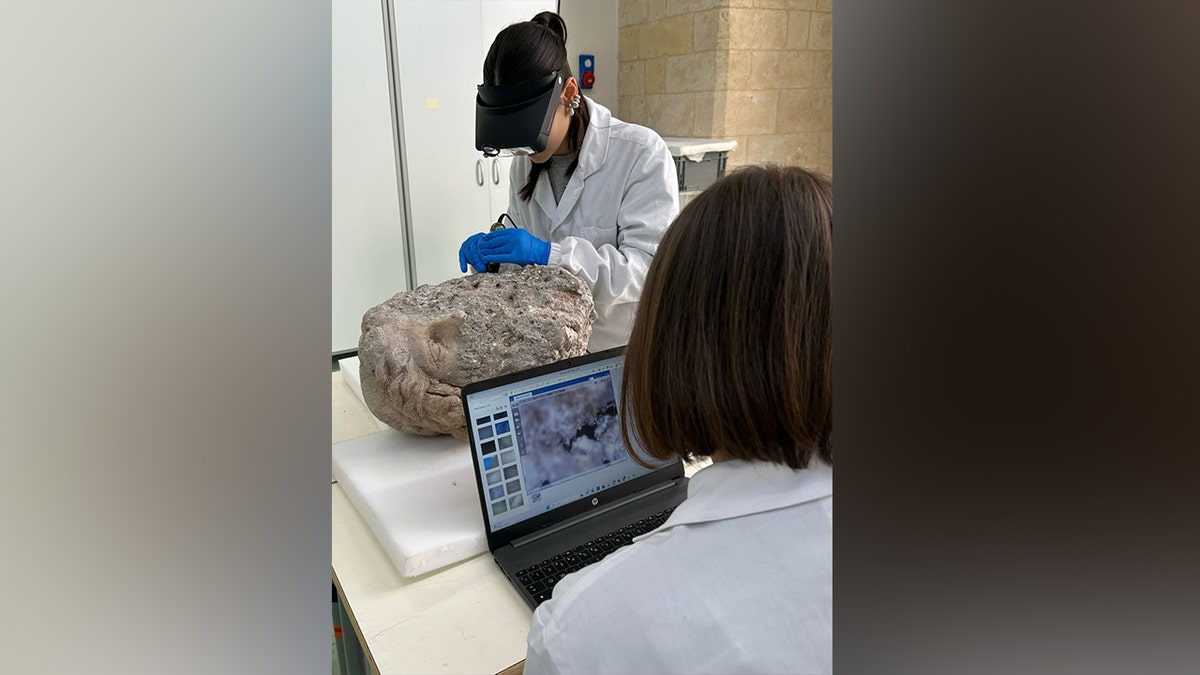
To accomplish this, the artifact has been transferred to the Central Institute for Restoration (ICR) in Matera, one of Italy’s leading conservation centers. There, restoration specialists and students from the School of Advanced Training for Restoration will conduct detailed documentation, diagnostic testing, and technical studies to better understand how the sculpture was created and whom it originally represented.
The investigation will unfold in two phases. The first involves scientific examination and analysis in Matera, while the second phase will take place in Rome, where conservators will complete the restoration process. Specialists hope that cleaning away centuries of mortar and deposits will expose details currently hidden beneath the surface.
Those details could prove crucial.
Roman gods were often distinguished by highly specific artistic attributes, including hairstyles, beards, crowns, symbols, and facial features. If enough of these characteristics survive beneath the encrustations, archaeologists may eventually determine whether the sculpture represents Jupiter, Serapis, Neptune, or another important deity from the Roman pantheon.

Beyond identifying the figure itself, the discovery could also help scholars better understand the religious landscape of Rome during one of the most transformative periods in Western history.
The Basilica of St. Stephen was constructed during a time when Christianity was rapidly expanding while many remnants of the older pagan world still survived throughout the city. Finding a possible pagan deity incorporated into the church’s foundations provides a tangible illustration of how these two worlds overlapped during Late Antiquity.
According to officials, the research results will contribute not only to the study of the artifact itself but also to a broader understanding of the historical and artistic development of the Appia Antica region. The findings may reveal new information about settlement patterns, religious practices, and cultural transitions that occurred as Rome evolved from the capital of a pagan empire into the center of Christianity.
The discovery also continues a remarkable trend of archaeological finds emerging from construction projects and excavations across Europe. In recent years, archaeologists have uncovered exceptionally preserved Roman statues, ancient cities, and forgotten burial grounds, demonstrating that even after centuries of exploration, the ancient world still holds countless secrets beneath modern landscapes.
For now, the mysterious stone head remains an unanswered question. Hidden beneath a Christian basilica for more than 1,500 years, the ancient face may soon reveal new clues about Rome’s forgotten gods and the dramatic transformation of one of history’s greatest civilizations.