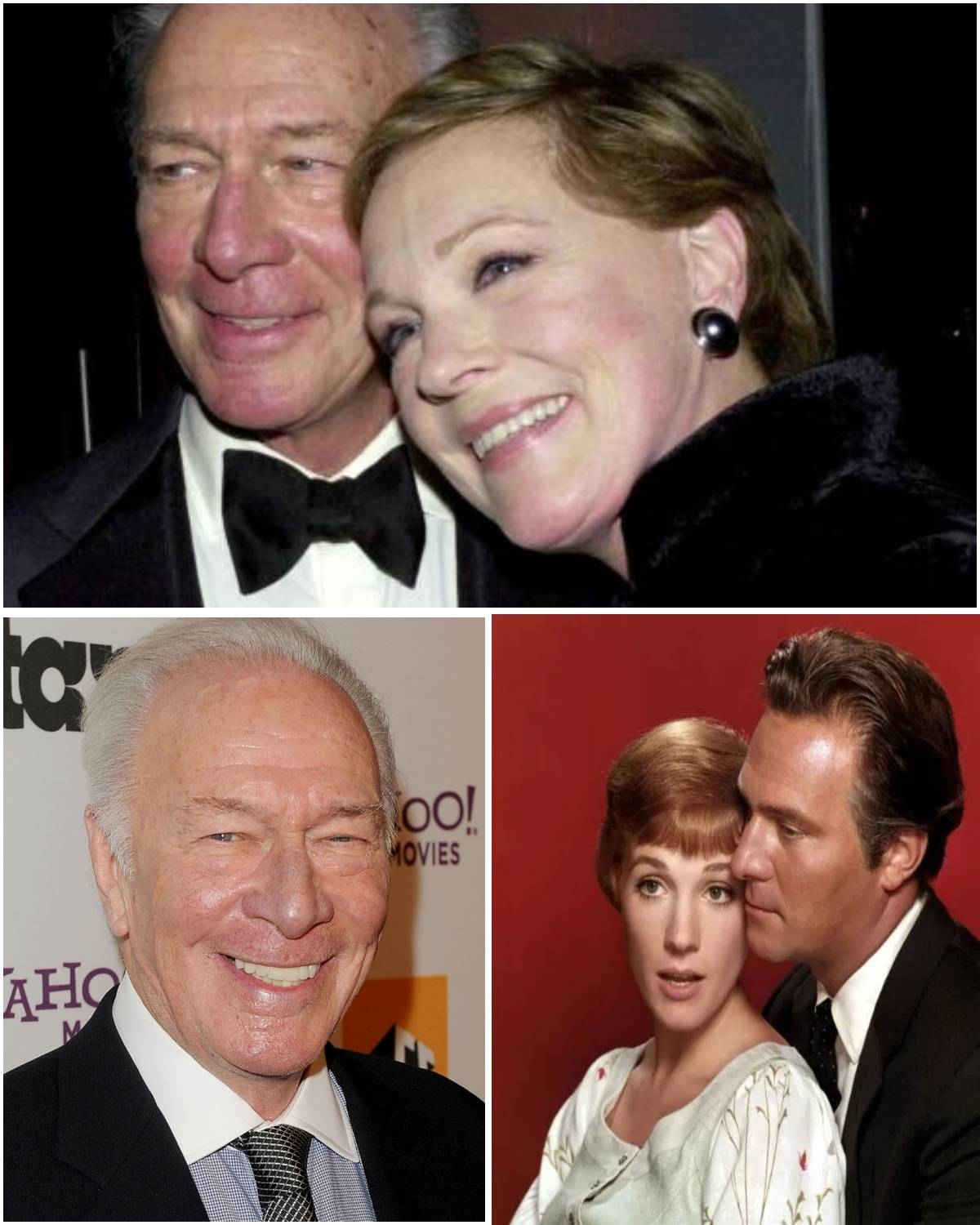
For decades, audiences have remembered The Sound of Music as one of the most beloved films in Hollywood history. Julie Andrews seemed to embody warmth, grace, and optimism as Maria, while Christopher Plummer brought strength and restraint to Captain Von Trapp. Together, they created one of cinema’s most unforgettable pairings.
But behind the scenes, their relationship was far more complicated than the perfect image fans saw on screen.
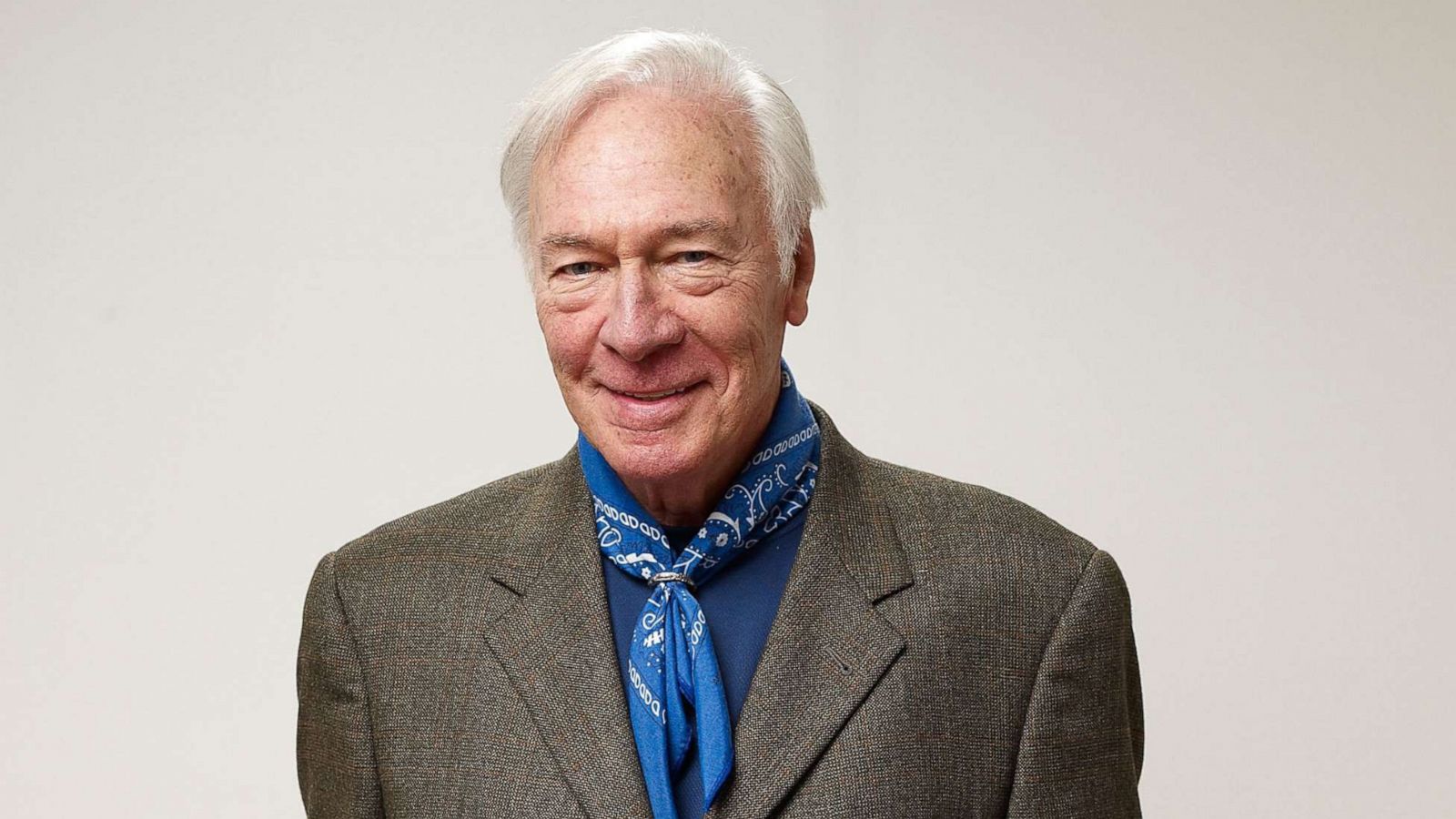
When Christopher Plummer first joined the production, he was not especially excited about the film. At that point in his career, he saw himself as a serious stage actor rooted in classical theater. To him, a sentimental family musical did not feel like the kind of project that matched his artistic identity.
Plummer reportedly found the story overly sweet and emotionally predictable. He worried that the film might hurt his credibility as a dramatic actor. Because of that, he arrived on set with resistance already built into his attitude.
Julie Andrews, however, approached the movie very differently.
She was disciplined, professional, and fully committed to the role. She brought warmth and emotional openness to the production, even while dealing with long shooting days, difficult weather, and the pressure of carrying much of the film. To many people on set, Andrews became the emotional heart of the movie.
But to Plummer, at least early on, that perfection was difficult to accept.
It was not that he hated Julie Andrews personally. His discomfort came from what she represented. She seemed completely aligned with the bright, sincere tone of the film—the very tone he was resisting. Her optimism and professionalism made him feel even more aware of his own doubts about the project.
The filming conditions only added to the tension.
Shooting in Austria was physically demanding. The cast dealt with long days, unpredictable weather, and emotional exhaustion. Andrews was working constantly while also caring for her young daughter. Plummer, meanwhile, was going through personal struggles of his own, including problems in his marriage.
Both actors were experiencing loneliness, but they handled it in opposite ways. Andrews leaned into focus and discipline. Plummer pulled back emotionally and often distanced himself from the production.
That contrast shaped their performances in a surprising way.
Plummer’s resistance helped create the cold, controlled version of Captain Von Trapp that audiences see early in the film. He did not play the character as an instantly charming romantic lead. Instead, he made him rigid, distant, and emotionally guarded.
This ended up strengthening the movie.
Because Julie Andrews brought warmth and openness, while Plummer brought restraint and skepticism, their scenes had a natural tension. Maria’s softness worked because Captain Von Trapp’s emotional distance felt real. His eventual transformation became more powerful because he did not soften too quickly.
Over time, Plummer began to understand the value of what Andrews was doing. He saw how hard she worked, how much discipline she had, and how completely she committed to the film. What he once saw as excessive sweetness eventually became something he respected.
Their early tension also carried a personal layer.
Both Plummer and Andrews later acknowledged that there was a certain attraction between them during filming. But the timing was wrong. Both had personal responsibilities, complicated marriages, and professional boundaries they did not cross. That unspoken emotional pull may have added even more depth to their on-screen chemistry.
Years later, Plummer’s feelings about The Sound of Music changed. Although he once mocked the film and famously joked about its sweetness, he eventually came to appreciate its lasting impact. He recognized that the movie connected deeply with audiences and that Julie Andrews was a major reason it worked.
Andrews, in turn, never described Plummer as an enemy or a difficult co-star. She praised him as a brilliant actor who gave the film the sharpness it needed. In her view, his seriousness prevented the story from becoming too sentimental.

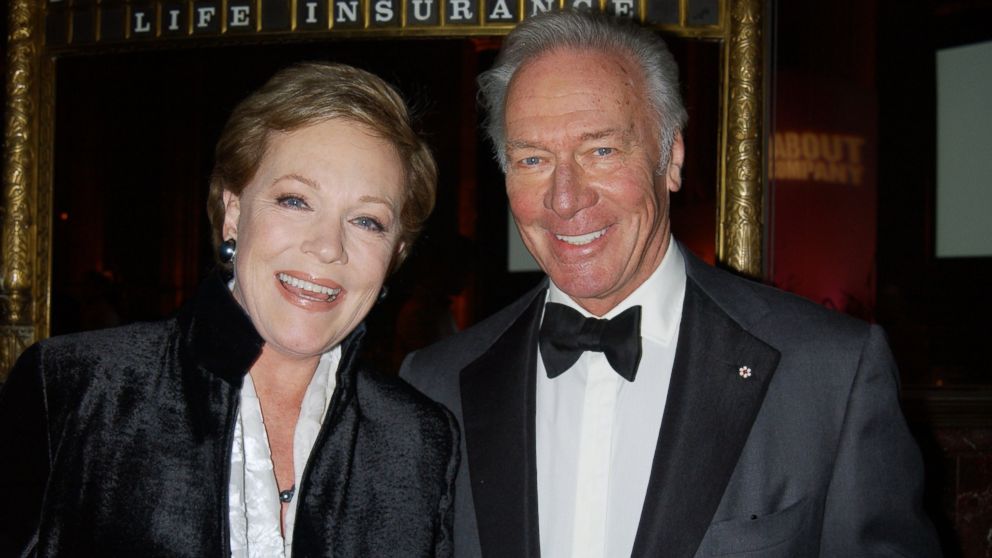
As the years passed, their relationship grew into genuine affection and friendship. Public reunions showed two people who understood each other deeply, teasing each other with warmth and respect. Whatever discomfort existed in the beginning had long since faded.
When Christopher Plummer passed away at 91, Julie Andrews honored him as a cherished friend and a consummate actor. Her words made it clear that their bond had become much more than a complicated memory from a movie set.
In the end, the truth about Christopher Plummer and Julie Andrews was never simple hatred or conflict. It was a story of two very different personalities meeting at complicated moments in their lives. Their differences created tension, but that tension helped make The Sound of Music unforgettable.
What began as resistance became chemistry.
What began as discomfort became respect.
And what began as a difficult working relationship eventually became one of Hollywood’s most meaningful friendships.