Dylann Roof, the man who infamously took the lives of nine worshippers during a prayer service at Emanuel African Methodist Episcopal Church in Charleston, South Carolina, is now facing a different kind of torment behind bars. As he remains on federal death row, his fate raises unsettling questions about the nature of justice and punishment in America.
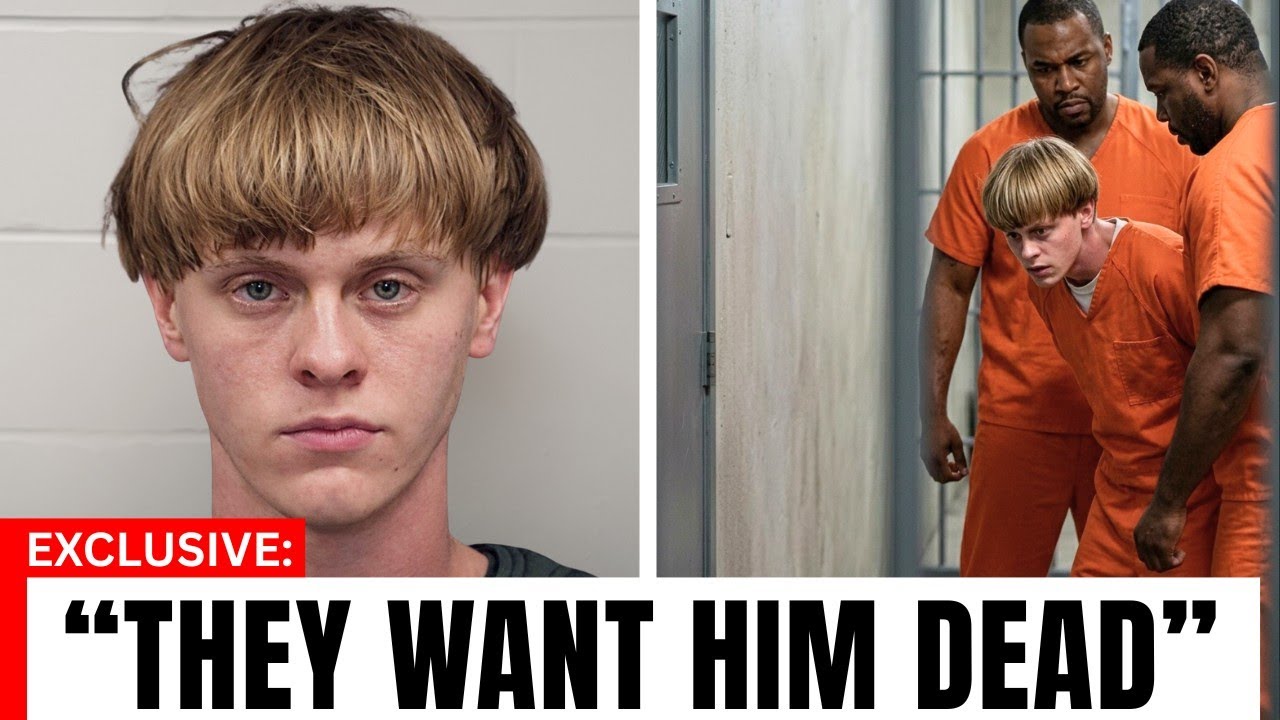 On January 11, 2017, Roof received a death sentence by lethal injection, a verdict that seemed to deliver justice for the families of his victims. Yet, as time drags on without a scheduled execution date, the reality of Roof’s incarceration may be more psychologically taxing than the death penalty itself.
The chilling truth emerged on December 1, 2023, when another inmate in the same facility took his own life after suffering from severe isolation. While this tragic event did not involve Roof, it highlights the dire conditions he endures in his concrete cell. With no clear end in sight, one must ask: is this truly justice, or is the psychological toll of such confinement a more brutal punishment than execution?
The events leading to Roof’s conviction are harrowing. On June 17, 2015, the then-21-year-old entered a Bible study at the church, welcomed by the congregation, only to unleash a horrific attack during the closing prayer. His actions were premeditated and racially motivated, and throughout his trial, he exhibited a 𝓈𝒽𝓸𝒸𝓀𝒾𝓃𝑔 lack of remorse.
Roof’s legal journey began on December 15, 2016, when a jury found him guilty on all counts, making him the first person sentenced to death for a federal hate crime in U.S. history. In a surprising twist, he chose to represent himself during the penalty phase, rejecting any mental health defense that might suggest he was unwell. Psychological evaluations indicated he may have suffered from various mental health issues, but Roof was determined to control his narrative, ultimately leading to his death sentence.

In April 2017, Roof pleaded guilty in state court to nine counts of murder, receiving nine life sentences without parole. This move was seen as a safeguard; even if his federal death sentence were overturned, he would still face life behind bars.
Fast forward to 2021, when the Fourth Circuit Court upheld his conviction. By 2022, the Supreme Court declined to hear his appeal, and in December 2024, President Biden commuted numerous federal death sentences but explicitly excluded Roof, emphasizing the nature of his crimes.
As of early 2026, Roof remains in the special confinement unit at the United States Penitentiary in Terre Haute, Indiana, a facility notorious for housing death row inmates. Described as eerily quiet, this unit offers minimal human interaction, with inmates living in near-total isolation. Each cell is equipped with just the essentials, and any movement outside the cell is tightly controlled.

In October 2023, Roof and other death row inmates were transferred to an even more restrictive section, reportedly leading to severe psychological deterioration among the prisoners. The case of Naci Khalil Arraiol, who tragically took his own life shortly after the move, underscores the mental strain of such confinement. Inmates have described a phenomenon known as the “death row phenomenon,” where prolonged uncertainty about execution leads to significant psychological decline.
Critics argue that the conditions on death row violate human rights standards and may constitute cruel and unusual punishment. Reports from former staff and advocates reveal a grim reality: inmates are deprived of meaningful activities, face constant noise, and experience extreme isolation.
This raises profound ethical questions about punishment. Is Roof’s ongoing confinement a more severe form of suffering than execution? Does it strip away his humanity in a way that death does not?

The families of the victims continue to grapple with their own feelings about justice. In the aftermath of the massacre, many expressed forgiveness towards Roof, yet still believed that execution was a fitting response. Others have come to oppose the death penalty altogether, arguing that life imprisonment might serve justice without the endless cycle of appeals and media attention that death row entails.
In 2023, the families reached a settlement with the Department of Justice over a background check failure that allowed Roof to obtain the weapon he used. While no amount of money can restore what was lost, it offers a step toward healing.
As Roof remains in his cell, the debate surrounding his punishment continues to unfold. Is prolonged confinement truly more torturous than execution? Should he have been sentenced to life without parole instead? These questions linger, inviting us to reflect on the complexities of justice and the human experience. What do you think?