Pirate Capital of the Caribbean: Newly Discovered Shipwrecks Reveal Nassau’s Golden Age of Piracy
Archaeologists exploring the waters around Nassau have uncovered several shipwrecks dating to the Golden Age of Piracy, offering rare new evidence about the lives of the men and women who turned the Bahamas into one of the most infamous outlaw havens in maritime history.
The turquoise waters surrounding Nassau, capital of the Bahamas, are among the most beautiful in the Caribbean.
Yet beneath the surface lies a landscape shaped by centuries of storms, trade, warfare, and piracy.
For generations, historians have known Nassau as the center of the so-called Golden Age of Piracy, a brief but influential period between the late seventeenth and early eighteenth centuries when some of the world’s most famous pirates operated from the islands of the Bahamas.
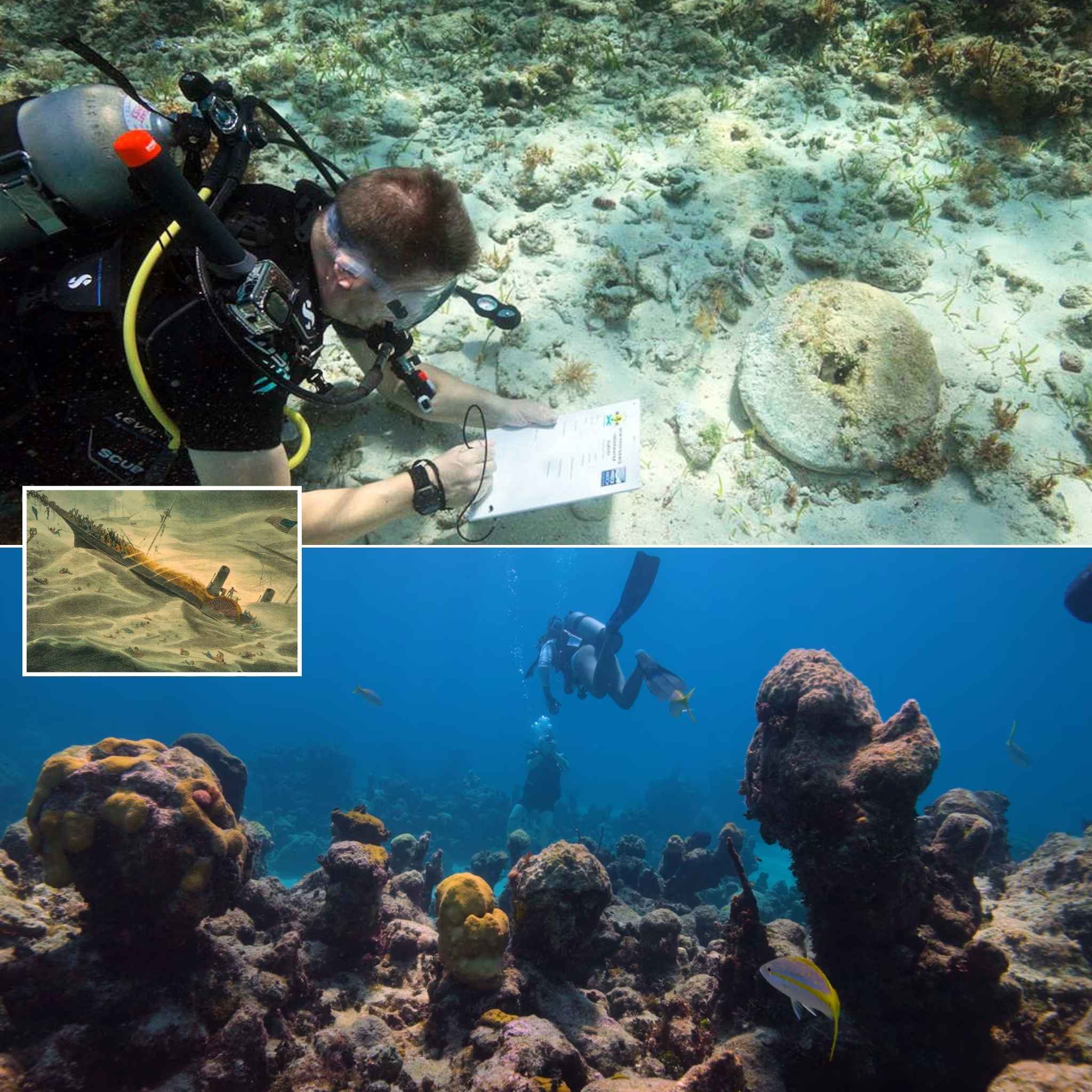
Names such as Blackbeard, Anne Bonny, Calico Jack Rackham, and Black Sam Bellamy have become legendary through books, films, and popular culture.
Despite their fame, surprisingly little physical evidence of Nassau’s pirate era has survived.
Most of the town’s buildings from that period disappeared long ago, destroyed by development, hurricanes, and centuries of change.
Now, a series of underwater archaeological discoveries may help fill some of those gaps.
Recent expeditions in Nassau Harbor and nearby waters have uncovered several shipwrecks linked to the age of piracy, including one vessel that researchers believe could potentially be connected to the notorious pirate captain Henry Avery.
The discoveries offer an opportunity to move beyond legends and explore the realities of pirate life in the Caribbean.
Searching Beneath Nassau Harbor
The discoveries were made during the New Providence Pirates Expedition, a project led by archaeologists from the Bahamas Maritime Museum and international research partners.
The expedition focused on Nassau Harbor and nearby coastal waters, areas long associated with pirate activity.
Conducting archaeological work there is not easy.
Strong tidal currents sweep through the harbor, creating difficult diving conditions.
Marine life adds another challenge.
Bull sharks frequently patrol the waters and are known for their aggressive behavior.
Despite these hazards, researchers spent weeks surveying the seabed using modern underwater archaeological techniques.
Their goal was ambitious: to locate physical evidence of Nassau’s pirate past.
For archaeologist Michael Pateman, a native of Nassau and one of the project’s leaders, the search carried personal significance.
Growing up in the Bahamas, he heard stories about the pirates who once dominated the islands.
Those stories eventually inspired his career.
“My dream was to find the Fancy,” Pateman later explained.
Nassau: The Pirate Republic
To understand the significance of the discoveries, it is important to understand Nassau’s unique place in history.
During the early eighteenth century, the Bahamas became one of the most lawless regions in the Atlantic world.
Following years of war between European powers, many privateers—sailors licensed to attack enemy ships during wartime—found themselves unemployed.
Some turned to piracy.
Others joined existing pirate crews.
Many drifted toward Nassau.
The town offered several advantages.
Its location placed it near major shipping routes.
Its shallow waters protected ships from large naval vessels.
Most importantly, local authorities often lacked the resources—or willingness—to enforce British law.
By approximately 1713, Nassau had become a refuge for pirates.
More than a thousand pirates are believed to have lived there at its peak.
The settlement became associated with a loose network of captains sometimes referred to as the Flying Gang.
Among them were some of the most famous names in pirate history:
- Blackbeard (Edward Teach)
- Anne Bonny
- Calico Jack Rackham
- Charles Vane
- Black Sam Bellamy
- Henry Avery
Although popular culture often portrays Nassau as a democratic “Republic of Pirates,” historians remain divided over how organized the pirate community actually was.
Nevertheless, the town unquestionably became the center of Caribbean piracy during the period.
The Mystery of Henry Avery
One of the expedition’s most intriguing discoveries may be connected to Henry Avery, often called the “Pirate King.”
Unlike many pirates, Avery achieved extraordinary notoriety during his lifetime.
In 1695, he led one of the most successful pirate raids in history.
Commanding a ship known as the Fancy, Avery and his allies attacked a treasure fleet belonging to the Mughal Empire of India.
The raid yielded enormous wealth and sparked an international manhunt.
Avery subsequently vanished from historical records.
His ultimate fate remains uncertain.
Some stories claim he escaped with vast riches.
Others suggest he died in poverty.
Historical documents indicate that after the Mughal raid, the Fancy arrived in Nassau in 1696.
According to contemporary accounts, the ship was stripped of valuable equipment and abandoned.
Researchers have long wondered whether traces of the vessel might still survive.
Could This Be the Fancy?
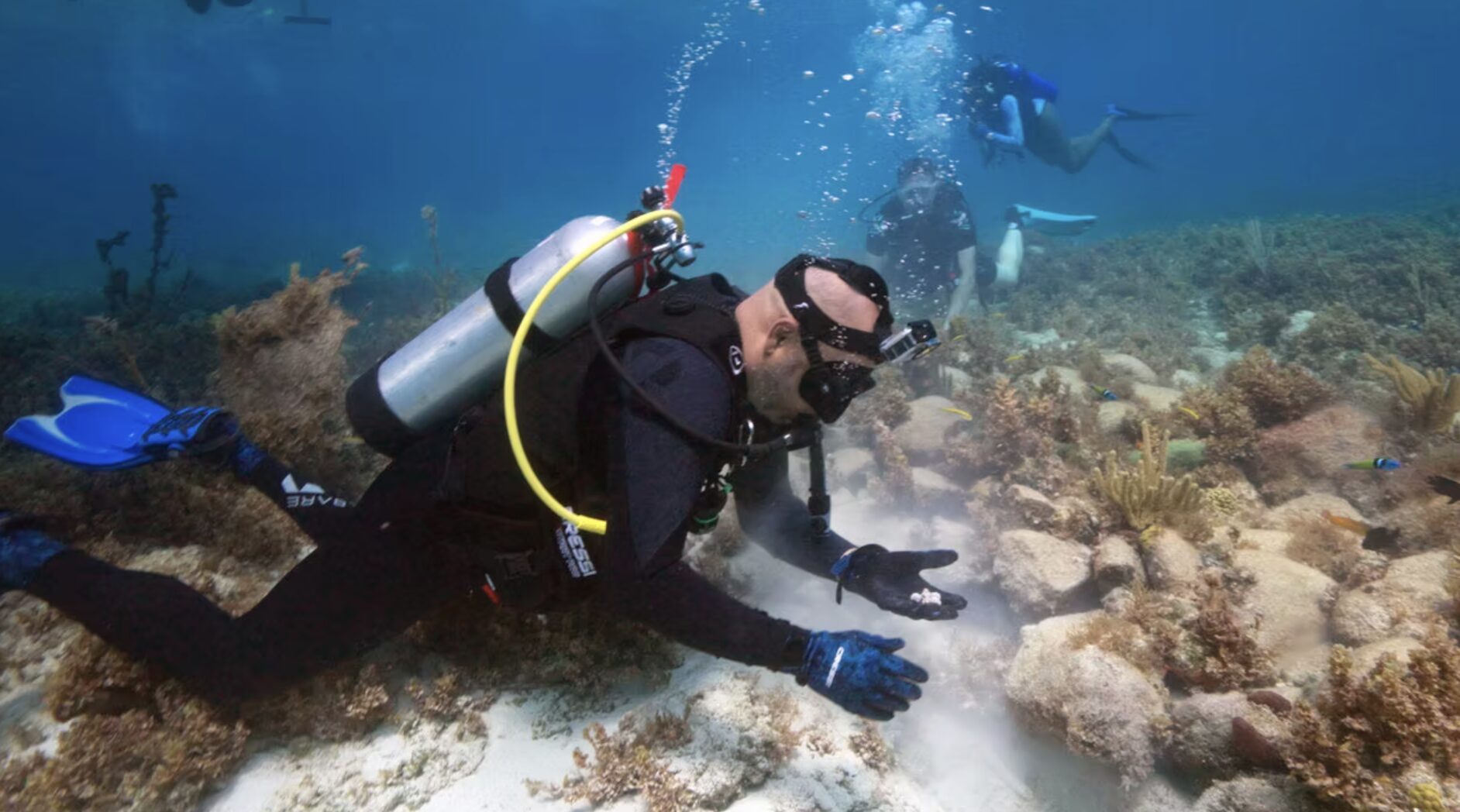
During the expedition, archaeologists located a large wreck dating to the correct historical period.
The vessel’s surviving remains match several characteristics associated with the Fancy.
Researchers note that:
- The wreck is located in the appropriate area.
- The construction methods fit the period.
- The vessel’s dimensions are broadly consistent with historical descriptions.
- Evidence suggests it was intentionally burned.
Historical records indicate that the Fancy was dismantled after arriving in Nassau.
The absence of valuable artifacts at the site aligns with that possibility.
Researchers found no cannons, fittings, or cargo that would normally be expected aboard a vessel of its size.
Instead, the ship appears to have been stripped before sinking.
Investigators also concluded that it was likely burned down to the waterline before finally settling beneath the harbor.
Such actions were common among pirates attempting to eliminate evidence or dispose of unwanted ships.
Despite these similarities, archaeologists remain cautious.
Nassau Harbor contains hundreds of wrecks spanning centuries of maritime activity.
At present, the identification remains speculative.
Further research will be needed before any definitive conclusions can be reached.
More Than One Wreck
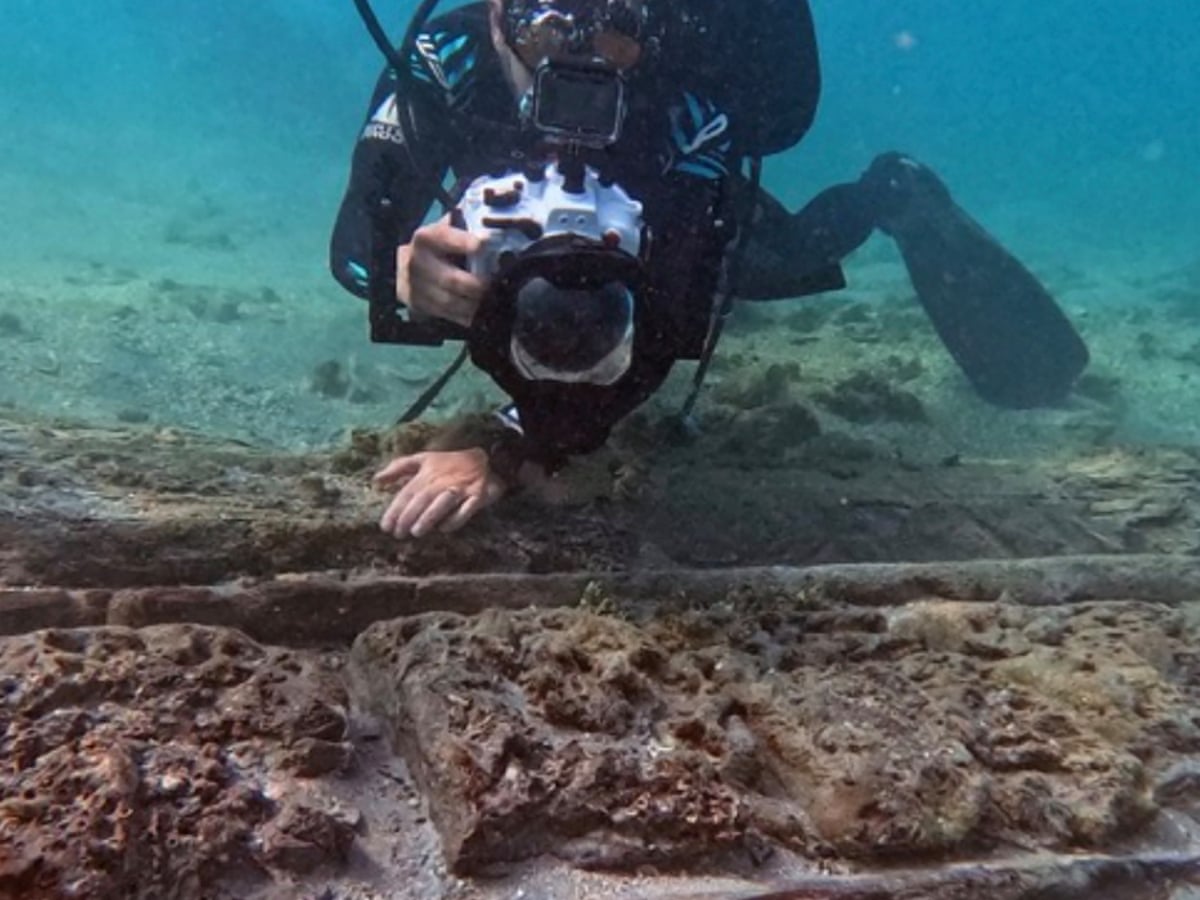
The expedition uncovered a total of six previously undocumented shipwrecks.
Three appear to date to the Golden Age of Piracy.
One site east of Nassau proved especially interesting.
Although much of the wooden hull had decayed, archaeologists recovered evidence of armaments commonly associated with pirate vessels.
These included:
- An iron cannon
- Musket balls
- A swivel gun
Swivel guns were small cannons frequently mounted on pirate ships.
They were effective against enemy crews during boarding actions and required relatively little space.
The weapons help confirm that the vessel likely participated in the armed conflicts that characterized Caribbean piracy.
Together, the wrecks provide some of the first direct archaeological evidence of Nassau’s pirate era.
The Reality Behind Pirate Legends
Part of the project’s motivation was to challenge popular misconceptions about piracy.
Modern audiences often encounter pirates through films, novels, and television series.
These portrayals emphasize adventure, treasure, and freedom.
The historical reality was often far harsher.
According to expedition co-leader Sean Kingsley, pirates were not romantic heroes.
Many were driven by poverty, violence, and desperation.
Life aboard merchant and naval vessels could be brutal.
Sailors faced dangerous conditions, harsh discipline, disease, and low wages.
Some were forcibly recruited into naval service.
For these men, piracy sometimes offered an alternative.
It promised greater earnings and a degree of autonomy unavailable elsewhere.
Yet pirate life remained dangerous.
Violent confrontations, disease, storms, and execution were constant risks.
Few pirates enjoyed long careers.
Many died young.
Piracy and the Atlantic Slave Trade
The discoveries also highlight the broader economic system in which piracy operated.
The Caribbean during the seventeenth and eighteenth centuries was deeply connected to the expanding Atlantic slave trade.
Pirates frequently targeted merchant vessels transporting valuable cargo.
Those cargos often included goods produced through enslaved labor.
In some cases, pirates directly participated in slave trading.
In others, formerly enslaved individuals joined pirate crews.
The relationship between piracy and slavery was complex.
According to archaeologist Justin Dunnavant, piracy and the slave trade were closely interconnected.
The enormous wealth generated by transatlantic slavery created lucrative targets for pirates.
Merchant vessels carrying valuable goods became attractive prey.
As a result, piracy developed alongside the broader commercial networks that linked Europe, Africa, and the Americas.

Before Nassau: Port Royal
Although Nassau became the most famous pirate haven, it was not the first.
Earlier generations of pirates had gathered at Port Royal, Jamaica.
During the seventeenth century, the town became notorious for gambling, drinking, and privateering.
Visitors described it as one of the most unruly settlements in the Caribbean.
Unlike Nassau, however, Port Royal operated with significant support from English authorities.
Privateers based there often attacked Spanish shipping with official approval.
Nassau represented something different.
By the early eighteenth century, many pirates operated independently of government control.
The Bahamas provided a refuge where outlaws could organize their own affairs.
That distinction helped transform Nassau into the symbolic capital of piracy.
Shipwrecks as Historical Archives
Because so little survives from Nassau’s pirate period on land, underwater archaeology plays a crucial role in understanding the era.
Shipwrecks function as time capsules.
When vessels sink, they often preserve objects that reveal details about technology, trade, warfare, and daily life.
In Nassau’s case, shipwrecks may represent the most important surviving evidence of the town’s pirate years.
Artifacts recovered from wrecks can help answer longstanding questions.
How were pirate ships armed?
What goods did they carry?
How were vessels modified for pirate use?
What connections existed between pirates and local communities?
Each discovery provides another piece of the puzzle.
The Challenge of Treasure Myths
One concern among archaeologists is that pirate-related discoveries often attract treasure hunters.
Stories of buried gold and lost riches remain deeply associated with piracy.
Researchers emphasize that the newly discovered wrecks have produced no evidence of hidden treasure.
Their value lies not in gold or silver but in historical information.
Archaeologists increasingly stress the importance of preserving shipwrecks as cultural heritage rather than viewing them as sources of profit.
By studying wrecks scientifically, researchers can reconstruct aspects of history that would otherwise remain unknown.
Building a Future for Maritime Heritage
The expedition also aims to strengthen local archaeological expertise in the Bahamas.
Training Bahamian divers, researchers, and heritage professionals forms an important part of the project’s long-term goals.
Future surveys may identify additional pirate-era wrecks in Nassau Harbor.
Researchers believe numerous undiscovered sites likely remain buried beneath the harbor floor.
New technologies, including underwater drones and advanced mapping systems, could help locate them.
Beyond research, the discoveries may contribute to cultural tourism and public education.
For a nation whose economy depends heavily on tourism, maritime heritage offers significant opportunities.
The pirate era remains one of the most recognizable chapters in Bahamian history.
Archaeological discoveries provide a way to tell that story through evidence rather than legend.
A New Chapter in Pirate History
For centuries, Nassau’s pirate past has existed largely through stories.
The exploits of Blackbeard, Anne Bonny, and Henry Avery have become part of popular culture around the world.
Yet historical reality often remained elusive.
The newly discovered shipwrecks offer something rare: direct physical connections to that world.
Whether or not one of the vessels ultimately proves to be Henry Avery’s Fancy, the discoveries mark an important milestone in Caribbean maritime archaeology.
They demonstrate that Nassau’s harbor still holds traces of the people who transformed a small Bahamian settlement into the most famous pirate haven in history.
Beneath the clear waters, hidden among currents and coral, the remains of that extraordinary era are beginning to emerge once again.
And with each new wreck, archaeologists move closer to understanding the true story behind the legends of the Golden Age of Piracy.