Athens’ Silver Coins and the Trade Networks That Helped Shape the Ancient Mediterranean
The Metal That Powered a Civilization
When people think of ancient Athens, they often imagine marble temples, philosophers debating in the agora, or the birth of democracy beneath the shadow of the Acropolis. Yet behind many of these achievements stood a resource hidden deep beneath the rocky landscape of Attica: silver.
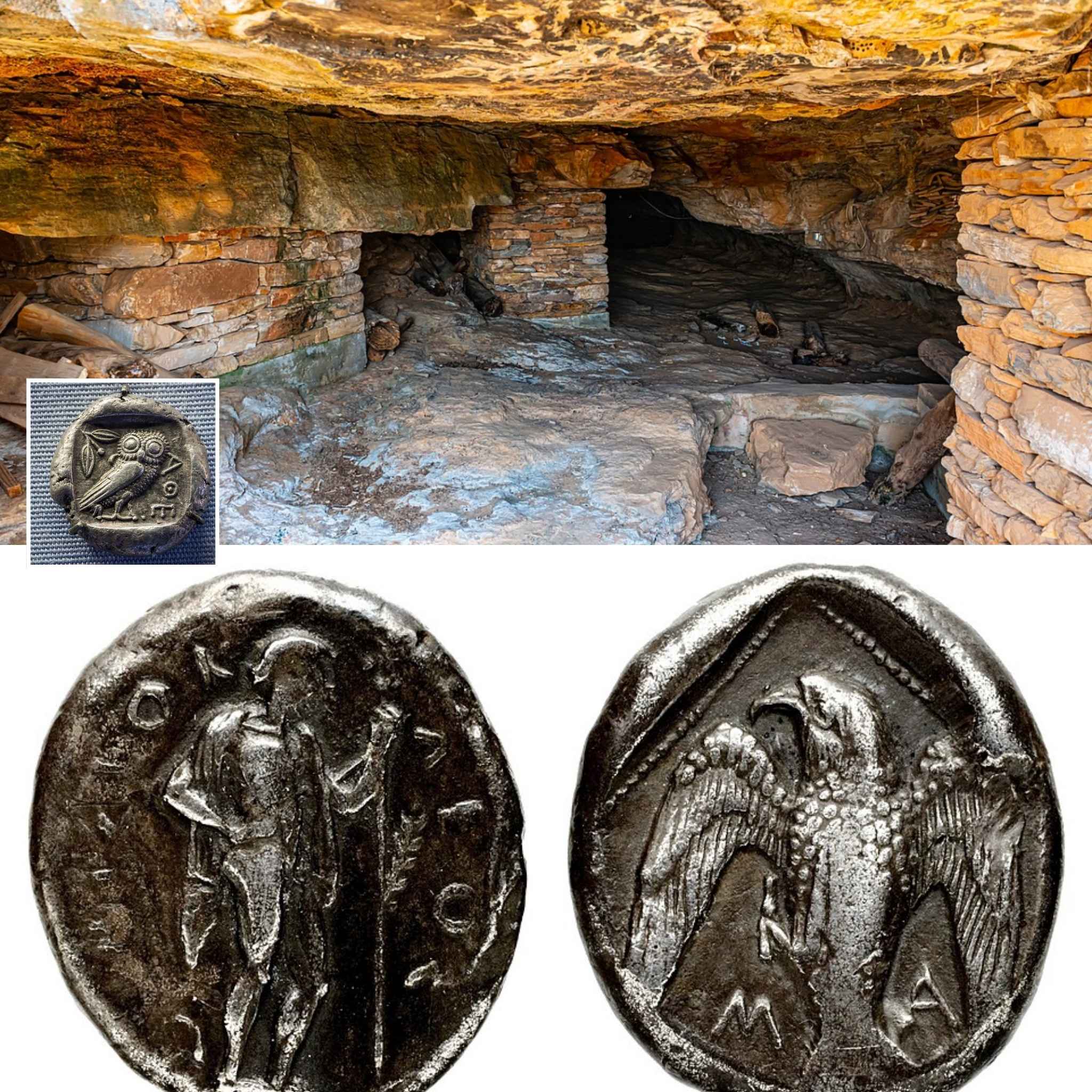
Long before Athens became the intellectual and cultural center of the Greek world, miners were extracting precious metals from the hills of Laurion in southeastern Greece. Over centuries, these mines generated immense wealth, financed military victories, supported public construction projects, and helped create one of the most influential economies of the ancient Mediterranean.
The silver extracted from Laurion was transformed into coins that traveled across seas and continents. These coins connected merchants, sailors, rulers, and ordinary citizens through a vast network of exchange stretching from the Black Sea to Egypt and beyond.
Recent archaeological and historical research continues to reveal how important this silver was—not only to Athens itself, but to the wider ancient world.
Laurion: The Hidden Wealth of Ancient Attica
Approximately 60 kilometers southeast of Athens lies the rugged mining district of Laurion.
Today, the region appears dry and rocky, but beneath its surface lay some of the richest silver-bearing ore deposits in the ancient Greek world.
Evidence suggests that mining activity in Laurion dates back to the Bronze Age, with some of the earliest extraction occurring as early as 3200 B.C.
Ancient writers recognized the antiquity of the mines.
The historian and military commander Xenophon wrote:
“It is clear, I presume, to every one that these mines have for a very long time been in active operation; at any rate no one will venture to fix the date at which they first began to be worked.”
By the Archaic Period, the mines had become one of Athens’ most valuable assets.
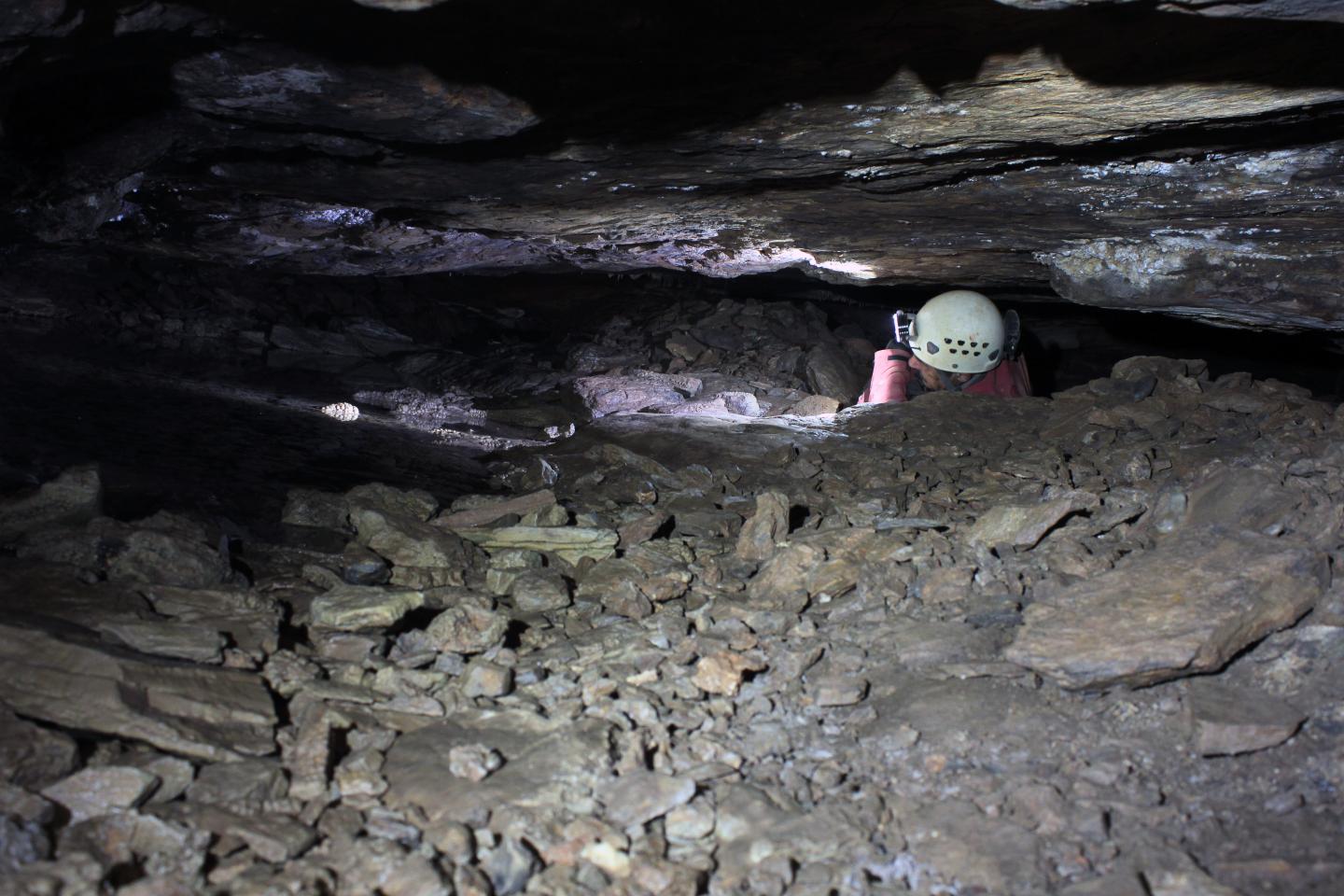
The extraction process was labor-intensive and often dangerous. Workers followed narrow veins of ore deep underground, using primitive tools and oil lamps to illuminate cramped tunnels.
Thousands of laborers, many of them enslaved, spent their lives extracting silver-bearing lead ore from the earth.
Once mined, the ore underwent crushing, washing, and smelting before pure silver could be obtained.
The effort was enormous, but the rewards were transformative.
The Rise of Athenian Coinage
The growing wealth generated by Laurion coincided with major political changes in Athens.
During the late sixth century B.C., the city began producing its first large-scale silver coinage.
This period overlapped with the rule of Peisistratos and his successors, whose political reforms helped strengthen the city-state.
The availability of silver allowed Athens to mint standardized coins that could be used throughout local and international markets.
Before coinage became widespread, trade often depended on barter systems or weighed quantities of precious metal.
Coins simplified commerce dramatically.
Merchants could now exchange goods using currency whose weight and purity were guaranteed by the issuing authority.
Athens quickly recognized the advantages.
Silver coins facilitated trade in:
- Olive oil
- Wine
- Pottery
- Textiles
- Metal goods
- Agricultural products
As Athenian exports expanded, so did the city’s economic influence.
Over approximately three centuries of intensive mining, scholars estimate that Laurion may have produced nearly 3,000 metric tons of silver.
Few ancient states possessed anything comparable.
The Discovery That Changed Greek History
Around the beginning of the fifth century B.C., a major new silver deposit was discovered at Laurion.
At precisely the same time, a growing threat emerged from the east.
The Persian Empire was expanding.
Greek city-states faced increasing pressure from one of the largest and most powerful empires the world had ever seen.
Many Athenians proposed distributing the profits from the newly discovered silver vein among citizens.
Instead, the politician Themistocles proposed a radically different plan.
He argued that Athens should invest the silver in building a fleet of warships.
The decision would change history.
According to Herodotus:
“Themistocles persuaded them to forbear the distribution, and build with the money two hundred ships.”
Those ships became the foundation of the Athenian navy.
The Silver Fleet and the Battle of Salamis
In 480 B.C., Persian King Xerxes launched a massive invasion of Greece.
His army crossed into mainland Greece while a powerful fleet supported the campaign along the coast.
Athens faced destruction.
The city evacuated much of its population while the newly constructed fleet prepared for battle.
The decisive confrontation occurred at Salamis.
The narrow straits near the island prevented the larger Persian fleet from fully utilizing its numerical advantage.
The Greek fleet, led largely by Athenian triremes financed through Laurion silver, attacked with devastating effectiveness.
The Persian navy suffered a catastrophic defeat.
The victory at Salamis became one of the most important turning points in world history.
Had Persia succeeded, the future development of Greek political institutions, philosophy, literature, and science might have unfolded very differently.
In a very real sense, silver helped save Greece.

Building an Empire of Trade
After the Persian Wars, Athens entered a period of extraordinary growth.
The city became leader of the Delian League, an alliance of Greek states initially formed for mutual defense.
Over time, Athens transformed the alliance into a maritime empire.
Its silver currency played a crucial role.
Athenian coins became trusted throughout the Mediterranean because of their consistent weight and purity.
Merchants preferred them.
Governments accepted them.
Soldiers were paid with them.
Tributes were collected in them.
The result was one of the earliest examples of an international currency.
Athenian silver reached:
- Egypt
- Anatolia
- Phoenicia
- Cyprus
- Sicily
- Southern Italy
- The Black Sea
- The Levant
Archaeologists have discovered Athenian coins thousands of kilometers from the city where they were minted.
These finds reveal how deeply integrated ancient trade networks had become.
The Famous Owl Coins
Among the most recognizable coins in world history are the Athenian Owl tetradrachms.
First minted around the late sixth and early fifth centuries B.C., these silver coins became symbols of Athens itself.
The front featured Athena, goddess of wisdom and warfare.
The reverse displayed:
- An owl
- An olive branch
- The letters ΑΘΕ
The abbreviation stood for “Of the Athenians.”
The owl symbolized wisdom, vigilance, and divine protection.
Its image became instantly recognizable across the Mediterranean.
The coins gained such widespread acceptance that merchants often preferred them over local currencies.
Some regions even produced imitations to satisfy demand.
The Owl tetradrachm became one of history’s earliest global currencies.
Silver and the Golden Age of Athens
The wealth generated by silver did far more than fund wars.
It helped create what historians now call the Golden Age of Athens.
Between approximately 480 and 404 B.C., Athens experienced an unprecedented flowering of culture.
During this era:
- The Parthenon was constructed.
- Sophocles wrote his tragedies.
- Euripides transformed theater.
- Herodotus recorded history.
- Socrates questioned accepted truths.
- Plato developed philosophical systems.
- Artists and architects created masterpieces.
These achievements required resources.
Public buildings, festivals, naval maintenance, and democratic institutions all depended upon state revenue.
Silver supplied much of that revenue.
Athens even paid citizens for participation in public service and jury duty.
This financial support helped broaden political participation and strengthen democratic governance.
Without the wealth of Laurion, many of these developments might never have occurred.
A Currency That Reached the Ancient World
The influence of Athenian coinage extended far beyond Greece.
Its success demonstrated the power of a stable and trusted currency.
Other states adopted similar monetary systems.
Later Greek kingdoms issued their own silver coins modeled on Athenian standards.
When Rome expanded across the Mediterranean centuries later, it introduced the silver denarius.
Although distinct from Greek coinage, the Roman system reflected many lessons learned from earlier monetary economies.
The concept of state-backed silver currency became a cornerstone of Mediterranean commerce.
In many ways, modern monetary systems owe part of their heritage to innovations pioneered in Athens.
Decline of the Mines and the Shift of Power
No source of wealth lasts forever.
Over time, the richest veins of Laurion became increasingly difficult to exploit.
Production fluctuated as deposits were exhausted and new ones discovered.
At the same time, Athens faced mounting political and military challenges.
The Peloponnesian War weakened the city.
Sparta emerged victorious.
Later, Thebes challenged Spartan dominance.
By the fourth century B.C., a new power was rising to the north.
Macedonia, under Philip II and later Alexander the Great, transformed the political landscape of the Greek world.
Alexander’s conquests shifted economic power eastward.
New sources of wealth emerged.
The era when Laurion silver dominated Mediterranean commerce gradually came to an end.
Yet the legacy remained.
Archaeology and the Continuing Story of Laurion
Modern archaeological investigations continue to uncover evidence of the vast mining operations that once powered Athens.
Researchers have identified:
- Ancient mine shafts
- Processing workshops
- Smelting installations
- Water-management systems
- Settlements associated with mining activity
These discoveries reveal the remarkable sophistication of ancient industrial production.
Far from being a simple source of raw materials, Laurion represented one of the largest and most organized mining complexes of the ancient world.
The region offers a unique glimpse into how natural resources can shape political power, economic development, and cultural achievement.
The Silver That Changed History
The story of Athens is often told through philosophy, democracy, and monumental architecture.
Yet beneath those achievements lies another story—one carved into the rocky hills of Laurion.
Silver financed fleets that defended Greece.
It funded temples that still stand today.
It supported artists, thinkers, and institutions whose influence continues to shape modern civilization.
The famous owl coins that crossed seas and borders were more than currency.
They were symbols of a society whose wealth, ambition, and creativity transformed the ancient Mediterranean.
Long after the mines declined and empires rose and fell, the legacy of Athenian silver endured.
It remains one of history’s most powerful examples of how a natural resource, when combined with political vision and economic innovation, can alter the course of civilization.