The Players to Watch at the 2026 U.S. Open: Who Can Conquer Shinnecock Hills?
Shinnecock Hills is once again ready to host the U.S. Open, and as always, it brings with it a test that separates great players from truly elite ones.

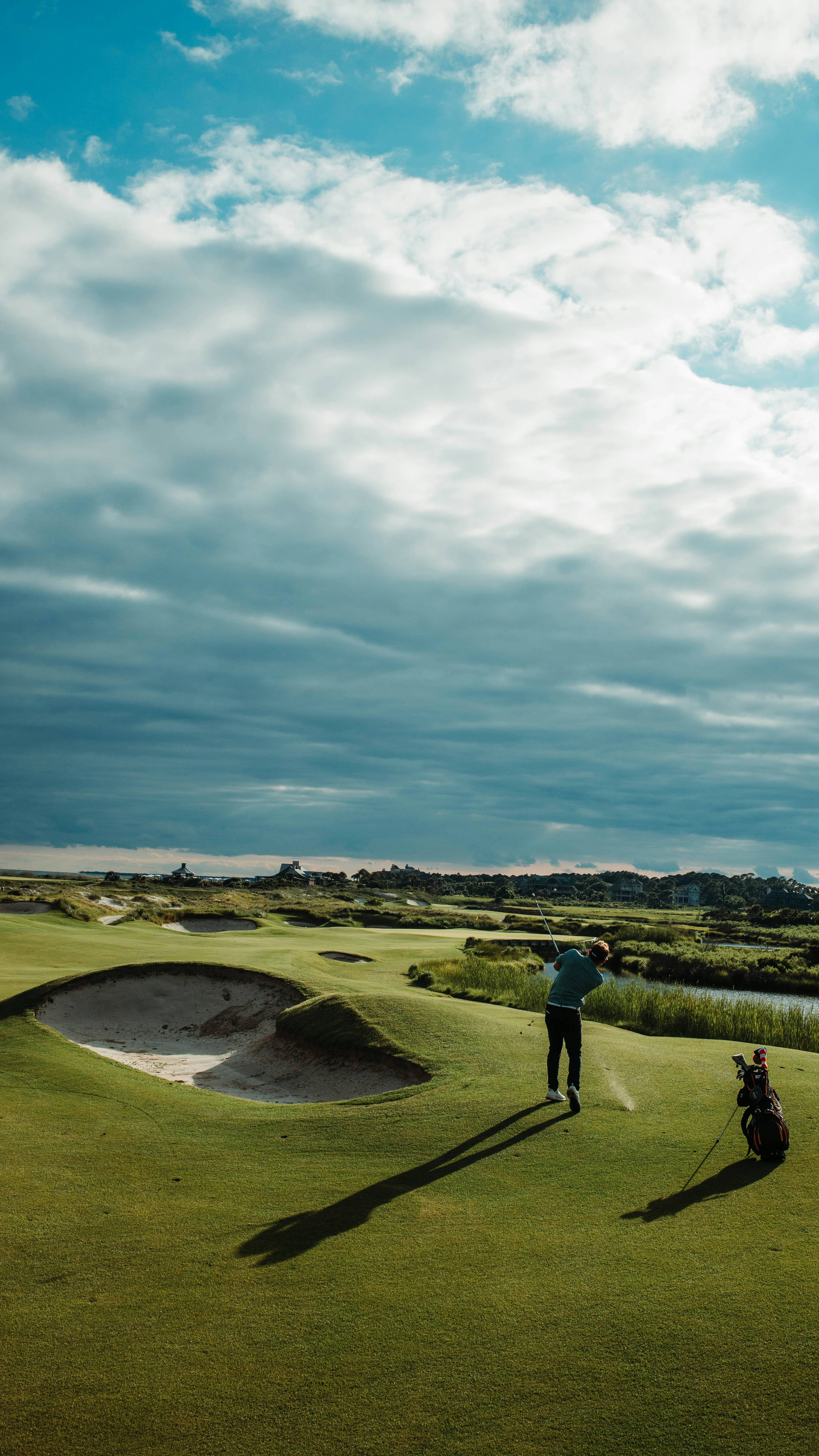
The 2026 edition will be played on a par-70 layout measuring 7,434 yards, slightly shorter than in 2018 but still widely regarded as one of the toughest examinations in championship golf. With firm fairways, deep rough, and fast, undulating greens, Shinnecock doesn’t just reward talent—it exposes weakness.
History tells the story best. The last U.S. Open champion to finish over par here was Brooks Koepka in 2018, when he lifted the trophy at 1-over 281. That alone proves how brutal the conditions can become when the course tightens under major pressure.
Now, a new generation of contenders arrives, and six names stand out above the rest as players capable of not only surviving Shinnecock—but beating it.
Jon Rahm – Power, Precision, and a Familiar Major Winner
Jon Rahm enters the U.S. Open conversation with strong recent form and a proven track record in major championships. With multiple LIV Golf victories this season and a runner-up finish at the PGA Championship, Rahm has shown he remains one of the most dangerous players in the game.
Although he previously missed the cut at Shinnecock, his overall U.S. Open pedigree cannot be ignored. A past winner of the championship, Rahm has repeatedly demonstrated the ability to handle demanding setups and heavy pressure.
Statistically, his recent performances have been impressive, particularly in ball-striking categories. His strokes gained numbers off the tee and on approach remain among the strongest on tour, making him a constant threat if he finds control early in the week.
When Rahm is driving it well, he becomes extremely difficult to beat—especially on a course that rewards precision over brute force.
Scottie Scheffler – The World No. 1 With a Relentless Game

Scottie Scheffler continues to dominate statistical categories across the PGA Tour, even in what many consider a “down” year by his standards.
While he has not been as dominant as in previous seasons, Scheffler still leads the tour in strokes gained tee-to-green and total performance metrics. His ability to consistently gain strokes across all areas of the game keeps him firmly in contention every time he tees it up.
The challenge at Shinnecock, however, will be putting and short game control on severely undulating greens—an area where even the best can struggle under pressure.
Still, Scheffler’s recent U.S. Open record is elite, with multiple top-10 finishes in his last four appearances. If he finds rhythm early, he remains the player most capable of separating from the field over four rounds.
Tyrrell Hatton – A Fierce Competitor Built for Difficult Conditions

Tyrrell Hatton arrives at Shinnecock playing some of the most consistent golf of his career. With multiple top-10 finishes this season and a LIV Golf victory at a demanding Valderrama layout, Hatton has proven he can thrive on difficult courses.
His U.S. Open history is also strong, highlighted by a top-5 finish at Shinnecock in 2018. That experience could prove invaluable as he returns to a venue where patience and discipline are essential.
Hatton’s game is built for survival golf—accurate enough off the tee, strong enough on approach, and mentally tough when conditions become frustrating. That combination makes him a legitimate contender if the tournament turns into a grind.
Rory McIlroy – A Champion With Freedom and Experience
Rory McIlroy enters the U.S. Open with a unique advantage—freedom from the pressure of chasing a career-defining milestone. Having already completed the career Grand Slam, McIlroy can approach major championships with less external weight than many of his rivals.
That freedom, combined with his elite driving ability, makes him extremely dangerous at Shinnecock.
While putting on fast, bumpy greens has occasionally been a weakness, McIlroy’s length off the tee allows him to control long courses better than almost anyone in the world.
His recent U.S. Open record is strong, with multiple top-10 finishes in recent years, proving his consistency in this championship.
If he avoids big mistakes early, McIlroy has the firepower to take control quickly.
Bryson DeChambeau – Power vs Precision at Shinnecock
Bryson DeChambeau brings one of the most polarizing but effective skill sets in modern golf. His raw distance off the tee remains one of the biggest advantages in the game, even at a course that often demands restraint.
Despite mixed major results earlier in the season, DeChambeau has continued to show strong performance in LIV Golf events, including multiple victories and consistent top finishes.
His ability to gain strokes off the tee in nearly every event he plays makes him a constant threat, especially if he can manage the short game demands of Shinnecock.
While accuracy and patience will be tested, Bryson’s combination of power and improved putting makes him a dangerous wildcard in this field.
Cameron Young – The Local Hope With Elite Form
Cameron Young may be the most intriguing dark horse in the field.
Playing near home and already familiar with the pressures of major championships, Young arrives in excellent form with multiple wins and strong finishes this season. His recent consistency suggests he is peaking at the right time.
Statistically, he has improved significantly in both putting and approach play, two areas that are critical at Shinnecock. His ability to avoid bogeys also stands out—an essential trait on a course where big numbers can quickly derail a round.
While his past U.S. Open results have been inconsistent, current form suggests a breakthrough could be coming at the perfect time.
Final Outlook – A Course That Rewards Survival as Much as Skill
Shinnecock Hills does not guarantee success for the most talented players—it rewards those who manage mistakes best.
Each of these six contenders brings a different strength:
- Rahm’s complete game and major-winning experience
- Scheffler’s statistical dominance
- Hatton’s toughness and consistency
- McIlroy’s elite driving ability
- DeChambeau’s unmatched power
- Young’s rising form and local confidence
But at Shinnecock, none of that guarantees anything.
The U.S. Open is rarely about perfect golf. It is about controlled chaos, patience under pressure, and the ability to survive when the course refuses to cooperate.
And in 2026, only one player will manage it better than the rest.