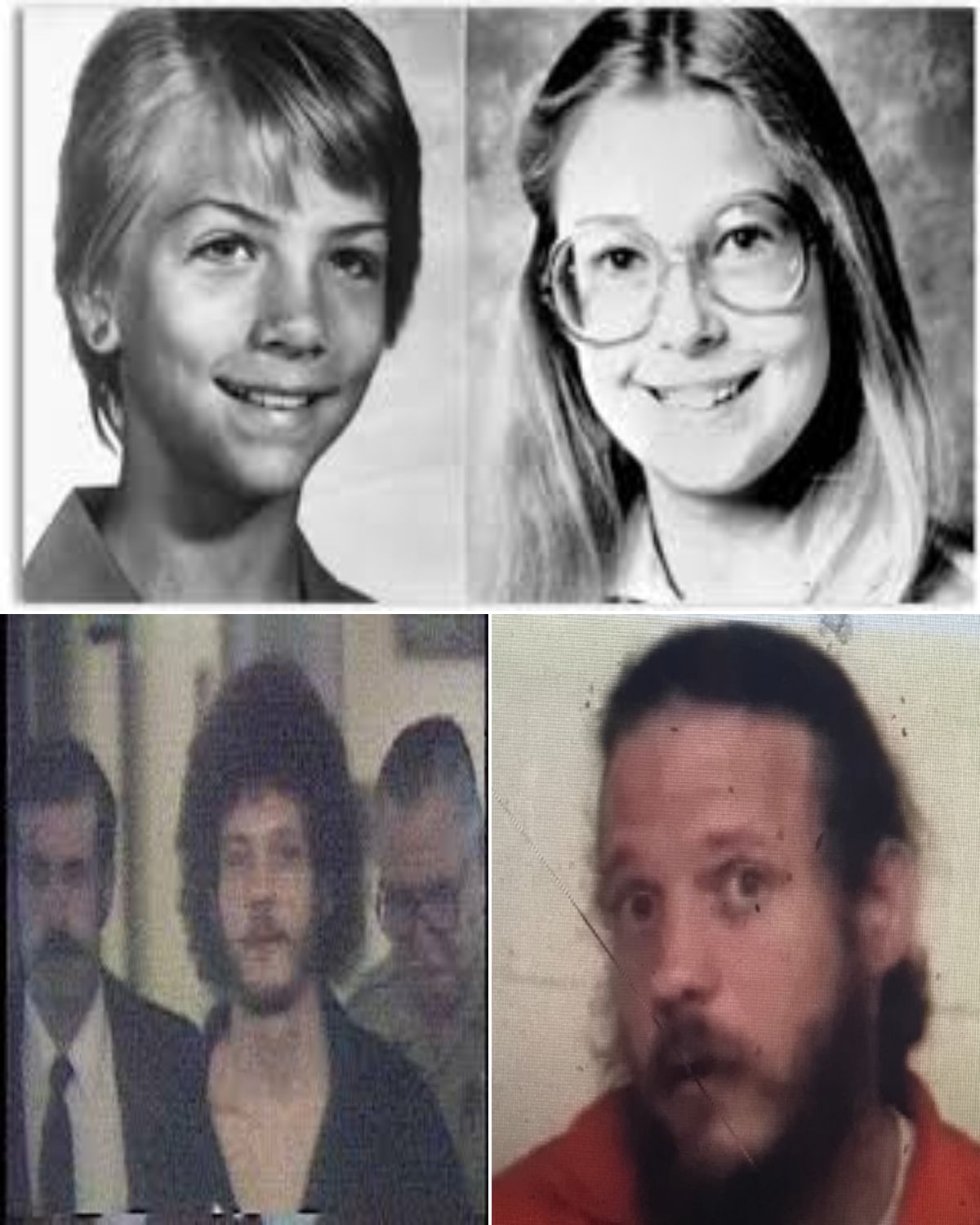
In the early hours of May 27, 1994, Charles Rodman Campbell became one of the last prisoners in modern American history to be executed by hanging.

After spending nearly twelve years on Washington State’s death row, Campbell faced execution for the brutal murders of three people in what prosecutors described as a calculated act of revenge. His victims included the woman whose testimony had helped send him to prison years earlier, her young daughter, and a concerned neighbor who happened to arrive at the wrong place at the wrong time.
When the final moment came, Campbell refused a last meal, declined to offer any final statement, and resisted prison staff until the very end.
His execution marked the closing chapter of one of Washington State’s most notorious murder cases.
A Revenge Plot Years in the Making
The origins of the case stretched back nearly a decade before the murders.
In 1974, Campbell sexually assaulted a young woman named Renae Wicklund. Despite the trauma she endured, Wicklund cooperated with authorities and testified against him in court.
Her testimony helped secure Campbell’s conviction and resulted in his imprisonment.
According to investigators, Campbell never forgave her.
Over the years, he developed a deep resentment toward the woman whose courage had contributed to his incarceration. After eventually being released from prison, he began searching for Wicklund.
Authorities later concluded that his intentions were clear: revenge.
The Murders at Clearview
On April 14, 1982, Campbell arrived at the Wicklund residence in Clearview, Washington.
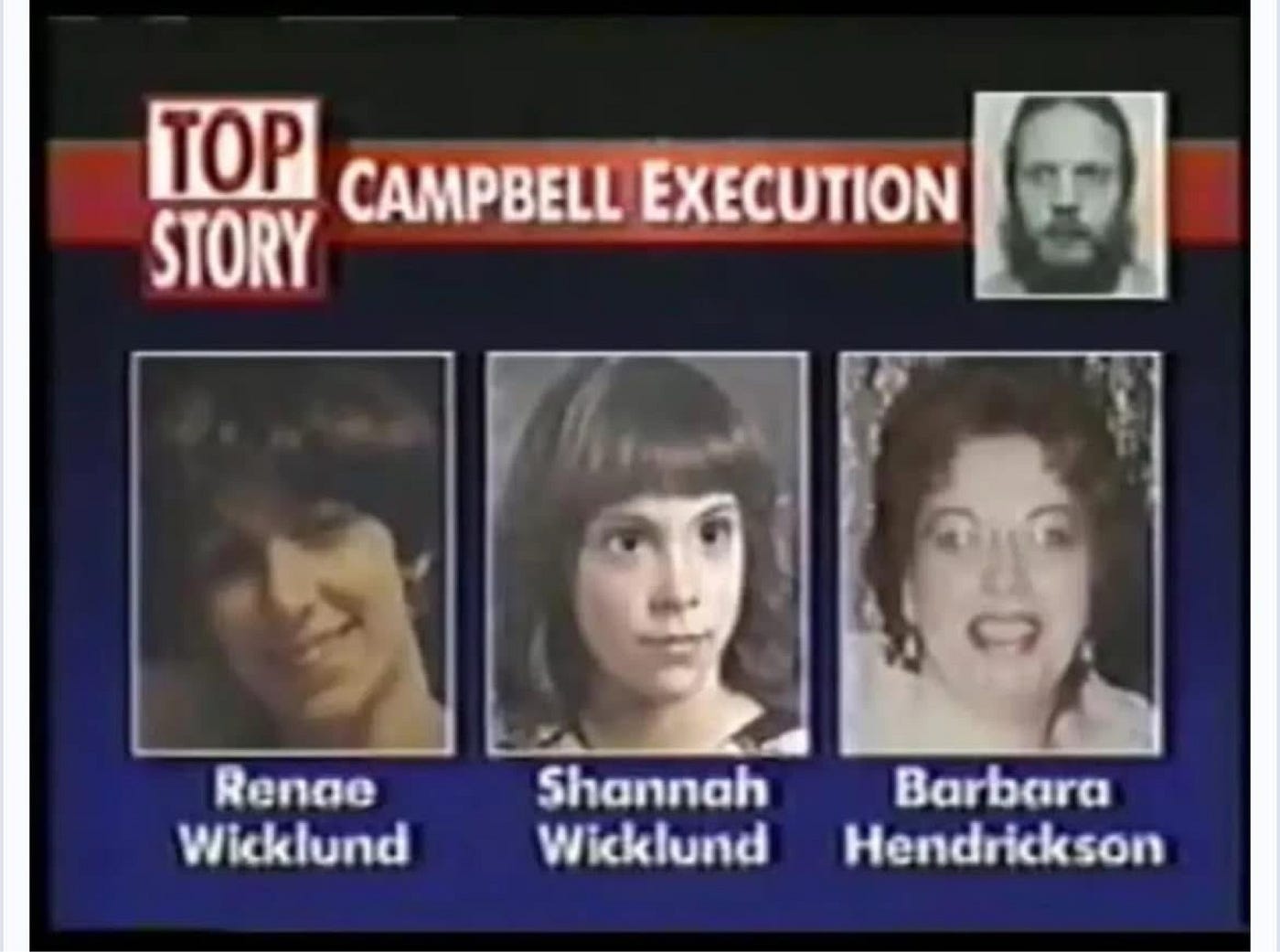
What followed was a horrifying series of murders that shocked the state.
Armed with a knife, Campbell attacked Renae Wicklund, fatally slashing her throat inside her home.
The violence did not end there.
Later that afternoon, Shannah Wicklund, Renae’s eight-year-old daughter, returned home from school. She had no idea her mother had already been killed.
Campbell murdered the child as well.
Before leaving the scene, Campbell encountered Barbara Hendrickson, a 51-year-old neighbor who had become concerned and came to check on Renae.
She too was attacked and killed.
By the end of the day, three innocent people were dead.
Investigators quickly identified the murders as an act of retaliation against a witness who had helped convict a violent offender years earlier.
The crime generated outrage throughout Washington and became one of the state’s most infamous murder cases.
Conviction and Death Sentence
Campbell was arrested and brought to trial later that year.
Prosecutors argued that the murders were deliberate, premeditated, and motivated by revenge.

The evidence presented during trial convinced jurors that Campbell had specifically targeted Renae Wicklund because of her role in his earlier conviction.
In November 1982, Campbell was convicted of three counts of aggravated first-degree murder.
The jury sentenced him to death.
Over the next twelve years, Campbell filed numerous appeals in both state and federal courts, seeking to overturn his conviction or sentence.
Each attempt failed.
The Final Days on Death Row
As Campbell’s execution date approached in May 1994, prison officials prepared for the possibility of trouble.
Reports from the time indicated that Campbell refused the traditional final meal offered to condemned prisoners.
During a search of his cell shortly before the execution, correctional officers discovered a sharpened metal object approximately four inches long that appeared to have been fashioned into a homemade weapon.
The discovery raised concerns about security and reinforced officials’ belief that Campbell might resist the execution process.
Those concerns proved justified.
Silence Until the End
Unlike many condemned inmates who use their final moments to apologize, express regret, or address victims’ families, Campbell chose complete silence.
When given the opportunity to make a final statement, he declined.
He offered no last words.
Witnesses reported that he showed no public remorse for the murders of Renae Wicklund, Shannah Wicklund, or Barbara Hendrickson.
His silence would become one of the most memorable aspects of the execution.
A Dramatic Struggle Before the Gallows
The hours before the execution became increasingly tense.
According to official accounts, Campbell refused to cooperate with prison staff tasked with preparing him for execution.
He resisted being restrained and refused orders from correctional officers.
Authorities ultimately used chemical spray to gain control of the situation.
Even after being removed from his cell, Campbell continued resisting efforts to position him beneath the gallows.
Officials eventually secured him to a restraint board in order to complete the execution procedure.
The extraordinary measures highlighted the unusual circumstances surrounding one of America’s rare judicial hangings.
Washington’s Rare Use of the Gallows
At the time, Washington law permitted condemned inmates to choose between lethal injection and hanging.
Campbell declined to select a method.
Under state law, that decision resulted in hanging being used as the default method of execution.
Shortly after midnight on May 27, 1994, Campbell was positioned beneath the noose at the Washington State Penitentiary in Walla Walla.
The trapdoor opened.
The execution was carried out as scheduled.
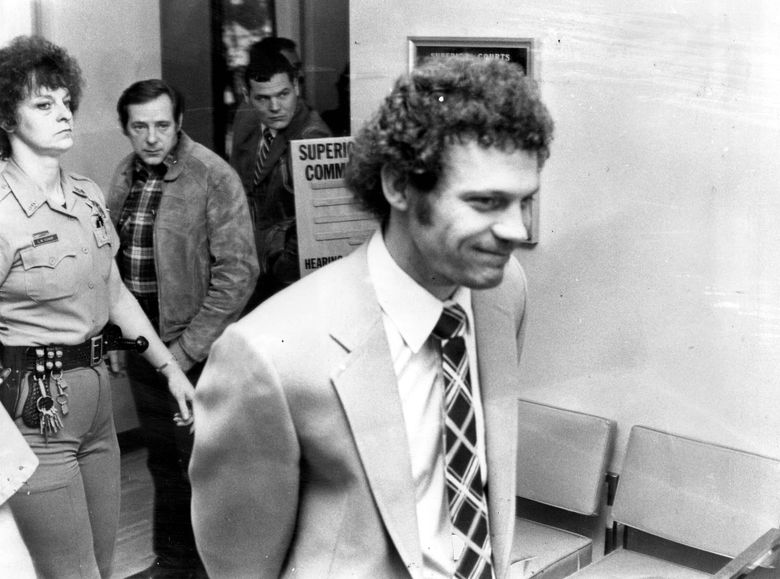
Campbell was pronounced dead at approximately 12:14 a.m.
The execution became only the second judicial hanging conducted in the United States since 1965 and remains one of the most widely discussed executions in modern American history.
A Lasting Impact on Washington
The murders of Renae Wicklund, her eight-year-old daughter Shannah, and Barbara Hendrickson left a lasting scar on Washington State.
The case drew national attention to the dangers faced by victims and witnesses who testify against violent offenders.
In the years that followed, the murders were frequently cited in discussions about witness protection, victims’ rights, and capital punishment.
More than four decades later, the case is still remembered not because of the man who committed the crimes, but because of the lives he destroyed in a calculated act of revenge.
For the families of the victims, justice arrived after twelve years of appeals and legal battles.
And when Charles Campbell finally faced the consequences of his actions, he left the world exactly as he approached the gallows—without a final meal, without a final apology, and without a single final word.