Recent excavations in Oregon have revealed artifacts and fossilized remains that challenge long-held assumptions about the timing of human settlement in North America. Carbon dating and stratigraphic analysis indicate that these objects could be over 15,000 years old, predating many previously accepted sites and suggesting that humans arrived on the continent much earlier than conventional models have proposed.
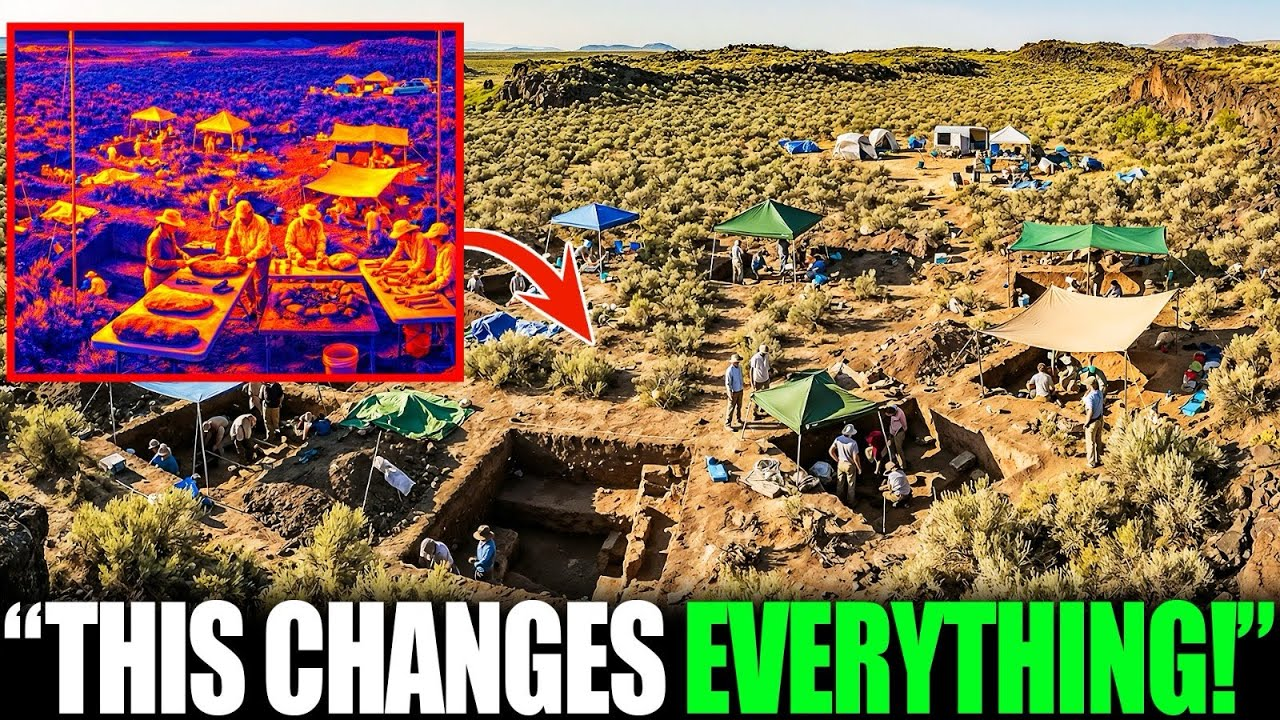
The Oregon site includes stone tools, remnants of hearths, and signs of sustained habitation, showing evidence of organized activity and adaptation to local environments. Researchers emphasize that these finds are not isolated; similar early sites in the Americas have gradually built a picture of pre-Clovis populations, reinforcing the idea that human migration into North America was more complex than once thought.
Genetic studies of ancient remains from the region are ongoing, with preliminary results hinting at connections to early Siberian populations. This discovery has sparked discussions about the routes early humans may have taken, including coastal and inland pathways, to spread across the continent.
Experts caution that while these findings are significant, they should be interpreted carefully. Archaeological evidence must be contextualized within broader patterns of climate, ecology, and technology to understand the lives of these early peoples.

The Oregon site is now considered a key location for understanding early human occupation in the Americas. Excavation teams are continuing detailed analyses, including soil sampling, residue testing, and further radiocarbon dating to refine the chronology of the site.
Beyond reshaping timelines, these discoveries highlight the ingenuity of early humans, who developed tools and strategies to thrive in diverse environments. The evidence from Oregon contributes to a growing recognition that prehistoric populations were sophisticated and adaptive.
Ultimately, this site reinforces the idea that the history of human settlement in North America is far richer and more complex than previously assumed, prompting a reassessment of migration theories and the chronology of human activity across the continent