The clock ticks toward the final moment, and across America, a small number of women have faced the ultimate sentence—execution by the state. Their crimes shattered communities, their trials ignited fierce debate, and their last breaths became chapters in the nation’s darkest criminal history. From Texas to Oklahoma to Virginia, five women walked into death chambers under a cloud of controversy, leaving behind questions that still haunt the justice system.
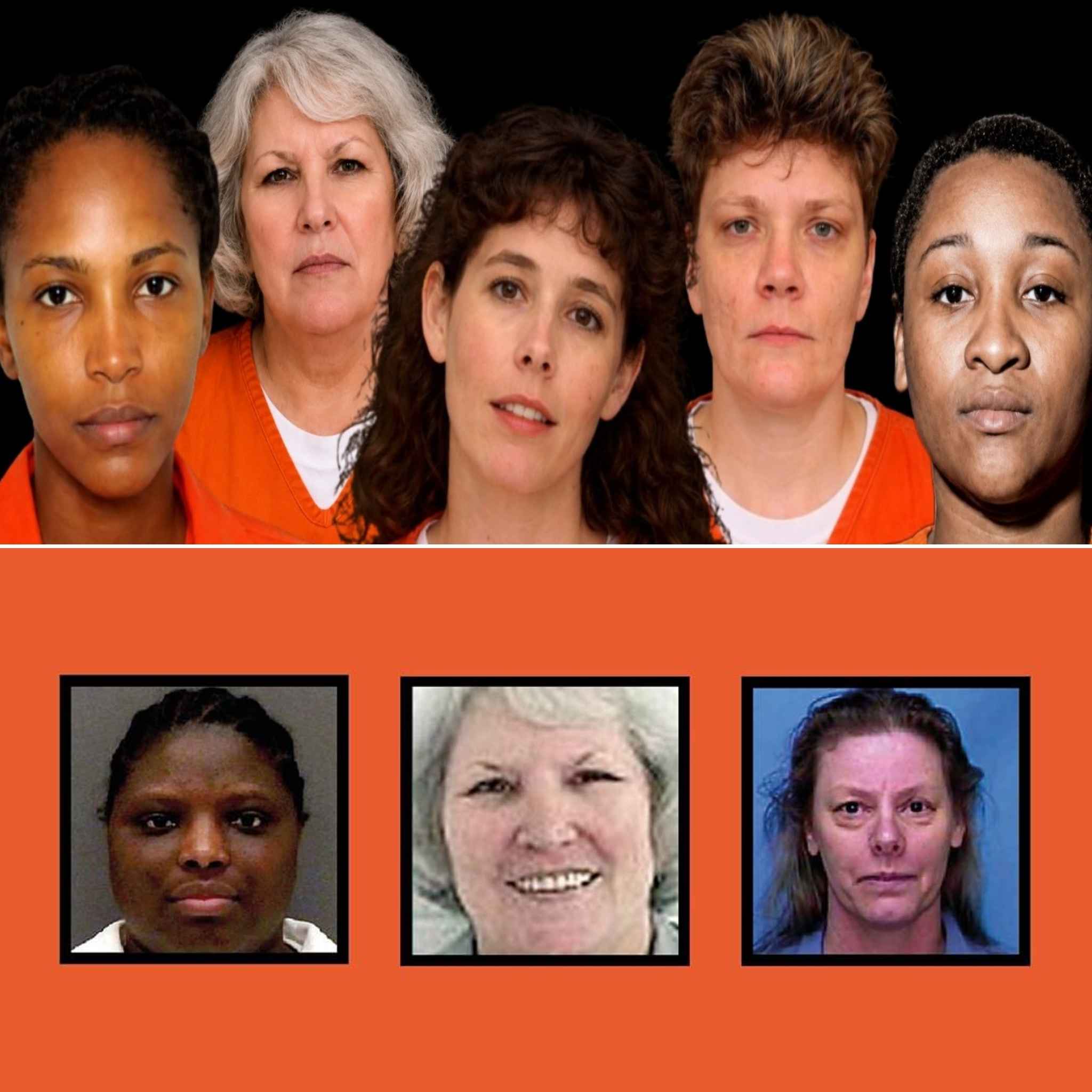
Kimberly McCarthy was executed in Texas on June 26, 2013, becoming the 500th person put to death by lethal injection in that state since capital punishment resumed. She was a former occupational therapist who cared for elderly patients, but addiction to crack cocaine unraveled her life. In 1997, she stabbed and beat 71-year-old neighbor Dorothy Booth after asking to borrow a cup of sugar. Prosecutors said she severed the victim’s finger to steal a wedding ring. At sentencing, jurors heard DNA evidence linking McCarthy to two other killings of elderly women—murders she was never tried for. She maintained her innocence until the end, claiming she was framed. Her execution drew national attention, with protests and counter-protests outside the prison. The debate over whether it was fair to consider untried crimes when deciding a death sentence continues to linger.
Teresa Lewis was executed in Virginia on September 23, 2010, the first woman put to death in that state in nearly a century. She orchestrated the murder-for-hire killings of her husband Julian and stepson Charles in 2002, motivated by a $250,000 life insurance payout. Lewis recruited two young men, Matthew Shallenberger and Rodney Fuller, who carried out the shootings while she unlocked the back door. She had an IQ of about 72, borderline intellectual disability, and her lawyers argued she was manipulated by Shallenberger. Yet prosecutors painted her as the mastermind. Both triggermen received life sentences, but Lewis faced death. Her final words were an apology to the victim’s daughter. Virginia abolished capital punishment in 2021, and her case is still cited in debates about mental capacity and culpability.
 Karla Faye Tucker was executed in Texas on February 3, 1998, becoming the first woman executed in that state since 1863. In 1983, high on drugs, she and an accomplice broke into an apartment to steal a motorcycle. Using a pickaxe, she killed Jerry Dean and Deborah Thornton, later claiming she felt a sexual thrill with each swing. But during her years on death row, she underwent a dramatic religious conversion, becoming a born-again Christian. Her story attracted global attention, with pleas for clemency from Pope John Paul II, Pat Robertson, and even the brother of one victim. Texas Governor George W. Bush declined to intervene. Her calm final moments—humming and looking upward—became iconic. Her case forced the nation to confront whether genuine transformation should outweigh the severity of the crime.
Lois Nadine Smith, known as “Mean Nadine,” was executed in Oklahoma on December 14, 2000. She was a 61-year-old grandmother who, in 1982, tortured and murdered 20-year-old Cindy Bylie, the estranged girlfriend of her son. Smith believed a rumor that Bylie planned to harm her son. After choking, stabbing, and shooting her, she allegedly jumped up and down on the victim’s neck. The brutality shocked even seasoned investigators. Yet those who knew Smith described her as kind and helpful, often protecting others from danger. The Oklahoma Pardon and Parole Board voted 3-2 against clemency. Her last meal—barbecued ribs, onion rings, cake—seemed oddly domestic. She died at 9:13 p.m., leaving a legacy of stark contradiction and enduring questions about the capacity for both violence and compassion.
Wanda Jean Allen was executed in Oklahoma on January 11, 2001, the first black woman executed in the United States in nearly 50 years. She had an IQ of 69 and significant brain damage from childhood injuries, including being hit by a truck and stabbed in the head. In 1988, she shot and killed her partner Gloria Leathers outside a police station after an argument. It was her second killing; she had previously served time for the manslaughter of a former girlfriend. Her trial attorney failed to present any evidence of her intellectual disability or neurological impairments. The jury never heard that her decision-making ability was permanently compromised. Her final words were, “Father, forgive them. They know not what they do.” A documentary about her case continues to spark debate over race, gender, and mental health in capital punishment.

These five women represent the most dangerous and most controversial executions in modern American history. Each case slices through abstract debates about justice, mercy, and the irrevocable power of the state. Kimberly McCarthy’s execution marked a grim numerical milestone in Texas, but the questions about untried evidence remain unresolved. Teresa Lewis’s death highlighted the asymmetry between the mastermind and the triggermen, raising issues of intellectual disability and manipulation. Karla Faye Tucker’s transformation forced a nation to weigh redemption against retribution. Lois Smith’s dual nature—a grandmother capable of unspeakable cruelty—challenged the very notion of who we consider a monster. And Wanda Jean Allen’s case exposed how easily the system can fail those with invisible disabilities.
The death chamber does not discriminate by gender, but the stories of these women reveal profound disparities in how society views female offenders. They are often judged not only by their crimes but by their roles as mothers, partners, and caregivers. When a woman commits an act of extreme violence, the shock is deeper, the scrutiny harsher, and the public’s need to understand more urgent. Each of these women left behind families, victims, and a tangle of unanswered questions. What drove Kimberly McCarthy from a career in occupational therapy to murder for drug money? Was Teresa Lewis truly a mastermind or a pawn? Could Karla Faye Tucker’s faith have been genuine enough to merit mercy? Did Lois Smith’s kindness to others outweigh the horror of her final act? And could Wanda Jean Allen have been saved if her brain damage had been properly considered?
 Some see these executions as justice served—a necessary response to heinous crimes that deserves finality. Others view them as state-sanctioned tragedies, flawed by systemic bias, inadequate representation, and irreversible decisions made in the absence of full information. The debate over capital punishment in America is far from settled, and these five women remain at its emotional heart. Their names are invoked in law schools, churches, and legislatures, each side using their stories to argue for abolition or retention. The legal system has moved on, but the human stories persist.
In the end, what remains is the stark reality that each execution was carried out by the state, with all the solemn ritual and clinical precision that modern prisons demand. The families of the victims watched through glass, seeking closure. The condemned women spoke final words—some apologetic, some defiant, some prayerful. And then the monitors flatlined, and history recorded another date, another name, another milestone. For the public, the stories of these women serve as a mirror reflecting our own beliefs about guilt, punishment, and the possibility of change. They force us to confront uncomfortable questions: Is anyone beyond redemption? Can a life of good deeds outweigh a moment of evil? Should intellectual disability be a barrier to execution? And when the system makes a mistake, can it ever be corrected?
The most dangerous women on death row were not merely dangerous; they were symbols of a justice system perpetually searching for balance. Their trials sparked protests and prayers. Their executions drew international condemnation and local applause. And their stories, now documented in countless articles, books, and films, continue to shape the conversation about who we execute and why. As more states move toward abolition, the legacy of these five women will endure. They represent the extremes of human behavior and the limits of state power. In their final moments, they were not merely inmates—they were mirrors, reflecting back to society its own deepest conflicts over life, death, and justice.