The Huntsville Unit in Texas fell silent at 9:40 p.m. on February 1, 2018, as John David Battaglia, a man who coldly executed his two young daughters while their mother listened helplessly on the phone, was pronounced dead by lethal injection. His final moments were a grotesque exhibition of defiance: he smirked at his ex-wife, taunted the witnesses, and even laughed as the fatal drug entered his veins. The execution of this 62-year-old former accountant marked the end of a nearly 17-year legal odyssey that began with the savage murders of nine-year-old Faith and six-year-old Liberty Battaglia. This crime stunned Dallas and the nation with its calculated brutality.
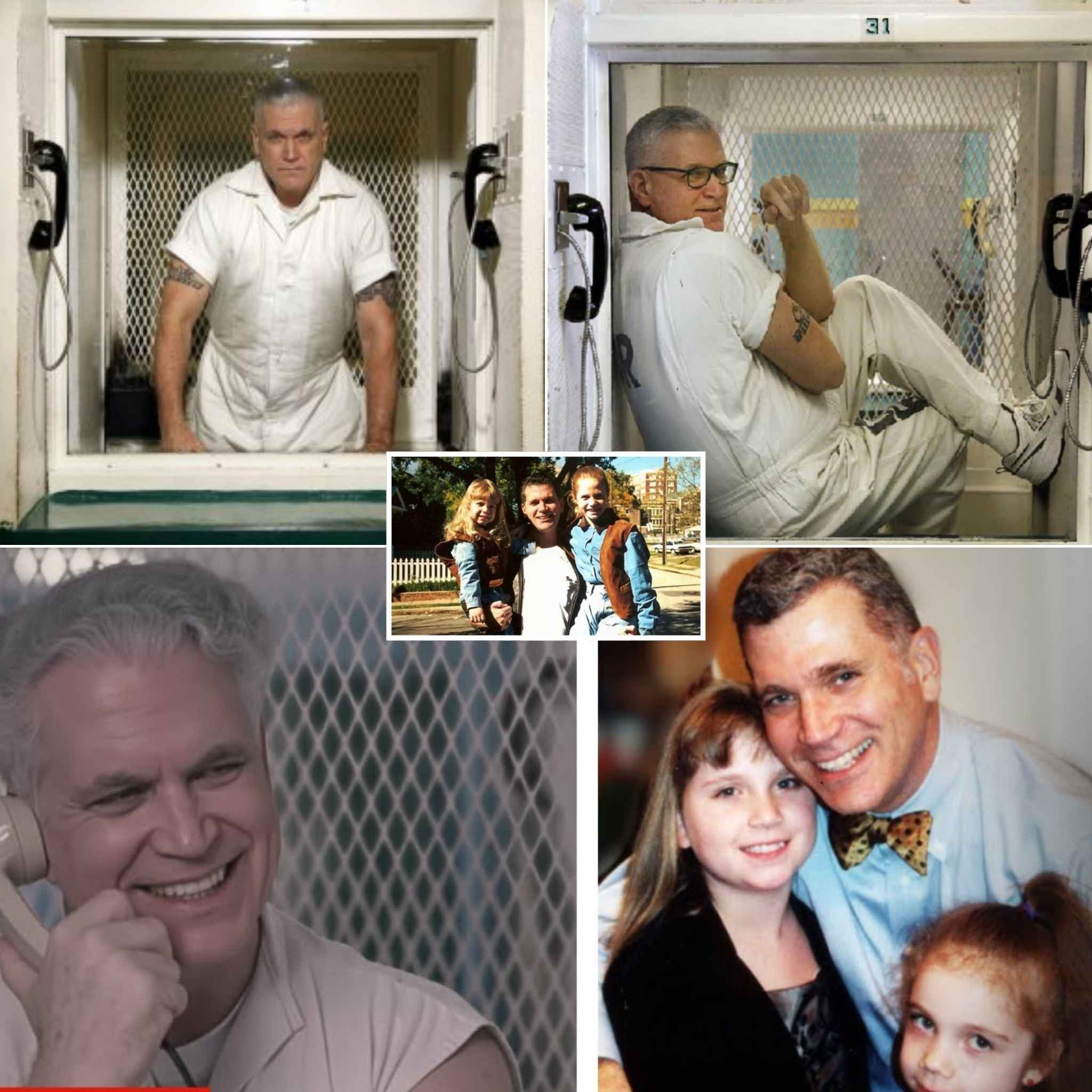
Battaglia’s path to death row was paved with a long history of domestic violence that escalated into the unthinkable. Born on August 2, 1955, on a military base in Enterprise, Alabama, he spent his childhood moving frequently, eventually settling in Dumont, New Jersey, and later attending Fairleigh Dickinson University. After a youthful drug arrest, he joined the Marines, rising to sergeant before leaving to become a certified public accountant in Dallas. To the outside world, he was a respected professional, a charming husband, and a devoted father to three daughters. But behind closed doors, a monster lurked.
His first wife, Michelle Getty, endured physical abuse for two years, culminating in a vicious attack outside their daughter’s school where Battaglia broke her nose. He pleaded guilty to misdemeanor assault in 1987, receiving probation. Undeterred, he remarried in 1991 to Mary Jean Pearl, with whom he had Faith and Liberty. For nearly a decade, he subjected Mary Jean to relentless verbal abuse and manipulation, while maintaining an affectionate facade with his children. In January 1999, Mary Jean separated from him, but the violence did not stop.
On Christmas Eve 1999, Battaglia brutally attacked Mary Jean in front of all three girls, punching her 20 times and leaving her covered in cuts and bruises. She filed for divorce and obtained a restraining order, but Battaglia repeatedly violated it, leaving threatening messages on her answering machine. On May 2, 2001, he learned an arrest warrant had been issued for violating his probation. Yet that same afternoon, he picked up Faith and Liberty for a scheduled visitation.
 Instead of taking them to dinner, Battaglia drove straight to his Dallas loft. As Mary Jean grew alarmed and called, he put the phone on speaker. Faith, in an innocent voice, asked her mother, “Mom, why do you want Daddy to go to jail?” Then came the desperate plea: “No, Daddy. Please don’t. Don’t do it.” Seven gunshots echoed through the line. After the fusillade, Battaglia picked up the phone and coldly said, “Merry Christmas.” He then left a voicemail on his daughters’ bedroom answering machine: “Good night my little babies. You were very brave girls. I love you very much.”
Inside the apartment, Battaglia had forced the girls to call their mother while he loaded a .357 Magnum Colt Python revolver. Faith saw him pointing the gun and begged for her life. He shot her three times and Liberty five times. Then he went to a bar with his girlfriend and later to a tattoo parlor, where he had two red roses inked on his left arm in honor of his victims. Police arrested him at the tattoo shop after a brief struggle.
The capital murder trial began on April 22, 2002. Prosecutors presented a damning case, including the haunting phone call recording. The jury deliberated for just 19 minutes before finding Battaglia guilty. During sentencing, the defense argued bipolar disorder and narcissistic personality disorder, but the jury imposed the death penalty on April 30, 2002. Over the next 16 years, Battaglia exhausted appeals, even filing a last-minute stay in 2016 that was granted hours before his scheduled execution due to mental competency questions. But by 2017, the courts had ruled against him.

Throughout his years on death row, Battaglia showed no remorse. He mocked the murders, telling other inmates that the girls were not his biological children, only his legal ones. “I didn’t kill my daughters because they weren’t my biological daughters,” he said. “They were my legal daughters. I guess that’s a distinction.” His behavior remained disturbingly cavalier right up to the end.
On the day of his execution, Battaglia woke at 7:00 a.m. and requested a final meal of fried chicken, mashed potatoes with gravy, green beans, corn, and cornbread. He remained in good spirits, according to prison officials, as the clock ticked toward the 6:00 p.m. scheduled time. But last-minute appeals to the U.S. Supreme Court delayed the process by more than three hours. Finally, after 9:00 p.m., he was led into the execution chamber.
 As he was strapped to the gurney, Battaglia initially said he had no final words. Then he spotted Mary Jean Pearl among the witnesses. A smirk spread across his face. “Well, hi, Mary Jean. I’ll see y’all later. Bye.” He turned to the guard and said, “Go ahead, please.” At 9:18 p.m., the lethal injection of pentobarbital began. Battaglia closed his eyes, looked upward, then opened them again, lifted his head, and laughed. “Am I still alive?” He then said, “Oh, I feel it.” He exhaled twice, began snoring, and stopped moving. The official time of death was 9:40 p.m.
After the execution, Mary Jean Pearl stepped away from the viewing window in tears, saying, “I’ve seen enough of him.” She returned to witness the doctor pronounce him dead. For the families of Faith and Liberty, the closure was bittersweet. Many viewed Battaglia’s execution as justice served, but others questioned whether his mental health history should have spared him the death penalty. There is no possible excuse for what he did to his own daughters, the prosecution had argued, and the jury agreed.
The case of John David Battaglia remains one of the most disturbing in the annals of Texas capital punishment. His final mockery, his laughter, and his utter lack of remorse ensure that the memory of Faith and Liberty’s last moments will haunt all who heard their desperate pleas. The system may have ended his life, but the scars he inflicted endure.