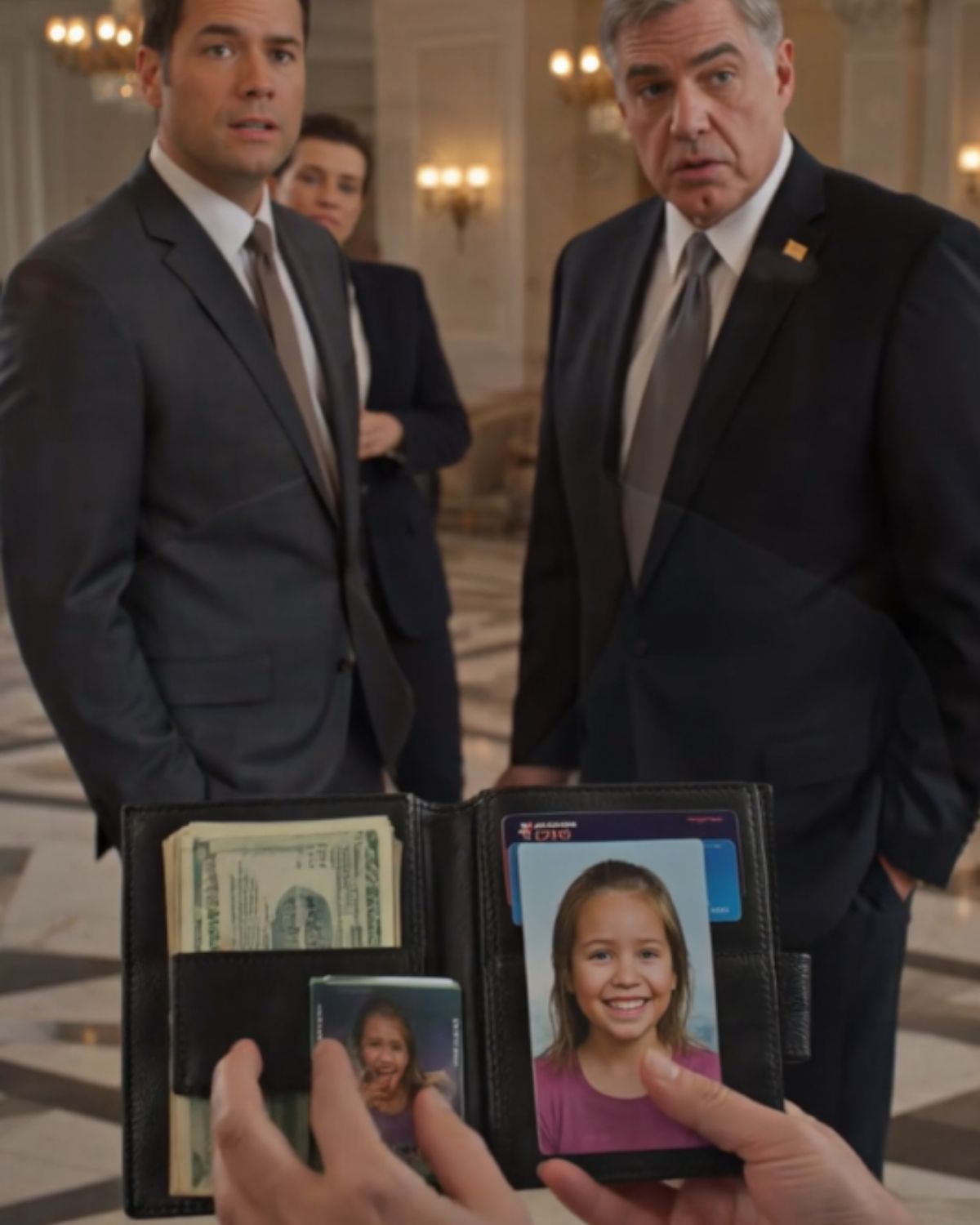
The Presidential Suite at the Meridian Grand Hotel always looked different after wealthy guests left.
Before they arrived, it looked perfect.
White marble floors. Tall windows overlooking the skyline. A king-size bed dressed in Egyptian cotton. Gold-trimmed lamps. Fresh orchids beside the private bar. Champagne chilled in a silver bucket. A dining table set for people who could order anything without checking the price.
After they left, it looked human.
A half-empty glass near the sofa.
Towel marks on the bathroom floor.
A chair pushed back from the desk.
Luggage tracks across the carpet.
One forgotten cufflink beneath the nightstand.
Two champagne glasses with lipstick on one rim and fingerprints on the other.
That morning, Elena Morales stood near the door with her cleaning cart, looking at the suite the way most guests never did.
Not as luxury.
As work.
Elena was thirty-four years old, a hotel housekeeper, and the kind of employee people praised only when she was invisible. She arrived before sunrise, tied her hair into a tight bun, changed into a simple gray uniform, and cleaned rooms most guests would never imagine cleaning themselves.
She knew how to remove red wine from white fabric.
She knew which guests left coins for tips and which left nothing but complaints.
She knew how to make a bed so smooth a manager could run a hand across it and find no wrinkle.
She also knew that people often revealed themselves by what they left behind.
Some left perfume bottles almost full.
Some left receipts from expensive dinners.
Some left children’s drawings folded into books.
Some left rooms so destroyed that Elena wondered how anyone could sleep peacefully inside such carelessness.
The guest in the Presidential Suite had checked out early.
His name was Robert Langford, according to the room sheet. Business executive. VIP guest. Three nights. Private security. No disturbance requested. High importance.
Elena had not met him.
People in suites like this rarely met cleaners unless something was wrong.
She put on gloves, opened the curtains, and let pale morning light fill the room.
The city below was already moving.
Cars streamed between buildings. Office windows glittered. People hurried along sidewalks, each carrying worries no one else could see.
Elena took a breath, then started.
She stripped the bed first.
Checked the pillows.
Checked beneath the sheets.
Checked inside the drawers.
That was policy.
Guests forgot things all the time: chargers, watches, passports, medicine, envelopes, rings, toys, documents, and once, a wedding dress still hanging in the closet.
Every item had to be reported.
Every item had to be logged.
Every item had to be handled properly.
Elena believed in that rule more than most people did.
Not because she feared getting fired.
Because she had once lost something no one returned.
Years earlier, when she first moved to the city, her mother gave her a small gold cross on a thin chain. It was not expensive. The gold had faded. The clasp was weak. But her mother had worn it through twenty years of cleaning houses, raising children, and praying over bills that did not know mercy.
Elena lost it on a bus after a double shift.
She went to the depot three times.
Nobody had turned it in.
The cross was not worth much money.
That was why losing it hurt more.
Whoever found it had probably looked at it and decided it was too small to matter.
Elena never forgot that feeling.
Now, whenever she found something in a guest room, she imagined someone searching pockets, opening bags, retracing steps, hoping the world had not swallowed one more piece of them.
She cleaned the bathroom.
Collected the towels.
Emptied the bins.
Wiped the marble sinks until they shone.
Then she moved to the seating area near the windows.
There was a black leather sofa facing the skyline. A glass coffee table stood in front of it, still holding two newspapers and a room service receipt. Elena collected the papers, checked between the cushions, and bent down to vacuum near the base.
That was when she saw it.
Something black half-hidden under the sofa.
At first, she thought it was a phone case.
She knelt and reached carefully beneath the edge.
Her fingers closed around soft leather.
A wallet.
Black.
Heavy.
Expensive.
Elena sat back on her heels.
For a moment, the room was completely quiet except for the low hum of the air conditioning.
She looked toward the door.
No one there.
She looked at the wallet again.
Then she opened it slightly, just enough to identify the owner.
Cash.
A thick stack of hundred-dollar bills.
Credit cards.
A platinum membership card.
Several business cards with embossed lettering.
A driver’s license.
And tucked behind the license, a small photograph.
A young girl, maybe eight or nine, sitting on a man’s shoulders at the beach. Her hair was flying in the wind. She was laughing with her whole face, one hand holding a blue kite string. The man beneath her was younger than the ID photo, smiling like someone who did not yet know life could divide itself into before and after.
Elena froze.
The money was the first thing anyone would notice.
But the photograph was the thing someone would miss.
She whispered, “Someone will be looking for this.”
She closed the wallet immediately.
Then she stood.
For a second, she felt the weight of it in her hand.
It was more cash than she made in weeks.
Maybe more than a month after rent, bus fare, groceries, school supplies for her younger brother, and the medication she sent her father every other paycheck.
She thought of her own fridge at home.
Half a carton of eggs.
Rice.
Beans.
A jar of instant coffee.
She thought of the notice from the landlord folded inside her kitchen drawer.
She thought of her sister’s message from the night before:
Can you help with Mateo’s school shoes? I’ll pay you back next month.
Money like this could solve things.
Not forever.
But long enough to breathe.
She held the wallet tighter.
Then she saw the little girl’s face again in her mind.
And the old ache of her mother’s lost cross returned.
Elena placed the wallet against her chest for one second.
Not as temptation.
As responsibility.
Then she walked out of the Presidential Suite.
The hallway outside was quiet and wide, carpeted in deep blue, lined with gold-framed mirrors and silent doors. Her cleaning cart waited beside the wall.
She locked the suite door and pushed the cart toward the service elevator.
On the way down, she kept one hand over the pocket of her uniform where the wallet rested. Not because she wanted to keep it. Because she was afraid someone might see it and misunderstand before she had the chance to do the right thing.
The service elevator opened near the housekeeping floor.
The housekeeping room smelled of laundry detergent, steam, and coffee. Staff moved in and out, folding sheets, restocking carts, and checking room assignments pinned to a board.
Her coworker, Mia, looked up from a stack of towels.
“You finished 1201 already?”
“Almost.”
Elena closed the door behind her and took out the wallet.
Mia’s eyes widened.
“Where did you find that?”
“Under the sofa in the Presidential Suite.”
Mia stepped closer.
“Is that Mr. Langford’s?”
“I think so.”
Elena opened it just enough to show the ID.
Mia looked inside and inhaled sharply.
“Elena.”
“I know.”
“That’s more money than we make in a month.”
Two other housekeepers looked over.
The room seemed to shrink.
Elena closed the wallet again.
“It isn’t ours.”
Mia lowered her voice.
“I’m not saying take it.”
Elena looked at her.
Mia’s face flushed.
“I’m not. I just mean…”
She stopped.
Everyone in that room understood what she meant.
People who cleaned luxury rooms learned to live beside impossible comparisons.
A guest spent more on one bottle of wine than they paid for electricity.
A forgotten scarf cost more than a week of groceries.
A suite could sit empty for a night while employees took buses home to crowded apartments.
The unfairness was not imaginary.
But neither was the choice.
Elena placed the wallet on a clean towel.
“We log it now.”
A younger housekeeper named Priya whispered, “What if the manager says there was less money in it?”
That was not paranoia.
That was experience.
Elena nodded.
“Then we do it properly. Witnesses. Security. Lost and found record. CCTV.”
Mia looked at her with respect now.
“You want me to come?”
“Yes.”
Elena picked up the wallet again.
“Please.”
They walked together through the service corridor toward the main reception area.
The transition from back-of-house to front-of-house always felt like crossing an invisible border.
Behind the scenes, people sweated, lifted, scrubbed, repaired, cooked, sorted, carried, and cleaned.
In front, everything appeared effortless.
The lobby opened before them, grand and golden.
Marble floors.
Tall floral arrangements.
Elegant guests.
Receptionists in tailored uniforms.
Bellboys standing beside polished luggage carts.
A pianist playing near the lounge.
Elena felt several eyes on her as she approached the front desk in her gray housekeeping uniform.
She was used to that.
Some guests looked through her.
Some looked at her only when they needed something removed.
Some staff from other departments treated housekeeping as if dirt transferred socially.
At the reception desk, the front desk manager, Colin Price, was speaking to a guest in a navy suit.
“One moment, sir,” he said smoothly.
Then he turned to Elena with less warmth.
“Yes?”
Elena placed the wallet on the counter.
“This was left in the Presidential Suite. Under the sofa. It appears to belong to Mr. Robert Langford. Please log it properly.”
Colin’s eyes dropped to the wallet.
Then to Elena.
“Did you open it?”
“Only enough to confirm identification.”
His brow lifted.
Mia stepped forward.
“She brought it directly from housekeeping. I witnessed it.”
Colin looked mildly annoyed by the interruption.
“I’ll handle it.”
Elena did not move.
“I’d like the lost item form completed while I’m here.”
Colin’s expression tightened.
“Elena, I said I’ll handle it.”
She held his gaze.
“I’m responsible for reporting where I found it and when. I’d like the record to be accurate.”
The receptionist beside Colin looked uncomfortable.
Mia crossed her arms.
Colin exhaled through his nose and opened the lost and found system.
“Fine. Room?”
“1201. Presidential Suite.”
“Time found?”
“9:42 a.m.”
“Found by?”
“Elena Morales, housekeeping.”
“Item?”
“Black leather wallet containing ID, cards, business cards, cash, and a family photograph.”
Colin looked up.
“You counted the cash?”
“No.”
He paused.
“Then how do you know there’s cash?”
“I saw it when I checked for ID.”
He typed.
Elena watched every word appear on the screen.
“Please add that the wallet was intact when handed over.”
Colin gave a thin smile.
“You’re very thorough today.”
Elena’s voice stayed calm.
“I’m thorough every day. People notice only when something valuable is involved.”
The receptionist lowered her eyes to hide a small smile.
Colin clicked save.
“I’ll send it to security.”
“I’ll walk with it to security,” Elena said.
Colin stared.
“That isn’t necessary.”
“It is for me.”
For a moment, there was silence at the desk.
Then Colin picked up the wallet and walked around the counter.
“Fine.”
They went to the security office near the side hallway.
Inside, the room was small, cool, and lined with camera monitors showing different parts of the hotel: lobby, elevators, corridors, loading dock, bar entrance, service hallway.
A security supervisor named Denise Carter sat at the main desk.
She looked up.
“What’s this?”
Colin placed the wallet on the desk.
“Lost item from 1201. Housekeeping found it.”
Elena stepped forward.
“I found it under the sofa after checkout. I opened it only to identify the owner, then brought it down with Mia as witness.”
Denise looked at her.
Unlike Colin, she listened.
“Good. We’ll seal it.”
She put on gloves, opened the wallet carefully, confirmed the ID, and placed it inside a tamper-evident property bag.
She did not count the cash in open view.
She documented the visible contents and sealed the bag.
Then she turned to a monitor.
“Let’s pull hallway footage.”
Colin shifted.
“Is that necessary?”
Denise looked at him.
“For a Presidential Suite guest’s wallet? Yes.”
She rewound the footage from the twelfth-floor corridor.
They watched Elena exit Room 1201 at 9:48, lock the door, keep her hand near her uniform pocket, and go directly to the service elevator. Another camera showed her entering the housekeeping room. A third showed her leaving with Mia. A fourth showed them approaching reception.
Denise nodded.
“Immediate report confirmed.”
Elena exhaled quietly.
She had not realized she was holding tension in her shoulders until it loosened.
Denise printed a receipt and handed it to her.
“Keep this. It confirms you found and reported it.”
Elena accepted it.
“Thank you.”
Colin glanced at the paper as if the whole thing had become unnecessarily official.
Denise noticed.
“Proper procedure protects everyone,” she said.
Colin said nothing.
Elena returned to work.
The Presidential Suite still needed finishing.
She changed the linens, polished the glass table, replaced the towels, removed the champagne glasses, and vacuumed under the sofa again just in case anything else had been left behind.
But her mind stayed on the photograph.
The little girl on the man’s shoulders.
The blue kite.
The smile.
By noon, the suite looked perfect again.
As if no one had ever lived there.
That was the strange thing about hotel rooms.
They swallowed evidence of people so the next guests could feel like the first.
But some things were not meant to be swallowed.
At 1:13 p.m., Robert Langford rushed into the lobby.
He did not look like the calm executive who had checked out that morning.
His tie was loosened. His coat was unbuttoned. His face was pale with panic. A driver followed him, carrying a phone and trying to keep up.
The hotel owner, Marcus Whitmore, had just entered from the conference wing when he saw him.
Marcus was in his late fifties, composed, respected, and rarely surprised in his own lobby.
But he had known Robert Langford for years.
He immediately recognized fear.
“Robert?”
Robert turned.
“Marcus. My wallet.”
Marcus stepped closer.
“What happened?”
“I left it here. I think in the suite. I’ve checked the car, the airport lounge, my briefcase, everything.”
Marcus looked toward reception.
“We’ll check lost and found.”
Robert gripped his arm.
“It’s not the money.”
His voice broke slightly.
Marcus’s expression changed.
“What was in it?”
Robert swallowed hard.
“My daughter’s photo. The beach one.”
Marcus went still.
He knew.
Everyone close to Robert knew.
Robert’s daughter, Sophie, had died three years earlier after a sudden illness no money had been able to outrun. She was nine years old. The photograph in his wallet was the last picture taken before she got sick.
Robert carried it everywhere.
Not because he had no other photos.
He had thousands.
But that one had been in his wallet on the day of her diagnosis, the day of the first hospital stay, the day she asked if he would still carry it when she was “too big for shoulders.”
She never became too big.
Robert looked toward the desk, desperate now.
“I can replace the cards. I can replace the cash. I can replace every document in that wallet. But not that photo.”
Marcus turned immediately to Colin at reception.
“Lost and found. Robert Langford. Black wallet.”
Colin straightened.
“Yes, sir. It was turned in this morning.”
Robert’s whole body seemed to stop.
“It was?”
“Yes, sir.”
“Is the photo there?”
Colin hesitated, then picked up the phone.
“I’ll have security bring it.”
Marcus looked at him.
“Now.”
Within two minutes, Denise from security entered the lobby carrying the sealed property bag.
Elena was behind her.
Not because she had been summoned for praise.
Because Denise had found her in the service hallway and said, “You should be there when this is returned. You did this correctly.”
Elena had tried to refuse.
“I’m working.”
“This matters too,” Denise said.
Now Elena stood near the edge of the lobby in her housekeeping uniform, hands folded in front of her, trying not to draw attention.
Robert saw only the property bag at first.
Denise placed it on the counter.
“Mr. Langford, we confirmed this wallet was found in the Presidential Suite and reported immediately by housekeeping.”
Robert opened the sealed bag with trembling hands.
He checked the license.
The cards.
He barely glanced at the cash.
Then his fingers moved to the photo pocket.
He pulled out the small family picture.
The lobby seemed to quiet around him.
Robert stared at Sophie’s face.
The blue kite.
The wind.
The smile.
His eyes filled instantly.
He pressed the photo to his mouth and closed his eyes.
Marcus looked away for a moment, giving his friend privacy.
Colin stood very still behind the desk.
The receptionist beside him looked like she might cry.
Robert whispered, “Thank God.”
Then he looked up.
“Who found this?”
Denise turned slightly.
“Elena Morales. Housekeeping.”
Every eye moved toward Elena.
She wished, briefly, that the floor would open.
She was more comfortable cleaning rooms than standing in the center of a luxury lobby while wealthy guests stared.
Robert walked toward her.
Not fast.
Not grandly.
Carefully.
As if approaching someone who had held part of his heart without knowing it.
“You found it?”
Elena nodded.
“Yes, sir. Under the sofa.”
“And you turned it in?”
“Yes, sir.”
“Everything was inside?”
“I only checked for identification. Security sealed it.”
Robert held the photo in one hand and the wallet in the other.
His voice shook.
“You didn’t just return my wallet.”
He looked down at Sophie’s picture.
“You returned something I can never replace.”
Elena’s throat tightened.
“I’m glad it was still there.”
Robert looked at her hands.
Hands that had cleaned rooms all morning.
Hands that could have taken cash nobody might have traced immediately.
Hands that had instead carried his grief safely through hotel procedure.
He held the wallet against his chest.
“Thank you.”
Elena gave a small nod.
“You’re welcome.”
Robert stepped closer and took both her hands in his.
Not in a showy way.
In gratitude.
Elena froze at first, unused to guests touching her hands unless they were handing over trash, towels, or complaints.
But Robert held them gently.
“My daughter’s name was Sophie,” he said.
Elena’s eyes softened.
“She looks very happy in the photo.”
Robert smiled through tears.
“She was.”
For once, the past tense did not close the conversation.
It opened it.
He continued, “She loved hotels. Not fancy things. Elevators. Tiny soaps. Breakfast buffets. She thought room keys were magic.”
A small laugh moved through his tears.
Elena smiled too.
“My little brother used to collect hotel pens when he was a child. He thought they were free treasures.”
Robert laughed quietly.
Then his face grew serious again.
“You protected my treasure today.”
Elena could not answer.
Marcus Whitmore had been watching from a few feet away.
He knew the hotel business well enough to know that the most important people in the building were often treated like the least visible.
Housekeepers found lost passports before flights.
Engineers prevented disasters guests never knew almost happened.
Dishwashers kept banquets moving.
Security guards handled problems politely enough that guests never noticed.
And cleaners like Elena carried the reputation of the hotel in quiet choices made behind closed doors.
Marcus turned to Denise.
“How exactly was this handled?”
Denise answered clearly.
“Found in Room 1201 at 9:42 a.m. by Elena Morales. She opened it only to identify the owner. Brought it to housekeeping. Asked for a witness. Delivered it to reception. Requested proper logging. Brought it to security. CCTV confirms immediate reporting. Wallet sealed and stored.”
Marcus looked at Elena.
“You asked for a witness?”
“Yes, sir.”
“Why?”
Elena hesitated.
The honest answer might sound disrespectful.
Marcus saw her hesitation.
“Please,” he said. “Tell me the truth.”
She looked down, then back up.
“Because when something valuable is found, people don’t always protect the person who found it. I wanted the wallet protected. And I wanted myself protected too.”
The lobby went silent again, differently this time.
Marcus absorbed the answer.
Colin shifted behind the desk.
Denise’s expression suggested she already knew.
Marcus looked toward reception.
“Was she treated with respect when she reported it?”
No one answered immediately.
That was answer enough.
Elena quickly said, “The item was logged.”
Marcus turned back to her.
“That is not what I asked.”
Colin cleared his throat.
“Mr. Whitmore, I followed procedure.”
Denise spoke before Marcus could.
“Elena had to insist on procedure.”
Marcus looked at Colin.
The front desk manager’s polished confidence cracked.
“I didn’t refuse,” he said.
“No,” Marcus replied. “You underestimated her.”
Colin’s face reddened.
Marcus did not raise his voice.
“Elena handled a high-value lost item with more professionalism than some managers handle a guest complaint.”
Several staff members looked down.
Elena’s face grew warm.
She did not want anyone fired because of her.
She only wanted to finish her shift and catch the 4:30 bus.
But Marcus was not done.
He turned to Robert.
“You were here this morning for the executive hospitality panel.”
Robert nodded, still holding Sophie’s photo.
Marcus looked back at Elena.
“The panel was about trust in luxury service. We spent two hours discussing technology, guest loyalty, private client experience, and brand reputation.”
His mouth tightened slightly.
“Meanwhile, the clearest example of trust in this hotel was happening under a sofa.”
Elena did not know where to look.
Marcus continued, “How long have you worked here?”
“Six years.”
“Six years?”
“Yes, sir.”
“What was your position before housekeeping?”
“I started in laundry. Then rooms. Sometimes deep-clean rotation.”
“Have you applied for other roles?”
Elena hesitated.
“Yes.”
Marcus waited.
“Guest services assistant. Twice. And lost and found coordinator once.”
“What happened?”
“I was told I didn’t have front-facing experience.”
The irony sat heavily in the lobby.
Robert looked at Marcus.
Marcus looked at Colin.
Colin’s face had gone pale.
Elena added quietly, “It’s all right.”
Marcus turned back to her.
“No, it isn’t.”
She looked startled.
He softened his voice.
“Do you know what guest relations requires?”
She did not answer.
Marcus said, “Discretion. Judgment. Calm under pressure. Respect for personal belongings. Proper documentation. Emotional intelligence. The ability to understand that what looks small to one person may mean everything to another.”
He glanced at Sophie’s photo in Robert’s hand.
“Today, you demonstrated all of that.”
Elena’s eyes filled, but she blinked quickly.
Marcus continued.
“Honesty like yours belongs in guest relations, not hidden behind closed doors.”
The words hit her harder than she expected.
Not because housekeeping was shameful.
It was honest work.
Hard work.
Necessary work.
But for years, Elena had felt the ceiling above her. Invisible, low, and always explained politely.
You’re excellent where you are.
We need reliable people in housekeeping.
Maybe next time.
You don’t have the right background.
And now the owner of the hotel was saying what no one in management had ever said out loud:
Her character qualified her for more.
Marcus looked toward Denise.
“We have a guest integrity and recovery desk opening next month, correct?”
Denise nodded.
“Yes. Lost items, VIP follow-up, guest issue resolution.”
Marcus looked at Elena.
“I’d like you to interview for it.”
Elena stared at him.
“Interview?”
“Yes. Properly. With training, salary increase, and a real transition plan if you choose it.”
“If I choose it?”
Marcus smiled slightly.
“You returned a wallet full of cash. I assume you can be trusted with a choice.”
A soft laugh moved through the lobby.
Elena’s tears finally fell.
She wiped them quickly, embarrassed.
“I don’t have office clothes.”
Robert smiled gently.
“That is the easiest problem in this building.”
Marcus nodded.
“We’ll handle professional wardrobe support as part of the transition, if you accept the role.”
Elena shook her head slightly, overwhelmed.
“I don’t want special treatment.”
Marcus’s expression became serious.
“This is not special treatment. This is long-overdue recognition.”
Behind the reception desk, the young receptionist began clapping softly.
One bellboy joined.
Then Mia, who had come from housekeeping and stood near the corridor watching with both hands over her mouth.
Denise clapped next.
Soon, the applause spread quietly across the lobby.
Not loud.
Not theatrical.
Respectful.
Elena stood in her gray uniform, in the same marble lobby she usually crossed quickly so guests would not notice her, and felt seen in a way that made her both proud and afraid.
Robert still held her hands.
“Whatever position you take,” he said, “please never lose what made you return this.”
Elena looked at Sophie’s photo.
“I know what it feels like to lose something that matters.”
Robert nodded, understanding more than she had said.
Later that afternoon, Marcus asked Elena, Mia, Denise, Colin, and the HR director to meet in the small conference room behind the lobby.
Elena almost did not sit at the table.
She was used to standing in rooms like that, waiting to be instructed.
Denise pulled out a chair beside her.
“Sit.”
Elena sat.
Colin looked uncomfortable across from her.
Marcus began.
“This morning revealed two things,” he said. “First, Elena’s integrity. Second, a failure in how this hotel recognizes talent.”
The HR director opened a folder.
Marcus raised one hand.
“Before forms, I want to hear from Elena.”
Everyone turned to her.
Elena swallowed.
“What would you like me to say?”
“The truth,” Marcus said. “What happens when housekeepers report valuable lost items?”
She looked at Mia.
Mia nodded slightly.
Elena took a breath.
“It depends on who is working.”
Marcus waited.
“Some managers are careful. Some are not. Sometimes items are logged immediately. Sometimes we are told to leave them at the desk and go back to work. Sometimes guests accuse housekeeping first if something is missing, even before checking whether they misplaced it.”
Colin looked down.
Elena continued.
“Most housekeepers are honest. Very honest. We know what it means to work hard for little. But we are often treated like suspects before we are treated like employees.”
The room grew quiet.
Marcus’s face tightened.
“Go on.”
Elena’s voice gained steadiness.
“Training says report everything. But the system does not always protect the person reporting. There should be a clear chain. Witness. log. seal. security receipt. Not because we are untrustworthy. Because good systems protect honest people.”
Denise nodded firmly.
“She’s right.”
Marcus looked at Colin.
The front desk manager swallowed.
“I should have logged it immediately without making her insist.”
“Yes,” Marcus said. “You should have.”
Colin looked at Elena.
“I’m sorry.”
Elena held his gaze.
His apology was awkward, but real.
“I accept,” she said. “But please don’t do that to the next person.”
Colin nodded.
“I won’t.”
Marcus turned to HR.
“Create a revised lost property process by Friday. Housekeeping must be included in drafting it.”
The HR director nodded.
“Elena,” Marcus said, “if you are willing, I’d like you to help design the training.”
Her eyes widened.
“Me?”
“You understand the weak points better than the people who wrote the current policy.”
Mia smiled.
Elena looked at the table.
Then nodded.
“I can help.”
The interview happened two weeks later.
Not as a performance.
Not as a reward ceremony.
A real interview.
Elena wore a navy blazer borrowed from Mia’s cousin, a white blouse, and her best black shoes. She had spent the night before practicing answers in front of the bathroom mirror while her little brother Mateo sat on the floor and asked questions like, “What are your greatest strengths?” in a terrible British accent.
She was nervous.
More nervous than she had expected.
Marcus did not interview her alone. That would have made the decision look like charity. The panel included HR, Denise from security, the guest relations director, and one housekeeping supervisor.
Elena answered carefully at first.
Then the guest relations director asked, “How would you handle a guest who is angry because something sentimental was lost?”
Elena paused.
Then she said, “I would not start with policy.”
The director leaned forward.
“What would you start with?”
“With the item.”
“Explain.”
Elena folded her hands.
“If someone says they lost a watch, maybe it is just expensive. But maybe it belonged to their father. If someone loses a scarf, maybe it is designer. Or maybe it still smells like the person who gave it to them. Guests don’t always say the emotional part first. They are too upset or embarrassed. So I would ask clear questions, act quickly, and let them know we understand the item matters before we talk about forms.”
Denise smiled.
The guest relations director wrote something down.
Elena continued.
“And I would keep housekeeping informed. They find most things. They should not be treated like invisible hands.”
The housekeeping supervisor’s eyes softened.
The job offer came the next day.
Guest Integrity Coordinator.
Lost property, sensitive guest follow-up, internal documentation, liaison between housekeeping, security, and front desk.
Training included.
Salary increase included.
Uniform allowance included.
Elena read the offer letter three times before believing it.
When she told her father over the phone, he went quiet.
“Papa?”
“I’m here,” he said.
“You didn’t answer.”
“I’m trying not to cry at the pharmacy counter.”
She laughed and cried at the same time.
Mateo made a sign from notebook paper and taped it to the kitchen wall:
CONGRATULATIONS ELENA
PROFESSIONAL WALLET HERO
She told him to take it down.
She left it up for three days.
Her first month in guest relations was hard.
She had to learn new software, guest communication scripts, escalation procedures, privacy policies, and how to speak in meetings where people used phrases like “service recovery pathway” when they meant “fix the problem without making it worse.”
Some staff were kind.
Some were not.
A few front desk employees treated her promotion like a lucky accident.
One whispered, “Find one rich man’s wallet and suddenly you’re management.”
Elena heard it.
She said nothing at first.
Then later, when the same employee misplaced a guest’s medical cooler in the luggage room and panic spread through the desk, Elena stepped in.
“What is inside?” she asked.
The guest’s husband answered, shaking. “Insulin.”
Elena moved immediately.
“Time sensitive?”
“Yes.”
She turned to the bell captain.
“Check cold storage and luggage overflow. Denise, pull the camera at the west entrance. Colin, call the driver and confirm what was unloaded.”
Everyone moved.
The cooler was found in eight minutes, placed mistakenly behind floral delivery boxes.
The guest cried with relief.
The employee who had mocked Elena found her later.
“I’m sorry,” she said quietly.
Elena nodded.
“Learn the system. It protects people.”
“I will.”
Slowly, the hotel changed.
Lost items were logged better.
Housekeepers received receipts immediately.
Security reviewed high-value items without making employees feel accused.
Guest relations began asking about sentimental value, not only dollar value.
A grandmother’s ring was found in a laundry fold and returned before checkout.
A child’s stuffed rabbit was overnighted to another state with a handwritten note.
A businessman’s passport was located behind a safe minutes before his airport departure.
Every time something was returned properly, Elena thought of the black wallet.
The photo.
The little girl with the kite.
Three months after the incident, Robert Langford returned to the Meridian Grand.
This time, he did not stay in the Presidential Suite.
He asked for a quiet room on the ninth floor.
Before checking out, he requested to see Elena.
She met him in the lobby, now wearing a dark guest relations blazer with her name tag:
ELENA MORALES
Guest Integrity Coordinator
Robert smiled when he saw it.
“It suits you.”
She smiled back.
“Thank you.”
He held out a small envelope.
Elena’s expression changed.
“Mr. Langford, I can’t accept—”
“It isn’t cash.”
She hesitated.
He handed it to her.
Inside was a photograph.
A copy of the beach picture.
Sophie on his shoulders, laughing, holding the blue kite.
On the back, he had written:
For Elena, who understood that some things are priceless.
Elena stared at it.
Her throat tightened.
“I don’t know what to say.”
“You already said it when you returned her to me.”
Robert looked toward the lobby windows.
“I started carrying the original less after that day. Not because it matters less. Because I realized I was terrified that if I lost the photo, I would lose her again.”
Elena listened.
He continued.
“But grief does not live in paper. The photo helps me remember. It does not hold all of her.”
Elena nodded slowly.
Thinking of her mother’s cross.
Robert looked back at her.
“I had the original professionally preserved. I keep it at home now. And I carry a copy in the wallet.”
“That sounds safer.”
“It is.”
He smiled faintly.
“And I still check under every sofa before I leave a room.”
Elena laughed.
“So do I.”
They stood together in the lobby, two people connected by an object that had carried money, memory, grief, and opportunity in the same black leather cover.
Before Robert left, he took both her hands again.
This time, she did not freeze.
“Thank you, Elena.”
“You’re welcome.”
After he left, Marcus approached from the side corridor.
“You’re doing well.”
Elena looked at the photograph in her hand.
“I’m learning.”
“So are we.”
She looked up.
He meant the hotel.
And maybe himself.
A year later, the Meridian Grand used Elena’s revised lost property system as a training model across all its hotels.
Not with her face on a poster.
She refused that.
But she agreed to record a staff training video from the housekeeping room where the story began.
In the video, she stood beside a cleaning cart, wearing her guest relations blazer.
She looked into the camera and said:
“When we find something in a room, we are not just handling property. We may be handling someone’s passport, someone’s medicine, someone’s wedding ring, someone’s last photograph, someone’s only copy of a document, someone’s memory. Our job is not only to return things. Our job is to protect trust.”
The video was shown to housekeeping, front desk, security, and management teams.
New employees remembered her line.
Protect trust.
Elena still visited housekeeping every morning.
Not because she had to.
Because she knew where the real eyes of the hotel were.
Mia would wave a towel at her and say, “Look who came down from guest relations.”
Elena would answer, “I came to see the people who actually run the building.”
The housekeepers liked that.
Because it was true.
On the anniversary of the day she found the wallet, Elena stayed late to help train new staff.
Afterward, she walked through the Presidential Suite alone.
It had just been cleaned.
The city skyline glowed beyond the windows.
The sofa was in the same place.
The marble floor shone.
Fresh champagne glasses waited near the bar for guests who would arrive later and likely never know the story of what had happened there.
Elena knelt and checked beneath the sofa out of habit.
Nothing.
She smiled.
Then she stood and looked around the room.
A year earlier, she had been a tired cleaner holding a wallet full of money that could have solved many immediate problems.
She had not become rich overnight.
No one had handed her a mansion.
No fairy tale door had opened and erased the hard parts of life.
Her rent still came due.
Her father still needed medicine.
Mateo still outgrew his shoes faster than anyone believed possible.
But something real had changed.
Her integrity had been seen.
Her voice had been heard.
And the hotel had become slightly better because one cleaner refused to treat honesty as invisible labor.
Downstairs, near the lobby, Marcus was speaking with Colin, Denise, and the guest relations team when Elena arrived.
Colin had changed too.
Not perfectly.
But noticeably.
He now logged lost items without being asked. He credited housekeeping by name. He caught himself before making assumptions. And once, when a guest accused a cleaner without evidence, Colin said firmly, “We will investigate properly. We do not accuse employees to ease panic.”
Elena had heard about that.
She respected him more for the change than she would have for a flawless apology.
Marcus turned when he saw her.
“Good timing.”
“For what?”
He nodded toward the staff gathered near the reception desk.
Mia was there.
So was Denise.
Several housekeepers.
Bellboys.
Receptionists.
The HR director.
Elena looked suspicious.
“What is this?”
Marcus smiled.
“Not a promotion. Don’t worry.”
Mia grinned.
“We knew you’d panic.”
Marcus held up a small framed certificate.
“We’re creating an annual Integrity in Service Award. Not for the person who gets the most guest compliments. Not for the person who sells the most upgrades. For the person whose quiet decision protects the dignity of the guest, the staff, or the hotel.”
Elena’s eyes widened.
Marcus continued.
“The first one belongs to you.”
She shook her head immediately.
“No, Mr. Whitmore, I don’t need—”
“I know,” he said. “That is why it matters.”
He handed her the frame.
It read:
ELENA MORALES
For protecting trust when no one was watching.
The lobby staff applauded softly.
The sound was not huge.
Not cinematic.
Not the kind of applause that changes the world in one second.
But it reached the part of Elena that had spent years believing hard work only mattered when something went wrong.
Mia hugged her first.
Then Denise.
Even Colin shook her hand with real respect.
Elena looked at the certificate, then at the people around her.
“I didn’t do anything extraordinary,” she said quietly.
Marcus shook his head.
“That’s where you’re wrong.”
Robert Langford had sent flowers that morning with a note.
Marcus handed it to her.
Elena opened it.
Sophie believed room keys were magic. Thank you for proving honesty is too.
Elena pressed the note gently against the certificate.
That evening, when she returned home, she placed the award on the kitchen shelf beside Mateo’s school photo, her father’s old watch, and a tiny framed picture of her mother.
Then she took out Robert’s photo of Sophie and placed it in a small envelope in the drawer where she kept important things.
Not because it belonged to her like property.
Because it reminded her that doing the right thing could carry someone else’s heart safely back to them.
And sometimes, in ways you never expect, it could carry your own life forward too.
Years later, guests at the Meridian Grand would still lose things.
Wallets.
Rings.
Passports.
Toys.
Letters.
Photos.
And because of a cleaner named Elena Morales, every lost item was treated like it might be priceless to someone.
People would tell the story simply:
A housekeeper found a wallet full of cash in the Presidential Suite and returned it.
But the real story was deeper than that.
A woman who was often unseen chose integrity when no one stood over her shoulder.
A grieving father recovered a photograph he thought he had lost forever.
A hotel owner realized character is not always found in the most visible roles.
A manager learned that procedure without respect is not professionalism.
And a workplace changed because one honest person insisted the right thing be done properly.
Elena did not become powerful because she found a wallet.
She became recognized because the wallet revealed what had been true about her all along.
That is the quiet power of honesty.
It may not make you rich overnight.
It may not remove every struggle.
But it builds something money cannot buy.
Trust.
And when trust finally opens the right door, it can change not only one life, but the way an entire room sees the person who was there all along.