
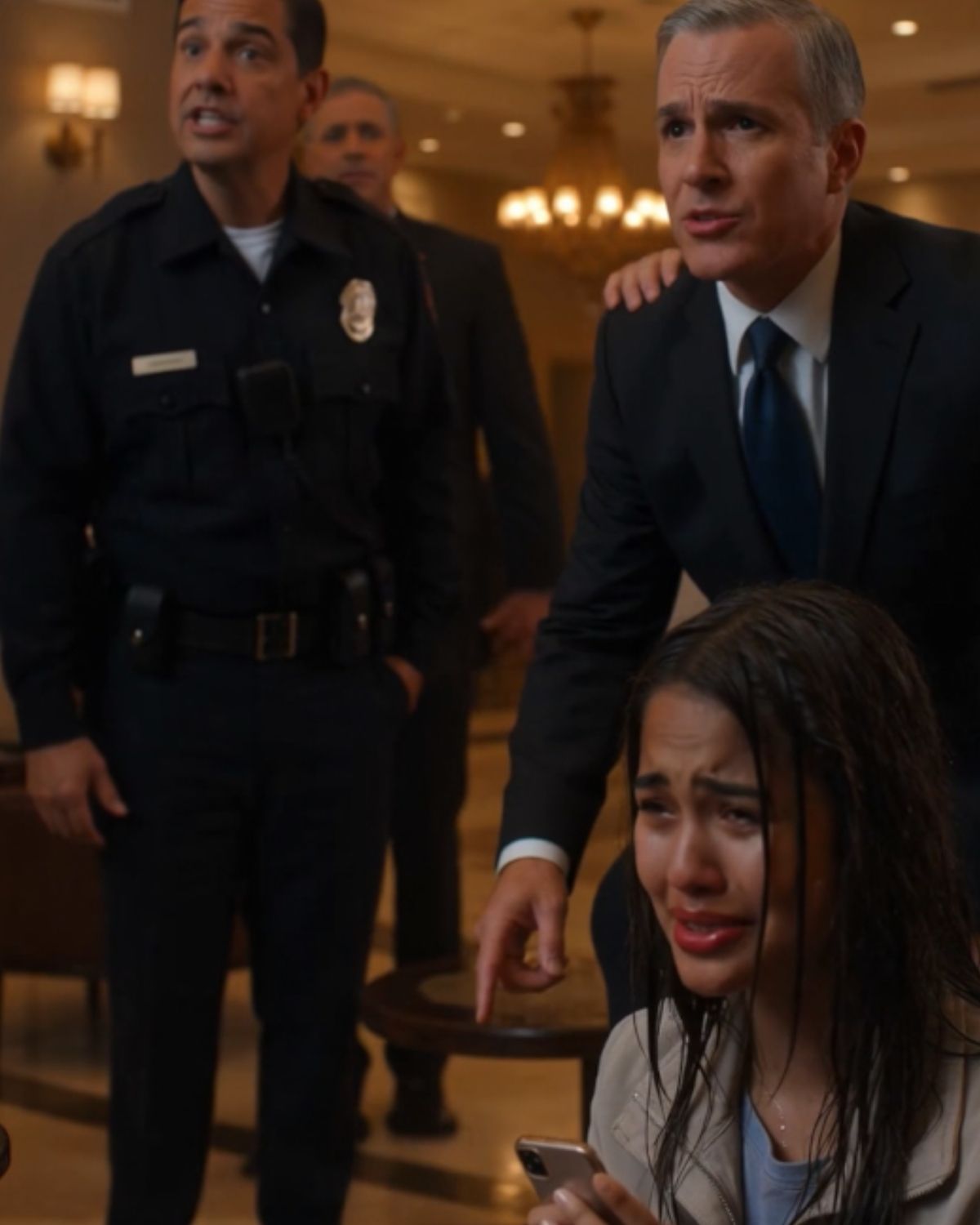
 A night guard was accused of breaking hotel policy because he let a crying woman sit inside during a storm.
It was midnight at the Valmere Hotel, and the rain was falling so hard the empty street looked silver under the lamps.
Inside, the lobby glowed with warm golden light. The marble floor was polished. The flowers on the front desk were fresh. Everything looked calm.
Then Daniel Cole, the night security guard, noticed a woman standing outside the glass doors.
She was young, soaked from the rain, and holding her phone with trembling hands. She kept looking down the street, then back at her screen.
Daniel watched for a few seconds.
Something was wrong.
He walked outside, stopping a few steps away so he would not frighten her.
“Miss, are you alright?”
She wiped her tears with her sleeve.
“I just need somewhere safe to wait for my taxi.”
Daniel looked at the dark street behind her. Then he opened the hotel door.
“You can wait here until your ride arrives.”
Inside the lobby, he gave her a seat near the front desk, under the camera, where staff could see her. He offered her water and asked reception to call a licensed taxi.
He did not take her upstairs. He did not ignore procedure. He simply moved a frightened person out of the rain and into a visible, safe area.
A few minutes later, the night manager, Mr. Harris, walked into the lobby.
His eyes went straight to the woman.
“Why is she inside?” he asked sharply. “She isn’t a guest.”
Daniel stood calmly.
“She was scared and needed help.”
Mr. Harris frowned.
“You may have broken hotel policy.”
The woman lowered her head, embarrassed.
Daniel said nothing more. He knew he might get written up.
Then a security supervisor entered from the hallway.
“Mr. Harris,” he said quietly, “you need to see the CCTV.”
In the dark monitoring room, the footage played on the screen.
It showed the woman walking quickly through the rain.
Behind her, a man followed.
When she stopped at the hotel entrance, he stopped too.
He stood near the edge of the light, watching her.
When Daniel walked outside and brought her in, the man turned away and disappeared down the street.
The room went silent.
Mr. Harris stared at the screen.
His face changed from anger to shock, then to shame.
No one needed to explain what might have happened.
Back in the lobby, the hotel director arrived and reviewed the footage again.
Then he turned to Daniel in front of the staff.
“He made the correct decision.”
The woman stood up, still holding the bottle of water.
“Thank you,” she said softly. “Thank you for believing something was wrong.”
Daniel only nodded.
“I’m glad you’re safe.”
A week later, the same CCTV clip played during a hotel leadership meeting.
Daniel received formal recognition for following safety judgment under pressure. His name was added to the internal training case for guest protection, and he was promoted into a supervisor development program.
Mr. Harris stood in the back of the room, silent.
The final frame on the screen showed Daniel opening the door in the rain.
Not as a hero.
Just as a person who noticed fear and chose kindness before rules could become an excuse.
Sometimes the difference between danger and safety is one person willing to say, “You can wait here.”


