Chapter One: The Toast
My father stood before dessert and tapped his butter knife against a glass of red wine.
The sound cut through the private dining room like a small alarm.
Every conversation around the long oak table softened. Forks paused. My mother straightened in her chair. My brother Dylan leaned back with the easy smile of a man who already knew the toast was for him.
Outside the restaurant windows, San Diego burned gold beneath the evening sun. The marina glittered beyond the glass, all polished decks and white sails and expensive people laughing over seafood towers. Inside, the Tate family occupied a room with leather chairs, brass lamps, and framed photographs of naval ships that made the place feel patriotic in the way rich restaurants liked to be patriotic—clean, quiet, and far away from blood.
My father lifted his glass.
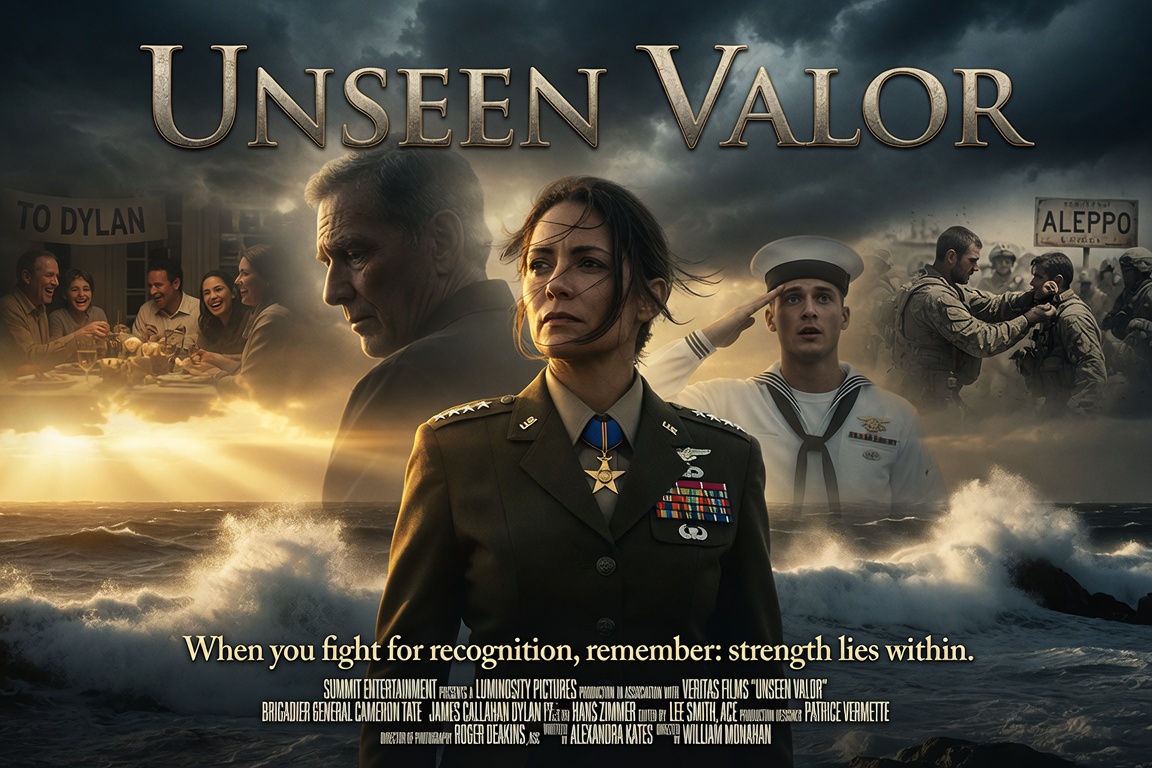
“To Dylan,” he said.
My brother looked down, pretending embarrassment.
“To the first real soldier in this family.”
The table erupted.
My aunt clapped first. My uncle whistled. A cousin shouted, “Hooyah!” though he had never served a day in anything except a golf club committee. My mother pressed one hand over her heart, eyes shining as if Dylan had already saved the nation twice before appetizers.
I kept my hands folded in my lap.
My father saw me across the table and smiled the way men smile when they believe they are being generous.
“No offense, Cameron.”
The laughter grew softer, but it did not stop.
Dylan lifted his glass toward me. “Come on, Cam. You know what Dad means.”
I looked at my wine. My mother had poured everyone else nearly to the rim. Mine sat at the bottom of the glass, a dark red inch catching the light.
“You have work tomorrow,” she had said when she poured it. “Don’t you?”
Something like that.
My father continued, warming to the room.
“When Dylan was a boy, he never backed down from anything. Not the ocean. Not football. Not a fight.” His thick fingers tightened around the glass. “And now tomorrow, my son graduates with the toughest men in the United States Navy.”
My mother reached for Dylan’s wrist and squeezed.
Across the table, Dylan’s fiancée, Marissa, smiled like she had practiced it in a mirror. Blonde hair, diamond earrings, posture perfect. Her hand rested on Dylan’s arm, claiming both the man and the future attached to him.
“And Cameron,” my father added, turning the toast toward me with the blunt mercy of a hammer, “we’re proud of you too. Government work is steady work.”
A few smiles bent downward.
My cousin Brandon hid his laugh in his napkin.
I lifted my glass.
The wine smelled expensive. Dry. Sharp. Beneath it, my mind supplied another smell: burned hydraulic fluid inside a transport bay, hot metal under rotor wash, desert dust packed into the back of my throat.
Forty-three men had come home breathing because I had refused to leave them buried in a valley no one was supposed to enter.
At the end, my headset had gone dead in one ear. Blood had run beneath my collar. A nineteen-year-old corpsman had gripped my sleeve and said, “Ma’am, please tell me this bird is real.”
I had told him, “Look at me. Don’t look at the fire.”
Now my father raised a toast to the first real soldier in the family.
I touched the glass to my lips.
Didn’t drink.
“To Dylan,” I said.
My brother grinned. “Thanks, office lady.”
The table laughed again.
Not cruelly, maybe. That was the part people never understood. A knife did not have to hate you to cut.
My mother leaned toward me after the toast, her perfume soft and floral, covering the butter, wine, and grilled fish.
“You look tired, sweetheart.”
“I’m fine.”
“You should have worn the blue dress I sent. This one is a little…” Her eyes moved over my gray blazer, white blouse, plain black slacks. “Severe.”
Dylan reached for the bread basket. “That’s Cam. Pentagon chic.”
“I don’t work at the Pentagon anymore,” I said.
That should have ended it.
Instead, my father laughed once. “Same thing. A desk is a desk.”
I placed my glass down so gently the stem made no sound.
At the far end of the room, the waiter opened the door.
Cold air slipped in from the hallway.
With it came a man in a navy blazer.
He did not belong to our party. Early forties, clean-shaven, hair cut short but not freshly, shoulders too square for a civilian. He paused just inside the doorway as if looking for someone.
Then his eyes found mine.
Only for a second.
Enough.
The room blurred around him. My aunt asking for more lemon. Dylan laughing at something Brandon said. My mother adjusting the silver bracelet she wore only when she wanted people to notice she had good taste.
The man in the blazer gave no signal. No nod. No expression.
But his right hand brushed the pocket of his jacket twice.
My pulse did not change.
I had spent half my adult life making sure my pulse never changed when it should have.
He turned away and stepped back into the hallway.
I excused myself before my mother could ask where I was going.
The corridor outside the private room was dim, lined with dark wood and old nautical maps. From the main dining area came the clean music of money: glasses chiming, soft laughter, servers speaking low. The man in the blazer was already near the restrooms.
I followed without hurrying.
He stopped beside a framed black-and-white photograph of sailors standing on a deck in 1944.
“You shouldn’t have come alone,” he said.
His voice was quiet.
I stood two arm lengths away. “I came for my brother’s graduation.”
“No, Colonel. You didn’t.”
The title landed between us.
Not loud. Not dramatic.
Still, it changed the hallway.
Behind the closed door, my family laughed at something. My father’s voice rose above the rest, proud and booming.
The man reached into his pocket.
I shifted my weight half an inch.
He noticed. Smart enough not to smile.
Slowly, with two fingers, he removed a small bronze challenge coin and held it out flat on his palm.
One side carried the insignia of Dylan’s training command.
The other side had been scratched with three words.
VALE KNOWS EVERYTHING.
The hallway seemed to narrow.
Commander Grant Vale.
Dylan’s mentor. Guest speaker tomorrow. Decorated officer. Rising star. The man my father had spent all week calling “the kind of warrior America needs.”
I looked from the coin to the stranger’s face.
“Who sent you?”
He glanced toward the private room.
“Someone who wants your brother alive long enough to graduate.”
A server rounded the corner carrying a tray of champagne flutes. The stranger stepped away, slipped into the passing noise, and disappeared toward the main exit.
I did not follow.
Not because I lost him.
Because when I turned the coin over again, I saw something dried into the grooves near the edge.
Not dirt.
Blood.
Chapter Two: The Suitcase
My mother was telling a story about Dylan at twelve when I returned.
“He came home with a black eye,” she said, laughing already, “and Robert asked him if he won.”
My father pointed his fork at the table. “And he said, ‘No, sir. But I didn’t quit.’”
Everyone loved that story.
They had loved it so much they forgot the part where I was the one who walked Dylan home, holding a frozen bag of peas against his face while he cried and begged me not to tell Dad he had been scared.
Dylan looked at me as I sat down.
“You okay?”
For a moment, the boy with the black eye flickered behind the man with the new SEAL haircut.
Then Brandon leaned over and said something about “office emergencies,” and Dylan’s smile came back.
“I’m fine,” I said.
The coin was in my closed fist beneath the table.
Its edge pressed a half-moon into my palm.
My father ordered another bottle of wine. My mother asked Marissa about wedding venues. Dylan told a clean version of training, all mud and teamwork, none of the parts that left men staring at drains too long.
I listened.
People reveal more when they think you are not important.
Commander Vale’s name came up four times.
Each time, Dylan’s posture changed. Chin higher. Shoulders set. A son reacting to a father he had chosen.
“He pushed us hard,” Dylan said. “But he knew who could handle it.”
My father nodded. “That’s leadership.”
My mother smiled. “He told me Dylan had natural command presence.”
“Did he?” I asked.
The table paused.
Dylan glanced over. “Yeah. Why?”
I turned the stem of my glass between two fingers. “Just wondering how well you know him.”
My father’s eyebrows drew together. “Cameron.”
One word. Warning, correction, disappointment. He could still fit all three into my name.
Dylan’s smile thinned. “I know him well enough.”
Marissa looked between us. “Commander Vale has been very kind to Dylan.”
Kind.
I thought of the coin. The blood in the grooves. The words carved by a shaking hand or a dying one.
“Kind men usually are,” I said.
Dylan gave a short laugh. “What’s that supposed to mean?”
“Nothing.”
“No, say it.”
My mother’s hand landed lightly on the table. “Let’s not do this tonight.”
My father leaned back. “Your brother has earned one evening without your attitude.”
There it was.
My attitude.
Not the years of silence. Not the missed birthdays because I was in rooms without windows, listening to men decide which lives were worth risking. Not the scar under my ribs that still tightened before rain. Not the folded flag I had delivered to a widow because the chaplain’s voice broke.
My attitude.
I looked at Dylan.
His jaw was set. His eyes were bright with wine and old rivalry.
“You’re right,” I said. “Tomorrow is his day.”
My mother smiled with relief.
Dylan did not.
He knew me better than they did, even after all these years. He heard what I had not said.
After dinner, in the parking lot, the marine air had turned cold. Fog pressed low over the harbor. Valets ran between cars beneath yellow lamps, their breath faint in the light.
My father hugged Dylan hard.
“Proud of you, son.”
“Thanks, Dad.”
My mother kissed Marissa’s cheek. Brandon wanted a group picture. Everyone gathered beneath the restaurant sign.
“Cameron,” my mother called. “Come stand beside your brother.”
I stepped into the frame.
Dylan put an arm around my shoulders. To anyone else, it might have looked affectionate.
His fingers tightened once.
“What are you doing?” he murmured.
I smiled for the camera. “Trying to get through dessert.”
“You asked about Vale.”
The flash went off.
“So?”
Another photo.
Dylan’s voice dropped. “Don’t embarrass me tomorrow.”
I turned my head slightly.
For the first time all night, he looked unsure.
Not angry.
Afraid.
The camera flashed again.
“I would never embarrass you,” I said.
His grip loosened.
“But I won’t lie for you either.”
Before he could answer, my mother rushed forward to inspect the photos.
“Oh, Cameron,” she said, frowning at the screen. “Couldn’t you smile normally?”
Back at the hotel, I locked the door, placed the bloody coin on the desk, and opened my suitcase.
The gray blazer came off first.
Then the blouse.
Then the woman my family knew disappeared piece by piece.
Beneath the folded civilian clothes lay my dress blues, pressed sharp enough to cut paper. Ribbons aligned. Medals secured. Nameplate polished.
TATE.
Not office lady.
Not steady government work.
Not the daughter who almost counted.
I unzipped the hidden compartment and removed the file.
CLASSIFIED//JOINT TASK FORCE RAVEN
The pages smelled faintly of paper, toner, and locked rooms.
Photographs slid beneath my fingers.
A burned convoy.
A shattered satellite phone.
A weapons crate that should never have been near an American extraction site.
Then the personnel appendix.
Commander Grant Vale.
Multiple redactions.
Two missing after-action reports.
And near the bottom, under “unwitting logistical transfer,” one name I had stared at for three months, hoping the evidence would change.
Petty Officer Candidate Dylan Robert Tate.
My brother.
I sat on the edge of the bed.
Outside, an ambulance wailed somewhere in the city, rising and falling until it became part of the ocean wind.
My phone vibrated once.
Unknown number.
No text.
Just a photograph.
Dylan, taken from across the hotel lobby minutes ago.
He stood at the elevator with Marissa, laughing, one hand in his pocket.
Behind him, half hidden by a marble column, Commander Grant Vale watched him.
A second message appeared.
Bring the coin tomorrow, Colonel.
Then a third.
Or your brother takes the fall.
Chapter Three: The Favorite Son
Sleep came in fragments.
A helicopter door. My father’s toast. Dylan at seven, standing barefoot in the driveway with blood on his lip. Commander Vale’s face in a file photograph, smiling beside an admiral.
At 0400, I stopped pretending.
The hotel room was dark except for the thin blue line of dawn pushing through the curtains. I sat at the desk with coffee gone cold beside my hand and the coin beneath a reading lamp.
Blood in the grooves.
Not enough for a full sample without destroying the surface.
Enough to confirm someone had carried it after injury.
I photographed both sides, uploaded them through an encrypted channel, and waited.
My reflection in the black laptop screen looked like a stranger. Hair pulled tight. Eyes hollowed by fluorescent nights. A small pale scar cutting through my left eyebrow from a safehouse window that had not been safe.
My mother once told me scars made women look hardened.
She said it while touching the place above my brow with the kind of sadness usually reserved for stained furniture.
The secure reply came at 0447.
COIN MATCHES TRAINING COMMAND. SERIAL TRACE: ISSUED TO CDR G. VALE. BLOOD ANALYSIS PENDING FROM IMAGE INSUFFICIENT. PROCEED WITH CAUTION. GEN. ELLERY ARRIVES 1100.
I closed the laptop.
General Marcus Ellery never arrived early unless something had already gone wrong.
By 0630, my mother was calling.
I let it ring twice.
“Cameron,” she said when I answered, “please tell me you’re awake.”
“I’m awake.”
“You sounded tired last night.”
“I was.”
A pause. Fabric rustled. She was dressing, probably standing before a hotel mirror, choosing earrings that looked modest but weren’t.
“I want today to be good for Dylan.”
“So do I.”
“Your father gets carried away.”
The apology was so small it could hide under a fingernail.
I said nothing.
My mother exhaled. “He didn’t mean to hurt you.”
That was the family prayer.
He didn’t mean it.
She’s sensitive.
Dylan’s day.
Let it go.
On the desk, the coin caught the light.
“Mom.”
“Yes?”
“Did Commander Vale ever visit the house?”
Silence.
Not confusion.
Calculation.
“When would he have done that?”
“That’s what I’m asking.”
“Well, there was the barbecue last summer. You couldn’t come.”
I had been in a field hospital outside Izmir, holding pressure on an interpreter’s neck while a surgeon searched for a pulse.
“What did he talk about?”
“Dylan, mostly. Training. Opportunities.” Her voice brightened, relieved by safe ground. “Your father liked him immediately.”
“I’m sure he did.”
“He asked about you too.”
My hand stilled.
“What did he ask?”
“Oh, just polite things. Where you worked. Whether you were still in Washington.” A drawer shut on her end. “I told him you had a desk job. Nothing sensitive.”
The blue dawn outside the window seemed to lose temperature.
“Did Dad tell him anything?”
“Cameron, your father doesn’t know anything.”
That part was true.
My father knew stories, not facts. He knew I missed holidays. He knew I had a government badge once. He knew I stopped sending photos after my thirtieth birthday.
He did not know I had commanded operations from rooms where no one used last names.
He did not know generals lowered their voices when they entered my office.
He did not know because I had chosen his ignorance.
And now someone else had used it.
“Why are you asking all this?” my mother said.
I looked at my dress blues hanging on the closet door.
“Just making conversation.”
She softened. “Wear something nice today, sweetheart. There will be pictures.”
“I will.”
“And Cameron?”
“Yes?”
“Please don’t make your brother feel small.”
The line clicked dead a moment later.
I stared at the phone.
Then, slowly, I laughed once.
No sound came out.
At 0830, I arrived at the naval base in civilian clothes.
Gray slacks. White blouse. Sunglasses. Hair pinned low. The uniform stayed in a garment bag across my arm.
The sky was hard blue. The kind of blue that made every flag look brighter. Families moved toward the ceremony grounds in clusters, carrying flowers, cameras, balloons, children on hips. The air smelled of sunscreen, salt, cut grass, and jet fuel drifting from somewhere beyond the hangars.
Loudspeakers crackled.
A brass band warmed up in uneven bursts.
Men in dress whites crossed the pavement with practiced purpose. Mothers cried before anything had happened. Fathers stood taller than usual. Little boys pointed at sailors as if they were superheroes.
I found my family near the reserved seating area.
My father wore his old police dress jacket, though no one had asked him to. The brass buttons strained slightly across his stomach. My mother wore navy blue and pearls. Marissa held a bouquet wrapped in white ribbon.
Dylan stood with his class near the staging area, shaved, polished, transformed by uniform and distance.
My mother saw the garment bag.
“Oh good,” she said. “You brought a dress.”
“Something like that.”
My father looked at my visitor badge. “You got through security fast.”
“Yes.”
“How?”
“I showed ID.”
He smirked. “Government office has perks.”
Before I could answer, applause rose near the main platform.
Commander Grant Vale had arrived.
He moved through the crowd like a man accustomed to people making space for him. Tall, composed, silver at the temples, uniform immaculate. His smile was warm enough for parents, firm enough for recruits, humble enough for cameras.
Dylan saw him and straightened.
Vale clasped his shoulder.
From twenty yards away, I watched my brother become younger.
“Proud of you,” Vale said.
Dylan nodded once, hard. “Thank you, sir.”
Vale turned.
His eyes passed over the crowd.
Past my father.
Past my mother.
Then they found me.
Nothing changed in his face.
That was how I knew he was good.
He crossed the grass toward us.
“Captain Tate,” he said to my father.
My father nearly glowed. “Commander. Honor to see you again.”
“No, sir. The honor is mine.” Vale shook his hand with both of his. “You raised a fine son.”
My mother looked ready to frame the sentence.
Vale turned to me.
“Ms. Tate.”
Not Colonel.
Not ma’am.
Ms.
He offered his hand.
I took it.
His grip was dry, controlled.
“Commander,” I said.
For one heartbeat, his thumb pressed against the inside of my wrist.
A warning.
Or a test.
His smile did not move. “I hope you enjoy the ceremony.”
“I expect it will be memorable.”
A flicker. Gone fast.
My father looked between us. “You two know each other?”
Vale released my hand.
“Only by reputation.”
My mother laughed lightly. “Cameron? She works behind a desk.”
Vale looked at me.
“I imagine she’s very good at it.”
The loudspeaker cracked again.
Families began moving toward seats.
Vale stepped closer as my parents turned away.
His voice dropped beneath the band’s first clean note.
“Walk away after the ceremony. Let Dylan have his future.”
I did not look at him.
“And the dead?”
His smile stayed in place for the crowd.
“Heroes die every day, Colonel. Countries survive because adults know which truths to bury.”
He walked toward the platform before I could answer.
My father called from the aisle.
“Cameron, come on. Don’t stand there like security.”
I followed my family to their seats.
The garment bag felt heavier now.
Chapter Four: The Ceremony Begins
Heat rose from the pavement in silver waves.
By midmorning, the stands were packed. White folding chairs filled the grass. Flags snapped in the wind. The band played with bright precision, brass notes flashing over the crowd like sunlight on water.
The graduates marched in formation.
Boots struck pavement.
One sound.
One body.
One story polished for the public.
Families stood. Cameras rose. My mother pressed a tissue under each eye before the first speech even began.
Dylan marched in the second row.
His gaze stayed forward, but when he passed our section, his eyes cut sideways.
Looking for approval.
My father gave him a sharp nod.
Dylan’s face hardened with pride.
I wondered when pride had become the only language the men in my family trusted.
The base commander spoke first. Then an admiral. Words like sacrifice, honor, brotherhood, resilience floated over the crowd. Good words. True words. Dangerous words when men like Vale learned to hide behind them.
Commander Vale took the podium last before the general’s arrival.
Applause rolled across the field.
He waited for it to settle.
Smart. Patient. Beautifully trained.
“Families,” he began, voice carrying without strain, “today you see the result of pain you did not witness.”
My mother gripped my father’s hand.
Vale continued. “You see clean uniforms. You see strong backs. You see men who survived a test designed to reveal what remains when comfort, pride, and fear are stripped away.”
He looked over the graduates.
“Some men discover courage. Some discover limits. The rarest discover duty.”
His eyes moved toward Dylan.
My brother stood taller.
Then Vale’s gaze touched me.
Only briefly.
“But duty is not always clean. It is not always understood. And sometimes, those who carry the greatest burden must do so without applause.”
A murmur of appreciation passed through the families.
My father whispered, “Damn fine speaker.”
I watched Vale’s hands on the podium.
No tremor.
No sweat.
No guilt.
That worried me more than guilt would have.
A movement near the rear gate drew my eye.
Two black SUVs rolled onto the field road.
Not part of the published schedule.
The lead vehicle stopped near the reviewing stand. A rear door opened. A Marine aide stepped out first, then another officer, then a tall man in dress uniform with four stars on each shoulder.
General Marcus Ellery.
The crowd shifted before they understood why.
Military personnel recognized him first.
Spines straightened.
Hands moved.
The admiral onstage stepped down quickly.
Vale turned from the podium.
For the first time all morning, his expression slipped.
Only a fraction.
Enough.
My mother leaned toward me. “Who is that?”
“Someone important,” my father murmured, irritated he did not already know.
General Ellery moved slowly, not because he was old, though he was near sixty, but because powerful men never need to hurry when everyone else will wait. His hair was close-cropped silver. His face carried deep lines and no wasted softness.
He shook the admiral’s hand.
Then the base commander’s.
Then he turned away from the platform.
The aide said something to him.
General Ellery ignored it.
He walked down the center aisle toward the family seating.
People rose as he passed, unsure whether they were supposed to. Cameras lifted again. The band stumbled, then stopped.
My father stood halfway, tugging his jacket straight.
Dylan’s formation remained rigid, but I saw his eyes widen.
General Ellery kept walking.
Not toward my father.
Not toward Dylan.
Toward me.
The air changed.
My mother’s fingers tightened around her purse.
“Cameron?” she whispered.
I rose.
The garment bag lay across my chair.
General Ellery stopped two feet in front of me.
For a moment, neither of us spoke.
I saw him as I had last seen him in another country, under red emergency lights, his sleeve torn, his voice rough through smoke.
Get them out, Tate.
I saw the forty-three names.
I saw the six who did not make it.
Then General Marcus Ellery, four-star commander, lifted his right hand and saluted me.
A gasp moved through the crowd.
My father froze.
My mother’s lips parted.
Dylan stared from formation as if the ground beneath him had opened.
I returned the salute.
General Ellery lowered his hand first.
“Colonel Tate,” he said, voice clear enough for three rows to hear. “I’m sorry to interrupt your brother’s ceremony.”
The silence became complete.
Even the flags seemed louder.
My father whispered, “Colonel?”
General Ellery did not look at him.
His eyes stayed on mine.
“We have a problem,” he said.
I looked past him.
Commander Vale stood near the podium, perfectly still.
His face had gone pale beneath the California sun.
General Ellery’s voice dropped.
“The leak wasn’t contained overseas.”
My hand closed around the back of the chair.
“Where is it now?”
The general looked toward the graduates.
Then, slowly, toward Dylan.
“Here.”
Chapter Five: The Rank Nobody Knew
For ten seconds, no one moved.
The ceremony field held its breath.
Then the sound returned all at once.
Whispers. Cameras clicking. A child asking too loudly why the important man saluted that lady. My mother saying my name under her breath as if testing whether it still belonged to me.
My father’s face had changed color.
Red first.
Then gray.
“Cameron,” he said. “What is he talking about?”
I did not answer him.
General Ellery’s aide stepped near my shoulder. “Ma’am, we have a secure room prepared.”
Ma’am.
My mother flinched at the word.
Dylan broke formation.
Only half a step, but enough for the instructor beside him to hiss his name.
He locked himself still again, eyes fixed on me.
Hurt. Confusion. Betrayal.
Not because I had lied.
Because I had outranked the story he needed to believe.
Commander Vale left the podium.
He approached with measured calm, but his right hand hung too close to his sidearm for a ceremony.
“General Ellery,” he said. “This is highly irregular.”
Ellery turned.
“Commander Vale.”
Two words.
No greeting inside them.
Vale smiled for the crowd. “With respect, sir, perhaps any operational matter should be handled away from families and graduates.”
“I agree.”
Vale’s shoulders eased.
Ellery continued, “That is why you will accompany us.”
The smile remained.
The eyes changed.
“Sir?”
“Now.”
My father stepped forward. “Hold on. What’s going on? My son is graduating today.”
General Ellery looked at him at last.
“And your daughter may be the reason he lives to remember it.”
My father’s mouth opened.
No words came.
I picked up the garment bag from my chair.
My mother caught my wrist.
Her hand was cold.
“Cameron,” she whispered. “Are you really…?”
Her eyes moved over my face like she was searching for the daughter she had misplaced years ago.
I gently removed her hand.
“Yes.”
It was the smallest truth I could give her.
And it wounded more than a speech.
General Ellery started toward the command building. I followed. Vale walked behind us, escorted now by two officers who looked casual only to civilians.
Halfway across the grass, Dylan’s voice cut through the murmurs.
“Cameron!”
I stopped.
He stood at the edge of formation, fists clenched at his sides.
“What did you do?”
The old question.
The family question.
Not what happened.
Not are you okay.
What did you do?
I looked at my brother in his perfect uniform, sunlight bright on his face, our parents sitting behind him with all their pride broken open.
“I came to protect you,” I said.
Dylan shook his head once, hard. “From who?”
Before I could answer, Commander Vale spoke behind me.
“From herself, Candidate Tate.”
The officers beside him stiffened.
Vale looked at Dylan with fatherly sorrow.
“Your sister has been under extreme pressure for a long time. Classified work takes a toll.”
There it was.
Not denial.
Not attack.
Concern.
The cleanest blade.
Dylan’s eyes flicked to me.
For one terrible second, I saw him want to believe Vale.
Because believing Vale meant his life still made sense.
General Ellery stepped between us.
“Commander,” he said quietly, “another word and I will have you restrained in front of every family on this field.”
Vale’s jaw tightened.
The crowd watched without understanding the shape of the war happening in plain sight.
I turned away first.
That cost me.
Dylan would think it was guilt.
Sometimes protecting someone looked exactly like abandoning them.
Inside the command building, the air-conditioning hit like winter. The walls smelled of floor polish, old coffee, and institutional paint. A young lieutenant opened a conference room and avoided looking at me too directly.
The secure room had no windows.
Good.
Windows were promises the outside world rarely kept.
General Ellery placed a tablet on the table. “At 0300, Naval Cyber Command flagged a transmission from a device registered to this base.”
Vale sat across from me. “This is absurd.”
No one asked him to sit.
He had done it anyway, claiming status by posture.
I remained standing.
Ellery tapped the screen.
A map appeared. San Diego. Base grid. Training command sector.
Then a file transfer path.
My stomach tightened.
The destination server was foreign.
The encryption signature matched the one from the Raven leak.
Vale leaned forward. “That could be spoofed.”
“It could,” I said.
His eyes shifted to me.
I pointed to the second line of code. “But the packet delay says local physical access before transmission. Someone plugged in.”
Ellery nodded once. “The originating device was recovered thirty minutes ago.”
He swiped again.
A photograph filled the screen.
A ruggedized training drive.
Black casing.
White label.
D. TATE.
The room became very quiet.
Vale’s voice softened. “General, with respect, this confirms my concern. Candidate Tate may have been compromised through family contact.”
I laughed.
Not loudly.
Vale looked offended.
“You think this is funny, Colonel?”
“No,” I said. “I think you rehearsed that.”
His pupils tightened.
General Ellery watched us both.
I placed the bloody coin on the table.
Vale’s expression did not change.
But his right thumb moved once against his ring finger.
There.
Recognition.
“This was delivered to me last night,” I said. “Your coin. Your warning. Someone bled to get it out.”
Vale looked at Ellery. “I lost that coin months ago.”
“Convenient,” I said.
“Accurate.”
“You warned me to walk away.”
“I advised you not to damage your brother’s career with paranoia.”
I leaned forward, palms flat on the table.
“Commander, I have heard men lie while bleeding, drowning, burning, praying, and begging for their mothers. You’re better than most.”
His smile disappeared.
“But not better than me.”
For the first time, anger showed.
Real anger.
There he was.
Not the mentor. Not the patriot. Not the polished officer families adored.
The man under the uniform.
“You have no idea what I protected,” he said.
General Ellery’s eyes sharpened.
I lowered my voice.
“Then show me.”
Vale caught himself.
Too late.
The room seemed to tilt toward that unfinished confession.
A knock struck the door.
The lieutenant entered, pale.
“General. There’s been an incident at the ceremony field.”
Ellery turned. “What kind of incident?”
The lieutenant swallowed.
“Candidate Dylan Tate is missing.”
Chapter Six: The Brother’s Shadow
My mother used to say Dylan hid like a dog with stolen food.
Under beds. Behind curtains. In the laundry room with a flashlight and comic books. He never ran far. He only wanted someone to come looking.
At twenty-eight, trained by the Navy, frightened by truth, and possibly carrying the weight of treason he did not understand, my brother could run farther.
Much farther.
General Ellery moved first.
“Lock down the base quietly,” he told the lieutenant. “No public alarm. No sirens unless we confirm threat.”
“Yes, sir.”
Vale stood. “I can help locate him. He trusts me.”
“No,” I said.
He turned to me. “This is not your call.”
“Actually,” Ellery said, “right now it is.”
Vale’s face hardened. “General, you are letting personal history cloud command judgment.”
Ellery stepped closer to him.
“I watched Colonel Tate hold an extraction line open while half a mountain came down around her. I watched her refuse evacuation until the last wounded man was loaded. If personal history clouds my judgment, Commander, it clouds it in her favor for good reason.”
Vale said nothing.
I was already at the door.
Ellery followed me into the hallway. “Where would he go?”
I thought of Dylan at twelve, hiding with a split lip.
Not far enough to be gone.
Far enough to be found by the right person.
“He wants answers,” I said. “But he won’t go to our parents. Not if he feels humiliated.”
“Vale?”
“He wants to trust Vale. That makes Vale dangerous.”
My phone buzzed.
Unknown number.
A video file.
I opened it.
Dylan appeared in shaky footage, standing in what looked like a storage corridor. His graduation uniform was still on, collar open, face flushed.
“Cam,” he said, breathing hard. “I don’t know what this is. Vale said you were investigating me. He said you think I betrayed my team.”
His eyes flicked off camera.
Someone else was there.
“I didn’t know what was on the drive. He told me it was training data. He told me to move it because the system was down.”
Dylan swallowed.
The boy came through again.
“Cam, I swear to God, I didn’t know.”
A voice spoke from off camera.
“Tell her where you are.”
Dylan looked at someone beyond the lens.
Then back.
His face changed.
Fear, this time.
Real fear.
The video cut off.
A text followed.
Bring the coin to Pier 6 storage. Alone.
Ellery read it over my shoulder.
“No.”
“Yes.”
“That is not a request, Colonel.”
“And this is not a kidnapping for ransom. He wants the coin. Or what’s inside it.”
Ellery’s eyes dropped to the bronze disk in my hand.
“The coin is just metal.”
“Maybe.”
I turned it between my fingers.
Issued to Vale. Scratched warning. Blood in the grooves.
Too obvious as a message.
Maybe not obvious enough as a container.
I held it near the hallway light.
There, along the rim, beneath the dried blood, a seam thinner than a hair.
I almost smiled.
“Not just metal.”
Ellery’s aide handed me a field knife without being asked.
I slid the blade into the seam and twisted.
The coin opened with a soft click.
Inside was a microSD card no larger than a fingernail.
General Ellery swore under his breath.
Vale had not wanted the coin because it accused him.
He wanted it because it could bury him.
Pier 6 sat beyond the main ceremony grounds, past maintenance sheds and a fenced access road where the public music faded into industrial noise. The air smelled of diesel, salt, wet rope, and sun-heated metal. Gulls screamed over the water like alarms no one respected.
I changed in a utility restroom near the admin wing.
Not into dress blues.
Into dark tactical slacks, flat boots, a navy windbreaker, and the shoulder holster from my garment bag.
The woman in the mirror looked less like my mother’s disappointment now.
More like the person enemies learned to fear too late.
Ellery’s team set a perimeter two hundred yards out. Quietly. No sirens. No heroics. Vale remained in custody inside the command building, though I doubted custody meant much if his network reached inside base systems.
“You have six minutes before my people breach,” Ellery said through my earpiece.
“Make it eight.”
“Five.”
“Seven.”
A pause.
“Six and a half.”
I walked alone toward the storage building.
The roll-up doors were half rusted, the concrete stained dark from years of water and oil. A chain-link fence rattled in the wind. Somewhere inside, a pipe knocked rhythmically.
I reached the side entrance.
The door was ajar.
Inside, the light came in strips through high dirty windows. Crates stacked in rows. Old equipment under tarps. The temperature dropped ten degrees.
“Dylan,” I called.
No answer.
I moved between crates, counting angles, exits, shadows.
A boot scraped concrete to my left.
I turned.
Dylan stepped out with his hands half raised.
“Don’t shoot.”
My chest tightened despite training.
His face was bruised near the cheekbone. Fresh.
“Who hit you?”
He looked ashamed. “Does that matter right now?”
“Yes.”
His mouth twisted. “Still giving orders.”
“Still breathing because of them.”
That landed.
He looked down.
“I didn’t know, Cam.”
“I know.”
His head snapped up. “You do?”
“If I thought you knowingly leaked classified material, you’d be in restraints.”
He almost laughed. It broke before becoming sound.
Behind him, metal shifted.
I raised my weapon.
A man emerged from the shadows.
Not Vale.
The stranger from the restaurant.
Navy blazer gone. White shirt stained dark at the side. One hand pressed to his ribs. The other held a pistol, pointed at the floor.
Dylan turned. “That’s the guy who grabbed me.”
“I didn’t grab you,” the man said through clenched teeth. “I stopped you from running to Vale.”
Blood slicked his fingers.
I kept my weapon steady. “Name.”
“Lieutenant Aaron Pike. Former logistics officer. Raven support cell.”
Missing from the appendix.
Presumed dead in an off-book convoy fire.
I stared at him.
“You’re supposed to be dead.”
He smiled weakly.
“Yeah. Vale keeps saying that.”
Then the storage lights went out.
Chapter Seven: The Crime Beneath the Flag
Darkness swallowed the room whole.
Dylan cursed.
I grabbed his sleeve and pulled him behind a stack of crates as the first shot cracked through the storage building.
Concrete spat near my shoulder.
Pike dropped hard, biting back a scream.
“Stay down,” I said.
Dylan crouched beside me, breathing too loud.
“Who’s shooting?”
“Someone who wants everyone confused.”
Another shot.
Closer.
Not wild. Controlled. Suppressed weapon, subsonic rounds, shooter moving from the east aisle.
Professional.
Dylan looked at my gun, then at my face.
For the first time in years, he did not see an office worker.
He saw the calm before violence.
His voice came out smaller. “What do I do?”
I handed him the microSD card.
His fingers closed around it.
“Do not lose this.”
“What is it?”
“The difference between a scandal and a funeral.”
Pike groaned. “Vale’s contractor. He used Navy channels to route weapons. Not just overseas. Domestic buyers too.”
Dylan stared. “What?”
“Your training drive moved access keys,” Pike said. “You were clean because you were useful. Young. Trusted. Eager.”
Dylan flinched.
Outside, distant voices shouted.
Ellery’s perimeter had heard the shots.
My earpiece crackled with static, then died.
Signal jammed.
The shooter fired again, forcing us lower.
I scanned the dark.
Shapes. Crates. Thin daylight at the edges of doors.
A shadow crossed one strip of light.
I fired once.
The shadow vanished.
Dylan’s eyes widened.
Not at the shot.
At me.
“Cam…”
“Later.”
Pike shoved a bloody hand into his pocket and pulled out a folded paper, sealed in plastic. “If I don’t walk out—”
“You will.”
“No.” His eyes hardened. “Listen. Vale isn’t the top. He used someone outside to move shipments through old law enforcement contacts. Local protection. Evidence lockers. Port access.”
My stomach went cold.
“Who?”
Pike looked at Dylan.
Then at me.
“Tate,” he said.
Dylan shook his head. “No.”
I did not speak.
Pike coughed. Blood touched his lips.
“Robert Tate signed off on security clearances for a donor foundation fifteen years ago. Maybe he didn’t know then. But someone used his credentials later.”
Dylan’s face drained.
“Dad?”
Another shot tore through the crate above us.
Wood splintered over my hair.
I moved.
Two shots toward the muzzle flash.
A grunt answered.
The shooter retreated.
I grabbed Dylan by the collar and pulled him toward the side aisle.
“Move.”
We ran low between crates.
Pike staggered behind us, one hand on the wall, leaving a dark trail.
The side exit was twenty feet away.
Then a voice came through the dark.
“Colonel Tate.”
Vale.
Not in custody anymore.
His voice echoed from the far aisle, amplified by metal and concrete.
“I told you truth was expensive.”
Dylan stopped so abruptly I nearly slammed into him.
“Vale?” he called.
I hissed, “Dylan, no.”
But my brother stepped half out from cover.
The old need in him was visible even in darkness.
The need for the mentor to explain.
For the hero to stay clean.
For the father he had chosen not to betray him.
Vale’s silhouette appeared beneath the high window, pistol in hand but lowered.
“Dylan,” he said gently. “You were never supposed to be hurt.”
Dylan’s voice shook. “You used me.”
“I protected you.”
“You made me carry stolen access keys.”
“I gave you a simple task. You completed it. That is not guilt.”
“That’s not innocence either,” I said.
Vale’s head turned toward me.
“No,” he said. “Innocence is a luxury for people who don’t understand power.”
He stepped into a strip of light.
His uniform was still immaculate.
Somehow that was the ugliest thing in the room.
“Do you know what happens if this becomes public?” he asked. “Foreign partners exposed. Intelligence channels burned. Careers destroyed. Families dragged through hearings. Every enemy we have laughing while Americans eat their own.”
Pike rasped, “You sold weapons.”
Vale’s eyes flashed. “I redirected assets to people willing to fight battles politicians were too weak to name.”
“You got six Americans killed.”
“I got dozens more saved later.”
Dylan stared at him. “You said honor mattered.”
Vale looked at him with something almost like pity.
“It does. But honor is not purity, son. It is choosing which stain keeps the flag standing.”
Son.
The word hit Dylan harder than the punch on his face.
My brother’s hand tightened around the microSD card.
Vale saw it.
His expression changed.
“Dylan,” he said softly, “give that to me.”
Dylan did not move.
Vale lifted the pistol slightly.
Not at me.
At Pike.
“The dead man has already had his second chance.”
Dylan looked at me.
In his eyes, I saw the driveway. The frozen peas. The boy begging me not to tell Dad he had been scared.
This time, he was scared.
This time, he did not hide it.
“No,” Dylan said.
Vale sighed.
Then raised the gun.
I fired first.
Vale dropped behind a crate as Ellery’s team breached the far door.
Light exploded into the building.
Voices thundered.
“Federal officers! Drop your weapon!”
Dylan hit the floor. Pike collapsed beside him. I moved toward Vale’s last position, weapon up, heart flat and cold.
But when I rounded the crate, all I found was an open maintenance hatch leading beneath the pier.
And on the concrete beside it, placed neatly where I would see it, was my father’s old police badge.
Chapter Eight: The Father’s Badge
My father looked smaller in an interrogation room.
Not weak. Robert Tate would have rather chewed glass than appear weak.
But smaller.
The police dress jacket was gone. His white shirt sleeves were rolled to the elbows. His face had lost the ceremonial shine. Under fluorescent light, he looked like what he was: a sixty-three-year-old man with tired eyes, thick hands, and a lifetime of believing the badge on his chest had made him right.
The badge sat sealed in an evidence bag on the table.
He would not look at it.
My mother sat beside him, both hands wrapped around a paper cup of water she had not touched. Her pearls looked too bright against her throat.
Dylan stood in the corner.
He had refused medical treatment until Pike was loaded into an ambulance.
That was new.
General Ellery watched through the glass from the adjoining room. He had offered to keep me out of the first interview.
I told him no.
Some truths should not be outsourced.
I entered with a folder beneath my arm.
My father looked up.
For a second, I saw anger gather out of habit.
Then his eyes dropped to the rank on my uniform.
Colonel.
He had not seen me change.
He had only seen the result.
That seemed to bother him most.
“Cameron,” my mother whispered.
I sat across from them.
No one spoke.
The air conditioner hummed. Somewhere beyond the wall, a phone rang and stopped. Dylan shifted his weight, boots scraping tile.
My father finally said, “Am I under arrest?”
“Not yet.”
His jaw tightened. “That supposed to scare me?”
“No.”
“Then what is this?”
I opened the folder.
Photographs. Documents. Old port access forms. Foundation donor lists. Security approvals from fifteen years earlier, several bearing Robert Tate’s signature.
My mother leaned closer, then recoiled as if the paper smelled.
My father stared.
“I signed a lot of forms.”
“I know.”
“I was captain. People brought things to my desk.”
“I know.”
“You think that means I helped traitors?”
I slid one document forward.
“Your badge number was used six months ago to approve restricted storage access near Pier 6.”
His face flushed. “Impossible.”
“Your physical badge was recovered in the storage building.”
“I lost that badge years ago.”
“When?”
He opened his mouth.
Closed it.
My mother’s cup trembled.
I looked at her.
“When, Mom?”
She shook her head. “I don’t know.”
But she did.
My father turned slowly toward her.
Elaine Tate, who had corrected posture at dinner tables, who remembered every birthday except the ones I spent overseas, who could make a room behave with one raised eyebrow, suddenly looked like a woman standing at the edge of deep water.
“Elaine,” my father said.
She stared into the paper cup.
“I thought it was over.”
Dylan pushed off the wall. “What was over?”
My mother’s lips pressed together.
A tear slipped down, but she wiped it away quickly, angry at it.
“After your father retired,” she said, “there were debts.”
My father’s face hardened. “Elaine.”
“No, Robert.” Her voice cracked. “No more speeches.”
The room changed.
My mother had never said that to him in front of us.
She looked at me, not Dylan.
Maybe because she knew I would understand the shape of confession.
“Your father invested with Martin Kessler. The veterans’ housing foundation. Everyone trusted him. Police, city council, donors.” She swallowed. “The money disappeared.”
My father slammed a hand on the table. “I handled it.”
“No,” she whispered. “You hid it.”
Silence.
Dylan stared at them as if watching strangers perform his childhood.
My mother continued. “Kessler offered to repay quietly. He said he only needed Robert to keep certain contacts open. Introductions. Old clearances. Nothing illegal, he said. Nothing that mattered.”
I looked at my father.
“And you believed him?”
My father’s eyes burned.
“I believed I had a family to protect.”
There it was.
The anthem of every compromised man.
“I had a pension,” he said. “A mortgage. Dylan’s training. Your mother’s medical bills.”
My mother closed her eyes.
He pointed at me, and his voice rose. “You weren’t here.”
The words struck harder than they should have.
Dylan stepped forward. “Dad.”
“No.” My father’s hand shook now. “She wasn’t. She was off doing whatever secret important thing she couldn’t tell us about. Your mother was sick. The bank was calling. I did what I had to do.”
I stared at him.
Not because he blamed me.
Because part of him truly believed it.
“What did Kessler ask for?” I said.
My father looked away.
“Names,” he muttered. “Port contacts. Old evidence storage routes. Retired officers who still had consulting access.”
“And your badge?”
His face folded inward.
“I gave it to him for a ceremony,” he said. “A fundraiser. He said he wanted to display law enforcement support.”
Dylan whispered, “Jesus.”
My mother gripped the cup until it bent.
“I found out later,” she said. “I told Robert to report it.”
My father laughed bitterly. “And tell them what? That a retired police captain handed his badge to a criminal because he was too proud to admit he’d been conned?”
I leaned back.
The room smelled of burned coffee and old fear.
“So you stayed quiet.”
My father looked at me then.
His eyes were wet.
Not soft.
Wet.
“I thought silence would keep it from touching you kids.”
Dylan’s laugh was sharp and broken. “It touched everyone.”
My father flinched.
Good.
Some pain belonged where it landed.
The door opened.
General Ellery stepped in.
“We located Kessler,” he said. “Dead. Apparent suicide two hours ago.”
My mother gasped.
Ellery’s eyes met mine.
“Vale is still missing.”
I stood.
My father’s voice stopped me at the door.
“Cameron.”
I turned.
He looked at my uniform, then my face, then the evidence bag holding his badge.
For once, he seemed unable to decide which version of himself to use.
The captain.
The father.
The guilty man.
“I didn’t know what you were,” he said.
The sentence hung there, ugly and honest.
I answered quietly.
“I know.”
His face twisted.
Because forgiveness would have been easier to reject.
Truth gave him nowhere to stand.
Chapter Nine: The Quiet Revenge
Commander Grant Vale made one mistake.
He believed every person had a price because he had already paid his own.
Men like that misunderstood silence. They thought silence meant fear, weakness, permission.
They never imagined silence could be a room being built around them.
By 1800, the graduation ceremony had become a rumor with uniforms attached. Families were escorted off base with polite explanations. News cameras gathered beyond the gates, hungry but blind. Official statements used words like security concern and ongoing review.
Dylan did not graduate on the field.
None of his class did.
The ceremony was postponed.
That hurt him more than the punch.
He sat alone in a hallway outside medical, elbows on knees, still in uniform, staring at the floor. A corpsman had taped his cheek. His knuckles were scraped from where he had helped carry Pike to the extraction team.
I sat beside him.
For a while, neither of us spoke.
Down the corridor, our parents waited in separate chairs with a lifetime of marriage between them and no bridge in sight.
Dylan rubbed his palms together.
“I hated you,” he said.
I looked ahead. “I know.”
He swallowed.
“Not all the time.”
“I know that too.”
His laugh was small and ruined.
“I thought you looked down on us.”
“No.”
“You always left. You never explained anything. You’d miss Christmas, then show up with some boring story about paperwork.” He shook his head. “I thought you were ashamed.”
I looked at my hands.
They were steady.
I wished they weren’t.
“I was tired.”
He turned toward me.
“I was twenty-four the first time I had to choose who got evacuated first,” I said. “There were only two seats left. Three wounded. One of them kept asking me if his wife had been called.” I breathed once. “After that, small talk got hard.”
Dylan’s face changed.
No apology could fit there.
Not yet.
So he did not force one.
“What happened to the third guy?” he asked.
I looked down the corridor.
A vending machine hummed under bad lights. My mother held a tissue in both hands. My father sat with his elbows on his knees, staring at nothing.
“He died holding my radio.”
Dylan closed his eyes.
“I’m sorry,” he said.
It was not enough.
It was still something.
General Ellery approached with two agents.
“We have a location,” he said.
I stood.
Dylan stood too.
“No,” I said.
He squared his shoulders. “I’m involved.”
“You’re compromised.”
“I’m also bait.”
That stopped me.
He hated being useful in the way truth made him useful.
But he did not look away.
“Vale wants the card,” Dylan said. “He thinks I’m angry enough at you to bring it.”
“You are angry enough.”
“Yeah.” His jaw tightened. “But I’m not stupid enough anymore.”
Ellery studied him.
In another life, my father would have loved the look on my brother’s face.
A real soldier.
Finally.
Not because he wore the uniform.
Because he was afraid and stepping forward anyway.
Vale contacted Dylan twenty minutes later.
No video this time.
Just a call.
Dylan answered on speaker inside a secured operations room.
“Son,” Vale said.
Dylan’s face hardened at the word.
“I’m not your son.”
A pause.
“Your sister has poisoned you against the only person trying to protect your future.”
“My future got postponed.”
“Temporarily. Give me the card, and I can make this disappear.”
Dylan looked at me.
I gave nothing away.
He swallowed. “Where?”
“Old ferry terminal. Thirty minutes. Alone.”
“I want guarantees.”
Vale’s voice softened. “I give you my word.”
Dylan’s eyes burned.
“That used to mean something to me.”
He ended the call.
The old ferry terminal sat on a forgotten edge of the harbor, fenced off from redevelopment, its windows boarded, its ticket booths covered in graffiti. At night, fog moved through the broken structure like breath from something wounded. Sodium lights flickered over puddles of black water.
Dylan walked in alone.
Or appeared to.
He wore a wire beneath his uniform shirt. The microSD card in his pocket was a decoy. The real one was already in federal custody, copied to three secure servers.
I watched from the upper maintenance level with Ellery’s tactical team spread in shadows.
Through my earpiece came Dylan’s breathing.
Fast.
Controlled badly.
Human.
Vale stepped from the fog near the old ticket counter.
No uniform now. Dark jacket. Civilian clothes. A duffel in one hand.
He smiled like a disappointed father.
“You came.”
Dylan stopped ten feet away.
“You hit me.”
“I saved your life.”
“You keep saying that after hurting people.”
Vale’s smile faded.
“Give me the card.”
Dylan reached into his pocket.
Vale lifted his gun.
“Slowly.”
My finger rested along the frame of my weapon.
Not trigger.
Not yet.
Dylan held out the decoy card between two fingers.
“Before I give it to you,” he said, voice unsteady but clear, “tell me one thing.”
Vale sighed. “We don’t have time.”
“Did you know the convoy would be hit?”
Silence.
Fog moved behind him.
Vale’s face settled into something old and exhausted.
“I knew there was risk.”
“Did you know?”
Vale’s jaw worked once.
“They were already exposed. Leaving the weapons route active protected future operations.”
Dylan’s voice cracked. “Six Americans died.”
“And forty-three lived later because the network stayed open long enough to identify buyers.”
On the upper level, Ellery went still.
There it was.
Not full confession.
Enough.
Dylan stepped closer.
“My sister saved those forty-three.”
Vale’s eyes flicked upward.
Too late.
“She did,” he said. “And if she had understood strategy, she would have let the first six stay buried.”
Dylan threw the decoy card at his feet.
“Go to hell.”
Vale raised the gun.
Floodlights ignited.
“Drop it!” agents shouted from every direction.
Vale spun, grabbed Dylan by the collar, and dragged him back against his chest, pistol under his jaw.
My heart stopped.
Then emptied.
Vale’s eyes found me on the upper level.
“Of course,” he said. “The quiet daughter.”
I stepped into the light.
Weapon down at my side.
“Let him go.”
Vale laughed once. “Still protecting him.”
“Yes.”
“He resented you.”
“Yes.”
“Your parents diminished you.”
“Yes.”
“And you still came.”
I descended the metal stairs slowly.
Each step echoed.
Dylan did not move. His eyes were fixed on mine, wide and furious and terrified.
Vale pressed the gun harder into his jaw.
“Why?” Vale asked.
I stopped ten feet away.
“Because love isn’t a medal,” I said. “You don’t take it back because no one clapped.”
Something moved across Vale’s face.
Not guilt.
Recognition.
Maybe once, long ago, he had wanted to believe that too.
Then his eyes hardened.
“Put down the weapon.”
I lowered my gun to the wet concrete.
Dylan made a sound.
I looked at him.
Trust me.
He understood.
Not because we were soldiers.
Because once, years ago, I had held a bag of frozen peas to his face and promised not to let Dad see him cry.
I stepped away from the gun.
Vale smiled.
Then Dylan drove his heel down on Vale’s foot and dropped his full weight.
I moved before the pistol cleared.
One strike to Vale’s wrist.
Bone gave.
The gun clattered across concrete.
Dylan rolled away.
Agents swarmed.
Vale hit the ground with three rifles on him and my knee between his shoulder blades.
He turned his face just enough to see me.
Breathing hard.
Bleeding from the mouth.
Still trying to smile.
“You think this ends clean?” he said.
I leaned close.
“No.”
His eyes narrowed.
“It ends true.”
Chapter Ten: The Salute Returned
The official ceremony took place two days later.
Smaller.
Quieter.
No cameras beyond authorized press. No grand surprise entrance. No polished speeches from Commander Vale, whose name had already begun its careful descent through sealed indictments, federal warrants, and headlines that could not yet say half of what mattered.
The sky was overcast.
A gray morning over San Diego, cool and salt-heavy, the kind of weather that made flags move slowly.
Families gathered again, but the mood had changed. Pride was still there, but bruised. More careful. People hugged harder. Spoke lower.
Dylan stood with his class.
His cheek was still marked.
So were several illusions.
My father sat beside my mother in the second row.
They had not spoken much since the interrogation.
Neither had I.
That was fine.
Some bridges should be inspected before anyone crossed them.
I wore my dress blues.
Not because I wanted the room to look.
Because I was tired of shrinking to make other people comfortable.
When I walked down the aisle, conversations thinned.
My mother saw me first.
Her hand went to her mouth.
Not in shock this time.
In grief.
My father stood.
No one else in our row did at first, so he stood alone, awkward, stubborn, old pride fighting new shame across his face.
I stopped in front of him.
He looked at my ribbons.
Then at the scar above my eyebrow.
Then at me.
His voice was rough.
“Colonel.”
The word was not enough.
It was the first stone laid in the right direction.
I nodded once.
“Captain.”
His eyes filled.
He sat before they could fall.
My mother reached for my hand as I passed. I let her hold it for one second.
Her fingers trembled.
“I should have asked,” she whispered.
I looked down at her.
“Yes.”
She flinched.
Then nodded.
Good.
Comfort could come later.
Truth first.
The ceremony began.
Names were called.
Men crossed the platform.
Hands shook.
Families cried.
When Dylan’s name rang out across the field, my father inhaled sharply. My mother gripped a tissue. Marissa stood with both hands pressed to her lips.
Dylan walked across the platform.
Not swaggering now.
Walking.
A man carrying his own weight for the first time.
The admiral shook his hand. General Ellery presented his certificate. Dylan turned toward the crowd.
His eyes found our parents.
Then me.
For a moment, the field disappeared.
No band. No flags. No speeches.
Just my little brother standing under a gray sky, finally old enough to understand that heroes were not the people who never fell.
They were the people who stopped asking others to carry the lie.
After the ceremony, families spilled onto the grass.
My father hugged Dylan first.
Hard.
No speech.
Just his hand gripping the back of Dylan’s neck while both men stared over each other’s shoulders, hiding what the other already knew.
My mother kissed Dylan’s cheek and cried openly.
Then Dylan came to me.
He stopped one step away.
For years, there had always been a joke here. A deflection. A shove. A nickname.
Office lady.
Cam the ghost.
Pentagon chic.
He used none of them.
“I don’t know how to fix what I said,” he told me.
“You don’t fix it with one sentence.”
He nodded.
“I know.”
A gull cried overhead.
The band packed instruments into black cases. Families posed for photos. Somewhere behind us, my father was speaking quietly to General Ellery, his shoulders bent in a way I had never seen.
Dylan looked at my uniform.
“All this time,” he said.
“Not all of it.”
“Enough.”
“Yes.”
His eyes shone.
“You saved forty-three men?”
I thought of smoke. Heat. The corpsman’s hand on my sleeve.
“I helped bring them home.”
Dylan smiled faintly through the tears he refused to let fall.
“Still doing that.”
Then he stepped back.
Straightened.
And saluted me.
Not because protocol required it.
Not because a crowd watched.
Because this time, he understood what respect cost.
I returned the salute.
My mother sobbed once behind us.
My father did not speak.
But when I lowered my hand, I saw him standing there, looking at both his children as if the family portrait in his head had finally cracked wide enough to let the real people through.
Dylan dropped his salute.
“So,” he said, voice uneven, “what happens now?”
I looked toward the harbor.
Beyond the base, beyond the ships, beyond the fog lifting slowly off the water, the world waited with all its unfinished wars.
“Now?” I said.
General Ellery’s aide approached across the grass, phone in hand, expression tight.
The day had not finished taking from us.
I turned back to Dylan.
“Now we find out who Vale was really working for.”
The aide stopped beside me.
“Colonel,” he said quietly, “you need to see this.”
On the phone screen was a live security feed from the federal holding facility.
An empty cell.
A dead camera.
And on the wall, written in black marker where Commander Vale should have been, four words waited for me.
THIS WAS YOUR WARNING.