CHAPTER ONE — THE DELETED NIGHT
The technician stopped breathing before I did.
That was the first thing I noticed.
Not the monitor.
Not the frozen frame on the screen.
Not even the shape standing in my backyard at 2:13 in the morning.
The first thing I noticed was the kid behind the counter going completely still, like someone had reached across the room and pressed pause on his body.
His name was Milo.
Twenty-two, maybe twenty-three.
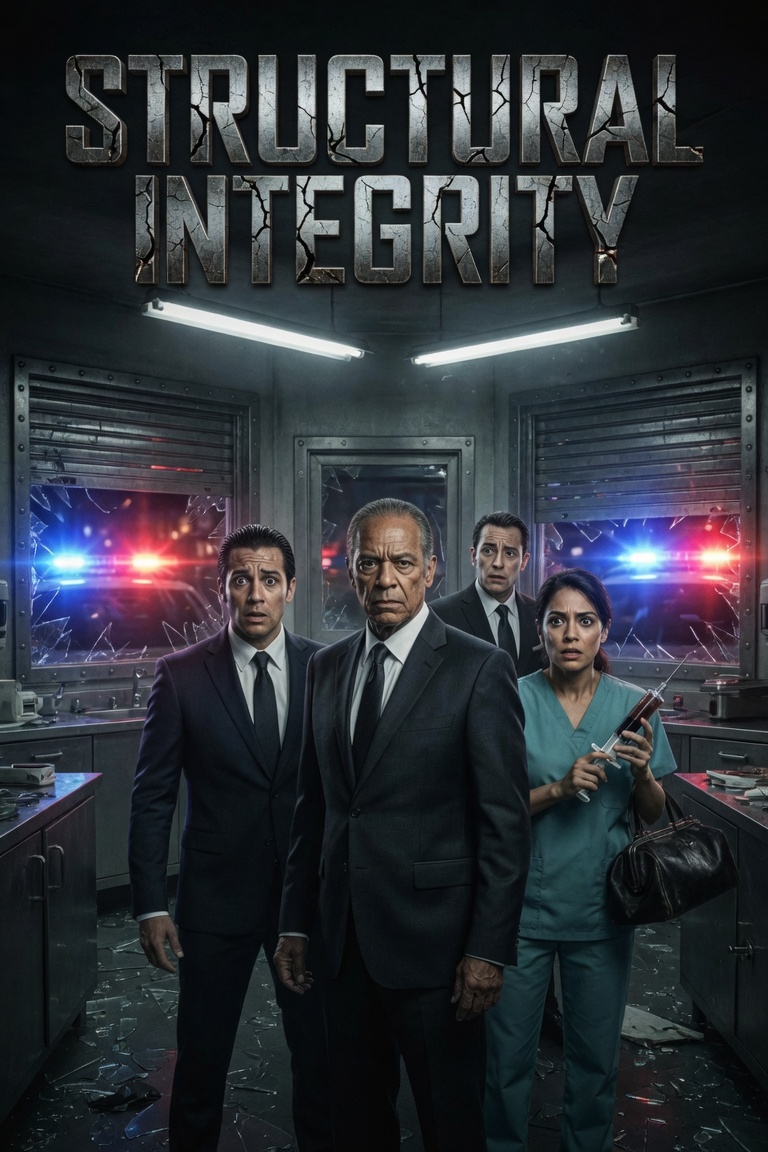
Curly hair, black hoodie, wire-rimmed glasses, and the usual expression of someone who repaired other people’s electronics because talking to machines was easier than talking to customers.
Every time I’d been in Carter’s Tech Repair, he barely looked up from his keyboard.
That morning, he looked up.
Then he looked at me.
And whatever he saw on that screen took the color out of his face.
“Sir,” he whispered.
The shop suddenly felt too small.
Outside, pickup trucks moved along Main Street under a pale winter sky. A delivery van idled by the curb. The bell above the door still trembled from when I’d walked in ten minutes earlier with my backyard security camera in a grocery bag.
Inside, the air smelled of dust, solder, burnt coffee, and the lemon cleaner someone had sprayed over old carpet.
I leaned closer to the counter.
“What is it?”
Milo’s fingers hovered over the keyboard.
Not typing.
Not moving.
The security camera sat open beside him, its casing removed, a tiny memory card plugged into a reader attached to his computer. On the monitor, lines of file data scrolled in a black window.
Then one video thumbnail appeared.
Just one.
A recovered fragment.
Gray and grainy.
My backyard.
My fence.
The maple tree beside the shed.
The motion light over the garage door.
And beneath it, a person standing near my daughter’s bedroom window.
Milo swallowed.
“Sir, you need to leave.”
I looked at him.
“What?”
He turned the monitor slightly away from the front windows.
His voice dropped so low I almost missed it.
“You need to leave. Right now.”
A cold line moved down my back.
I stepped closer.
He reached to close the laptop.
I caught his wrist.
Not hard.
Just enough.
“Milo.”
His eyes were wide behind his glasses.
“Please.”
“Move your hand.”
He shook his head.
“I shouldn’t have opened this.”
“You repair cameras.”
“Not this kind of problem.”
I looked past him to the frozen image.
The person in my yard wore a dark coat.
Hood up.
Gloved hands.
Face turned slightly toward the camera.
The footage had caught only half the profile.
But half was enough.
Not to identify the person.
Not yet.
Enough to know they had not been wandering.
They had been looking for something.
Or someone.
My daughter’s curtains were visible in the window behind them.
Closed.
Just like I’d checked them before going to bed.
My mouth went dry.
“What happened to the footage?”
Milo’s lips parted.
“It was wiped.”
“I know that. That’s why I brought it.”
“No.” He glanced toward the shop door. “Not deleted. Wiped. Remotely. Someone accessed the camera system after the motion alert, cleared the local storage, then tried to overwrite the recovery sector.”
I understood maybe half of that.
But I understood enough.
“Can you recover it?”
“I recovered twelve seconds.”
“Play it.”
“No.”
“Milo.”
He looked at me like a kid standing on thin ice.
“Mr. Hayes, listen to me. Whoever did this knew what they were doing. And they didn’t just delete a video. They left a callback address.”
“What does that mean?”
“It means when I connected your camera to my system, it tried to phone home.”
The shop’s heater clicked on.
Warm air pushed dust across the counter.
I heard a car horn outside.
Too normal.
Too far away.
“Phone home where?”
Milo looked at the monitor.
Then at the door.
Then back at me.
“To a private security server.”
My heart slowed.
That happens sometimes when fear becomes useful.
“Whose?”
Milo closed his eyes once.
When he opened them, he looked ten years older.
“Hawthorne Development.”
The name entered the room and everything in me went quiet.
Hawthorne Development.
The company trying to buy my street.
The company that had called my house six times in three months.
The company whose lawyers sent letters saying my property sat inside a “critical redevelopment corridor.”
The company owned by my son-in-law’s father.
Grant Hawthorne.
I looked at the screen again.
At the figure near my daughter’s window.
My daughter, Emma, was twenty-eight years old, married six months, and pregnant with my first grandchild.
She and her husband had been staying with me for two weeks after a “small disagreement” with his family.
At least, that was what she called it.
Small.
Funny how children use small words when they are trying not to scare their fathers.
I pointed at the monitor.
“Play the video.”
Milo shook his head.
“Mr. Hayes—”
“If someone came to my house last night and stood outside my pregnant daughter’s window, I need to see it.”
His hands trembled.
He pressed play.
The footage moved.
Grainy.
Silent.
The figure stepped into frame from the side gate at 2:13 a.m.
Not stumbling.
Not searching.
Confident.
They looked toward the kitchen window first.
Then the garage.
Then Emma’s room.
The motion light flickered on.
The figure froze.
For two seconds, they stared directly at the camera.
My body locked.
Not because I recognized the face.
Because I recognized what they carried.
A small white envelope.
The figure moved toward the back door.
Placed the envelope beneath the mat.
Then turned.
Before leaving, they raised one gloved hand toward the camera.
Not waving.
Showing something.
A ring.
Large.
Gold.
A square black stone set in the center.
Milo stopped the video before it ended.
He whispered, “That ring.”
I looked at him.
“You know it?”
He nodded slowly.
“I saw it last week.”
“Where?”
His mouth opened.
Closed.
Then the bell above the shop door rang.
Both of us turned.
A man stepped inside wearing a charcoal overcoat and leather gloves.
Tall.
Silver hair.
Smile too smooth.
Grant Hawthorne.
My daughter’s father-in-law.
He looked at me.
Then at the camera on the counter.
Then at Milo.
His smile widened.
“Well,” he said softly. “That’s unfortunate.”
CHARACTER FILES
David Hayes — 57
Widowed father, retired city utility supervisor, now living quietly in the old house he bought with his late wife.
Appearance: Broad-shouldered, weathered face, gray beard, work-worn hands, calm eyes that miss little.
Personality: Quiet, patient, protective, practical, slow to anger but difficult to move once decided.
Deep wound: His wife died before seeing their daughter become a mother, and he fears failing the family he has left.
Greatest fear: That his calmness will be mistaken for weakness until someone he loves gets hurt.
Secret desire: To keep his home as a safe place for Emma and the baby.
Moral belief: A man’s first duty is to protect without becoming cruel.
Greatest weakness: He carries burdens alone because he does not want to worry others.
Greatest strength: He stays steady when fear tries to rush him.
Emma Hayes Cole — 28
David’s daughter, newly married, pregnant, temporarily staying in her childhood home.
Appearance: Warm brown eyes, dark hair usually tied in a loose bun, tired smile, one hand often resting over her stomach.
Personality: Kind, intelligent, conflict-avoidant, quietly brave.
Deep wound: She grew up watching her father swallow grief and learned to hide fear so he would not worry.
Greatest fear: Bringing danger into her father’s home.
Secret desire: To build a family that feels peaceful, not strategic.
Moral belief: Love should feel safe, not negotiated.
Greatest weakness: She minimizes harm to keep other people calm.
Greatest strength: When pushed too far, she tells the truth with devastating clarity.
Daniel Cole — 31
Emma’s husband, son of Grant Hawthorne’s second wife from a previous marriage, legally tied to the Hawthorne family business.
Appearance: Tall, clean-cut, anxious eyes, expensive clothes worn like borrowed armor.
Personality: Gentle, conflicted, loyal but slow to confront power.
Deep wound: Raised inside a wealthy household that treated acceptance as conditional.
Greatest fear: Losing both Emma and the only family structure he has known.
Secret desire: To be free from Grant Hawthorne’s control.
Moral belief: Family should protect the vulnerable, though he has often failed to act on it.
Greatest weakness: He hesitates when facing his stepfather.
Greatest strength: He is capable of choosing truth when consequences become unavoidable.
Grant Hawthorne — 64
Powerful developer, head of Hawthorne Development, Daniel’s stepfather and Emma’s father-in-law.
Appearance: Silver hair, tailored suits, gold ring with black stone, controlled smile, eyes that rarely warm.
Personality: Charming, strategic, entitled, ruthless beneath civility.
Deep wound: Built his empire after losing his family’s old land and believes property is the only security that cannot abandon him.
Greatest fear: Losing control of a redevelopment project that will define his legacy.
Secret desire: To be remembered as the man who transformed the city.
Moral belief: Progress requires sacrifice, and sentimental people should not be allowed to block it.
Greatest weakness: He underestimates ordinary fathers.
Greatest strength: He knows how to make intimidation look legal.
Milo Carter — 23
Local technician at Carter’s Tech Repair.
Appearance: Curly hair, glasses, hoodie, ink-stained fingers, nervous energy.
Personality: Brilliant, socially awkward, decent, easily scared but not cowardly.
Deep wound: His older brother was ruined after exposing corporate fraud and Milo learned that truth can be expensive.
Greatest fear: Being dragged into a fight too powerful for him to survive.
Secret desire: To do the right thing without losing everything.
Moral belief: Evidence matters.
Greatest weakness: Fear makes him hesitate.
Greatest strength: Once he decides to help, he sees details others miss.
CHAPTER TWO — THE ENVELOPE UNDER THE MAT
Grant Hawthorne did not look surprised to see me.
That was how I knew he had expected the camera to come here.
Not maybe.
Not possibly.
Expected.
He stood just inside the repair shop door, shaking rain from his shoulders like a man entering a private club instead of a cramped business between a laundromat and a pawn shop.
“Milo,” he said.
The kid behind the counter went pale.
“Mr. Hawthorne.”
So they knew each other.
Good.
Fear gives you information before anyone speaks.
Grant removed his gloves finger by finger.
“David, isn’t it?”
I did not answer.
His smile remained.
“Emma’s father.”
Still nothing.
He glanced at the disassembled camera.
“I hope there hasn’t been a problem.”
Milo’s hand moved toward the keyboard.
Grant saw it.
“Careful.”
One word.
Soft.
Enough.
Milo froze.
I stepped between them.
That surprised Grant.
Only slightly.
Men like him are rarely surprised for long.
I placed one hand on the counter beside the camera.
“What were you doing in my yard last night?”
His smile deepened.
“Was I?”
I looked at the gold ring on his hand.
Square black stone.
Clean edges.
The same shape from the video.
Grant followed my gaze and turned the ring lazily, like we were discussing jewelry at a dinner party.
“This old thing?”
Milo whispered, “Mr. Hayes…”
Grant looked at him.
The kid dropped his eyes.
I did not.
“What was in the envelope?”
Grant’s expression changed.
There.
A small tightening beside the mouth.
Not guilt.
Annoyance.
He had not expected me to know about the envelope.
Maybe he thought whoever wiped the camera had done a better job.
Maybe he thought ordinary men never checked what was missing until too late.
“My company has made you a generous offer,” he said.
“For my house.”
“For an aging structure in a redevelopment zone.”
“My house.”
His smile cooled.
“Sentiment is expensive.”
“Not as expensive as trespassing.”
Milo made a tiny sound behind me.
Grant stepped closer.
He was taller than me by two inches and dressed like a man who believed height mattered in rooms without evidence.
“David, let me give you some advice.”
“No.”
He blinked.
I almost enjoyed that.
“No?”
“No advice.”
His jaw flexed.
I picked up the camera casing and slipped the memory card reader from Milo’s computer.
Milo’s eyes widened.
Grant’s voice hardened.
“That device may contain proprietary data.”
I looked at him.
“My backyard contains my family.”
Silence.
Grant’s eyes narrowed.
Then his phone buzzed.
He checked it.
The irritation vanished beneath the mask again.
“You should go home,” he said.
“I was planning to.”
“No.” His gaze lifted to mine. “You should go home now.”
The way he said it made the blood in my hands turn cold.
I grabbed the camera, the memory card, and my grocery bag.
Milo whispered, “Sir, wait.”
Grant turned toward him.
Milo swallowed hard, then reached under the counter and handed me a small flash drive.
His fingers shook.
“Diagnostic file,” he said too loudly.
Grant’s eyes moved to the drive.
Milo added, “For the invoice.”
Grant smiled.
“Good boy.”
That was a mistake.
The kid’s face changed.
Just a flicker.
Shame becoming anger.
I took the drive and placed it in my coat pocket.
Then I left the shop.
Outside, rain had turned the sidewalk slick and dark. My truck sat across the street. I crossed slowly, every nerve listening.
When I reached the driver’s door, my phone rang.
Emma.
I answered before the first ring finished.
“Dad?”
Her voice was too quiet.
“What happened?”
A pause.
Then:
“There’s an envelope under the back mat.”
My hand tightened around the phone.
“Don’t touch it.”
“I already did.”
“Emma.”
“It has my name on it.”
I looked back through the rain-blurred window of Carter’s Tech Repair.
Grant Hawthorne stood inside, watching me.
“What does it say?”
Emma breathed shakily.
“It says, ‘Tell your father to sign before the baby comes.’”
The street noise dropped away.
My daughter was silent for a second.
Then she whispered, “Dad, there’s something else.”
“What?”
“It has a hospital bracelet inside.”
I closed my eyes.
Rain tapped against my phone.
“What name is on it?”
Emma’s voice cracked.
“The baby’s.”
CHAPTER THREE — THE HOUSE ON BRIAR LANE
I bought the house on Briar Lane in 1994 with a bad roof, two empty bedrooms, and $600 left after closing.
My wife, Ruth, stood in the kitchen on move-in day wearing paint-stained jeans and a ponytail, looked at the cracked linoleum, the yellow cabinets, the window that refused to open, and said, “This house has good bones.”
I told her good bones did not fix plumbing.
She kissed me and said, “No, but you do.”
For thirty years, that house held us.
Held Emma’s first steps.
Held Ruth’s Sunday music.
Held Christmas mornings where we wrapped gifts badly because neither of us had the patience for ribbon.
Held the night the doctor called and Ruth sat at the kitchen table staring at nothing while I stood behind her with both hands on her shoulders because I did not know what else to do.
Cancer moved into our house before death did.
Slowly.
Then all at once.
Ruth died in the downstairs bedroom because she wanted to see the maple tree from the window.
Emma was twenty-one.
Old enough to understand.
Too young to lose the only person who could tell her how to become a woman without apologizing for it.
After the funeral, developers started calling.
That always seemed obscene to me.
Ruth’s flowers had barely wilted before strangers wanted to know if I had considered selling.
At first, it was polite.
Then persistent.
Then official.
Briar Lane sat in the middle of a corridor the city had suddenly decided was “underutilized.”
Underutilized meant families lived there.
Underutilized meant old trees.
Underutilized meant front porches, cracked sidewalks, barking dogs, mailboxes with faded numbers, and people who waved from driveways.
Hawthorne Development wanted all of it.
Luxury townhomes.
A boutique hotel.
Retail.
Parking structure.
Public-private revitalization.
Words that sounded clean enough to hide what they erased.
Most neighbors sold.
Some happily.
Some tired.
Some pressured.
I stayed.
Not because the house was worth millions.
Because it was worth memory.
Then Emma married Daniel Cole.
Daniel was not a bad man.
That made things harder.
Bad men are simple.
Daniel was gentle, worried, apologetic, and raised inside a family that treated obedience as rent.
His mother had married Grant Hawthorne when Daniel was fourteen. Grant gave him expensive schools, internships, a last name adjacent to power, and the constant understanding that gratitude should look like silence.
When Emma first brought Daniel home, he stood in my kitchen holding grocery-store flowers and looking nervous enough to drop them.
“Mr. Hayes,” he said, “your daughter says you make the best chili in the county.”
“She lies when she wants something.”
Emma said, “Dad.”
Daniel laughed.
I liked him for laughing.
Not too much.
Enough.
Over dinner, he asked about Ruth without making his voice soft in that insulting way people use around grief. He listened when Emma spoke. He helped clear plates. He looked at the old cabinets and said, “This house feels like someone loved it properly.”
That was when I decided he might be all right.
Grant Hawthorne did not attend the wedding rehearsal dinner.
He sent a bottle of wine and a note.
To the new couple. Build wisely.
No love.
No welcome.
Just branding.
At the wedding, he gave a toast about legacy, opportunity, and families aligning future interests.
Emma squeezed my hand beneath the table until my knuckles hurt.
Two months later, Grant made the first offer on my house.
Through a lawyer.
Not through Daniel.
Not through Emma.
A lawyer.
The amount was generous.
Too generous.
I declined.
The second offer came with language about eminent domain risk.
I declined.
The third came after Daniel and Emma argued with Grant at Thanksgiving and moved into my house “for a few days.”
They had been there fourteen.
Last night, something moved in my yard.
This morning, the footage was gone.
And now a hospital bracelet with my unborn grandchild’s name sat inside an envelope beneath my back mat.
That was not a land dispute anymore.
That was a line crossed so badly the ground changed shape.
CHAPTER FOUR — EMMA’S SECRET
By the time I got home, two police cars were parked in front of my house.
For one terrible second, my body forgot how to move.
Then Emma came out onto the porch wrapped in Ruth’s old blue cardigan, one hand over her stomach, the other clutching Daniel’s arm.
She was alive.
Standing.
Crying.
I parked crooked in the driveway and barely remembered to turn off the engine.
“What happened?”
Emma came down the steps.
I met her halfway.
She tried to speak and failed.
Daniel looked like he had aged ten years in an hour.
His face was gray, his eyes red, his jaw tight enough to shake.
Two officers stood near the back gate. One of them held the envelope in a plastic evidence bag.
A female officer approached me.
“Mr. Hayes?”
“Yes.”
“I’m Officer Ramirez. Your daughter called regarding a threatening note.”
Threatening note.
Another polite phrase.
My eyes went to Emma.
“What did it say exactly?”
Daniel answered.
“Tell your father to sign before the baby comes.”
His voice broke on baby.
Emma looked at me.
“There was a bracelet from Westbridge Women’s Hospital.”
Her fingers pressed into the cardigan.
“The one where I’m scheduled to deliver.”
I felt something ancient and ugly move through me.
Not rage.
Rage is hot.
This was cold.
Clear.
Useful.
Officer Ramirez asked, “Do you have reason to believe someone specific left it?”
I took the memory card reader and flash drive from my pocket.
“Yes.”
Daniel’s head snapped toward me.
“Who?”
I looked at him.
His eyes already knew.
That was the second hard truth of the day.
Daniel knew more than he had said.
“Grant.”
Emma closed her eyes.
Daniel whispered, “God.”
Officer Ramirez noticed.
“Grant who?”
“Grant Hawthorne,” I said. “Hawthorne Development.”
The officer’s expression changed.
Only slightly.
But enough.
Everyone knew the name.
“He wants my house.”
Daniel stepped forward.
“It’s more than that.”
Emma gripped his arm.
“Daniel.”
“No.” His voice trembled. “No more.”
He looked at me.
“Mr. Hayes, I’m sorry.”
“For what?”
He swallowed.
“My mother called me three days ago. She said Grant was furious. She said he had found out Emma was still listed at this address for medical paperwork.”
Emma went still.
I looked at her.
“What paperwork?”
Her face crumpled.
“Dad…”
The cold inside me deepened.
“What paperwork, Emma?”
She sat on the porch step like her knees had stopped helping.
Rain dripped from the roofline beside her.
Daniel crouched next to her.
She looked at the yard.
At the maple tree.
At the house that raised her.
“I didn’t tell you because I didn’t want you to worry.”
Every father hates that sentence.
Not because it is unloving.
Because it means fear has been living in your child’s room without paying rent.
“Tell me now.”
Emma wiped her face.
“Grant wanted Daniel to sign something before the baby is born.”
“What something?”
Daniel answered.
“A family trust acknowledgment.”
I turned to him.
“What does that mean?”
He rubbed both hands over his face.
“It would put future inheritance from the Hawthorne side under Grant-controlled trusteeship. Any child of mine would be tied to Hawthorne family governance.”
I stared at him.
“My grandchild isn’t even born.”
“I know.”
Daniel’s voice cracked.
“I refused.”
Emma took his hand.
“He refused and Grant said we were being emotional.”
Of course he did.
Men like Grant call it emotion when someone resists being inventoried.
Daniel continued.
“Then he said if Emma wanted the baby raised like a Hayes instead of a Hawthorne, we shouldn’t expect protection.”
Officer Ramirez was writing now.
Fast.
I looked toward the back gate.
“Protection from what?”
Daniel’s face twisted.
“That’s what I asked.”
“And?”
“He smiled.”
Silence fell over the porch.
Rain ticked through the gutters.
Across the street, Mrs. Alvarez stood behind her curtain pretending not to watch.
Good.
Let her watch.
Witnesses were useful.
Officer Ramirez took my statement. I gave her everything: the noise, the missing footage, the tech shop, Milo, Grant walking in, the server address. When I mentioned Hawthorne Development, her partner stopped pretending not to listen.
“Mr. Hayes,” she said carefully, “we’ll need the recovered file.”
“I have the diagnostic copy.”
She looked relieved.
So did I.
Milo had been scared.
But he had not been useless.
The police left an hour later, promising patrol checks and follow-up.
Promises are not locks.
When the cars pulled away, I turned to Daniel.
“Everything now.”
He nodded.
No argument.
No delay.
Good.
We went inside.
The house smelled of coffee, rain, and the lemon oil Emma used on Ruth’s old kitchen table.
I sat at one end.
Emma sat beside Daniel.
For a long moment, nobody spoke.
Then Daniel removed his wedding ring, placed it on the table, and pushed it toward me.
Emma gasped.
“Daniel?”
He looked at her.
“Not because I’m leaving.”
His eyes filled.
“Because I need your father to know I’m not hiding behind being your husband.”
He looked at me.
“My full legal name is Daniel Cole Hawthorne.”
The room changed.
Emma stared.
“You told me you never took his name.”
“I didn’t publicly.”
His voice shook.
“He adopted me when I was sixteen. Privately. For estate reasons. My mother said it was security.”
I looked at him.
“And now?”
“Now I think it was ownership.”
The refrigerator hummed.
Rain tapped the window.
Then Daniel said the sentence that made Emma cover her mouth:
“Grant doesn’t just want the house. He wants the baby listed as a Hawthorne heir before his board finds out he has no direct bloodline successor.”
CHAPTER FIVE — MILO’S COPY
Milo came to the house at 8:40 that night.
I did not invite him.
He arrived on a bicycle in the rain, backpack covered with a black trash bag, glasses fogged, hoodie soaked through, looking like a frightened raccoon with a moral compass.
I opened the front door before he knocked twice.
“You shouldn’t have come here.”
“I know.”
“Come in.”
He stepped inside and immediately looked at the corners of the ceiling.
“Do you have smart speakers?”
“No.”
“Smart TV?”
“Emma has one in the guest room.”
“Unplug it.”
Daniel moved before I asked.
Good.
Milo stood in the entry, dripping on the rug.
Emma brought a towel.
He took it with both hands, saw she was pregnant, and looked even more miserable.
“I’m sorry,” he said.
She frowned.
“For what?”
“For almost not helping.”
That was a strange apology.
But not a bad one.
We gathered at the kitchen table.
Milo opened his backpack and removed a laptop, two flash drives, and a small device wrapped in foil.
I looked at the foil.
“Is that necessary?”
“Probably not.”
“Then why?”
“It made me feel better.”
Fair.
He plugged in the first drive.
“I copied the recovered video before Mr. Hawthorne came in. The one I gave you was the diagnostic file. This one has the raw recovery and the callback data.”
Daniel leaned closer.
“What callback?”
Milo looked at him.
“You know Hawthorne uses private security contractors?”
Daniel nodded.
“Blackridge.”
Milo clicked a file.
A log appeared.
IP addresses.
Time stamps.
Device IDs.
Most of it meant nothing to me.
Milo pointed.
“Your camera was accessed from a Blackridge administrative node at 2:21 a.m. Eight minutes after the figure appeared.”
Daniel’s face went pale.
“Grant uses Blackridge for executive protection.”
Emma whispered, “Executive protection?”
Milo looked at her.
“I don’t think they were protecting anyone.”
He played the recovered footage again.
This time on my kitchen table.
The gray image filled the laptop screen.
The figure entered the yard.
Placed the envelope.
Showed the ring.
Left.
Milo froze the frame where the figure looked toward the camera.
“I enhanced it.”
He pressed another key.
The image sharpened slightly.
Not much.
Enough.
The lower half of the face.
Silver beard shadow.
One cheekbone.
The ring.
Grant.
Emma inhaled sharply.
Daniel stood and walked to the sink like he might be sick.
I kept watching.
A man who threatened my child had stood on Ruth’s grass.
Milo cleared his throat.
“There’s more.”
Of course there was.
He opened another file.
Audio.
“Your camera doesn’t usually record sound well, but the recovered fragment had a few seconds.”
He pressed play.
Static.
Rain.
Footsteps.
Then Grant’s voice, low and close:
“Last chance, David.”
A pause.
Then another voice.
Not Grant.
A woman.
“Make sure Daniel sees it before morning.”
Emma’s fingers dug into the table.
Daniel turned slowly from the sink.
His face looked shattered.
“Mom,” he whispered.
CHAPTER SIX — DANIEL’S MOTHER
Daniel’s mother arrived the next morning in a silver SUV that cost more than my house had in 1994.
Her name was Vivian Cole Hawthorne.
Fifty-six.
Elegant.
Beautiful in a tired way.
The kind of woman who looked like she had spent decades being expensive to maintain and impossible to hear.
She stepped onto my porch wearing a cream coat, gloves, and sunglasses despite the gray sky.
I opened the door.
“Mrs. Hawthorne.”
She removed the sunglasses.
Her eyes were red.
“Mr. Hayes.”
Emma stood behind me.
Daniel did not.
He was in the kitchen, one wall away, listening because he had asked to hear before being seen.
Vivian looked at Emma’s stomach, and something in her face cracked.
“May I come in?”
“No.”
She swallowed.
Fair.
She had expected that.
“Daniel won’t answer my calls.”
“No.”
“I need to explain.”
I looked at her.
“Explain the envelope?”
Her face collapsed.
So.
She had hoped we had less.
People always do.
She gripped the porch railing.
“I didn’t know what was inside.”
“You knew there was an envelope.”
“Yes.”
“You knew it was meant to scare my daughter.”
Vivian closed her eyes.
Rain moved through the bare branches above us.
“I knew it was meant to pressure Daniel.”
“That isn’t better.”
“No.”
For the first time, she sounded like a mother instead of a rich man’s wife.
“No, it isn’t.”
Emma stepped beside me.
“Why?”
Vivian looked at her.
“I was trying to protect my son.”
Emma’s jaw tightened.
“From us?”
“From Grant.”
The kitchen floor creaked behind us.
Daniel had moved closer.
Vivian heard it too.
Her eyes filled.
“When Daniel refused the trust documents, Grant became furious. He said Daniel was ungrateful. He said you were turning him against the family.”
Emma said nothing.
Vivian continued.
“He told me if Daniel didn’t sign before the baby was born, he would cut him off from everything.”
Daniel stepped into view.
His face was pale.
“You mean money?”
Vivian turned toward him.
“Money. Board position. Health coverage through the family office. Your grandmother’s medical fund.”
Daniel flinched.
Ah.
There it was.
Not just greed.
Leverage.
Daniel’s grandmother—Vivian’s mother—was in a private care facility funded by Grant.
Vivian looked at him.
“He said he would move Mother.”
Daniel’s hands curled.
“So you helped him threaten my wife?”
“No.” She stepped forward.
I raised one hand.
She stopped.
“I helped him deliver a warning,” she whispered. “I told myself that was different.”
Daniel laughed once.
A terrible sound.
“That’s what this family does. Changes words until cruelty sounds temporary.”
Vivian covered her mouth.
Emma’s voice was quiet.
“Mrs. Hawthorne, did you know he was outside my window?”
Vivian shook her head quickly.
“No. I swear to God, no. I thought the envelope would be left at the front door. I didn’t know about the camera. I didn’t know about Blackridge. I didn’t know he would use the hospital bracelet.”
“The baby’s name was on it,” Emma said.
Vivian began crying.
“I know.”
Daniel stepped back.
“You gave him the hospital information.”
Vivian’s silence answered.
Emma’s face went still.
Very still.
That frightened me more than tears.
“You had access because I trusted you,” she said.
Vivian whispered, “I wanted to feel included.”
Emma nodded slowly.
“And you traded that for control.”
The words struck harder because they were not loud.
Vivian looked at Daniel.
“I am sorry.”
He shook his head.
“No. Not yet.”
She seemed confused.
“Not yet?”
“You don’t get to apologize before telling the whole truth.”
Vivian’s shoulders dropped.
The porch held its breath.
Then she said, “Grant is meeting the city planning liaison tonight. At the Hawthorne Club. He’s going to argue your refusal is a mental fitness issue.”
I stared at her.
“My refusal to sell?”
She nodded.
“He is building a file. Elder stubbornness. Unsafe property conditions. Family concerns.”
Family concerns.
There it was again.
The language of removal dressed as care.
Vivian looked at me.
“He wants the city to pressure you out before the public hearing.”
Daniel whispered, “Mom.”
She turned to him.
“I brought documents.”
From her purse, she removed a sealed folder.
Her hand shook as she held it out.
I did not take it.
Daniel did.
Vivian looked at her son.
“I should have done this years ago.”
Daniel’s eyes filled.
“Yes.”
She flinched.
He did not comfort her.
Good.
Comfort given too quickly can become another form of silence.
Vivian stepped back into the rain.
Before leaving, she looked at Emma.
“I don’t expect forgiveness.”
Emma rested one hand on her stomach.
“Good.”
Vivian nodded.
Then walked to her SUV.
When she drove away, Daniel stood with the folder in his hands like it weighed more than paper.
I closed the door.
“What’s in it?” Emma asked.
Daniel opened the folder.
Inside were emails.
Trust drafts.
Medical fund records.
And one letter from Grant to Blackridge Security.
Subject:
Hayes Property Pressure Plan.
At the bottom, in Grant’s clean digital signature:
Escalate without visibility.