Chapter 1 — The Billionaire Who Owned a War
Essen, Germany
April 1945
The factory gates were still standing.
That was the first thing people noticed.
The city around them had been destroyed.
Buildings were broken open.
Streets were buried beneath rubble.
Smoke still drifted above the ruins of Essen.
But the Krupp factories remained.
Massive.
Silent.
Waiting.
For more than a century, those factories had been the symbol of German industrial power.
Steel.
Weapons.
Machines.
War.
The name Krupp was not just a company.
It was an institution.
A dynasty.
A fortune built over generations.
And now, as Allied soldiers entered Germany, they were walking toward one of the most powerful industrial empires in modern history.
An empire that had helped build Hitler’s war machine.
Inside one of the surviving buildings, a man stood beside a window looking over the damaged factory grounds.
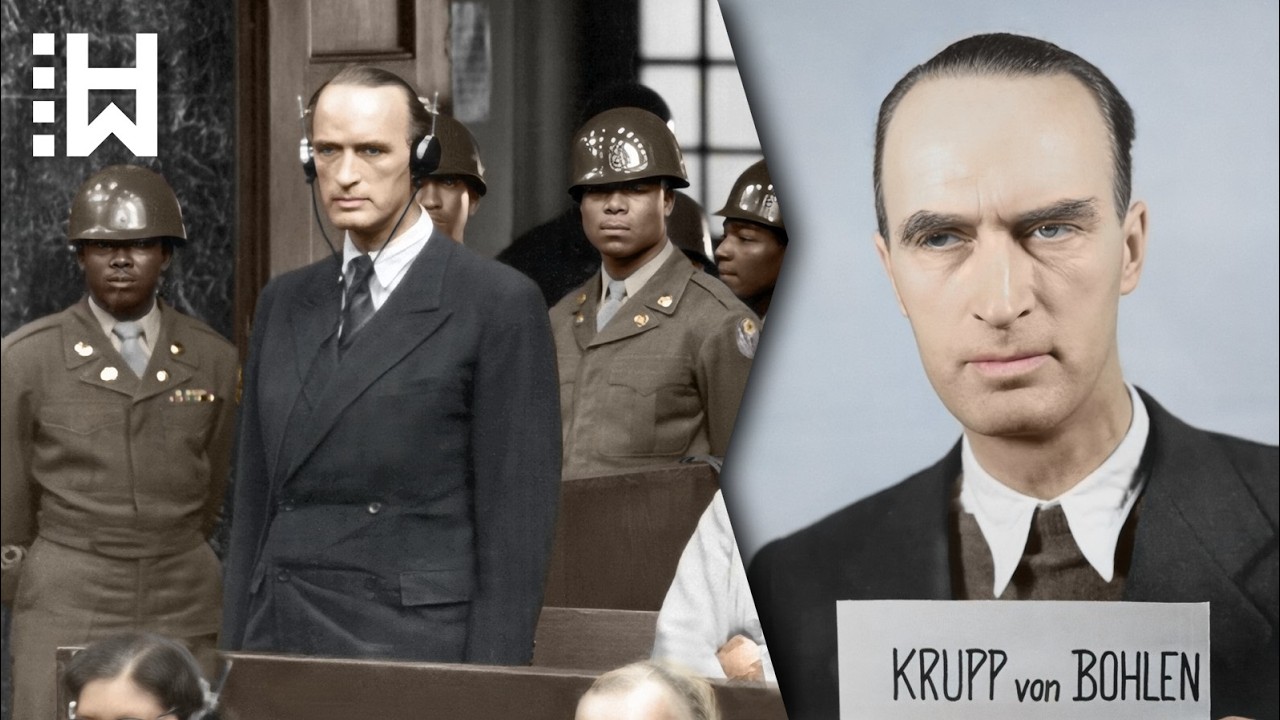
His name was Alfried Krupp.
Thirty-eight years old.
Heir to one of Germany’s greatest fortunes.
A man born into privilege, surrounded by engineers, executives, and politicians.
He had inherited more than factories.
He had inherited responsibility for a machine that had helped fuel a war that had killed millions.
Now the war was over.
And the world wanted answers.
The Krupp Name
Long before Adolf Hitler came to power, the Krupp family name carried enormous weight in Germany.
The company began in the early nineteenth century and grew through steel production and heavy industry.
Railways.
Ships.
Machinery.
Weapons.
Generation after generation, the Krupps became closely connected to Germany’s military strength.
Their factories supplied the German Empire during World War I.
They supplied the Weimar Republic.
And when Hitler rose to power, they became one of the central industrial pillars of Nazi Germany.
But Alfried Krupp did not inherit the empire during peaceful times.
He inherited it during transformation.
A period when Germany was rebuilding its military power.
When Hitler promised national revival.
When industry leaders saw opportunity.
The Young Heir
Alfried Krupp was not the loudest industrialist in Nazi Germany.
He was not a politician.
He was not a military commander.
He rarely appeared in public speeches.
His power came from factories.
From contracts.
From production numbers.
He was trained to think like an industrial manager.
Efficiency.
Output.
Growth.
Results.
Those qualities could build companies.
But during wartime, they could also become dangerous.
Because behind every production number was a human cost.
When Alfried took control of the company, Germany was preparing for war.
The government demanded more weapons.
More steel.
More equipment.
The Krupp factories expanded rapidly.
Production increased.
Profits grew.
The relationship between industry and the Nazi state became stronger.
Hitler and the Industrialists
Adolf Hitler understood something important.
A modern war could not be fought only by soldiers.
It required factories.
Engineers.
Resources.
Workers.
The battlefield began far behind the front lines.
It began inside industrial plants.
Companies like Krupp were essential.
They produced the weapons that allowed Germany to fight across Europe.
Tanks moved because factories built engines.
Artillery fired because factories produced shells.
Naval vessels sailed because factories produced steel.
The Nazi military machine depended on industrial power.
And industrial power depended on labor.
The Problem of Labor
As the war expanded, Germany faced a growing problem.
Millions of German workers were needed for military service.
Factories needed more people.
The solution became one of the darkest aspects of Nazi Germany’s economy.
Forced labor.
Millions of people from occupied countries were deported and forced to work in German industries.
Prisoners of war.
Civilians.
Concentration camp prisoners.
They became part of an economic system built around exploitation.
For companies like Krupp, the question was no longer only:
How much can we produce?
It became:
Who will produce it?
Auschwitz and Industry
By the later years of the war, the connection between concentration camps and industry had become increasingly direct.
The Nazi regime expanded the use of prisoners as a labor force.
Camps were not only places of imprisonment and murder.
They became connected to economic projects.
Factories were established near camps.
Prisoners were transferred to industrial work.
Human beings were treated as replaceable resources.
At the Krupp facilities, forced labor became part of production.
Workers arrived exhausted.
Underfed.
Often sick.
They lived under brutal conditions.
Their lives were controlled completely.
For the Nazi economic system, they were not viewed as people with rights.
They were viewed as labor units.
A Survivor’s Memory
Years later, survivors would describe the contrast.
The factory floors were enormous.
Machines were powerful.
Production never stopped.
But beside those machines were exhausted prisoners struggling to survive.
The noise of industry covered everything.
The sound of metal.
The movement of machinery.
The orders shouted by supervisors.
And beneath it all:
The suffering of thousands.
The Billionaire and the System
The central question after the war was not whether forced labor existed.
It did.
The question was:
Who was responsible?
Could industrial leaders claim they were only businessmen?
Could they separate themselves from the crimes committed inside their factories?
Could someone build an empire on a system of exploitation and say:
“I was only producing.”
Alfried Krupp faced that question in a courtroom.
But before Nuremberg…
Before judgment…
Before prison…
There was one final chapter of the Nazi industrial empire.
The collapse.
The End of the Reich
In 1945, the world Alfried Krupp knew disappeared.
The Nazi government collapsed.
Hitler was dead.
German cities lay in ruins.
The factories that had once represented power became evidence.
Allied investigators arrived with documents.
Witnesses arrived with memories.
Survivors arrived with stories that could not be ignored.
Inside the Krupp empire, the machines had stopped.
But the questions had only begun.
A family name that had survived for more than a century was now connected to one of history’s greatest crimes.
And the man who inherited that name would soon stand before the world.
Not as an industrial genius.
Not as a billionaire heir.
But as a defendant.
The courtroom would ask a question that would define the rest of his life:
When an empire is built on the suffering of others, who truly owns the guilt — the system, the men who created it, or the people who profited from it?
To be continued — Chapter 2: The Krupp Empire and the Machinery of Hitler’s War


