The slap cracked through the business-class cabin before anyone understood what had happened.
A champagne glass trembled in its holder.
The man in seat 2C stopped laughing.
The couple across the aisle turned in perfect unison.
At the rear of the cabin, a young flight attendant froze with a tray balanced against her hip.
Valerie Grant stood beside seat 3A with one hand resting against her cheek.
Across from her, Miranda Cole lowered her arm.
For nine years, Miranda had worked private aviation. She had served actors, politicians, executives, and people wealthy enough to expect the sky itself to make room for them.
She knew how to smile without warmth.
She knew how to sound polite while giving an order.
And she believed she knew exactly what kind of passenger stood in front of her.
Valerie wore a charcoal hoodie beneath a rain jacket. Her glasses had thin steel frames. The leather bag hanging from her shoulder was old enough to show pale lines along the seams.
No designer luggage.
No assistant.
No security detail.
No visible reason to be treated as important.
That was the mistake.
The entire cabin waited for Valerie to react.
She did not shout.
She did not strike back.
She did not demand to speak to the captain.
Instead, she looked directly at Miranda with a stillness so complete that the silence became heavier than anger.
Then she picked up her bag.
“Your company has made its decision,” Valerie said.
Miranda folded her arms.
“Please take your assigned seat.”
“My assigned seat is 3A.”
“Not anymore.”
Valerie looked once at the four people watching her.
None of them spoke.
Then she walked to the back of the aircraft and sat down.
To everyone else, it appeared that she had surrendered.
She had not.
The chain of events had begun four hours earlier, when a storm system grounded dozens of commercial flights across the region.
Valerie had been traveling alone from Chicago to New York.
Her assistant had offered to reroute a corporate aircraft, but Valerie declined. She had a meeting the next morning and believed she could find another option without involving an entire team.
That part was true.
The rest was deliberate.
For eighteen months, Valerie had been examining Crestline Aviation Group.
The company operated charter aircraft, premium commuter routes, and corporate travel services across the eastern United States. Its financial reports showed rising fuel costs, shrinking margins, and dangerous short-term debt.
Its marketing materials told a different story.
Every passenger matters.
Service without hierarchy.
Dignity at every altitude.
Valerie had spent most of her life learning that organizations often used the language of fairness most loudly where fairness was weakest.
So she had developed a habit.
Before investing in a company, she used it without announcing herself.
She waited in ordinary lines.
She called customer service from numbers that carried no executive identification.
She dressed simply.
She watched how employees treated people they believed could not reward or punish them.
The canceled commercial flight gave her the opportunity.
A travel agent found an available seat on a Crestline charter departing from a private terminal outside the city.
Valerie booked under her own name.
She did not include her title.
She did not request VIP handling.
The rain had intensified by the time she reached the private terminal.
Water ran across the tarmac in silver lines beneath the floodlights. A white Crestline jet waited near the hangar, its body reflecting the blue flashes of service vehicles.
Inside, the cabin smelled of cedar, new carpet, and expensive upholstery.
There were only four passengers besides Valerie.
A middle-aged couple dressed for a tropical vacation occupied the first row. They spoke loudly about a villa in St. Barts.
A man in a wrinkled blazer sat across the aisle with an empty miniature bottle tucked beside his seat.
He had already been drinking before boarding.
Miranda greeted the first three passengers by name.
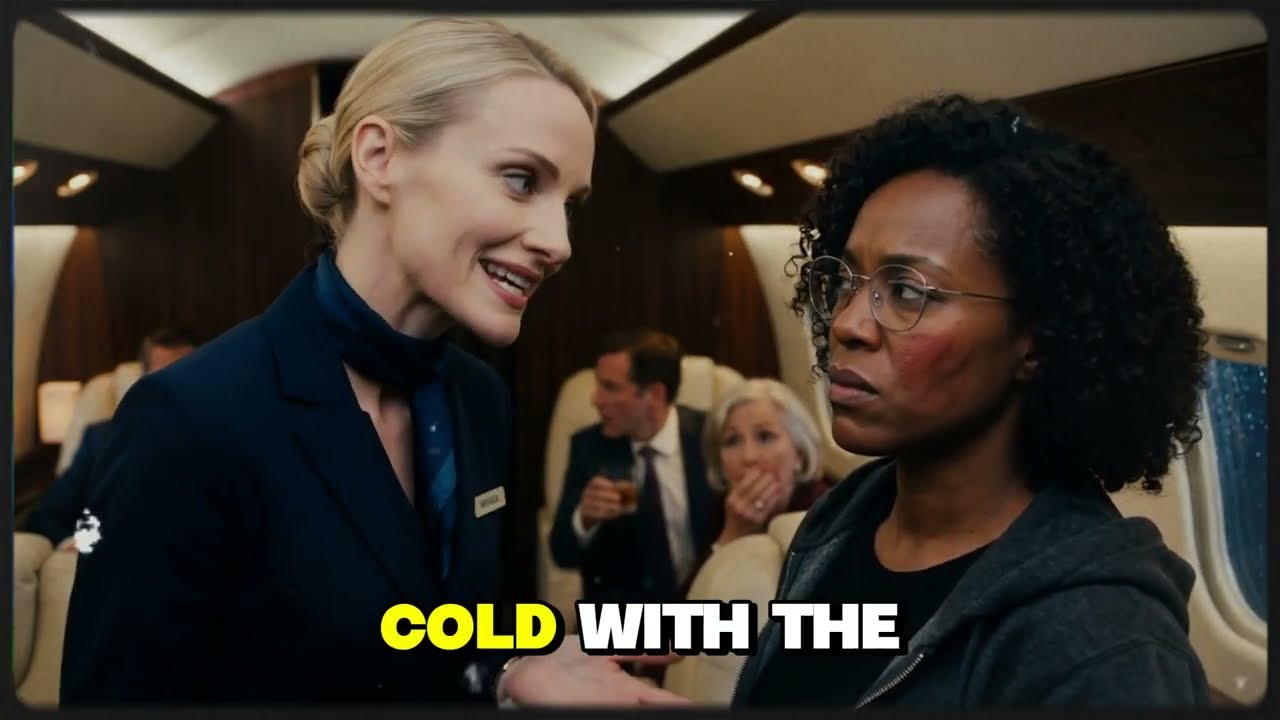
When Valerie stepped aboard, Miranda’s eyes moved from her shoes to her bag and then to her face.
“Staff entrance is around the side,” she said.
“I’m a passenger.”
Miranda’s expression did not change.
“May I see your booking?”
Valerie handed her the confirmation.
Miranda read it twice.
Then she looked at Valerie again.
“This is a private charter.”
“I’m aware.”
“You booked today?”
“Yes.”
Miranda tapped something into her tablet.
The drunk passenger leaned toward the aisle.
“Maybe the airport’s running a promotion.”
The vacationing couple laughed softly.
Valerie heard them.
She said nothing.
Miranda continued scrolling.
“I’ll need identification.”
Valerie gave it to her.
The name appeared clearly.
Valerie Grant.
Miranda compared the photograph, handed the card back, and still did not step aside.
“Wait here.”
The other passengers watched as though the delay confirmed something suspicious.
After nearly three minutes, Miranda returned.
“Your booking is valid.”
Valerie nodded and moved toward seat 3A.
Miranda blocked the aisle.
“We need you in the rear row.”
“My ticket says 3A.”
“We have weight-distribution requirements.”
Valerie looked toward the front of the cabin.
The man in 2C weighed significantly more than she did. Two large suitcases had already been secured near the forward storage compartment.
“Is the aircraft outside balance limits?”
Miranda’s tone sharpened.
“That is not information we discuss with passengers.”
“It becomes passenger information when you use it to change an assigned seat.”
The younger flight attendant at the back looked up.
Her name was Elena Torres. She had worked for Crestline for eleven months and had never heard Miranda relocate a passenger for weight distribution before boarding was complete.
Miranda moved closer to Valerie.
“Please do not make this difficult.”
“I am asking to sit in the seat I purchased.”
The man in 2C raised his glass.
“Some people get one private flight and suddenly think they own the plane.”
Valerie turned toward him.
Before she could answer, Miranda stepped between them.
“You are delaying departure.”
“No,” Valerie said. “You are.”
Miranda’s face changed.
The professionalism did not disappear all at once. It thinned.
Then it broke.
She slapped Valerie.
No one intervened.
Elena felt the shock travel through her body.
The vacationing woman looked down at her phone.
Her husband stared toward the window.
The drunk man muttered, “Finally.”
Valerie touched her cheek, looked at Miranda, and moved to the back row.
The aircraft door closed ten minutes later.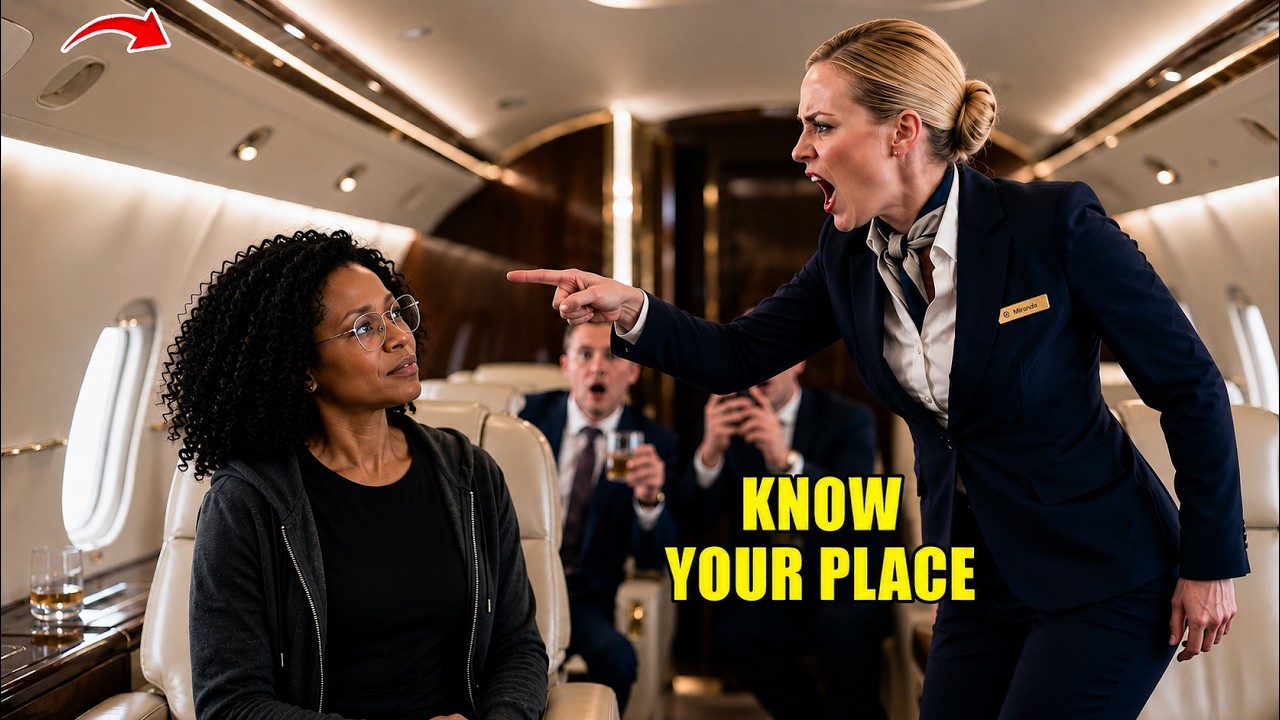
As they taxied through the rain, Elena opened the passenger manifest on her tablet.
She told herself she was checking emergency information.
That was only partly true.
The name bothered her.
Valerie Grant.
She had seen it somewhere connected to the company.
Elena searched the internal VIP roster.
Nothing appeared at first.
Then a restricted investor profile loaded beneath an outdated photograph.
Elena enlarged the image.
The woman in the photograph wore a dark suit and stood behind a conference podium.
The face was unmistakable.
Valerie Grant
Founder and Executive Chair, Grant Tech Solutions
Principal, Northbridge Strategic Holdings
Elena’s stomach tightened.
She opened the investor-relations portal.
The access was limited, but the summary information was visible.
Northbridge Strategic Holdings controlled approximately eleven percent of Crestline Aviation.
Below that, one line appeared in red:
Proposed emergency capital facility: $240 million
Final execution scheduled: 9:00 a.m. tomorrow
Elena stared toward the back of the cabin.
Valerie sat alone beside the small oval window, watching rain move across the glass.
Her cheek was still red.
Elena knew enough about business to understand what she was seeing.
Crestline was not simply carrying an investor.
It was carrying the person expected to keep the company alive.
Valerie had not begun life with money.
She grew up in a two-bedroom apartment on the south side of Milwaukee with a mother who worked double shifts at a hospital laundry.
Her father left when she was seven.
For years, Valerie believed the hardest part of poverty was not having enough.
Later, she understood that it was being treated as though scarcity revealed something about your character.
Her school had broken computers and textbooks with missing pages.
She learned programming at a public library using machines that shut down after forty-five-minute sessions.
At seventeen, she earned a university scholarship that required her to maintain a near-perfect grade-point average.
The scholarship covered tuition.
It did not cover food, travel, winter clothing, or the quiet humiliation of being the only student in a project group who could not afford dinner after class.
She worked nights.
She graduated near the top of her class.
Then she entered the technology industry at a time when few investors imagined a Black woman could build the systems they were willing to buy.
At her first major interview, a partner asked whether she was applying for the administrative position.
At a financing meeting years later, investors directed technical questions to the junior male engineer sitting beside her.
She built Grant Tech Solutions from a rented office above a printing shop.
The company began with four employees and one government data contract.
It became a global artificial-intelligence and infrastructure firm valued in the billions.
Valerie became one of the wealthiest self-made women in the country.
She still carried the old leather bag because her mother had bought it for her first executive interview.
She still traveled without an entourage when she could.
And she never forgot how differently the world behaved when it believed no one important was watching.
Halfway through the flight, Valerie opened her phone.
She sent one message to Marcus Webb, her attorney and chief investment counsel.
Terminate Crestline transaction. Full withdrawal. Prepare notice tonight.
Marcus responded within seconds.
Confirm final?
Valerie looked toward the front of the cabin.
Miranda was pouring another drink for the man in 2C.
The man said something that made her laugh.
No one had checked whether Valerie needed medical attention.
No one had apologized.
No one had even asked what had happened.
Valerie typed one word.
Final.
Elena saw her send the message.
She did not know the contents, but she knew something had shifted.
When the aircraft landed shortly before midnight, Valerie left without speaking to anyone.
No chauffeur waited.
She booked a car through an app and sat in the back seat while the city passed in blurred lines of rain and neon.
First, she called Marcus.
“I want the offer revoked before three.”
“The board meeting is at nine.”
“There will be no meeting.”
“They will ask for a reason.”
“They can investigate their own company.”
Then she called Joanne Price, her executive assistant.
Joanne answered on the second ring, her voice thick with sleep.
“Valerie?”
“Cancel tomorrow morning’s Crestline signing.”
A pause followed.
“All of it?”
“All of it.”
“Do you want communications to prepare a statement?”
“No.”
“Should I alert the investment committee?”
“Yes. Tell them Northbridge is out.”
Joanne knew better than to ask twice.
Back at the terminal, Elena approached Miranda.
“We need to report what happened.”
Miranda removed her uniform jacket.
“What happened was that a passenger became disruptive.”
“You hit her.”
“She moved toward me.”
“No, she didn’t.”
Miranda turned.
“Be careful, Elena.”
The warning was quiet.
“You’re new. You don’t understand private aviation yet. Passengers lie. They provoke. They make complaints because they know companies are afraid of bad publicity.”
“She’s Valerie Grant.”
Miranda blinked.
“Who?”
Elena showed her the tablet.
Miranda read the investor profile.
For a fraction of a second, fear crossed her face.
Then she pushed the tablet away.
“That doesn’t change her behavior.”
Elena stared at her.
“It changes nothing about what you did.”
At 12:34 a.m., Elena submitted an incident report to human resources, passenger-service management, corporate legal, and the executive assistant to Crestline’s chief executive.
She attached the manifest, time stamps, the investor profile, and a written statement describing the slap.
Then she requested preservation of cabin-security footage.
At 2:47 a.m., Northbridge Strategic Holdings formally withdrew its $240 million financing offer.
Crestline CEO Richard Hartley saw the email at 5:18.
He was still in bed.
At first, he assumed it was a negotiation tactic.
Then he read the language.
Effective immediately.
No extension.
No revised terms.
No further diligence.
Richard called his chief financial officer.
Then legal.
Then the board chair.
By six-thirty, twelve executives were on an emergency video conference trying to understand why a transaction negotiated for seven months had vanished hours before signing.
At 7:02, Richard’s assistant forwarded Elena’s incident report.
At 7:15, security delivered the cabin footage.
At 7:28, the board watched Miranda slap Valerie Grant.
No one spoke for several seconds after the video ended.
The board chair removed his glasses.
The chief financial officer leaned back as though the distance might change what he had seen.
Richard stared at the frozen frame on the screen.
Valerie stood in her hoodie beside seat 3A.
Miranda’s hand was raised.
The other passengers were watching.
“What have we done?” Richard whispered.
The financial press learned about the withdrawn financing before the market opened.
Crestline declined to explain.
 That made the story worse.
Analysts had known the company needed liquidity. Without Northbridge’s capital, debt payments due within two quarters became difficult to manage.
The stock opened down eight percent.
By ten o’clock, it had fallen fourteen.
Then the video leaked.
By noon, Crestline shares were down twenty-one percent.
Miranda arrived at headquarters at 11:40.
Her access card stopped working at the lobby gate.
A security officer took her employee badge.
Her phone disconnected from company email while she stood waiting for the elevator.
She was escorted into a small conference room where two human-resources officers and a corporate attorney sat behind a table.
Miranda crossed her arms.
“The passenger was aggressive.”
The attorney turned a laptop toward her.
The video began.
Miranda watched herself block the aisle.
She heard herself question Valerie’s booking.
She heard the drunk passenger’s comments.
Then she saw the slap.
Security footage had no loyalty.
It did not remember stress.
It did not soften tone.
It simply showed what happened.
Miranda’s face lost color.
“Is she pressing charges?”
The attorney studied her.
“That is your first question?”
Miranda looked again at Valerie’s frozen image.
For the first time, she understood that the woman had not looked powerless.
Miranda had only required her to be.
Crestline placed her on immediate suspension.
By evening, the scandal had moved beyond financial news.
Civil-rights organizations demanded an independent investigation.
Former passengers described earlier incidents involving racial profiling, seating disputes, and selective enforcement.
A retired employee said complaints had been quietly settled for years.
Sponsors announced internal reviews.
Two corporate clients suspended travel contracts.
Richard Hartley released a statement calling the incident inconsistent with Crestline’s values.
The public response was immediate.
People asked what those values meant if nine years of employment had taught Miranda that she could strike a passenger and expect the company to defend her.
Valerie remained silent for forty-eight hours.
Her publicist, Sylvia Bennett, confirmed only that Valerie was aware of the incident and would respond when appropriate.
That silence created more pressure than outrage would have.
When Valerie finally spoke, she chose a financial-news interview rather than a morning talk show.
Christine Hale, one of the country’s most respected business journalists, interviewed her live.
Valerie wore a black suit.
The bruise on her cheek was faint but visible.
Christine began carefully.
“Was the withdrawal of the $240 million offer retaliation for what happened on the aircraft?”
“No,” Valerie said.
The answer surprised everyone.
Valerie continued.
“Retaliation is personal. An investment decision is structural.”
She explained that Northbridge had spent eighteen months evaluating Crestline’s debt, operations, leadership, and service culture.
“The incident did not create the problem,” she said. “It revealed it.”
Christine asked whether the slap had been the deciding factor.
“The slap was an extreme act. But what concerned me was everything around it.”
Valerie listed the sequence calmly.
Her valid ticket was treated as suspicious.
Her assigned seat was removed without a credible reason.
Another passenger mocked her.
An employee escalated the situation.
Witnesses remained silent.
The company had no functioning mechanism that made a junior employee feel safe intervening before harm occurred.
“This was not one bad person appearing suddenly inside a healthy organization,” Valerie said. “This was a culture showing what it believed it could get away with.”
Christine asked whether Valerie would reconsider the investment if Crestline replaced its leadership.
“No.”
The market reacted within minutes.
Then Valerie announced that Northbridge was entering negotiations with Alder Regional, a smaller aviation company serving secondary cities and underserved routes.
“We have used Alder anonymously several times,” she said. “We observed how its employees treated elderly passengers, delayed families, people with limited English, and customers who appeared unable to cause reputational harm.”
Alder’s shares surged.
Crestline’s fell again.
Richard Hartley resigned before the end of the week.
Miranda requested a private meeting with Valerie.
Valerie initially declined.
Then Elena’s incident report reached her.
She read every line.
The report did not dramatize.
It did not protect the company.
It simply documented the truth at a time when telling it could have cost Elena her career.
Valerie agreed to meet Miranda once.
They sat across from each other in a conference room at Northbridge’s offices.
No cameras.
No attorneys.
No publicists.
Miranda looked smaller without her uniform.
“I’m sorry,” she began.
Valerie waited.
“I didn’t know who you were.”
Valerie’s expression changed slightly.
“There it is.”
Miranda frowned.
“What?”
“The problem.”
“I was trying to explain.”
“You believe the mistake was failing to identify someone powerful.”
“That isn’t what I meant.”
“It is exactly what you meant.”
Miranda looked down.
Valerie leaned back.
“You are sorry because the woman you hit could affect your life.”
“That’s not fair.”
“No. What happened on the aircraft was not fair.”
Miranda’s eyes filled.
“I made a terrible mistake.”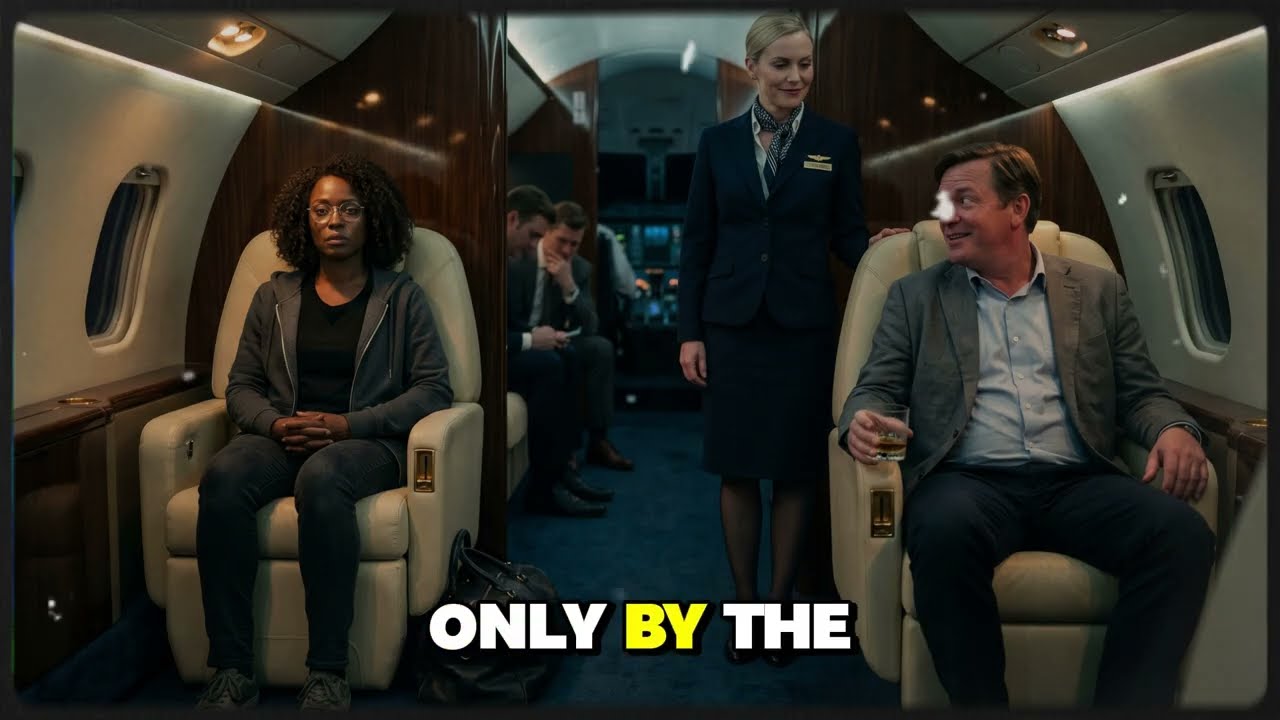
“You made a series of decisions.”
Valerie’s voice remained calm.
“You looked at my clothes. You questioned a valid booking. You moved me from a seat I paid for. You accepted mockery from another passenger. You treated my insistence on basic fairness as aggression.”
Miranda wiped her cheek.
“I was under pressure.”
“So were the people who watched you.”
Valerie paused.
“Pressure does not create values. It exposes which values are available when convenience disappears.”
Miranda asked the question she had come to ask.
“Can you forgive me?”
Valerie considered it.
“I don’t know.”
Miranda looked up.
“I thought you would say no.”
“Forgiveness is not a performance I owe you.”
The words settled between them.
“What matters now is whether you become a person who needs no powerful witness in the room before choosing restraint.”
Miranda left without receiving the relief she had hoped for.
She found work months later in a different industry.
Her life became quieter.
People stopped recognizing her.
Whether that anonymity became punishment or education depended on what she did when no one watched.
Valerie never returned to negotiations with Crestline.
Northbridge invested in Alder Regional under strict conditions.
Respectful-service training became mandatory at every level, including senior management.
Discrimination complaints went to an independent reporting office rather than local supervisors.
Cabin-conduct audits were performed without advance notice.
Executive bonuses were tied partly to passenger-dignity measures, complaint handling, and employee willingness to report misconduct.
Valerie visited Alder anonymously four times before approving the final agreement.
On one trip, she watched a gate agent kneel beside an elderly man who could not hear the boarding announcements.
On another, a flight attendant defended a migrant family when a passenger mocked their accent.
No one knew Valerie was present.
That was why the moments mattered.
Joanne contacted Elena several weeks later.
She invited her to interview for director of passenger experience at the new Alder initiative.
Elena arrived nervous and overprepared.
Valerie sat across from her with the incident report on the table.
“Why did you send this at 12:34 in the morning?” Valerie asked.
Elena took a breath.
“Because I knew that if I waited until morning, someone would convince me it was safer not to.”
“Were you afraid?”
“Yes.”
“Why send it anyway?”
Elena looked at the report.
“Because silence had already helped the wrong person once that night.”
Valerie hired her.
Crestline survived, but not comfortably.
It refinanced under harsher terms.
Several routes were sold.
The board ordered a full cultural audit.
Investors withdrew.
Corporate clients demanded new oversight.
The company remained in the air, but the confidence that once surrounded its name never fully returned.
Valerie continued building investments around a principle most business schools treated as difficult to measure.
Human dignity.
Northbridge expanded a scholarship program for first-generation engineering students.
It funded aviation training for young people from low-income communities.
It invested in transportation companies willing to make ethical conduct part of executive compensation rather than a sentence in an employee handbook.
Months later, Valerie spoke at a technology mentoring center in the neighborhood where her mother had once worked double shifts.
The audience was mostly students.
Some wore borrowed suits.
Some had taken two buses to attend.
Valerie stood at the podium and looked at them.
“Power is not convincing every room that you belong there,” she said.
“It is knowing who you are while the room is trying to make you doubt it.”
She told them that quiet people were often mistaken for weak people.
But silence could also be observation.
Preparation.
Control.
“The person saying the least may be the person seeing the most,” she said. “And when the moment arrives, they may be the only one who knows what must happen next.”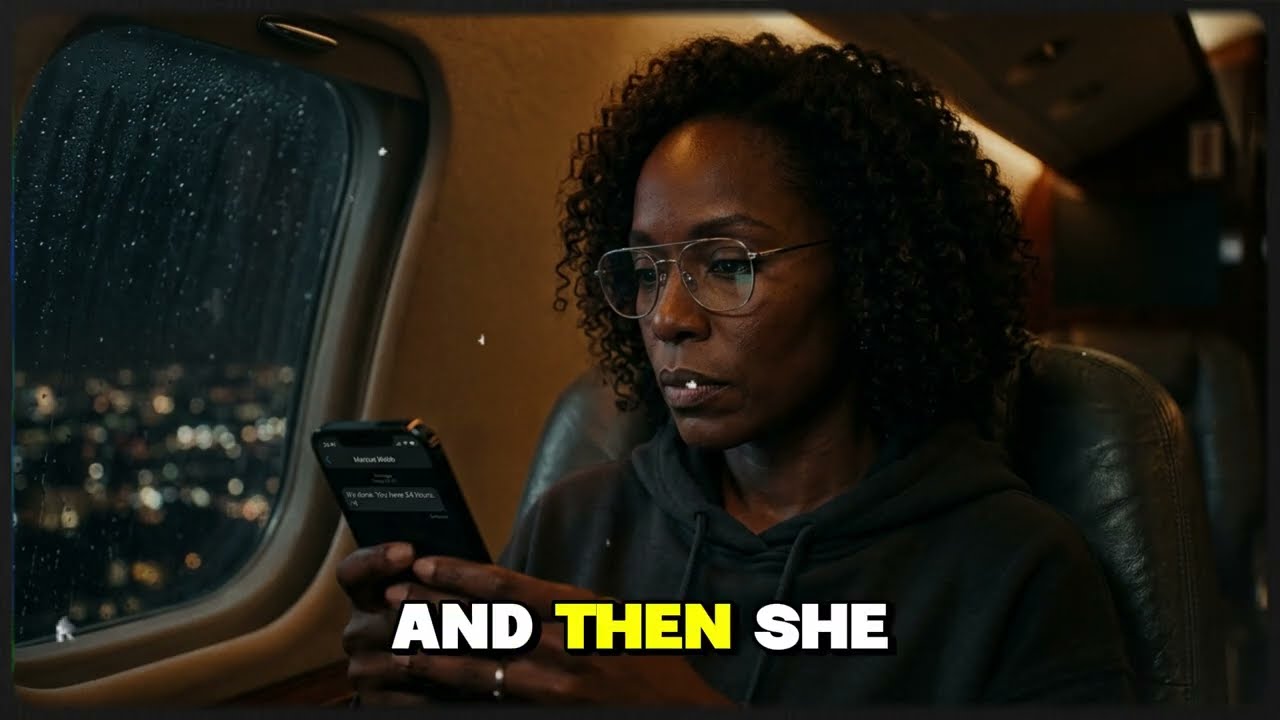
After the speech, Valerie did not remain onstage.
She walked through the crowd, spoke to students, and listened to their plans.
Then she left through a side entrance.
Her car moved slowly through the city.
From the back seat, she watched nurses waiting for buses, delivery drivers unloading boxes, cleaners entering office towers, and workers carrying the invisible weight of systems that depended on them while rarely honoring them.
Valerie thought about the aircraft.
The slap had lasted less than a second.
The consequences lasted months.
But the real lesson was not that Miranda had struck a billionaire.
It was that she believed she was striking someone who did not matter.
Valerie had spent a lifetime earning enough power to force institutions to listen.
She no longer believed that power should be used only to protect herself.
Too many people would never control eleven percent of a company.
They would never have lawyers available at midnight.
They would never be able to remove $240 million from a table.
That was precisely why those who could had a responsibility not to waste their position.
Because the true measure of power is not how quickly the world apologizes after discovering who you are.
It is whether you use that power to make sure the next person is treated with dignity before anyone asks for their name.