Chapter 1 — The Fleet That Believed It Could Not Lose
Pacific Ocean
June 4, 1942
7:00 a.m.
The ocean looked empty.
That was the first illusion.
For hundreds of miles around the Japanese fleet, there was nothing but blue water stretching toward the horizon.
No enemy ships.
No aircraft.
No warning.
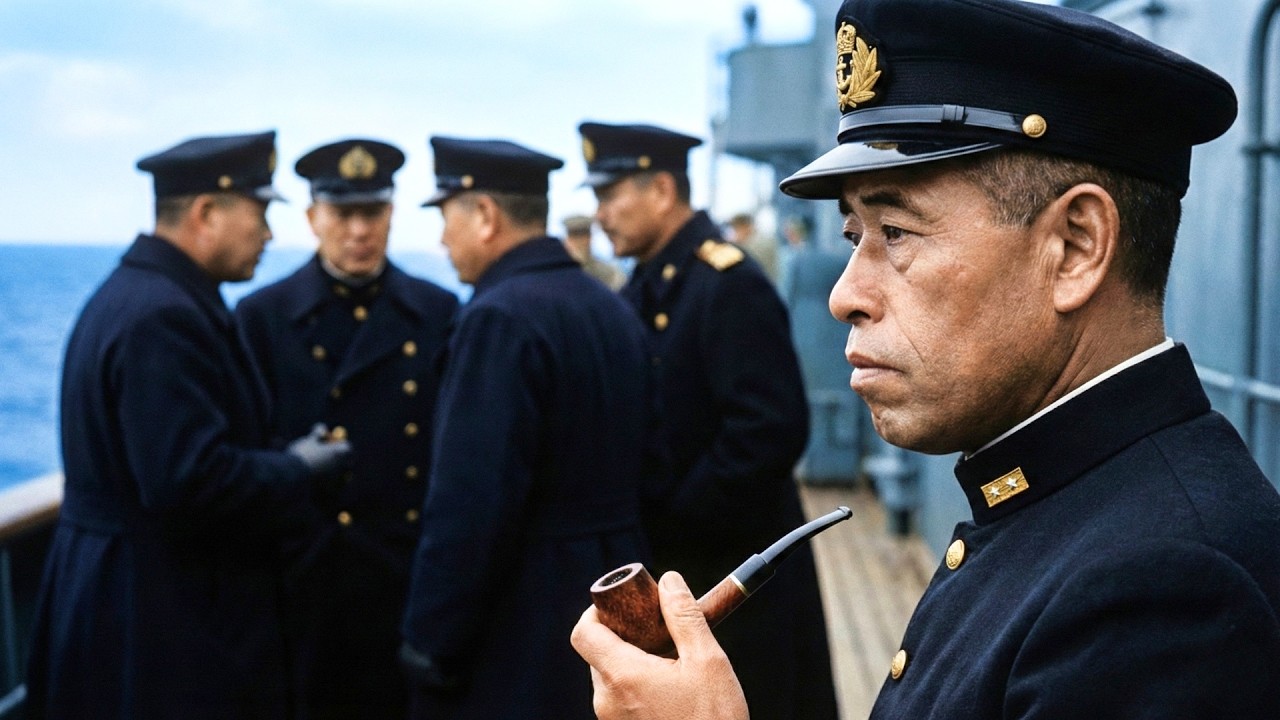
Only the endless Pacific and the sound of engines preparing for another victory.
On the bridge of the aircraft carrier Akagi, Admiral Chuichi Nagumo looked out over the sea.
The man standing before him commanded one of the most powerful naval forces ever assembled.
Four aircraft carriers.
Hundreds of aircraft.
Thousands of sailors.
Some of the most experienced pilots in the Japanese Navy.
Just six months earlier, many of these same men had attacked Pearl Harbor and shocked the world.
They had proven that Japan could strike first.
Strike hard.
And win.
Now, at Midway, they believed they were about to do it again.
The mission seemed almost impossible to fail.
The target was a small American island far from the main battlefields.
Midway Atoll.
A lonely outpost in the Pacific.
But its location made it strategically important.
If Japan captured Midway, it could push its defensive perimeter farther east.
It could threaten Hawaii.
It could force the United States Navy into a decisive battle.
A battle Japan believed it would win.
Inside Japanese headquarters, the plan had been carefully designed.
Admiral Isoroku Yamamoto, the architect of the Pearl Harbor attack, believed the United States needed to be defeated quickly.
Japan’s industrial capacity could not match America’s.
Time was the enemy.
A decisive victory was necessary.
Midway would be the trap.
The Americans would respond.
Their carriers would come forward.
Japan would destroy them.
The balance of power in the Pacific would change forever.
But there was one problem.
The Japanese believed they were setting a trap.
They did not know they were already inside one.
The Enemy Who Was Listening
Weeks before the battle began, American intelligence officers were already working through Japanese communications.
Inside a small, heavily protected building in Hawaii, a group of codebreakers stared at messages that seemed meaningless to most people.
Letters.
Numbers.
Fragments.
Patterns.
To everyone else, it was noise.
To them, it was a map.
The Japanese naval code was not completely broken.
But enough had been discovered.
Enough to understand that something large was coming.
A target.
A location.
A date.
The Americans had a chance.
The intelligence officers faced a difficult question.
Where would Japan strike?
The answer was not obvious.
The Japanese had many possible targets.
But slowly, a pattern emerged.
The codebreakers believed the target was Midway.
Now they needed proof.
One of the cleverest steps came from creating a false message.
American forces sent a report claiming Midway had a problem with its fresh water supply.
Soon afterward, Japanese communications mentioned a similar issue.
The Americans had confirmation.
The target was Midway.
The Japanese fleet was moving into a battle it believed was a surprise.
But the surprise belonged to America.
Admiral Nagumo’s Impossible Morning
At sunrise on June 4, Nagumo faced a commander’s nightmare.
A naval battle was not a single decision.
It was a chain.
Every choice affected the next.
Every delay mattered.
Every assumption carried consequences.
And war punished hesitation.
The first Japanese strike launched toward Midway.
The aircraft disappeared into the morning sky.
Bombers.
Fighters.
Torpedo planes.
They carried the confidence of a navy that had dominated every battle so far.
But when they reached Midway, they discovered the island was not destroyed.
The American defenses were still operating.
The attack had caused damage.
But not enough.
A message came back.
The strike leader reported that another attack was needed.
The island required a second bombing run.
That message created a crucial moment.
Nagumo had already prepared reserve aircraft.
Some were armed for attacking ships.
Others carried weapons designed for land targets.
The question became:
What should he do?
Then another report arrived.
A scout plane had discovered something unexpected.
American ships.
The message was incomplete.
The location was unclear.
But it changed everything.
On the bridge of Akagi, officers moved quickly.
The situation was becoming complicated.
Nagumo needed information.
Was the American force close?
How many ships?
Were carriers present?
The Japanese commander now faced a decision that would define history.
His aircraft reserves were being prepared.
His planes needed to be rearmed.
His crews needed time.
His enemy might be approaching.
And every minute mattered.
A staff officer entered.
“Enemy ships sighted.”
The room changed.
The words were simple.
But everyone understood their meaning.
The Americans were not supposed to be there.
Not yet.
Not like this.
For a moment, the Japanese advantage began to disappear.
Because the plan depended on surprise.
And surprise was gone.
The Countdown Begins
Below deck, Japanese aircraft handlers worked among bombs, fuel lines, and machinery.
They had no idea that history was moving toward them.
They only knew they had a mission.
Prepare the planes.
Move quickly.
Follow orders.
The flight deck was filled with activity.
Men carrying weapons.
Aircraft engines starting.
Commands shouted across the carrier.
The massive ship functioned like a living machine.
But machines have weaknesses.
A single delay.
A single mistake.
A single unexpected event.
Above them, American aircraft were already approaching.
Slowly.
Quietly.
From different directions.
Many would fail.
Many would be shot down.
But they had done something important.
They had forced Japan’s carriers to remain exposed.
Nagumo looked at the information in front of him.
The decision was becoming impossible.
Attack the island again?
Prepare for American ships?
Wait for more information?
Every option carried danger.
He was not a reckless commander.
That is what makes the story more complicated.
Nagumo was experienced.
Careful.
Methodical.
He believed in following established naval doctrine.
But Midway was not a normal battle.
It was a battle where information moved faster than decisions.
And somewhere above the Pacific…
American dive bombers were climbing toward altitude.
They had no idea they were approaching the most important target of the war.
The Japanese carriers were still intact.
Their aircraft were still on deck.
Their crews were still working.
Their commanders still believed they had time.
They were wrong.
Because in just a few minutes…
the sky above Midway would open.
And the fleet that had seemed unstoppable would begin burning.
To be continued — Chapter 2: The Codebreakers Who Knew the Japanese Plan Before the Admirals Did