The slap echoed across the private dining room on the forty-second floor of Whitmore Tower.
Crystal glasses trembled.
A silver fork slipped from someone’s hand and struck a marble plate with a sound that seemed unnaturally loud.
Twenty-two of the most powerful people in the city stared at Maya Johnson.
She stood beside the long dining table in a white chef’s jacket, her head turned slightly from the impact. A red mark was already forming across her cheek.
Across from her, Victoria Hail lowered her hand.
“You should know where you stand,” Victoria said.
No one moved.
Beyond the floor-to-ceiling windows, the city glittered beneath them—bridges, towers, traffic, and thousands of lives reduced by distance to small movements of light.
The room had been designed to create that feeling.
Everything about it suggested elevation.
The veined marble.
The dark walnut walls.
The handmade glass fixtures suspended like frozen rain above the table.
Even the chairs were positioned slightly lower than Ethan Whitmore’s place at the head, a subtle architectural reminder that every guest had entered someone else’s territory.
Maya had understood that the moment she arrived.
She had simply never believed the room made anyone larger.
Hours earlier, she had been in the kitchen behind the dining room, checking a sauce with the concentration of a surgeon.
At thirty-two, Maya had built a reputation for precision.
She did not shout across kitchens.
She did not throw pans.
She did not confuse fear with leadership.
When something went wrong, her voice usually became quieter.
That was when everyone listened.
She had started cooking as a teenager in Georgia, standing beside her grandmother in a small kitchen where nothing was measured and everything was remembered.
Her grandmother could tell when cornbread was ready by smell.
She knew whether a stew needed more time by the sound of the bubbles against the lid.
Maya learned that good cooking was not just chemistry.
It was attention.
Later, she trained in formal kitchens where everything was measured, labeled, timed, and documented. She worked under chefs who believed humiliation sharpened talent. She survived restaurants where sleep was considered weakness and injury was treated as poor planning.
She learned French technique, Japanese restraint, West African layering, and the agricultural rhythms of the American South.
By twenty-seven, she had worked in three Michelin-starred restaurants.
Critics wrote that her food felt “emotionally precise.”
One review said her dishes did not ask diners to admire them.
They asked diners to tell themselves the truth.
Maya never framed the review.
She did not keep awards in the kitchen.
Praise was useful for reservations.
It was not useful for seasoning.
Seven years earlier, Ethan Whitmore had hired her for a private dinner.
He had already dismissed four chefs that year.
One overcooked fish.
One served food late.
One argued with him over wine.
The fourth had lasted less than two hours.
People described Ethan as impossible to please.
Maya thought that description was lazy.
He was difficult, but specific.
There was a difference.
During that first dinner, Ethan said nothing after the opening course.
He said nothing after the second.
After dessert, he left the dining room and entered the kitchen.
He knocked before opening the door.
That detail stayed with Maya.
Most wealthy clients treated kitchens as invisible machinery. Ethan entered as though he understood it was someone else’s workplace.
He looked at Maya.
“You’re the only one,” he said.
“The only one what?”
“The only person I want cooking for me.”
From then on, Maya became the chef Ethan called for private dinners, political gatherings, negotiations, and the rare evenings when he ate alone.
Their relationship remained professional.
He never entered her kitchen without permission.
He never changed a menu after approving it.
He gave her technical feedback once in seven years.
A sauce was too sweet.
He was right.
That earned her respect more than flattery would have.
The dinner at Whitmore Tower had not originally been hers.
The event chef assigned to it had received a call that afternoon. His daughter had been hospitalized after a car accident.
By four o’clock, twenty-two guests had confirmed attendance, a six-course menu had been planned, and the service staff was already in place.
Ethan’s office called Maya.
“We need you,” his assistant said.
Maya looked at the menu, the delivery schedule, and the kitchen roster.
“Give me two minutes.”
She reviewed what had already been prepared.
Then she agreed.
Not because she wanted the attention.
Because an incomplete standard bothered her.
By five-thirty, Maya had reorganized the kitchen.
She reassigned stations, tasted every sauce, discarded one stock, adjusted the timing of the second course, and simplified a garnish that would have delayed service.
The staff followed her quickly.
She did not waste movement.
She did not explain what could be demonstrated.
By seven, the room was ready.
The guests never knew there had been a crisis.
Victoria Hail arrived twelve minutes late.
She entered slowly, as though punctuality was an obligation for other people.
At forty-one, Victoria was the founder of Hail Ventures, a real estate investment firm that had transformed entire neighborhoods and displaced enough residents to create several lawsuits and one documentary.
She wore a black silk suit cut sharply at the shoulders.
Her hair was flawless.
Her expression suggested that everything before her had been arranged for evaluation.
Victoria measured rooms by ownership.
She measured people by usefulness.
She had spent years converting wealth into proof that she was more disciplined, more intelligent, and more deserving than those who had less.
To her, service workers were not individuals.
They were functions.
Drivers drove.
Servers carried.
Assistants obeyed.
Chefs remained in kitchens.
That evening, she had come to discuss a major waterfront development with two institutional investors attending Ethan’s dinner.
The project was valuable.
Victoria expected it to become more valuable after dessert.
Before taking her seat, she inspected the room, the guests, the flowers, and the staff.
Her eyes lingered briefly on Marcus Reed.
Marcus was twenty years old and had been working at Whitmore Tower for three weeks.
His uniform fit poorly at the shoulders.
He carried a tray of sparkling water with both hands.
As he stepped around a chair, the heel of his shoe caught the edge of the carpet.
He recovered immediately.
The tray did not fall.
But several drops of water landed near Victoria’s shoe.
She looked down.
Then she looked at Marcus.
“What is wrong with you?”
The room quieted slightly.
Marcus swallowed.
“I’m sorry, ma’am.”
“You nearly poured that on me.”
“I caught the tray.”
“That is not an accomplishment.”
The young man’s face reddened.
Victoria lifted one foot and examined the leather as though it had been damaged.
“There are standards in places like this.”
Marcus looked toward the floor supervisor.
The supervisor hesitated.
Victoria continued.
“If you cannot carry water across a room, you should not be working in one.”
The guests nearest her heard every word.
One looked uncomfortable.
Another pretended to study the wine list.
No one intervened.
Maya heard the change in the dining room from the kitchen.
It was not the volume.
It was the absence of ordinary sound.
She stepped through the service door.
Marcus stood holding the tray, his hands locked too tightly around the edges.
Victoria stood in front of him.
Maya approached.
“I’m the chef overseeing service tonight,” she said. “I apologize for the interruption.”
Victoria looked at her jacket, then at her face.
“I was speaking to him.”
“I know.”
“Then you should remain in the kitchen.”
Maya’s expression stayed neutral.
“Marcus, please return the tray and take a minute.”
Marcus looked grateful and ashamed at the same time.
He left.
Victoria turned to Maya.
“You are excusing incompetence.”
“No. I’m managing a minor mistake.”
Victoria’s eyes narrowed.
“People like that should know when they are not suited to a certain environment.”
Maya held her gaze.
“People usually become suited to an environment by being allowed to learn in it.”
A man at the table lowered his glass.
Victoria gave a thin smile.
“How generous.”
Maya inclined her head and returned to the kitchen.
She did not allow the exchange to change the food.
The first course was chilled corn velouté with crab, smoked pepper oil, and a crisp made from benne seed.
Conversation slowed after the first bite.
The second course paired scallops with preserved citrus and fermented chili.
The third was a delicate broth poured tableside.
By the fourth course, several guests had stopped discussing business entirely.
Maya had designed the menu like a conversation.
Lightness first.
Then warmth.
Then depth.
Each plate prepared the diner for the next without announcing what it was doing.
The fifth course was lamb.
Maya had sourced it from a small farm she trusted.
The meat had been marinated with garlic, rosemary, and toasted coriander, then coated in a herb crust and served with smoked eggplant, charred onion, and a concentrated lamb jus.
She had adjusted the final seasoning herself.
Every plate left the kitchen exactly as intended.
When the lamb reached the table, the room became quiet for the right reason.
One guest closed his eyes after tasting it.
Another leaned toward his partner and whispered something approving.
Victoria took one bite.
Then she placed her knife and fork against the plate.
Too deliberately.
“This is oversalted.”
The guest beside her looked surprised.
“I don’t think it is.”
Victoria did not look at him.
“The sauce is aggressive. The crust is confused. And the presentation looks unfinished.”
No one agreed.
That seemed to irritate her.
She raised her voice.
“I would like to speak to whoever is responsible.”
The floor supervisor entered the kitchen.
“Maya.”
She already knew.
She removed her apron, checked that the next course was under control, and walked into the dining room.
Victoria waited with the expression of someone about to demonstrate authority.
“I’m Maya Johnson,” Maya said. “I prepared the dish.”
Victoria gestured toward the plate.
“It is far too salty.”
“I’m sorry it isn’t to your preference.”
“Preference?”
Maya remained still.
“I can prepare another entrée for you.”
“That is not the issue.”
“What would you prefer?”
“I would prefer an acknowledgment that the food is poorly executed.”
Maya looked at the untouched plates around the table.
“I can acknowledge that you do not enjoy it.”
Several guests shifted in their chairs.
Victoria leaned back.
“You are being defensive.”
“No.”
“You are.”
“I offered to replace the dish.”
Victoria’s voice grew sharper.
“You should be concerned that a guest of my experience finds your work unacceptable.”
Maya did not ask what experience Victoria meant.
She waited.
The silence made Victoria feel challenged.
She stood.
“You people always do this.”
Maya’s eyes changed slightly.
“What people?”
“Staff who think calmness is the same as competence.”
No one at the table moved.
Victoria pointed toward the plate.
“Say that the food is not good enough.”
Maya spoke evenly.
“I will not say something I do not believe.”
Victoria stepped closer.
“You have no idea how rooms like this work.”
“I know exactly how this room works.”
The answer was quiet.
It struck harder than defiance.
Victoria slapped her.
The sound traveled across marble, crystal, and glass.
Maya’s head turned.
The room froze.
She did not touch her cheek.
She did not step back.
Slowly, she faced Victoria again.
“You should know where you stand,” Victoria said.
Then the main doors opened.
Ethan Whitmore entered.
He had returned early from a meeting across town.
At sixty, Ethan moved without hurry because he had spent decades learning that other people would wait.
He took three steps into the room and stopped.
He saw the guests staring.
He saw the staff motionless against the wall.
He saw Maya standing beside the table with a red mark across her face.
His expression emptied.
“Who did this?”
No one answered.
The floor supervisor stepped forward.
“Ms. Hail objected to the main course. Chef Johnson offered a replacement. The conversation escalated.”
Ethan looked at him.
“And?”
“Ms. Hail struck her.”
Maya gave one small nod.
Ethan turned toward Victoria.
There was no anger in his face.
That was worse.
Victoria straightened.
“Ethan, this has been exaggerated. Your cook became insubordinate.”
Ethan said nothing.
“She refused to accept criticism,” Victoria continued. “It was a tense moment.”
Still nothing.
Victoria looked around the table for support.
None came.
Finally, she said, “It’s only a cook.”
Ethan’s voice was low.
“No.”
One word.
The room seemed to contract around it.
“She is not only anything.”
Victoria’s confidence faltered.
Ethan walked to Maya’s side.
“For seven years, Maya Johnson has prepared every private meal I have considered important.”
He looked down the table.
“She has cooked for heads of government, industry leaders, artists, and people who have crossed oceans to sit at one of her tables.”
Maya remained silent.
“She has declined executive positions in Paris, Copenhagen, and London. She has trained chefs who now lead kitchens of their own.”
Victoria’s face tightened.
Ethan continued.
“The chef assigned to tonight’s dinner had a family emergency. Maya received two hours’ notice. She entered an unfamiliar service plan, reorganized this kitchen, and produced six courses at a level most restaurants fail to reach with six months of preparation.”
He turned fully toward Victoria.
“You did not expose incompetence tonight.”
His voice became colder.
“You exposed yourself.”
No one looked at Victoria now.
That was the moment she understood the room had changed.
The same people who had laughed at her remarks earlier began avoiding her eyes.
One investor placed his napkin beside his plate.
Another quietly moved his chair away from her.
Victoria looked toward the two men she had expected to close the waterfront transaction with.
They were already speaking to Ethan’s assistant.
Ethan addressed the room.
“Hail Ventures is currently in discussions with three companies represented here tonight.”
Victoria’s head snapped toward him.
“Ethan.”
“Those discussions are suspended pending a review.”
“You cannot make that decision for everyone.”
“No,” Ethan said. “I can make it for Whitmore Capital.”
One of the investors cleared his throat.
“Our firm will also pause.”
The second man nodded.
“So will ours.”
Victoria stared at them.
“You are ending a major transaction over a disagreement with a chef?”
A woman at the far end of the table spoke for the first time.
“This is not the first disagreement.”
Heads turned toward her.
She was the chief operating officer of a national hotel group.
“Last year, you humiliated one of my parking attendants because your car took six minutes to arrive.”
Victoria’s face changed.
Another guest spoke.
“You screamed at your assistant in the lobby of the Bellmont.”
A third said, “There was also the waiter video.”
The fragments began connecting.
Stories people had dismissed as isolated behavior became a pattern.
A former employee reduced to tears in a conference hallway.
A driver fired after refusing to speed through a school zone.
A restaurant server insulted while someone nearby recorded the exchange.
Victoria looked around the table.
Every face now held memory.
The evening continued, but the dinner was over in every meaningful sense.
Guests spoke in careful tones.
Phones appeared beneath the table.
Assistants began sending messages.
Ethan’s legal counsel arrived quietly and took notes outside the room.
Victoria tried to approach Ethan near the windows.
His assistant stepped between them.
“Mr. Whitmore is unavailable.”
“He is ten feet away.”
“He remains unavailable.”
For the first time that evening, Victoria had no control over access.
She found Maya in the service corridor several minutes later.
Maya was reviewing dessert plates as though nothing had happened.
Victoria stopped beside her.
“I want to apologize.”
Maya looked at her.
“I lost my temper.”
“That is what happened at the end.”
Victoria hesitated.
“What does that mean?”
“The slap was the final act. It was not the first.”
“I said I was sorry.”
“You are sorry now.”
Victoria’s jaw tightened.
“I am trying to do the right thing.”
Maya set down the tasting spoon.
“Are you sorry because you understand what you did, or because the room stopped protecting you?”
Victoria opened her mouth.
Nothing came.
Maya continued.
“You embarrassed Marcus before you spoke to me. You dismissed him because he was young and serving you. You dismissed me because I wore a chef’s jacket.”
“I did not know who you were.”
“That is not a defense.”
Victoria looked away.
Maya’s voice remained controlled.
“I have spent my entire career being judged before I finish a sentence. People see my skin, my age, my uniform, and decide how much knowledge can reasonably fit inside me.”
Victoria said nothing.
“The problem is not that you misjudged an accomplished chef. The problem is that you believe accomplishment is required before dignity becomes mandatory.”
The service corridor was quiet except for the sound of plates moving in the kitchen.
Victoria’s eyes filled, though Maya could not tell whether the tears came from shame or fear.
“Can you forgive me?”
“Not tonight.”
The answer was not cruel.
It was final.
“Maybe one day you will understand what happened here,” Maya said. “But understanding will require more than losing a deal.”
Victoria left the tower alone.
No one escorted her to the elevator.
No one hurried to hold the door.
By the following morning, Hail Ventures had been removed from two major development discussions.
Within a week, a former assistant filed a workplace complaint.
Three hospitality companies announced they were reviewing incidents involving Victoria at their properties.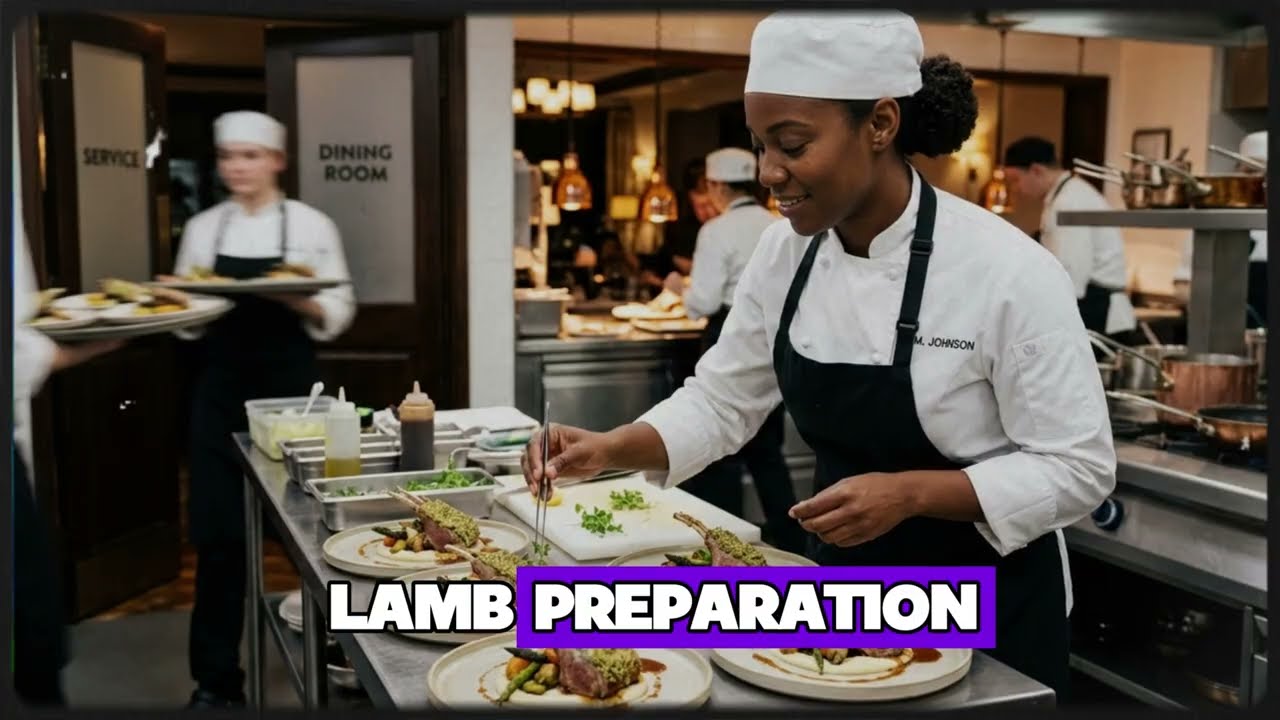
The waterfront transaction never recovered.
Whitmore Capital withdrew permanently.
Other investors followed.
The official explanation cited concerns about leadership judgment, reputational exposure, and organizational culture.
All of it was true.
After Victoria left, Ethan returned to the table.
He did not attempt to restore the evening with jokes or speeches.
He stood at the head of the room.
“What happened here should not have required my arrival to become unacceptable,” he said.
Several guests lowered their eyes.
Ethan looked toward the staff.
“Silence protected the wrong person tonight.”
Then he asked Maya to come into the room.
She resisted at first.
Dessert was still being plated.
Ethan waited.
Maya finally stepped out of the kitchen.
The guests rose.
The applause began slowly, then filled the room.
Marcus stood near the service door, clapping harder than anyone.
Maya accepted the recognition with a small nod.
She did not smile broadly.
She did not perform gratitude.
Several guests approached her afterward.
One offered a restaurant partnership.
Another handed her a card and asked whether she consulted for hotels.
A third apologized for saying nothing when Victoria insulted Marcus.
Maya thanked them without making promises.
Then she returned to the kitchen.
The pastry team was finishing the final plates.
A young line cook named Tessa looked at Maya’s cheek.
“Are you all right?”
Maya checked the chocolate glaze.
“Yes.”
Tessa hesitated.
“How did you stay so calm?”
Maya looked toward the service door.
“You learn your balance before someone tries to take it from you.”
Marcus stood nearby, his earlier shame still visible.
Maya called him over.
“You recovered the tray.”
He blinked.
“What?”
“When you slipped. You recovered it.”
“I still made a mess.”
“You spilled three drops.”
He looked down.
“She made me feel like I shouldn’t be here.”
Maya handed him a clean service cloth.
“Then come back tomorrow and prove that feeling wrong.”
Near midnight, the kitchen closed.
The final counters were cleaned.
Knives were wrapped.
Stocks were labeled.
Maya changed out of her chef’s jacket and folded it into her bag.
In the elevator, she caught her reflection in the mirrored wall.
The mark on her cheek had begun to fade.
She thought about Victoria’s face when the investors withdrew.
She thought about Ethan arriving at the exact moment everyone else had chosen silence.
She appreciated what he had done.
But she also knew her worth had not appeared when he defended her.
It had existed before he entered the room.
It existed while Marcus was being humiliated.
It existed in the kitchen when no guests knew her name.
It would exist tomorrow when the applause had become a story people told over lunch.
The elevator reached the lobby.
Maya stepped outside.
The city moved around her without ceremony.
Taxis passed.
Restaurant workers headed home.
Delivery crews unloaded trucks for the morning.
Somewhere, another kitchen was opening before dawn.
Maya walked toward the subway carrying her old knife case.
She was not a symbol.
She was not a lesson built for the comfort of powerful people.
She was a chef who had spent years mastering her work and herself.
The room on the forty-second floor had finally recognized her.
But dignity had never depended on that room.
It had entered with her.
And it left with her long after the doors closed.


