CHAPTER ONE — THE ENGINES NOBODY WANTED
The first engine arrived on a rainy Tuesday morning.
The second arrived two hours later.
By sunset, there were six.
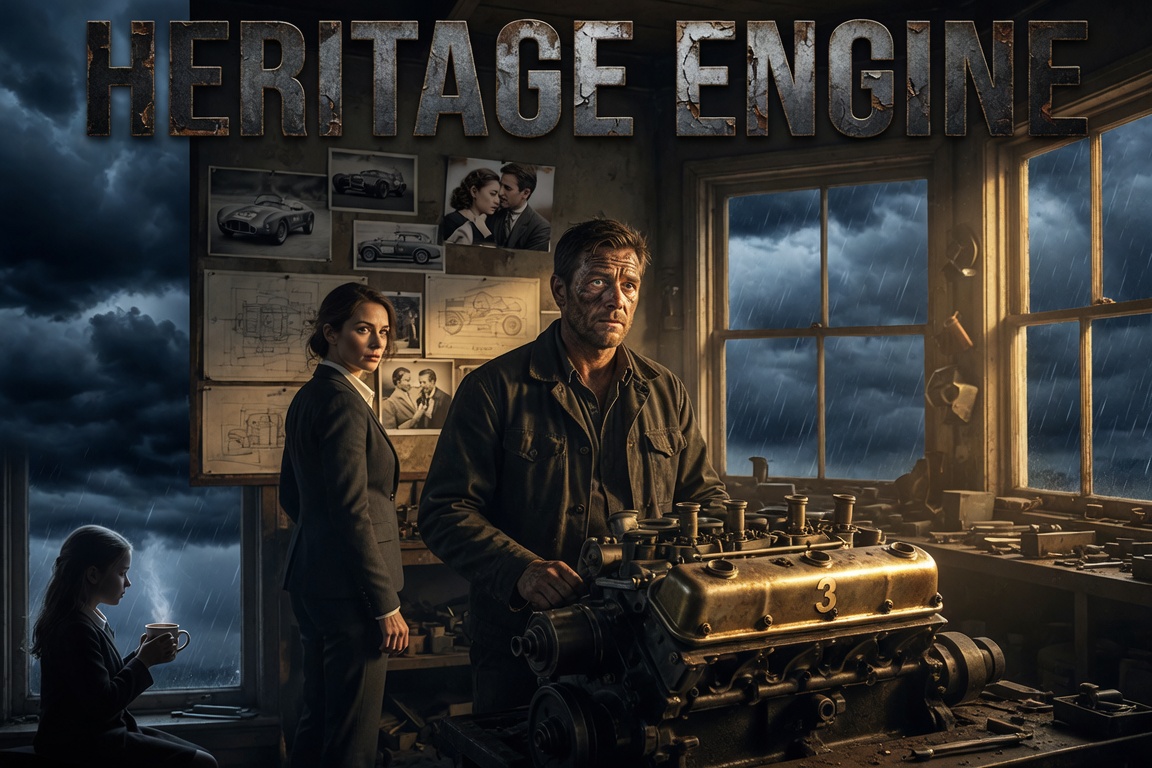
Six massive industrial engines sitting behind my small repair shop like forgotten pieces of someone else’s failure.
My neighbor called them junk.
My old customers called them scrap.
The delivery driver called them “a waste of space.”
The CEO who sent them called them worthless.
She was wrong.
But she would not know that for seven years.
My name is Samuel Carter.
I was forty-six years old when Aurora Dynamics left six dead engines outside my garage and changed my life without realizing it.
At the time, I owned Carter Auto & Industrial Repair.
Not a fancy business.
No glass building.
No corporate logo.
No investors.
Just a brick building at the edge of town with a faded sign, three repair bays, and a coffee machine that had been broken since 2018.
My customers were farmers.
Truck drivers.
Small business owners.
People who cared more about whether something worked than how expensive it looked.
I liked those people.
They reminded me of myself.
My wife, Rachel, used to say:
“Sam, you don’t repair machines.”
I would laugh.
“What do I repair?”
She would smile.
“People’s ability to keep going.”
I never thought much about that.
Until she was gone.
Cancer took Rachel when she was forty-one.
Too young.
Always too young.
After that, my world became my daughter Lily.
She was twelve then.
Now she was nineteen.
College.
Her own apartment.
Her own life.
The shop became quieter.
But I kept working.
Because stopping meant thinking.
And thinking meant remembering how empty the house felt without Rachel.
That Tuesday morning, I was replacing a transmission when a large truck stopped outside.
I wiped my hands.
A man in a company jacket walked in.
“Samuel Carter?”
“Yes.”
“Delivery for you.”
I looked behind him.
“Six engines?”
He nodded.
“From Aurora Dynamics.”
I frowned.
Aurora Dynamics was not a small company.
They built advanced industrial systems.
Power generation.
Manufacturing technology.
Government contracts.
The kind of company that never needed a small repair shop like mine.
“Why are they sending me engines?”
The driver shrugged.
“Manager said you’d know what to do.”
That answer bothered me.
Because I didn’t.
The engines were unloaded one by one.
Large.
Heavy.
Expensive.
Even broken, they looked valuable.
The driver handed me a clipboard.
“Sign here.”
I looked at the paperwork.
Under reason for disposal:
FAILED PROTOTYPES.
I stared.
“Disposal?”
“Yes.”
“They’re throwing these away?”
The driver shrugged.
“Apparently.”
He left.
I stood in the rain looking at six engines worth more than my entire building.
Something felt wrong.
Machines have personalities.
People laugh when I say that.
But anyone who works with them long enough understands.
A machine tells you things.
The sound.
The vibration.
The pattern of failure.
These engines did not feel dead.
They felt abandoned.
CHARACTER FILES
Samuel Carter — 46
Owner of Carter Auto & Industrial Repair.
Appearance: Broad shoulders, gray beginning in his hair, worn work clothes, hands marked by decades of repair work.
Personality: Patient, humble, observant, loyal.
Deep wound: Losing his wife made him afraid of building attachments that could disappear.
Greatest fear: Becoming unnecessary to his daughter after she creates her own life.
Secret desire: To prove his years of quiet work mattered.
Moral belief: Anything broken deserves a chance before being discarded.
Greatest weakness: He undervalues himself because he measures worth by helping others.
Greatest strength: He understands things others give up on.
Victoria Sterling — 39
CEO of Aurora Dynamics.
Appearance: Elegant, sharp, controlled, always perfectly dressed.
Personality: Brilliant, demanding, strategic.
Deep wound: Her father built Aurora Dynamics but died after trusting the wrong executives.
Greatest fear: Losing control of the company.
Secret desire: To prove she deserves leadership without relying on her family name.
Moral belief: Survival requires difficult decisions.
Greatest weakness: She sees people as resources during pressure.
Greatest strength: Exceptional strategic thinking.
Lily Carter — 19
Samuel’s daughter.
Appearance: Curious eyes, warm smile, artistic style.
Personality: Independent, compassionate, intelligent.
Deep wound: Losing her mother forced her to grow up quickly.
Greatest fear: Seeing her father alone.
Secret desire: For Samuel to stop living only for others.
Strength: Emotional honesty.
Daniel Hayes — 55
Former Aurora Dynamics engineer.
Appearance: Quiet, serious, always carrying notebooks.
Personality: Analytical, cautious, principled.
Deep wound: Was pushed out after questioning company decisions.
Greatest fear: Seeing his work destroyed by corporate ambition.
Strength: Technical brilliance.
Richard Sterling — 68
Founder of Aurora Dynamics.
Appearance: Older businessman, respected public image.
Personality: Visionary but controlling.
Deep wound: Believes weakness destroyed everything he built.
Greatest fear: His legacy collapsing.
Weakness: He sacrifices people for success.
Strength: Innovation.
CHAPTER TWO — THE WOMAN WHO THREW AWAY A FORTUNE
Three days after the engines arrived, Victoria Sterling walked into my shop.
I knew who she was immediately.
Not because I followed CEOs.
Because her face was everywhere.
Magazines.
Business news.
Airport advertisements.
Victoria Sterling.
The woman who transformed Aurora Dynamics from a family company into a global technology empire.
She entered my shop wearing a dark coat and expensive shoes that had no business standing on an oil-stained floor.
The contrast was almost funny.
Almost.
“Mr. Carter.”
I wiped my hands.
“Yes?”
She looked toward the engines outside.
“You received the delivery.”
“I did.”
“Good.”
She did not smile.
Most powerful people do not smile when they are inspecting problems.
“What exactly am I supposed to do with them?”
“Nothing.”
I frowned.
“Nothing?”
“They are scrap.”
I looked at the engines.
“No.”
Her eyes moved toward me.
“No?”
“They’re not scrap.”
For the first time, she looked interested.
Then annoyed.
“Mr. Carter, my engineers spent two years on those prototypes. They failed every required test.”
“Failed how?”
She paused.
“You’re a mechanic.”
“And you’re a CEO.”
Her expression hardened slightly.
“What does that mean?”
“It means we both know titles don’t fix problems.”
Silence.
Then she stepped closer.
“Those engines cost my company twelve million dollars.”
“And you’re throwing them away?”
“Yes.”
“Why?”
“Because they failed.”
I looked at the engines.
Then back at her.
“Or because someone failed to understand them.”
That sentence changed her expression.
Only for a moment.
But I saw it.
Doubt.
She covered it quickly.
“I don’t have time for theories.”
“Then why come here?”
She looked away.
Interesting.
Because she did not have an answer.
Finally she said:
“My father built Aurora Dynamics.”
“I know.”
“He taught me one thing.”
“What?”
“Never waste resources.”
I looked at the engines.
“Then why are you?”
Her face became colder.
“Good luck with your scrap.”
She turned.
Before leaving, she stopped.
“One more thing.”
“Yes?”
“If you find something valuable, contact Aurora.”
I nodded.
“Sure.”
She left.
I watched her car disappear down the road.
Then I walked back toward the engines.
And for the first time, I opened one.
CHAPTER THREE — THE SOUND OF A LIE
The first engine took me nine days.
Not because it was complicated.
Because I refused to believe the company that built it had made such a simple mistake.
Machines rarely fail for one reason.
People do.
I spent nights studying the components.
Reading the damage.
Checking every system.
Then I found it.
A small adjustment.
A tiny calibration issue.
Something so simple that I almost laughed.
They had not built a bad engine.
They had tested it incorrectly.
I repaired the first one.
Then started the test.
The entire shop shook.
The old windows rattled.
The lights flickered.
My neighbor came running outside.
“Sam!”
I stepped back.
The engine roared.
Not a broken sound.
A living sound.
A sound that filled the garage.
I stared.
Because I knew immediately.
Aurora Dynamics had thrown away a fortune.
I recorded everything.
The results.
The numbers.
The performance.
Then I called the company.
Three times.
Nobody answered.
I emailed.
No response.
Finally, after a week, I received one message.
FROM: Aurora Dynamics Legal Department
SUBJECT: Unauthorized Testing of Company Property
The first sentence made me stop.
You are instructed to cease all examination of Aurora Dynamics assets.
Assets.
Interesting.
They called them worthless when they wanted to discard them.
Assets when they wanted control.
I read the message again.
Then I noticed something.
The email was not signed by Victoria Sterling.
It was signed by Richard Sterling.
Her father.
The founder.
I looked at the repaired engine.
Then at the message.
Something bigger was happening.
This was not about broken machines.
It was about someone wanting them forgotten.
CHAPTER FOUR — THE SECRET INSIDE THE ENGINES
A month later, all six engines were running.
Six.
Not one.
All six.
My small garage became the place where a billion-dollar mistake had been corrected.
Then Daniel Hayes walked through my door.
I knew him immediately.
His name was attached to several patents owned by Aurora.
“Samuel Carter?”
“Yes.”
He looked around.
Then at the engines.
His face changed.
“Where did you get these?”
“Aurora sent them.”
He went quiet.
“They actually threw them away?”
“Yes.”
Daniel stepped closer.
His hands trembled.
“Do you know what you have?”
I smiled slightly.
“Engines?”
“No.”
He looked at me.
“You have the technology Aurora buried.”
The room became silent.
“What?”
Daniel opened his briefcase.
Inside were documents.
Research.
Reports.
Emails.
“They weren’t failed prototypes.”
“Then what were they?”
He looked toward the engines.
“The first successful versions.”
I stared.
“Why would they bury them?”
Daniel hesitated.
Then said:
“Because the person who created them was about to expose what Richard Sterling did.”
The door behind us opened.
Victoria Sterling stood there.
She had heard enough.
Her expression was different.
No CEO mask.
No corporate confidence.
Only shock.
“Daniel.”
He turned.
“Victoria.”
Her eyes moved to the engines.
Then to me.
Then back.
“What exactly did my father hide?”
Nobody answered.
Because the truth was sitting in the garage.
Six engines.
Six discarded pieces.
Six reminders that the most valuable things are often the ones powerful people decide nobody should see.
And Victoria Sterling finally understood something.
The man she thought was repairing scrap…
had uncovered the secret that could destroy her family’s empire.