Heinrich Müller – The Gestapo Chief Who Vanished After World War II

On May 2, 1945, as Berlin burned around him, one of the most feared men in Nazi Germany walked into the underground bunker beneath the Reich Chancellery.
His name was Heinrich Müller.
He was not a battlefield commander.
He was not a famous politician.
He was the man who made people disappear.
As the head of the Gestapo — Nazi Germany’s secret police — Müller had spent years building a machine of surveillance, interrogation, torture, and terror. His signature appeared on orders that sent thousands of people to prisons, concentration camps, and execution sites.
But when Nazi Germany collapsed, something extraordinary happened.
The man who had spent years hunting enemies of the Reich became the greatest missing person of the Third Reich.
Hitler was dead.
Goebbels was dead.
Himmler was dead.
The Nazi leadership was either captured, killed, or exposed.
But Heinrich Müller?
He simply disappeared.
And for decades afterward, intelligence agencies, historians, and investigators searched for answers to one haunting question:
How could the most powerful police chief in Nazi Germany vanish without leaving a trace?
Heinrich Müller was born in Munich, Germany, in 1900.
Unlike many senior Nazis, he was not a charismatic speaker. He did not build his power through crowds or political rallies.
He built it through paperwork.
Müller joined the Bavarian police after World War I and developed a reputation as a ruthless, efficient investigator. He specialized in political intelligence and spent years tracking communist and opposition groups.
When Adolf Hitler came to power in 1933, Müller found himself in a unique position.
The Nazis needed men who understood surveillance.
Men who knew how to collect information.
Men who knew how to identify enemies before they could act.
Müller was exactly that kind of person.
But there was one problem.
He was not originally a loyal Nazi.
Many senior party members distrusted him because he had worked for the previous German government.
Yet Heinrich Himmler and Reinhard Heydrich recognized his talent.
They did not need a passionate believer.
They needed someone who could make the system work.
And Müller could.
In 1939, he became chief of the Gestapo.
The position placed him at the center of Nazi Germany’s terror network.
Every day, reports crossed his desk.
Every day, names were added to lists.
Every day, decisions were made about the lives of people who would never know his face.
Inside the Gestapo headquarters on Prinz-Albrecht-Strasse in Berlin, Müller became known simply as “Gestapo Müller.”
The nickname carried fear.
Former prisoners described him as cold, emotionless, and completely focused on results.
He rarely raised his voice.
He did not need to.
His authority came from knowing that thousands of people could be destroyed by a single order.
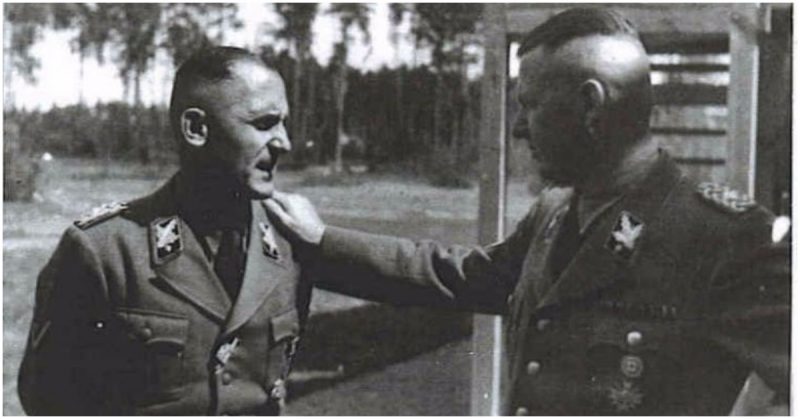
As World War II turned against Germany, Müller became increasingly obsessed with finding enemies inside the collapsing Nazi state.
He hunted resistance members.
He investigated anyone suspected of disloyalty.
He helped organize the suppression of opposition movements.
But as Allied forces approached Berlin in 1945, the world around him began to collapse.
The Nazi empire that had seemed unstoppable was now trapped inside a shrinking circle of destruction.
The Führerbunker became the final command center.
Above ground, Soviet artillery shells destroyed the city.
Below ground, Nazi leaders argued, panicked, and prepared for the end.
Müller remained there.
Witnesses later reported seeing him moving through the bunker during the final days.
Unlike others who were desperately searching for escape routes, Müller appeared strangely calm.
He had spent twelve years helping build the Nazi security state.
Now that state was disappearing around him.
On April 30, Adolf Hitler committed suicide.
Two days later, Berlin surrendered.
The Nazi leadership had fallen.
And then Heinrich Müller vanished.
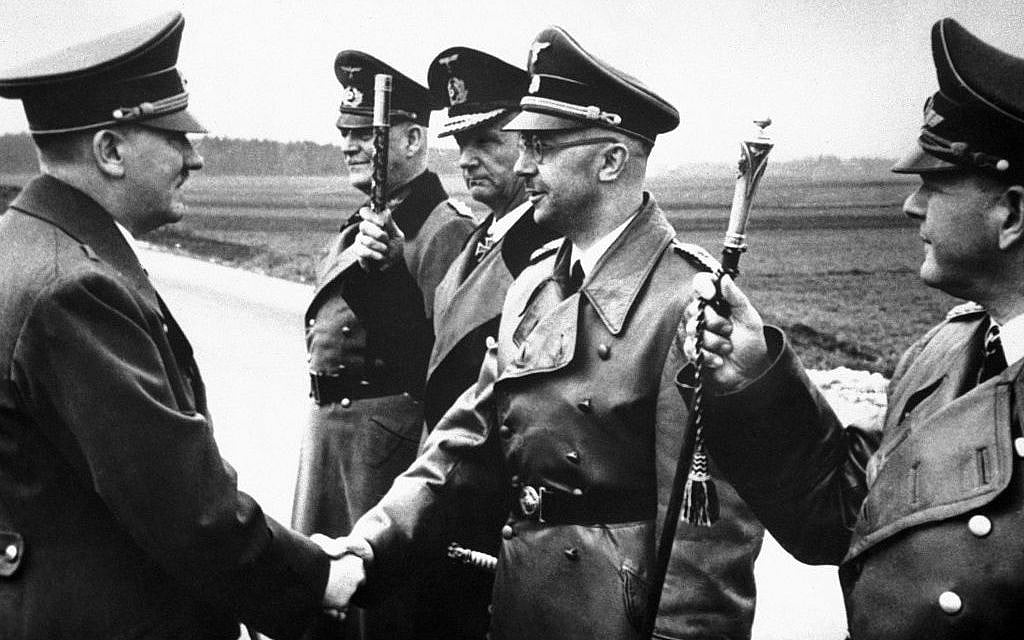
At first, many believed he must have been captured.
After all, the Allies were hunting Nazi officials everywhere.
The Nuremberg trials exposed the crimes of the regime.
Hermann Göring was captured.
Rudolf Hess surrendered.
Adolf Eichmann escaped but was eventually found decades later.
The world had proven that even powerful Nazis could be tracked down.
So investigators assumed Müller would eventually appear.
But he never did.
No confirmed photograph.
No verified arrest record.
No reliable witness.
No confession.
Nothing.
It was as if the head of Nazi Germany’s secret police had disappeared into thin air.
The mystery only grew because Müller was not an ordinary Nazi official.
He was one of the people who knew almost everything.
He knew the internal structure of the Gestapo.
He knew the names of collaborators.
He knew intelligence operations.
He knew the secrets of the Nazi regime.
To Allied intelligence agencies, finding Müller was not only about justice.
It was about information.
American and Soviet investigators searched for him.
Rumors appeared across Europe.
Some claimed he escaped to South America, joining other former Nazis who fled after the war.
Others believed Soviet intelligence captured him and used his knowledge.
Some even suggested Western intelligence agencies secretly protected him because his expertise on communist networks was valuable during the early Cold War.
Every theory had supporters.
None had proof.
Then came one of the strangest discoveries.
In 1963, workers renovating a cemetery in Berlin reportedly found documents suggesting Müller may have been buried there.
The claim created excitement.
Could the mystery finally be solved?
Investigators examined the evidence.
But doubts remained.
The identification was never considered conclusive.
Later searches failed to produce definitive proof.
The world still did not know what happened to Heinrich Müller.
The man who had built a system designed to track every person in Germany had successfully avoided being tracked himself.
But perhaps the biggest twist in Müller’s story was not that he escaped.
It was that the very system he created may have helped him disappear.
The Gestapo had spent years creating false identities, secret files, escape networks, and methods of hiding information.
After Germany collapsed, those same tools became useful to the people who knew how they worked.
Müller understood surveillance better than almost anyone alive.
He knew how investigators thought.
He knew how evidence was collected.
He knew what mistakes fugitives usually made.
The hunter understood how not to become the hunted.
And that possibility remains one of the darkest ironies of his story.
For decades, investigators continued searching.
In 2013, German authorities examined claims that Müller’s remains might have been located in Berlin.
Again, the evidence failed to provide a final answer.
Historians remain divided.
Some believe Müller died in Berlin during the final days of the war.
Others believe he escaped.
Some argue he lived under a new identity.
But no theory has been proven beyond doubt.
The mystery remains.
What makes Heinrich Müller’s disappearance so unsettling is not just the question of where he went.
It is what his disappearance represents.
A man who spent his career creating a world where nobody could hide became the one person who could.
The victims of the Gestapo had their identities stolen.
Their names were reduced to files.
Their lives were controlled by a government that watched everything.
Then, when that government collapsed, the man who helped build that machine disappeared into history without facing a public trial.
For the families who lost loved ones under Nazi persecution, that absence was painful.
There was no courtroom moment.
No final testimony.
No public confrontation.
Only a question that remained unanswered.
Some mysteries survive because nobody knows the truth.
Others survive because the truth is too disturbing to accept.
Heinrich Müller’s disappearance belongs to the second category.
Because whether he died in the ruins of Berlin or escaped into the shadows, one fact remains:
The man who spent years making others disappear became the greatest disappearance of the Nazi era.
History remembers dictators.
It remembers generals.
It remembers battles.
But sometimes, the most haunting stories belong to the people who vanished when their empire fell.
And Heinrich Müller’s unanswered fate remains a reminder that even after a regime collapses, the shadows it created can survive for generations.