The Japanese soldier stood before the firing squad on a cold January morning in 1948.

He was not facing the battlefield anymore.
There were no explosions. No charging troops. No cheering crowds.
Only a group of soldiers holding rifles, a silent execution ground near Yatai Hill in Nanjing, and the weight of a war that had left millions of people dead.
His name was Gichi Tanaka.
During the war, he had been portrayed in some Japanese wartime publications as a fearless warrior. After the war, he became one of the men held responsible for some of the darkest crimes committed during the Japanese invasion of China.
The man who once carried a sword into occupied territory was now standing powerless, waiting for the final order.
But his story did not begin in Nanjing.
It began years earlier, when an empire decided that expansion was the only path to survival.
In the early 1930s, Japan was transforming rapidly.
Factories were growing. Military technology was advancing. The country wanted to compete with the great powers of the world.
But industrialization required something Japan lacked: resources.
Coal. Iron. Oil. Timber. Raw materials needed to feed an expanding military machine.
Across the sea was Manchuria, a vast region in northeastern China rich in natural resources and strategically located near the Soviet border.
To Japan’s military leaders, Manchuria was more than land.
It was a solution.
It was a source of materials.
It was a buffer against a possible Soviet threat.
And it was territory they believed they had the right to control.
On the night of September 18, 1931, an explosion occurred near the South Manchuria Railway outside Mukden, modern-day Shenyang.
The damage was minor.
But the Japanese military used the incident as a justification for action.
Without waiting for full approval from Japan’s civilian government, elements of the Kwantung Army launched a military operation against Chinese positions.
The attack moved quickly.
Cities along the railway fell one after another.
The Chinese forces in the region were unable to stop the advance.
Within months, Japanese forces controlled almost all of Manchuria.
In March 1932, Japan established the puppet state of Manchukuo, presenting it as an independent nation while maintaining military and political control behind the scenes.
The international community protested.
The League of Nations investigated and condemned Japan’s actions.
Japan responded by leaving the organization.
The message was clear.
The empire was willing to ignore international pressure to pursue its ambitions.
But Manchuria was only the beginning.
For the next several years, Japan and China remained locked in a dangerous confrontation.
Small clashes became more frequent.
Trust disappeared.
Every incident carried the possibility of a larger war.
That moment came on the night of July 7, 1937, near the Marco Polo Bridge outside Beijing.
Japanese troops conducting exercises near the area reported that one soldier was missing.
They demanded permission to enter a nearby Chinese-controlled area to search for him.
The Chinese defenders refused.
Then gunfire erupted.
Nobody could fully control what happened next.
A local confrontation became the beginning of the Second Sino-Japanese War.
Japan launched a massive offensive.
Chinese cities fell one after another.
Beijing was captured.
Shanghai became the next major battlefield.
And Shanghai would reveal what this war was becoming.

The Battle of Shanghai began on August 13, 1937.
It was one of the largest urban battles of the entire conflict.
Nearly a million soldiers would eventually be involved.
The fighting spread through streets, buildings, factories, and neighborhoods.
Soldiers fought room by room.
Aircraft bombed positions from above.
Naval forces attacked from the coast.
The city became a battlefield where modern warfare collided with civilian life.
For months, Chinese forces attempted to defend Shanghai against the advancing Japanese army.
But Japan’s military superiority eventually forced a withdrawal.
Among the Japanese officers advancing through China was Gichi Tanaka, a captain associated with the 45th Regiment of the 6th Division.
The victory in Shanghai opened the road toward the next target.
Nanjing.
At the time, Nanjing was China’s capital.
Taking it was not only a military objective.
It was a psychological one.
Japanese commanders believed that capturing the capital would break Chinese resistance and force the government of Chiang Kai-shek to surrender.
As Japanese forces moved toward Nanjing in December 1937, fear spread throughout the city.
The wealthy escaped first.

Cars packed the roads.
Government officials fled.
Families with money searched for any way to leave.
Those without resources had nowhere to go.
Many ordinary people remained behind.
Foreign residents attempted to create a safe area inside the city.
The Nanjing Safety Zone was organized by international figures including German businessman John Rabe, who used his position to protect civilians.
The zone eventually sheltered hundreds of thousands of people, especially women, children, and the elderly.
But outside that area, the situation was deteriorating.
Japanese forces surrounded the city.
They issued demands for surrender.
Chinese commanders refused.
On December 10, Japanese forces began their final assault.
Two days later, Chinese commander Tang Shengzhi ordered a retreat.
But the withdrawal quickly turned into chaos.
Soldiers and civilians crowded together.
Military discipline collapsed.
Many troops abandoned their uniforms and attempted to escape among the population.
On December 13, 1937, Japanese forces entered Nanjing.
What followed became one of the most controversial and tragic episodes of the twentieth century.
For weeks, the city experienced widespread violence.
Thousands of Chinese soldiers who had surrendered or were captured were executed.
Many civilians were killed after being suspected of being soldiers.
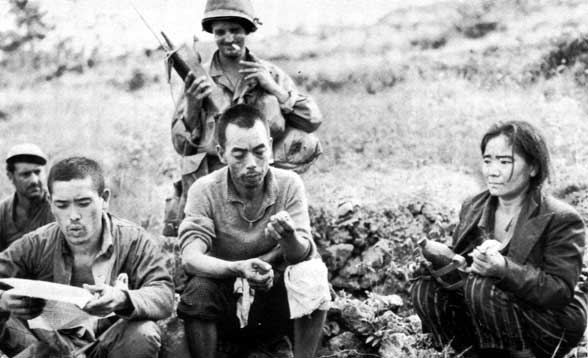
Homes were looted.
Buildings were burned.
Women and girls were assaulted.
The violence spread through neighborhoods across the city.
Among the most infamous stories connected to this period were those involving Japanese officers competing in a reported “killing contest” involving sword executions.
The story of Gichi Tanaka became connected to these wartime acts.
According to Chinese prosecutors after the war, Tanaka participated in killings of prisoners and civilians, with accusations that he personally killed hundreds of people using his sword.
Japanese wartime propaganda had once celebrated acts of extreme violence as demonstrations of courage and loyalty.
A soldier who committed brutal acts could be transformed into a symbol of military strength.
But after the war ended, those same stories became evidence.
Evidence of what happens when a military culture rewards cruelty instead of humanity.
The violence in Nanjing continued for weeks.
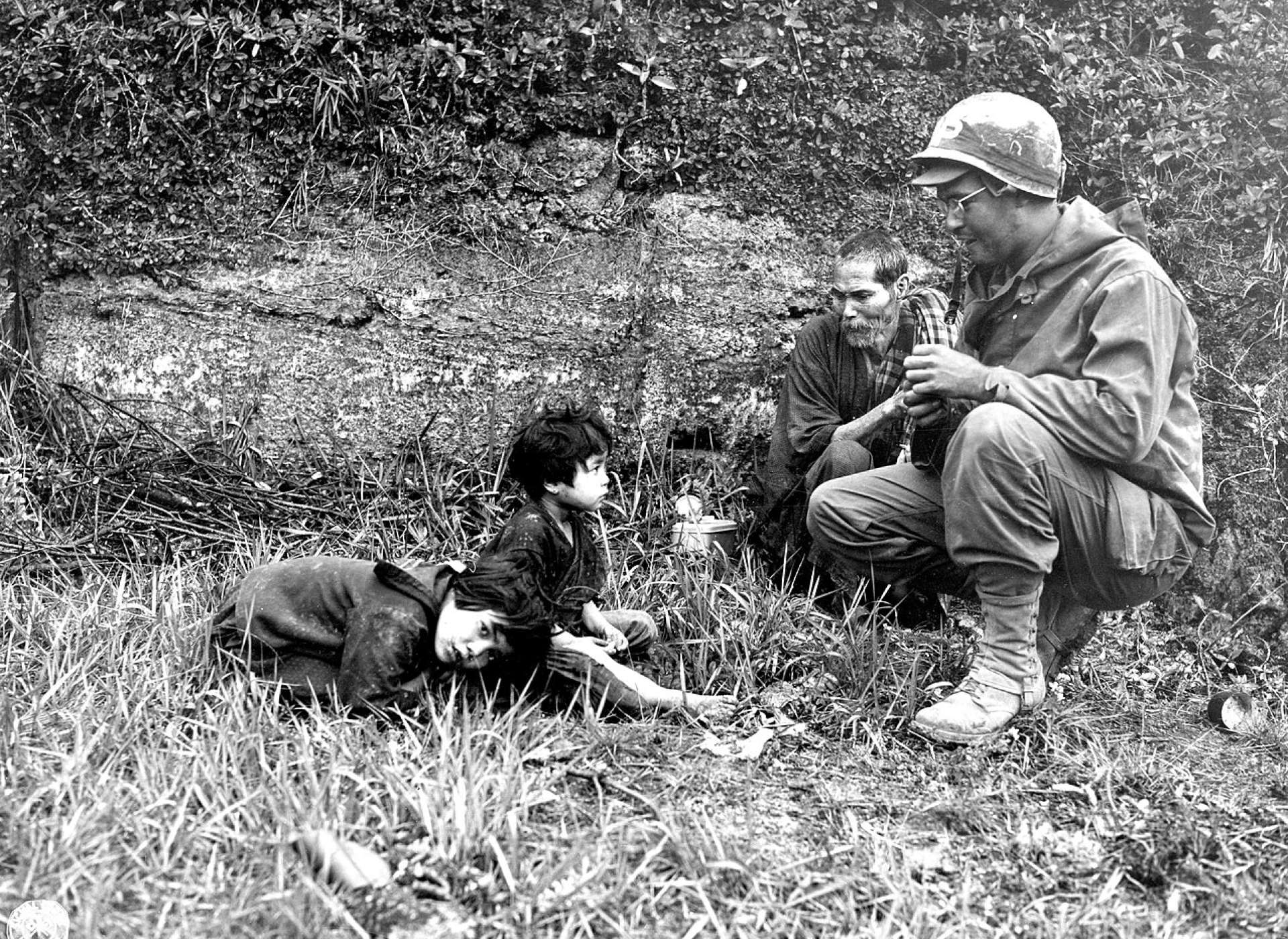
Families were destroyed.
Communities disappeared.
The exact number of victims remains debated among historians, but estimates commonly range into the hundreds of thousands when including civilians and disarmed soldiers.
By early 1938, the worst of the killing had begun to decline.
But the consequences would last for generations.
When World War II ended in 1945, the defeated Japanese empire faced a question the world could not ignore:
Who would be held responsible?
Tanaka was not initially among the most famous names on the list of war criminals.
But investigators continued examining evidence from Nanjing.
In 1947, Chinese authorities requested his extradition.
He was eventually transferred to China and brought to Nanjing for trial.
The courtroom became the place where the battlefield returned in another form.
Tanaka denied the accusations.
He argued that he was being used as a scapegoat.
He questioned evidence presented against him, including photographs connected to wartime killings.
He claimed stories about hundreds of deaths were exaggerated by propaganda.
But prosecutors presented testimony and records arguing that his actions were part of the broader pattern of atrocities committed during the occupation.
The trial also involved other Japanese officers, including Toshiaki Mukai and Tsuyoshi Noda, whose names had become associated with the wartime killing contest.
On December 17, 1947, their cases were combined.
The verdict came soon after.
Tanaka, Mukai, and Noda were found guilty of crimes involving the killing of prisoners and civilians.
They were sentenced to death.
On January 28, 1948, they were taken to the execution site near Yatai Hill.
The man who once carried a sword as a symbol of power now stood before rifles pointed in his direction.
The crowd did not see a warrior.
They saw a defeated officer from a defeated empire.
History remembers battles through maps and dates.
But wars are not only fought between armies.
They are experienced by families hiding in fear.
By civilians searching for safety.
By people whose names never appear in military reports.
The story of Gichi Tanaka is not only about one soldier.
It is about what happens when ambition turns into conquest, when propaganda replaces morality, and when violence is treated as glory.
Empires rise quickly.
Victories are celebrated loudly.
But eventually, every soldier, every commander, and every nation must answer for the choices made when they believed nobody could stop them.
Because history may take years to deliver justice.
But it rarely forgets.