Chapter One
The Raven Beneath Her Sleeve
The laughter began when Nora Keene’s sleeve slid above her shoulder.
It happened at 5:12 on a gray Monday morning inside the combat-training pool at Naval Amphibious Base Coronado. Rain tapped the high windows. Chlorine hung in the warm air. Thirty-two candidates stood barefoot along the wet tiles, shivering in black swim trunks while instructors paced behind them.
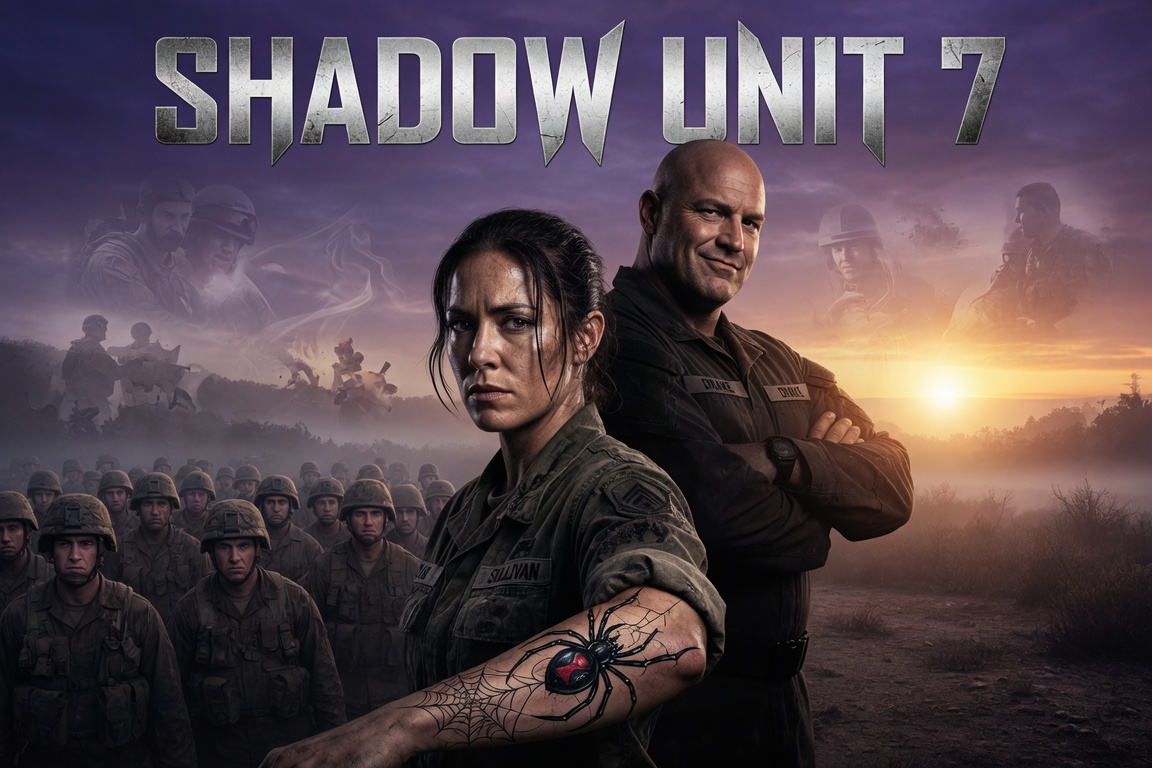
Nora was supposed to observe.
Her temporary badge identified her as NORA KANE, CIVILIAN PERFORMANCE CONSULTANT.
No rank.
No branch.
No explanation for the scar beneath her left ear or the way she counted exits whenever she entered a room.
Master Chief Cole Braddock stopped beside her.
At fifty, he still carried the dense, balanced posture of a man capable of violence without preparation. Gray threaded his close-cropped hair. An old fracture had left his nose slightly crooked. His voice remained quiet because quiet instructors made candidates lean forward before being cut down.
“You’ve been taking notes for three days,” he said. “Maybe it’s time the consultant demonstrates something.”
Nora closed the notebook.
“I’m here to examine training procedures.”
“You’re here because Washington believes discomfort requires paperwork.”
A few candidates smiled.
Braddock pointed toward the deep end, where weighted masks rested at the bottom beneath sixteen feet of water.
“Retrieve one.”
Nora looked at him.
“Is that a request?”
“It’s an opportunity to establish credibility.”
“Those are often the same thing when authority wants entertainment.”
The nearest candidates lowered their faces, hiding laughter.
Braddock’s mouth tightened.
“Afraid of water?”
“No.”
“Then you won’t mind.”
He handed her a black swimsuit from the equipment rack.
Nora could have refused.
The authorization letter inside the command office placed her beyond Braddock’s control. She could have ended his performance with two sentences and a secure call.
But candidates had reported three injuries during exercises that official records described as uneventful. One young sailor had disappeared after being medically dropped from the course. The instructors insisted he had gone home.
His mother said he had never arrived.
Nora had not entered Coronado to win an argument.
She entered to discover what people did when they believed no one important was watching.
She took the swimsuit.
Five minutes later, she returned wearing it beneath an unzipped gray training jacket.
The candidates stared.
Nora was forty-eight. The years had left evidence across her body: a pale surgical seam below her ribs, two round scars above her right hip, a shoulder that sat fractionally lower than the other.
None drew as much attention as the tattoo covering her left upper arm.
A black raven spread nine long feathers around a broken trident. One wing folded protectively over a small blue circle. Beneath it ran a line of coordinates too faded to read from a distance.
Candidate Troy Maddox laughed first.
He stood near the front, twenty-eight years old, former college swimmer, shoulders wide enough to make confidence appear reasonable.
“Ma’am, did the gift shop run out of real tridents?”
Several candidates laughed.
One whispered, “Discount SEAL tattoo.”
Another said, “Nine feathers for nine minutes in the Navy?”
Braddock did not stop them.
He studied the mark with an expression Nora could not read.
“Interesting artwork,” he said.
“It was expensive.”
“Did the artist know what a trident means?”
“Yes.”
“And you still chose to break it?”
“The broken parts were already there.”
Maddox smiled.
“Maybe she failed BUD/S in a previous life.”
Nora looked at him.
“Candidate Maddox?”
His smile weakened.
“How long can you hold your breath while frightened?”
“Long enough.”
“That was not a number.”
“Three minutes forty-two seconds.”
“While calm.”
He shifted.
“Yes, ma’am.”
“Fear spends oxygen faster than pride estimates.”
Braddock gestured toward the pool.
“Enough philosophy. Retrieve the mask.”
Nora removed the jacket.
Her right hand began to tremble.
Maddox noticed.
“So that’s why she writes everything down.”
The laughter returned, smaller this time.
Nora flexed her fingers once.
Nerve damage from a blast fourteen years earlier made the hand shake under cold, fatigue, or too many eyes. She had commanded operations while it trembled. Sutured arteries while it trembled. Signed condolence letters while it trembled.
She had never succeeded in ordering it to stop.
Nora stepped to the edge.
Then an alarm sounded beneath the water.
A candidate surfaced near Lane Four, coughing.
Another did not.
Braddock turned.
“Who’s down?”
“Dempsey,” an instructor shouted.
Lucas Dempsey had been performing an underwater knot exercise connected to a smart safety tether. The device was designed to release automatically if his oxygen level fell too low.
Its status light showed green.
Dempsey remained motionless twelve feet below.
Braddock ran toward the emergency pole.
Nora was already in the water.
The cold struck her chest. She dove through the blurred blue, following bubbles toward the bottom.
Dempsey’s ankle had twisted inside the tether line. His hands clawed weakly at the weighted knot station. The electronic clasp remained locked despite the red pulse flashing on the biometric band around his wrist.
Nora grabbed the release.
Nothing.
She pulled again.
The mechanism had received a software command to remain closed.
Not a malfunction.
An override.
Dempsey’s eyes found hers.
Panic widened them.
Nora placed one hand against his face.
Look at me.
He stopped fighting for half a second.
She drew the compact rescue blade from the pool wall and cut the line above his ankle. The reinforced cord resisted. Her right hand shook around the handle.
Dempsey convulsed.
Nora shifted the knife to her left hand and sawed through the final fibers.
The tether snapped.
She drove upward with one arm around his chest.
They broke the surface beneath shouting.
Braddock and two instructors pulled Dempsey onto the tiles. He had no visible breath.
Nora climbed out, knelt beside him, and opened his airway.
“Bag mask.”
An instructor hesitated.
“Now.”
The equipment struck her palm.
Nora sealed the mask and ventilated while Braddock checked for a pulse.
“Nothing.”
“Start compressions.”
He looked at her.
“You are not in command here.”
“Then command correctly.”
Something in her voice broke through him.
Braddock began compressions.
After twenty seconds, Dempsey coughed water across Nora’s forearm.
The room exhaled.
Medical staff rushed in.
Nora removed the biometric band from Dempsey’s wrist.
A code flashed across its damaged screen:
MANUAL HOLD — AUTHORIZED
Someone had ordered the tether not to release.
Maddox stood nearby, his earlier smile gone.
Nora opened the tether housing.
Inside, wedged beneath the battery, was a steel identification tag.
She wiped away the water.
RUIZ, MATEO J.
The missing candidate.
Nora’s pulse slowed.
Mateo Ruiz had disappeared nineteen days earlier.
The instructors claimed he had voluntarily withdrawn after a psychological breakdown.
His dog tag had just been found inside a device programmed to drown another sailor.
The pool doors opened.
Commander Gabriel Holt entered with two officers behind him.
He was forty-five, tall and narrow, with a silver command pin above his uniform pocket. A limp shortened his left stride. The expression on his face suggested someone had dragged him from a secure briefing and failed to explain why.
“What happened?”
Braddock stood.
“Equipment failure. Candidate Dempsey is stable.”
Nora held up the dog tag.
“This was inside the tether.”
Holt’s eyes moved from the tag to her face.
Then to the tattoo on her shoulder.
The color left him.
For a moment, he was no longer the commanding officer of the Naval Special Warfare Assessment Center.
He was a thirty-year-old lieutenant trapped beneath a flooded tunnel while a woman with a raven on her arm cut through steel to reach him.
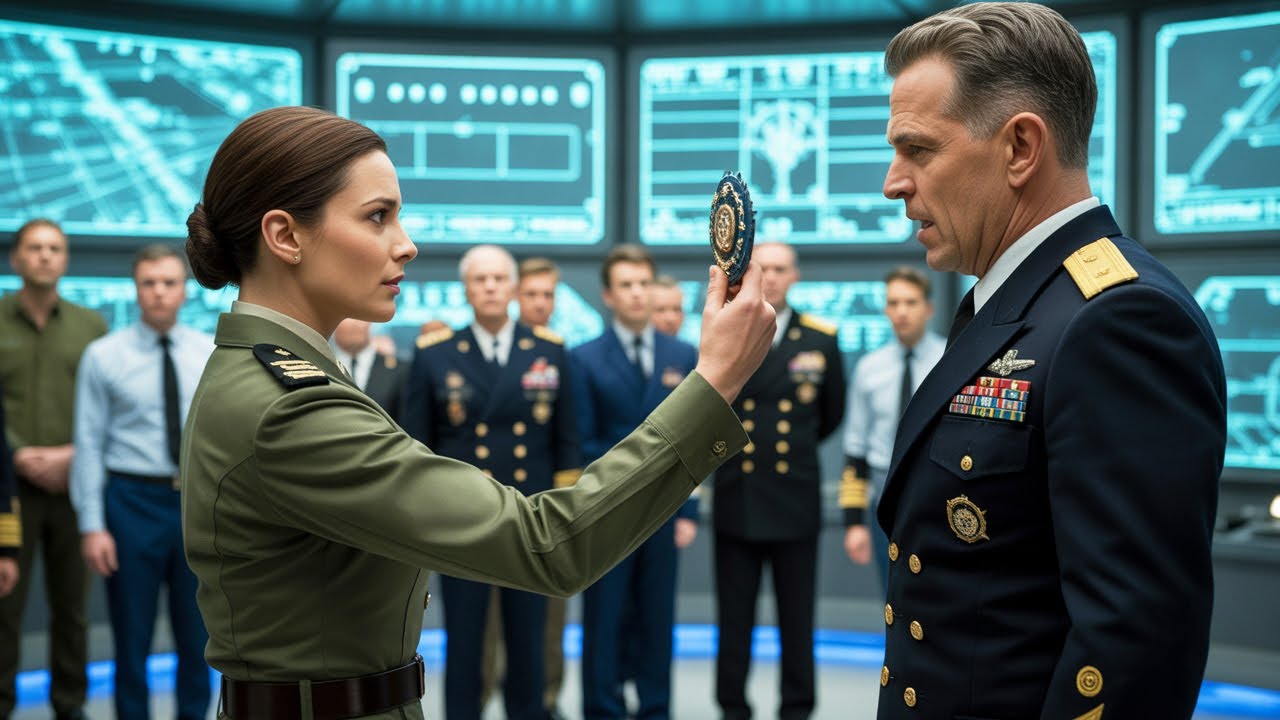
Holt came to attention.
His heels struck the wet tile.
He raised his hand in a salute.
“Rear Admiral Keene.”
The pool fell silent.
Maddox stared.
Braddock’s face hardened as though an old wound had just learned to speak.
Nora returned the salute.
“At ease, Commander.”
No one moved.
Holt looked toward the disabled tether.
“What are you doing here, Admiral?”
“Finding out why your candidates are being injured.”
She placed Mateo’s tag in his palm.
“And why your staff lied about a missing sailor.”
Holt stared at the name.
Behind him, the pool’s electronic systems went dark.
Every training screen shut down at once.
A message appeared across the main wall display:
RAVEN NINE SHOULD HAVE LEFT THE DEAD BURIED.
Braddock looked at Nora’s tattoo.
This time, nobody laughed.
Chapter Two
The Candidate Who Never Went Home
Commander Holt sealed the building.
No phones left the pool. No one accessed the base network. Medical staff transferred Lucas Dempsey under armed escort while Navy investigators photographed the tether and collected every device connected to the training system.
The candidates waited in the locker room under supervision.
Troy Maddox sat alone at the end of a bench, staring at his hands.
Nora dressed inside Holt’s office.
Her uniform waited in a locked garment bag sent ahead under diplomatic courier protocols. She did not put it on. Rank had already entered the building. Wearing it would add theater, not authority.
She chose dark trousers and a Navy-blue shirt that covered the tattoo.
The hand tremor remained.
Commander Holt stood near the window.
“You should have told me.”
“I could not determine whether you were part of the problem.”
His mouth tightened.
“You thought I might be drowning candidates?”
“I thought somebody under your command was altering safety systems.”
“That is not the same accusation.”
“It becomes the same funeral.”
Holt looked toward the pool below.
Technicians moved around the training stations beneath white forensic lights.
“I reviewed every injury.”
“You reviewed records created by the people running the exercises.”
“They were certified.”
“So was the tether.”
He turned.
“How long have you been investigating?”
“Six weeks.”
“You were on my base six weeks?”
“Not continuously.”
His eyes narrowed.
“What identity?”
“Several.”
He laughed once without humor.
“You saved my life, then waited nineteen years to return as a spy.”
“I returned as an inspector.”
“You used a false name.”
“You saluted it in front of thirty-two candidates.”
Regret passed across his face.
The salute had destroyed the covert portion of the inquiry.
Yet Nora could not blame him.
Operation Cold Lantern lived too deeply inside the survivors.
The raven tattoo was not a decoration. It was an unofficial memorial worn in smaller versions by seventeen people rescued from a submerged smuggling tunnel on the coast of Yemen.
Nora alone carried the complete image.
Nine feathers for the nine chambers she crossed.
The broken trident for the special-warfare unit trapped beyond the blast doors.
The blue circle for the civilians hidden inside the final chamber.
One man had not returned.
Master Chief Cole Braddock’s younger brother.
Evan.
Holt touched the old scar beside his left eye.
“I thought you had retired.”
“I tried.”
“People like us are poor at stopping.”
“People like us often use duty to avoid discovering what remains.”
He looked at her.
“That sounds recent.”
The office door opened.
Lieutenant Commander Elise Keene entered wearing a medical uniform beneath an unbuttoned raincoat.
Nora had not seen her daughter in nine months.
At twenty-nine, Elise had inherited her mother’s height and her father’s gray eyes. She served as a Navy diving-medicine physician at Balboa, where she treated trainees injured during high-pressure underwater exercises.
She stopped when she saw Nora.
“You.”
Holt glanced between them.
“You know each other.”
Elise removed her wet coat.
“She gave birth to me. Attendance afterward was less consistent.”
Nora’s hand tightened around the back of a chair.
“Why are you here?”
“Candidate Dempsey was transferred to my service.”
“How is he?”
“Alive. Mild aspiration injury. Possible nerve damage near the ankle.”
She placed a sealed bag on the desk.
“I found this inside his swimsuit.”
A thin plastic memory strip rested within.
Holt put on gloves.
“From the training system?”
“No. Personal storage.”
Elise looked at Nora.
“It contains a voice recording from Mateo Ruiz.”
Nora’s chest tightened.
Mateo was the son of Javier Ruiz, a Navy diver who died beside her husband during Cold Lantern. She had promised Javier’s widow she would look after him.
She sent birthday gifts.
Letters.
Recommendations.
Everything except the time he repeatedly requested.
Mateo joined the Navy without asking for her help.
She learned he had entered special-warfare assessment only after his disappearance.
Elise connected the memory strip to an isolated reader.
Mateo appeared on-screen inside a maintenance room. His head had been shaved for training. Bruising darkened one cheek.
“If this gets out,” he said, “they already know I found the override.”
He looked over his shoulder.
“The smart tethers aren’t safety devices. They’re collecting panic behavior. Somebody is training a control system to predict what swimmers do before they lose consciousness.”
Holt moved closer.
“Pelagos Dynamics designed the equipment.”
Mateo continued.
“Candidates are being pushed past automatic release thresholds. Medical data is edited afterward. Braddock signs the reports, but he’s not the person running the remote holds.”
The recording shook.
Metal struck somewhere nearby.
Mateo lowered his voice.
“Ghost in the gear. That’s what we call it. It can lock rebreathers, tethers, pool gates—anything on the Pelagos network.”
He held up a shipping manifest.
“Navigation modules are leaving the base inside damaged-equipment containers. I copied the serials.”
The video glitched.
Then Mateo looked directly at the camera.
“Admiral Keene, I know you’ll see this eventually.”
Elise glanced toward her mother.
Mateo continued.
“My father believed you never left people behind.”
His voice tightened.
“I need that to be true.”
The recording ended.
Nora remained still.
Elise disconnected the reader.
“He sent it to me twelve hours before he disappeared.”
Nora stared at her.
“You had this for nineteen days?”
“No. Dempsey found it hidden inside his locker after Mateo vanished. He was afraid to report it. He carried it into training because he planned to give it to a federal agent after the morning evolution.”
“And someone tried to drown him.”
“Yes.”
Holt walked toward the cabinet containing contractor files.
“Pelagos supplies biometric tethers, rebreathers, underwater navigation aids, and emergency drones. The contract was approved at fleet level.”
“Who manages it locally?” Nora asked.
He did not answer quickly enough.
“Elise?”
“Master Chief Braddock supervises training integration,” she said. “Commander Holt approved the medical-data arrangement.”
Nora looked at him.
Holt’s jaw tightened.
“Pelagos funded a rehabilitation program for injured operators and families. The Navy budget would not.”
“What did you give them?”
“Anonymous performance data.”
“The data was not anonymous if Mateo could trace individual candidates.”
“I did not know that.”
“Did you ask?”
He looked away.
Nora had used the same defense in other rooms.
The silence of a person who accepted a useful system before examining who paid.
A security officer knocked and entered.
“Commander, we recovered exterior footage from the night Candidate Ruiz disappeared.”
The video showed Mateo leaving Barracks Four at 1:18 a.m. He crossed the parking lot toward a black utility vehicle.
Someone waited beside it.
Commander Holt.
Elise looked at him.
“You were the last person seen with Mateo.”
Holt stared at the screen.
“I met him.”
“Why?” Nora asked.
“He said he had evidence of criminal diversion.”
“And?”
“I told him to bring it to me in the morning.”
“You let him leave?”
“Yes.”
“Where did he go?”
“I don’t know.”
The footage continued.
Mateo entered the passenger side.
Holt walked toward the driver’s door.
Then another figure emerged from the shadows and struck Mateo from behind.
The camera feed jumped forward eleven minutes.
The utility vehicle was gone.
Holt’s memory of the night and the footage could not both be true.
He stared at the missing interval.
“Someone edited it.”
Nora looked toward the time code.
The access signature appeared in the corner.
AUTHORIZED USER: C. BRADDOCK
The office door opened behind them.
Master Chief Braddock stood in the corridor.
He had heard enough.
“You should arrest me,” he said.
Then he looked at Nora.
“But not for the reason you think.”
Chapter Three
The Instructor Who Believed Mercy Killed
Braddock surrendered his access badge and sidearm.
He refused a lawyer.
They questioned him inside a training classroom where photographs of graduating classes covered the walls. Most faces looked young enough to mistake endurance for invulnerability.
Braddock sat beneath a framed image of his own class.
His brother Evan stood beside him.
Same eyes.
Same jaw.
Evan’s smile carried none of Cole’s restraint.
Nora placed the edited security log on the table.
“You used your credentials.”
“Yes.”
“To remove eleven minutes of video.”
“Yes.”
“Why?”
“To hide Commander Holt’s meeting with Ruiz.”
Holt stood against the wall.
“I did not ask you to.”
“No, sir.”
“Then why protect me?”
“Because the commander had been drinking.”
Holt’s face hardened.
“I had one glass at the retirement dinner.”
“You had four.”
Elise looked toward him.
“You met a frightened candidate while impaired.”
Holt said nothing.
Braddock continued.
“Ruiz wanted to report Pelagos. The commander told him to wait until morning. I followed the kid after they separated.”
“Why?” Nora asked.
“Because he mentioned remote holds.”
“You knew they existed.”
“I knew Pelagos could override safety releases during equipment calibration.”
“During live exercises?”
“No.”
Nora studied him.
He believed that.
At least, part of him needed to.
“What happened after you followed Mateo?”
“He crossed into the old dive-equipment yard. A Pelagos truck entered through the contractor gate.”
“Who drove?”
“Couldn’t see.”
“Did you intervene?”
“No.”
“Why?”
Braddock’s fingers closed into fists.
“Because the contractor funded Breakwater House.”
Elise knew the name.
“Veteran rehabilitation.”
“Operators with addiction, brain injuries, broken marriages. Men the Navy thanked and forgot.”
Braddock looked at Nora.
“My son died two years ago with fentanyl in his blood. He was never military. He simply learned from me that pain was something men hid until it became another person’s problem.”
The words left no room for performance.
“Breakwater House took men other programs rejected. Pelagos paid every bill.”
“So you protected the company.”
“I told myself the truck carried an executive coming to scare Mateo.”
“And when he disappeared?”
“I checked the barracks. His property was gone. Transfer papers were in the system.”
“Forged?”
“Yes.”
“When did you know?”
“The next day.”
“Why remain silent?”
Braddock looked toward Evan’s photograph.
“Because Pelagos CEO Silas Vane showed me evidence that Mateo had stolen classified navigation code. He said federal agents had taken him into custody.”
“You believed him.”
“I wanted to.”
Holt stepped forward.
“Cole, two candidates were injured after that.”
“I adjusted the exercises.”
“You signed reports saying equipment functioned normally.”
“Because shutting down the Pelagos program would close Breakwater House.”
Nora leaned closer.
“You decided candidates could carry hidden risk so injured veterans would keep receiving care.”
His jaw tightened.
“I decided no one had been seriously hurt.”
“Until this morning.”
“Yes.”
The word landed heavily.
Braddock did not look away.
Nora knew men like him.
She had commanded them.
Good men who crossed the first line for a reason they could explain, then spent years moving the line because admitting the first step felt worse than continuing.
“Why did you laugh at the tattoo?” Elise asked.
Braddock’s eyes moved toward Nora’s covered shoulder.
“Because she does not deserve it.”
Holt inhaled.
“Master Chief.”
“No. We are finished pretending respect is the same as truth.”
Braddock looked directly at Nora.
“Everyone tells the story of Raven Nine cutting through eight flooded chambers to save seventeen operators.”
“Eighteen,” Holt said.
“Seventeen came home.”
The classroom chilled.
Braddock’s brother remained behind during Operation Cold Lantern.
The official report stated Evan died after structural collapse severed the rescue line.
Braddock believed Nora had abandoned him to save classified intelligence equipment.
That version had circulated through units for years because classified silence invited people to build explanations from pain.
Nora’s right hand began trembling.
Braddock saw.
“Does it remember?”
“Yes.”
“What were his last words?”
“I cannot discuss the operation.”
He laughed bitterly.
“Nineteen years, and you still hide behind that.”
Nora reached into her bag.
She removed a black audio recorder sealed inside a government evidence pouch.
Elise stared.
“What is that?”
“The release order arrived two days ago.”
Nora placed the recorder before Braddock.
“Cold Lantern was declassified in part because the same navigation architecture is involved in Mateo’s disappearance.”
Braddock’s face changed.
“You had this when you entered the pool.”
“Yes.”
“And you waited.”
“I did not know whether giving it to you would help the investigation or end it.”
“You still decide what everyone can survive.”
Elise looked toward her mother.
The accusation belonged to more than Braddock.
Nora pressed play.
Water thundered through the recording. Alarms sounded beneath breathing apparatus and distant metal impacts.
Evan Braddock’s voice emerged.
“Raven Nine, blue chamber is full.”
Nora’s younger voice answered.
“I have space for one diver.”
“Negative. There are four children.”
Braddock stopped breathing.
The recording continued.
Cold Lantern had been described publicly as the rescue of a captured special-warfare unit.
It was more.
A trafficking network had hidden eleven children inside the final tunnel chamber. The collapse began during the rescue.
Evan reached them first.
Nora ordered him to return.
He refused.
“Take the children,” Evan said.
“Cole will kill me.”
“Cole thinks shampoo is an emotional weakness. He’ll recover.”
Even through the damaged audio, a smile lived in Evan’s voice.
The tunnel groaned.
Nora shouted, “Evan, move.”
“I have to hold the gate.”
“It will crush you.”
“Then stop arguing and get small people through.”
Children cried.
One by one, they entered the rescue line.
The final child crossed.
Nora said, “Now come.”
The steel gate buckled.
Evan’s breathing sharpened.
“No route.”
“I can reach you.”
“No.”
“Evan.”
His final words arrived clearly.
“Tell Cole I found something worth being afraid for.”
The recording ended beneath a roar of water.
Braddock lowered his head.
For nineteen years, he had believed his brother died because a commander valued equipment above a life.
Evan died choosing four lives whose names remained classified.
Nora did not touch him.
Grief was not a wound rank permitted her to enter without invitation.
After a long time, Braddock looked up.
“Why did you never tell me enough?”
“I was ordered not to disclose the children.”
“You could have said he chose.”
“I believed partial truth might compromise them.”
“No.”
His voice cracked.
“You believed the mission gave you the right to carry every part alone.”
Elise looked at Nora.
Again, the accusation expanded.
Nora accepted it.
“Yes.”
A technician entered with a recovered data report.
“We found the remote-hold source used on Candidate Dempsey.”
“Location?” Holt asked.
“Signal bounced through multiple base nodes, but the original transmission came from an abandoned naval structure beneath South Beach.”
Braddock raised his head.
“The old saturation-diving tunnels.”
Pelagos leased the surface warehouse above them.
Nora stood.
“Get me a site map.”
The technician handed her a tablet.
An underground complex appeared beneath the shoreline: decompression chambers, maintenance shafts, flooded access tubes, and one tunnel extending beneath the Pacific.
A live signal pulsed inside the deepest chamber.
Mateo’s medical identification code.
Alive.
Then the signal changed.
A second series of codes appeared around it.
Thirty-two candidates.
Every biometric band from the pool had been transferred into the system.
Pelagos was not merely monitoring the training class.
It had scheduled a synchronized remote-control event for the following morning’s ocean exercise.
Graduation Day.
Holt stared at the countdown.
“Fourteen hours.”
Nora looked toward the dark tunnel on the map.
“Mateo isn’t the hostage.”
Braddock understood.
“He’s the witness.”
The thirty-two candidates were the demonstration.
Chapter Four
The Man Who Built a Better Lifeboat
Silas Vane built Pelagos Dynamics after watching his daughter drown inside a rescue capsule the Navy had refused to replace.
Her name was Isabelle.
Twenty-three years old.
Civilian engineering intern aboard an oceanographic vessel.
A battery fire disabled the ship’s escape system three hundred miles west of Guam. The capsule released but failed to stabilize. It turned upside down in heavy seas.
Emergency aircraft found it eight hours later.
The passengers had survived the launch.
They drowned waiting for human rescuers.
Vane spent the next seventeen years designing systems that did not wait.
Automatic rebreathers.
Biometric tethers.
Autonomous rescue drones capable of reading panic through movement.
Navigation modules that could guide swimmers beneath jamming, darkness, or collapsed structures.
His inventions saved lives.
That fact became the foundation beneath everything he later permitted.
Nora met him inside the Pelagos administrative building at dusk.
He had agreed to the meeting after Holt threatened to suspend every company credential on base.
Vane entered the glass conference room without an attorney.
At fifty-seven, he was thin, white-haired, and dressed in a charcoal suit without a tie. His left leg dragged slightly, the result of decompression sickness during his years as a Navy saturation diver.
He carried no visible fear.
Only disappointment.
“Raven Nine,” he said.
“Mr. Vane.”
“I hoped you would understand the work.”
“I understand Mateo Ruiz is beneath your warehouse.”
His expression did not change.
“You tracked a candidate’s medical code into a restricted test facility.”
“He is alive?”
“Yes.”
“Held voluntarily?”
“No.”
Holt shifted beside Nora.
Braddock stood near the door under guard, present because he understood the tunnel architecture.
Vane looked toward him.
“Cole, I told you the boy was in federal custody.”
“You lied.”
“I protected Breakwater House.”
Braddock’s jaw tightened.
“You used my dead son to buy my silence.”
“No.”
Vane’s calm finally cracked.
“I kept men like your son alive after every official program turned them into waiting lists.”
“And Mateo?”
“He stole proprietary code and threatened to release operational data.”
“So you kidnapped him,” Nora said.
“I detained him until the demonstration.”
“What demonstration?”
Vane turned the wall screen on.
A simulation showed thirty-two swimmers entering the ocean beyond Coronado. Smart tethers connected their rebreathers to autonomous rescue drones.
When the program detected stress, the drones moved candidates toward safety.
“Tomorrow’s exercise will prove Pelagos can eliminate training drownings,” Vane said.
“By disabling candidates’ manual releases?”
“By preventing panic from overriding rescue logic.”
Holt stared.
“The system controls their rebreathers.”
“It can limit airflow to force compliance during ascent.”
Braddock stepped forward.
“You planned to suffocate them into obeying.”
“Temporarily reduce flow.”
“Human words,” Nora said.
Vane looked at her.
She had used the phrase with generals and contractors before.
“Fear makes divers fight rescue procedures,” he said. “Our system identifies the pattern and removes choices that lead to death.”
“Your system nearly killed Dempsey.”
“A calibration technician entered the wrong threshold.”
“You ordered the tether to remain locked.”
“I authorized a controlled hold.”
“Without the candidate’s consent.”
“Do storms request consent?”
Nora understood him.
That disturbed her more than hatred would have.
Vane believed catastrophe justified removing choice before catastrophe arrived. His daughter died because humans waited, debated, and respected procedures that failed.
He would never wait again.
“Why Mateo?” Elise asked from the secure video line.
Vane looked toward the screen.
“He discovered the training program.”
“He discovered you were using candidates as involuntary research subjects.”
“They signed broad performance waivers.”
“They did not sign away control of their oxygen.”
His face tightened.
“The Navy rejects innovation until coffins make the paperwork easier.”
Holt said, “So you engineered a crisis your machines could solve.”
“I designed a test under realistic stress.”
“With thirty-two lives.”
“With thirty-two future operators who will enter environments less forgiving than this.”
Nora stepped closer.
“What happens if the autonomous system fails?”
“It will not.”
There it was.
The belief beneath every disaster she had investigated.
Not cruelty.
Certainty.
“Your daughter’s capsule was also certified not to fail,” Nora said.
Vane’s eyes hardened.
“Do not use Isabelle.”
“You have used her every day since she died.”
His hand struck the table.
For the first time, anger moved openly through him.
“I built machines that reach people when heroes are still discussing weather.”
“And then you decided people inside those machines no longer deserved a choice.”
The room went still.
Vane’s breathing slowed.
He touched the screen.
“Tomorrow proceeds.”
Holt shook his head.
“The exercise is canceled.”
“No.”
Vane displayed another control panel.
Thirty-two green lights represented candidates’ biometric bands.
A thirty-third belonged to Mateo.
“If you cancel, the system interprets the command as external compromise and begins the demonstration inside the tunnel.”
Nora looked at the pressure readings.
Mateo’s chamber was already partially flooded.
“How long can he survive?”
“Sixteen hours under normal conditions.”
“And abnormal?”
Vane did not answer.
Braddock moved toward him.
Guards restrained him.
Vane watched without satisfaction.
“Cole, you taught those candidates that hesitation kills.”
“I taught them to choose under pressure.”
“You punished them until they obeyed.”
The accusation landed because it contained truth.
Nora studied the schematic.
The remote system operated through a submerged relay beneath the offshore training range. Cutting power at the building would transfer control to the relay. Destroying the relay might lock every tether and rebreather in its current state.
Pelagos had built redundancy against human interruption.
“Let me enter the tunnel,” Nora said.
Vane’s eyebrows rose.
“With a team.”
“No.”
“Then tomorrow’s demonstration becomes a hostage execution watched by every military command reviewing your contract.”
He looked toward Holt.
The commander had already activated an independent recording system.
Vane understood.
His ability to describe the event later was disappearing.
“One team,” he said. “Four people. You retrieve Ruiz after the system begins live calibration.”
“Before.”
“During.”
“Why?”
“His biometric pattern is the reference.”
Mateo’s panic responses trained the system because he had spent nearly three weeks in controlled captivity.
Elise’s face went pale.
“You tortured him.”
“I exposed him to stress scenarios.”
Braddock’s voice dropped.
“I will kill you.”
Nora turned.
“No.”
Vane studied her.
“Still protecting everyone.”
“No.”
She looked at Braddock.
“Protecting him from the man grief wants him to become.”
Braddock stepped back.
The tunnel entry was scheduled for 4:30 a.m., thirty minutes before the ocean exercise.
Vane allowed Nora, Holt, Braddock, and a Navy diver named Lieutenant Priya Shah to enter.
Elise would monitor from the medical center.
The candidates would report for training believing the exercise remained routine.
Telling them might trigger Pelagos’ compromise protocol.
As Nora left the building, Troy Maddox waited beside her vehicle.
Military police had confined the candidates to barracks. He had slipped through an equipment corridor.
“You’re going after Ruiz.”
Nora looked at him.
“You should be in quarters.”
“Dempsey is my swim partner.”
“He is alive.”
“Because of you.”
The apology had not yet formed. Pride resisted the shape.
“I laughed at the tattoo,” he said.
“Yes.”
“I didn’t know.”
“You should not require rank before deciding whether someone deserves respect.”
He accepted the blow.
“What can I do?”
“Return to your barracks.”
“That’s nothing.”
“Sometimes discipline feels like nothing because nobody watches it.”
He looked toward the dark ocean.
“My band displayed a code after Dempsey went down.”
“What code?”
“R-nine.”
Nora’s pulse slowed.
“Show me.”
Maddox raised his wrist.
Beneath the normal candidate number, a hidden line blinked:
R9 / FINAL CONTROL SUBJECT
Vane had not selected Mateo as the only reference.
Nora’s rescue pattern from the pool had entered the system.
Pelagos intended to test whether its machines could predict and defeat Raven Nine herself.
Chapter Five
The Tunnel Beneath the Pacific
The ocean was black at 4:27 a.m.
Rain moved across the surface in silver lines. Floodlights from the Pelagos warehouse reached only partway down the concrete access shaft before darkness absorbed them.
Nora stood at the edge wearing a closed-circuit rebreather and a black dry suit. The raven tattoo remained covered.
Braddock checked her oxygen line.
His hands were steady.
“You still favor the right shoulder.”
“It was repaired.”
“That was not what I said.”
Nora looked at him.
He had spent the night listening to Evan’s recording more than once. Grief had changed his face. Not softened it. Removed one of the walls supporting his anger.
“You can remain topside,” she said.
“No.”
“You are emotionally compromised.”
“So are you.”
“Correct.”
The admission stopped him.
Commander Holt joined them.
“This is my command. I should lead.”
“You allowed the contractor to control training data.”
His jaw tightened.
“Yes.”
“You will follow Lieutenant Shah’s navigation instructions and mine inside the tunnel.”
“I outrank her.”
“Not underwater.”
Priya Shah checked the pressure seals.
“Admiral, with respect, nobody outranks the ocean.”
“Correct.”
They descended.
Cold water closed over Nora’s helmet.
The access shaft dropped forty feet before opening into an old saturation-diving complex. Concrete walls curved around narrow passages. Rusted pipes ran above them. Pelagos lights glowed at intervals along the floor.
Holt’s breathing filled the team channel.
Braddock moved beside him.
Nora led.
The tunnel brought Cold Lantern back through her body.
Pressure against the chest.
Metal groaning beyond sight.
The knowledge that a single broken line could turn architecture into a coffin.
Her right hand trembled around the guide rope.
Priya noticed.
“You good?”
“No.”
“Capable?”
“Yes.”
“Good enough.”
They reached the first chamber.
A training tether hung from the ceiling.
Inside its casing, small cameras tracked eye movement, hand position, and breathing rate.
Holt stared.
“They’ve been recording candidates inside every pool and ocean exercise.”
“Not just recording,” Nora said. “Learning.”
A screen activated along the wall.
Silas Vane appeared.
“You are twelve minutes early.”
“Release Mateo.”
“Calibration begins in eight.”
Behind him, Mateo sat inside a glass pressure chamber wearing a rebreather. His face was bruised. One eye had swollen shut.
He saw Nora through a camera.
His fingers moved in a diver’s code.
THREE CONTROLLERS. VANE NOT ALONE.
Nora repeated the signal to Braddock.
Vane continued.
“The system has created a model of rescue behavior from every recorded incident, including Cold Lantern.”
Nora’s body went still.
“How did you obtain those files?”
“General archives. Contractor partnerships. Commander Holt’s data agreement.”
Holt’s face tightened.
“I never authorized operational records.”
“You authorized integration with Navy readiness databases.”
Again, the useful agreement examined too late.
Vane touched a control.
The tunnel gates closed behind Nora’s team.
“Tomorrow’s generation of rescue systems will know when human judgment becomes attachment.”
“Attachment?”
“You risked eighteen trained operators to reach four unidentified children.”
Nora’s voice lowered.
“They had names.”
“The system did not.”
“And that is why it cannot replace us.”
“It can prevent heroes from sacrificing strategic lives for visible emotion.”
Braddock moved toward the chamber.
“You used my brother’s death as a training variable.”
“I used every death available.”
A second voice entered the channel.
Female.
Calm.
“Silas, stop explaining.”
Commander Rachel Sloane appeared on another screen.
Holt’s executive officer.
She had managed contractor integration, candidate records, and base-security access. During the investigation, she had remained at fleet headquarters on temporary assignment.
Now she stood inside the offshore control station.
Holt stared.
“Rachel.”
“You were never supposed to inspect the data deeply, Gabe.”
“You killed Mateo’s records.”
“I removed a candidate who stole classified technology.”
“Did you attack Dempsey?”
“I corrected a loose end.”
Vane looked toward her image.
“That was not authorized.”
Sloane laughed softly.
“You do not authorize me.”
The relationship shifted.
Vane built the system.
Sloane had turned it into a weapon.
She had been selling the stolen navigation modules to private maritime-security firms and foreign buyers. Pelagos’ veteran programs provided cover. Vane accepted illegal transfers to fund his work but told himself the technology remained defensive.
Sloane removed that comforting limit months earlier.
“Unlock the chamber,” Vane said.
“No.”
“Rachel.”
“You wanted a demonstration. You’ll have one.”
The ocean-exercise bands activated five minutes early.
On the surface, thirty-two candidates preparing at the shoreline felt their wrist devices tighten.
Training drones launched from the offshore platform.
Maddox’s voice broke into the channel.
“Admiral, the bands are locking.”
Nora looked at the countdown.
LIVE CALIBRATION: 02:00
“Elise, pull candidates from the water.”
Her daughter answered through the medical relay.
“They haven’t entered yet.”
Sloane’s voice interrupted.
“They do not need to.”
The candidate bands emitted electrical shocks.
Men collapsed along the beach.
Autonomous drones moved toward them, towing restraint lines.
Vane stared at the feed.
“This is not the test.”
“No,” Sloane said. “This is the sale.”
Foreign observers were receiving the live data.
A system capable of disabling elite military candidates remotely was worth more than a rescue machine.
Vane’s face emptied.
He had built a better lifeboat.
Someone had converted it into a cage.
The chamber around Mateo began filling rapidly.
Nora moved toward it.
A steel gate dropped between them.
Sloane looked through the screen.
“Raven Nine, the model predicts you will choose Ruiz.”
“What happens if I don’t?”
“He drowns.”
“And the candidates?”
“They remain alive while buyers verify control.”
Braddock looked toward the tunnel leading to the relay.
Destroying it might free the candidates.
Or lock Mateo’s rebreather closed.
Sloane had built the old command equation perfectly.
One visible life against many distant ones.
She expected Nora to choose Mateo because grief made him personal.
Nora looked at Braddock.
“Go to the relay.”
His eyes widened.
“Mateo—”
“I have him.”
“You may not.”
“No.”
She placed her hand against the gate.
“But the candidates cannot wait for me to prove I can save everyone.”
Braddock understood.
Nora had not abandoned Mateo.
She had stopped pretending leadership meant solving every part with her own hands.
Holt and Priya followed Braddock toward the relay.
Nora remained alone beside the flooding chamber.
Mateo’s oxygen indicator fell.
Vane watched from another locked room, unable to control the system carrying his name.
Nora removed the rescue tool from her belt.
Cold Lantern returned.
A gate.
A life beyond it.
Water rising.
This time, no classified order told her which person counted.
Only metal.
Time.
And a young man who had asked her to prove his father’s faith had not been misplaced.
She began cutting.
Chapter Six
What the Candidates Chose
On the beach, Troy Maddox woke with sand in his mouth and a restraint line around his chest.
A Pelagos drone dragged him toward the water.
Other candidates lay scattered along the shore. Some remained conscious. Others convulsed as the biometric bands delivered correction pulses whenever they resisted.
Instructors shouted from behind locked security gates.
The drones had sealed the ocean-training perimeter.
Maddox saw Lucas Dempsey’s empty place in the formation.
For the first time, he felt grateful his swim partner was injured somewhere safe.
A voice came through the band.
Commander Sloane.
“Candidates, resistance increases electrical response. Remain still.”
Maddox looked toward the ocean.
The machine pulling him did not care whether he understood.
It cared whether his body matched obedience.
Nora’s words returned.
Fear spends oxygen faster than pride estimates.
His breathing had already become shallow.
Beside him, Candidate Aisha Bell tried to tear off her band. The device shocked her.
Maddox stopped fighting his own restraint.
He rolled with the drone’s pull, reached beneath the line, and used the slack created by compliance to turn toward Bell.
“Stop pulling,” he said.
She stared.
“Trust me.”
“That seems like a poor decision.”
“Correct.”
She stopped.
The drones interpreted reduced resistance as successful control and lowered electrical output.
Maddox moved closer.
“Everyone,” he shouted. “Go loose. Make them think they won.”
Candidates along the beach heard.
One by one, bodies stopped fighting.
The system relaxed its hold.
The men and women Sloane considered predictable began cooperating outside her model.
Maddox slipped two fingers beneath Bell’s restraint.
“On three.”
“What?”
“Do not ask useful questions now.”
They twisted in opposite directions.
The line loosened.
An instructor on the other side of the gate saw and began directing others through hand signals.
The candidates turned the demonstration into a team exercise the system had not been trained to understand.
Inside the tunnel, Braddock reached the relay chamber.
A cylindrical control unit stood beneath the water, protected by a metal frame. Power cables extended toward the offshore platform.
Priya scanned it.
“Two control cores. One manages candidates. One manages Mateo’s chamber.”
Holt looked at the labels.
“They share a fail-safe.”
Braddock raised the cutting tool.
“Which one?”
Priya caught his arm.
“Cut the wrong cable and every rebreather seals.”
“How long to identify?”
“Five minutes.”
“We have less than two.”
Holt examined the casing.
A Pelagos emblem covered a maintenance hatch.
He drove his dive knife beneath it.
The panel opened.
Manual levers sat inside.
Vane had built human access.
Sloane had hidden it behind branding.
Holt reached for the first lever.
Priya stopped him.
“The markings are reversed.”
“How do you know?”
“Bubble corrosion. This one was operated more recently.”
Braddock stared at the second.
“Sloane expected emergency crews to choose the obvious control.”
Holt’s face tightened.
“She learned from our training.”
“No,” Braddock said. “She learned from our arrogance.”
They pulled the second lever together.
On the beach, candidate bands released.
Drones stopped.
Maddox fell onto wet sand, gasping.
In the tunnel, Mateo’s chamber sealed completely.
His airflow stopped.
Sloane laughed through the communication system.
“You chose the class.”
Braddock turned toward the chamber route.
Nora’s voice arrived, strained.
“Correct choice.”
A metal impact sounded behind her words.
“Nora?” Elise said.
No response.
Nora had cut halfway through the gate.
The rescue tool’s battery failed.
Mateo floated inside the chamber, one hand against the glass.
His oxygen gauge showed thirty seconds.
Vane appeared through a side observation window.
He had escaped his control room through a maintenance passage.
He carried a manual release key.
“Sloane locked me out,” he said.
Nora extended her hand through the bars.
“Key.”
“It opens Mateo’s chamber but restarts the relay.”
“The candidates’ bands are off.”
“Their rebreathers remain linked. Restart may reseal them.”
Nora looked toward the beach feed.
Candidates were pulling equipment away from drones and one another. Most had removed the smart rebreathers.
Not all.
Two lay in shallow water, still connected.
Mateo struck the glass weakly.
Vane held the key.
“If he dies, his data dies with him.”
Nora looked at him.
“Is that what concerns you?”
His face cracked.
“No.”
For the first time, Silas Vane allowed the answer to arrive without his daughter, his inventions, or the thousands he claimed he might save.
“I do not want another person to drown inside something I built.”
He placed the key into Nora’s hand.
“Then help me.”
They turned it together.
The chamber opened.
At the same moment, two candidate rebreathers on the beach sealed.
Maddox heard warning alarms and ran into the water. Bell followed. They ripped the masks away and dragged the unconscious candidates onto shore.
Inside the tunnel, Nora pulled Mateo free.
He did not breathe.
She removed his mask and began rescue ventilation.
Vane knelt beside her.
“My system can restart his diaphragm.”
“No.”
“It has electrical stimulation.”
“No more machines.”
“He is dying.”
“So help me as a person.”
Vane stared.
Then placed his hands where she directed and began compressions.
Thirty seconds.
One minute.
Mateo coughed water into Nora’s mask.
His eyes opened.
“Admiral?”
“I’m here.”
“You took your time.”
His father had used the same words after Nora pulled him from a burning helicopter twenty-six years earlier.
She almost laughed.
The tunnel shook.
Sloane had activated demolition charges at the offshore control station.
Concrete cracked above them.
Water burst through a seam.
Vane looked toward the ceiling.
“She’s destroying the evidence.”
Holt and Braddock returned.
“Exit route is collapsing,” Priya said.
Nora lifted Mateo.
Braddock took his weight.
Vane remained near the control terminal.
“The data archive is here.”
“Leave it,” Nora said.
“It proves what she did.”
“We have recordings.”
“Not the buyer list.”
Water rose around his knees.
He looked toward the server.
Years of work.
Isabelle’s death transformed into equations, patents, and certainty.
The evidence could expose Sloane.
It could also preserve his company’s value.
Nora saw the argument inside him.
“Silas.”
He looked at her.
“You are not required to die proving your intentions were good.”
The sentence broke something.
Vane left the server.
They moved toward the access shaft as the tunnel flooded behind them.
Halfway up, another explosion tore through the structure.
A steel beam fell across the passage.
Braddock and Holt passed Mateo over it.
Priya crossed.
Nora turned.
Vane lay beneath the beam, one leg pinned.
Water climbed toward his chest.
“Go,” he said.
Braddock looked at Nora.
The tunnel.
The trapped man.
The old story waiting to repeat itself.
Vane had endangered candidates, imprisoned Mateo, and used grief as permission.
Leaving him would make escape easier.
Braddock’s jaw tightened.
“He deserves trial.”
Nora handed Mateo to Holt.
Then she and Braddock went back.
Vane stared as they lifted the beam.
“You should leave me.”
Nora’s right hand shook against the metal.
“No.”
“Why?”
“Because I am tired of letting guilty people become simple once they are dead.”
Together, they freed him.
The five survivors reached the access shaft seconds before the tunnel collapsed.
They surfaced into rain and sirens.
On the shoreline, candidates stood in formation without anyone ordering them.
Maddox saw Nora emerge with Mateo and Vane.
He came to attention.
Not because he finally knew her rank.
Because he had watched her return for a man she intended to prosecute.
One by one, the others followed.
Nora pulled off her hood.
The raven tattoo showed beneath the torn suit.
No one laughed.
Then gunfire came from the offshore platform.
Commander Sloane had not destroyed herself with the evidence.
She was escaping by helicopter.
And Elise was aboard.
Chapter Seven
The Daughter in the Aircraft
Sloane took Elise from the medical command post two minutes before the tunnel collapsed.
She wore a stolen security uniform and carried a pistol beneath a rain jacket. By the time staff recognized her, the helicopter had lifted from the offshore platform.
Elise sat restrained behind the pilot.
Sloane held a weapon against her ribs.
“You were not part of the plan,” Sloane said.
“Children often aren’t.”
“I need your mother’s fleet-access code.”
“She will not give it to you.”
“She will if the alternative is watching you fall.”
Elise looked through the rain-streaked window.
Below, rescue boats converged on the shore. Candidates gathered around ambulances. The Pelagos warehouse burned near the roof.
Her mother stood beside the access shaft, small at that distance.
For most of Elise’s childhood, Nora had seemed larger when absent.
Decorations arrived in boxes.
Calls came from secure numbers.
Explanations remained incomplete.
Elise built an image of her mother from headlines, silences, and the way adults lowered their voices around certain operations.
The real woman below looked exhausted.
Her right hand shook as a medic wrapped it.
Sloane transmitted over an open channel.
“Admiral Keene, your daughter is aboard.”
Nora’s face lifted.
The helicopter banked north.
“What do you want?” she asked.
“Fleet access to erase the Pelagos archive and open a safe corridor.”
“The archive is destroyed.”
“Copies exist.”
“Yes.”
Sloane’s jaw tightened.
“You recorded Vane.”
“We recorded everyone.”
She looked toward Elise.
“Your mother turns every room into evidence.”
“She turns every relationship into an operation too.”
Nora heard through the radio.
The words hurt.
Elise did not withdraw them.
Sloane smiled faintly.
“At least one of you is honest.”
Nora walked toward Commander Holt’s communications vehicle.
“Rachel, where are you going?”
“A vessel waits offshore.”
“You will not reach it.”
“You trained people to believe impossible means unprepared.”
“No.”
Nora’s voice remained calm.
“I trained people to identify when a mission has become an excuse not to stop.”
Sloane pressed the weapon harder against Elise.
“Give me access.”
“No.”
Elise closed her eyes.
There it was.
The choice she had accused her mother of making for everyone else.
Nora continued.
“I will not give you a system capable of erasing the people you harmed.”
“You are choosing records over your daughter.”
“No.”
Nora looked toward Holt.
He understood and began tracking the aircraft manually.
“I am trusting my daughter to remain part of the decision.”
Elise opened her eyes.
Her mother spoke directly to her.
“Elise, the pilot is Petty Officer Garner. Left-handed. Former rescue aviation.”
Sloane frowned.
Garner’s left hand remained on the cyclic.
His right rested near the emergency fuel cutoff.
Nora continued.
“The rear door release is beside your knee.”
Elise felt it beneath the seat.
Sloane understood.
“Don’t.”
Elise drove her heel against the release.
The cabin door opened into wind.
Sloane turned instinctively.
Garner cut power and dropped the helicopter hard enough to throw everyone upward against restraints.
Elise struck Sloane’s gun wrist with both bound hands.
The pistol flew through the open door.
Sloane seized Elise’s throat.
The helicopter descended toward the sea.
Garner fought for control.
Nora’s voice came through.
“Elise, do not fight her strength. Turn with it.”
Her mother had taught her that at eleven after a school bully grabbed her backpack.
Elise rotated with Sloane’s pull and drove the woman against the seat frame.
Sloane’s forehead struck metal.
She released her.
Garner leveled the helicopter thirty feet above the water.
A Navy pursuit aircraft moved beside them.
Sloane sat bleeding, one hand raised.
The fight had left her face.
“What happens now?” she asked.
Elise breathed against the restraints.
“You live long enough to answer questions.”
Garner turned toward Coronado.
When the helicopter landed, Nora waited beyond the rotor wash.
Military police removed Sloane first.
Then Elise stepped down.
Mother and daughter stood facing each other beneath the rain.
Nora did not reach for her.
She had learned enough not to make closeness another order.
“You trusted me,” Elise said.
“Yes.”
“You also used me to stop her.”
“Yes.”
The honesty hurt less than protection disguised as innocence.
“Were you afraid?”
Nora’s hand trembled visibly.
“I could not feel my feet.”
Elise looked at the hand.
“When I was little, I thought you never got scared.”
“I encouraged that.”
“Why?”
“Because if you believed I was strong, I could leave without explaining what leaving cost.”
Elise’s eyes filled.
“That did not make it cost less.”
“No.”
Nora’s voice broke.
“I know.”
Elise stepped forward and embraced her.
Not forgiveness.
Not yet.
But no longer distance chosen by only one person.
Over Elise’s shoulder, Nora saw Master Chief Braddock standing beside Mateo’s ambulance.
The young man was conscious.
Silas Vane sat handcuffed on another stretcher while medics treated his crushed leg.
Commander Holt spoke with investigators.
Troy Maddox waited near the candidates.
When Nora approached, he straightened.
“Admiral.”
“Candidate.”
He looked toward her tattoo.
“I owe you an apology.”
“Yes.”
“I thought the mark was fake.”
“That is the least important part.”
His face reddened.
“I laughed because everyone else did.”
“That is more important.”
He nodded.
“I’m sorry.”
Nora studied him.
“Dempsey is alive because you and Bell removed the final candidates from the rebreathers.”
“We worked together.”
“Remember how quickly you said that.”
Maddox waited.
“The best people in your future teams will not always look impressive before the emergency,” she said. “Learn to recognize them earlier.”
“Yes, ma’am.”
The rain eased.
Dawn opened over the Pacific as a pale line beneath the clouds.
For nineteen years, people had told the story of Raven Nine as though Nora’s strength existed inside a flooded tunnel.
That was never the difficult part.
The difficult part was emerging afterward and allowing others to see the fear, errors, and lives she could not carry alone.
This time, she had not hidden them.
This time, everyone came back.
Chapter Eight
What the Salute Could Not Prove
The investigations lasted fourteen months.
Commander Rachel Sloane pleaded guilty to kidnapping, attempted murder, theft of military technology, unlawful human experimentation, and conspiracy to sell restricted navigation systems.
She defended herself during sentencing.
Not because she lacked counsel.
Because she believed only she could describe the logic correctly.
“The next war will be decided underwater,” she told the court. “Foreign powers are developing autonomous systems while our military debates consent forms.”
The prosecutor asked whether that justified disabling candidates without their knowledge.
Sloane looked toward the gallery.
“No.”
The answer surprised everyone.
Then she continued.
“It justified moving faster than the institution. I told myself the difference was temporary.”
“How many temporary crimes become a permanent one?”
Sloane did not answer.
She received thirty-eight years.
Silas Vane cooperated.
His testimony exposed buyers, illegal transfers, corrupted safety reports, and officers who treated Pelagos technology as too valuable to examine closely.
He pleaded guilty to kidnapping, unlawful detention, fraud, and reckless endangerment.
At sentencing, he spoke about Isabelle.
Then stopped himself.
“My daughter’s death explains what I built,” he said. “It does not sign the orders I gave afterward.”
The court sentenced him to eighteen years.
Pelagos’ legitimate rescue patents transferred into an independent public trust. Its rehabilitation programs, including Breakwater House, survived under outside oversight.
Some employees lost jobs.
Several veterans faced gaps in care.
The consequences were not clean.
Neither were the crimes that made the programs possible.
Master Chief Cole Braddock retired under administrative censure after admitting he altered injury reports and concealed contractor access.
Federal prosecutors declined to charge him with Mateo’s kidnapping but charged him with obstruction.
He pleaded guilty.
Before sentencing, Mateo asked to speak.
“My father trusted Master Chief Braddock,” he said. “So did I.”
Braddock lowered his head.
“He failed me.”
The courtroom remained still.
“He also entered a collapsing tunnel to help carry me out. The second thing does not erase the first. The first does not make the second false.”
Braddock served nine months and spent three years under supervision.
After release, he became a counselor at Breakwater House.
He refused the title of director.
“People have obeyed me enough,” he said.
Commander Gabriel Holt received a formal reprimand and lost command.
His superiors offered quiet retirement.
He declined.
He testified publicly about contractor influence, his failure to investigate candidate injuries, and the ease with which a commander could surrender judgment through useful technology.
He later taught ethics at the Naval Academy.
Students disliked his exams.
He considered that promising.
Mateo Ruiz recovered physically.
Nightmares lasted longer.
He withdrew from special-warfare assessment.
Some instructors called it a loss.
Nora called it a decision.
He trained as a Navy rescue systems engineer and helped redesign every safety tether in the program.
Each device included a mechanical release no software could override.
Lucas Dempsey returned to training after eight months.
Troy Maddox volunteered to become his swim partner again.
Dempsey asked whether the arrangement included fewer jokes.
Maddox said no contract could guarantee miracles.
Lieutenant Commander Elise Keene remained in diving medicine.
She and Nora began meeting every Sunday morning.
No secure aides.
No schedules marked tentative.
Some breakfasts lasted twenty minutes.
Others became arguments long enough to require lunch.
Both counted as showing up.
Rear Admiral Nora Keene submitted retirement papers.
The Chief of Naval Operations rejected them twice.
On the third attempt, Nora attached a handwritten note:
This is not a request for extraction.
The papers were approved.
Her final ceremony took place beside the Coronado training pool.
She wanted twelve people present.
Three hundred came.
Candidates lined the deck. Instructors stood behind them. Mateo attended beside his mother. Vane did not. Sloane could not.
Commander Holt arrived in civilian clothes.
Braddock came without decorations.
Elise stood in the front row.
Nora wore her full uniform.
The raven tattoo remained hidden beneath the sleeve.
Troy Maddox had completed the course by then. He stood among the newest graduates with a trident pinned above his pocket.
After the speeches, he approached.
“Admiral, may I ask something?”
“You already have.”
He smiled carefully.
“Why did Commander Holt salute you at the pool?”
“Because military courtesy required it.”
“That’s not what I meant.”
Nora looked toward Holt.
He stood near the deep end where nineteen years earlier he had learned the difference between being saved and being owed.
“He remembered an operation,” she said.
“Everyone thought the salute proved we had misjudged you.”
“It proved my rank.”
“Not who you were?”
“No.”
She turned toward the candidates.
“People prefer revelations that happen all at once. A hidden medal. A title. A commander suddenly standing at attention.”
Maddox listened.
“They think respect becomes reasonable only after authority confirms it.”
He looked down.
“Like I did.”
“Yes.”
The answer no longer needed cruelty.
“What should have proved it?”
Nora looked toward Lucas Dempsey, laughing with his family.
Toward Mateo, carrying scars no uniform displayed.
Toward Braddock, who had failed men and later returned for one.
Toward Elise, waiting without knowing whether her mother would choose the ceremony or breakfast afterward.
“The moment before the salute,” Nora said.
“When my hand was shaking and I entered the water anyway.”
Maddox nodded.
Nora removed her uniform jacket.
The tattoo appeared beneath the short sleeve of her white shirt.
No one laughed.
She touched the broken trident.
For years, she believed the mark belonged to the dead.
Evan.
Her husband Caleb.
Javier Ruiz.
The people left in tunnels, aircraft, and sealed reports.
Now she understood the raven’s nine feathers represented something else too.
Not chambers crossed.
Not lives saved.
Nine moments in which she had believed leadership required carrying the entire decision alone.
She no longer admired that part.
Elise approached.
“Breakfast tomorrow.”
Nora looked toward the senior officers waiting for photographs.
“What time?”
“Eight.”
“I have debriefing paperwork.”
Elise raised an eyebrow.
Nora corrected herself.
“Eight.”
They walked toward the exit together.
Behind them, Commander Holt came to attention one last time.
He saluted.
Nora returned it.
The candidates watched, but the gesture no longer transformed her.
It no longer revealed a hidden legend or corrected the room’s opinion.
It was only one service member acknowledging another before both turned toward the lives waiting beyond the uniform.
The salute lasted two seconds.
Showing up the next morning took longer.