Pat Morita, the beloved actor who brought Mr. Miyagi to life in The Karate Kid, revealed in his final days the untold battle he faced to land the iconic role—a struggle that nearly prevented one of cinema’s most memorable characters from ever existing. In a candid interview before his death in 2005, Morita finally broke his silence on the behind-the-scenes resistance he encountered from a powerful Hollywood producer determined to keep him away from the part.
The revelations, emerging now from video footage of Morita’s last conversations, paint a stark picture of an industry that nearly made a catastrophic mistake. Jerry Weintraub, the film’s influential producer, repeatedly rejected Morita’s name during casting, insisting he did not want a comedian or a comic actor for what he called a heavyweight role. Every time Morita’s name came up in submittals, Weintraub was adamant: he wanted an actor, not a comedian.
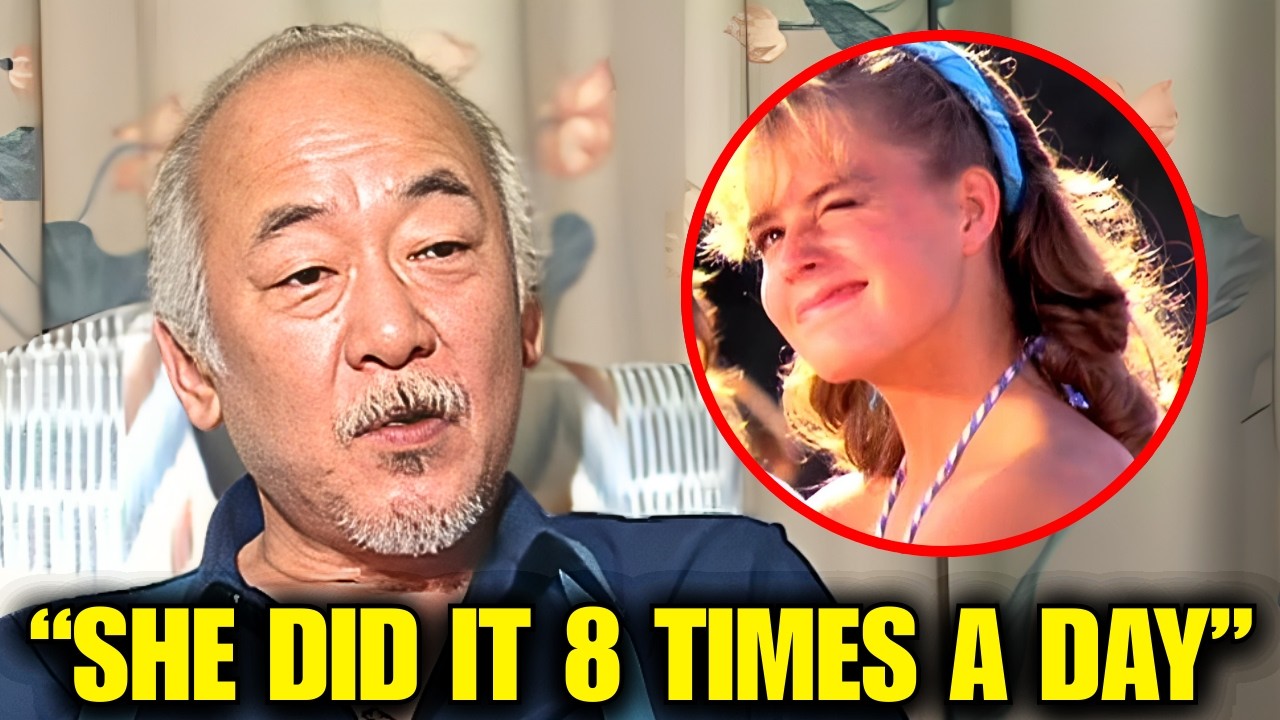 Morita was primarily known as a stand-up comic and lighthearted TV performer at the time, with credits on Happy Days and other sitcoms. That resume made him the last choice in Weintraub’s eyes for a war-hardened, emotionally scarred mentor. The wall of opposition stood firm for weeks as the casting search widened, with producers flipping through headshots of actors who looked the part, sounded the part, or carried the pedigree Weintraub demanded.
But fate intervened through director John Avildsen, fresh off his success with Rocky. Avildsen understood that The Karate Kid required a raw, human bond between mentor and student, and he refused to leave any stone unturned. He insisted that every possible candidate must read for the role, regardless of Weintraub’s objections.
Morita became the last actor brought in, almost an afterthought, stepping into an audition room where the air was thick with unspoken doubt.
When Morita walked into that audition, he expected the usual Hollywood setup with a panel of executives. Instead, he found Avildsen alone, half man and half camera, with a bulky battery pack strapped to his torso. The director was filming everything from the moment Morita stepped in.
No scripted lines, no formal reading—just Avildsen asking him to talk about himself, capturing raw presence rather than polished performance.
Avildsen’s one-man camera test became the turning point. Morita spoke about his life, his career, his ups and downs, and then improvised the toughest scenes from the script without sets or costumes. As he finished and started to leave, Avildsen called out, “Pat, don’t you want to take your script with you?
You might need it.” That single sentence electrified Morita, signaling that he might have broken through the wall of skepticism.
But one test was not enough. Even with Avildsen’s tape convincing some skeptics, the producers demanded more. Morita endured five separate auditions—a grueling gauntlet designed to prove he could not only act but embody Mr.
Miyagi. The first two tested his ability to recreate the intensity and subtlety from his initial audition. Each time he delivered, carrying himself with dignity and showing flashes of vulnerability.
 The third test raised the stakes when Ralph Macchio flew in from New York. The producers needed to know if the chemistry between Daniel LaRusso and Mr. Miyagi could feel real—father and son, mentor and guide.
Morita and Macchio read together, moving from simple dialogue into dramatic moments like the wax-on, wax-off scenes and soul-bearing confessions. The connection was immediate and authentic.
The fourth test added costumes. Dressed in the simple gi with his beard and hair, Morita transformed completely. The nightclub comic was gone; in his place stood a man shaped by age, experience, and quiet pain.
Even Macchio later admitted that when Morita dressed as Miyagi, the transformation was startling. The character came to life.
The fifth and final test was the clincher. On a cold, empty sound stage with no sets or props, just Morita, Macchio, and the camera, they performed under extreme conditions. Morita didn’t act—he inhabited Miyagi.
Macchio responded to a mentor who seemed real. When the camera stopped, the silence was deafening. Five auditions had proven beyond doubt that Morita was Miyagi in a way no one else could match.
Yet the final hurdle remained: Jerry Weintraub himself. After the fifth test, Avildsen screened the tape for the full room of studio heads. The quiet exchange between Morita and Macchio carried more weight than any action sequence.
When the test ended, the room fell silent. Weintraub picked up the phone and called Morita at home. His voice, usually sharp and unyielding, carried a different weight now.
 “Pat, I almost made the worst mistake of my life,” Weintraub said. “I just want to be the first to congratulate you. You’ve got the part of Miyagi.”
Morita later recalled feeling both triumph and humility—he had not raised his voice or bragged, but simply accepted the role. For him, this victory meant much more than his own career; Miyagi was destined to become a cultural icon.
Morita also revealed how Miyagi’s distinctive voice was born—not through careful planning but through exhaustion. During his early auditions, he was drained from the long process of proving himself. His energy ran low, his words slowed, and clipped, halting phrases emerged naturally.
Avildsen saw something in that cadence: not clownish, but carrying weight and truth.
Morita refined the voice deliberately, leaning into a man who spoke with deliberate pauses, someone who had learned English as a second language but thought deeply before each word. The broken grammar became poetry. Lines like “A man who catches flies with chopsticks can accomplish anything” landed not as jokes but as ancient wisdom.
The rhythm made audiences lean in, listen closer.
Macchio later stated that Morita’s voice disarmed him on set. He knew Morita as a comedian with a smooth, quick tongue, but suddenly he was facing a different person—quiet, almost meditative, with words dropping like small stones into water. The two rhythms complemented each other perfectly: Daniel’s nervous energy and Miyagi’s spare, broken English calming the air.
Some studio executives worried the voice would be too much, that audiences might laugh for the wrong reasons. Morita himself knew Hollywood’s long history of using accents to belittle. He imbued Miyagi with dignity, tapping into truth rather than parody, and the voice rose above stereotype.
 It became part of the character’s wit, gentleness, and charm.
Morita also shared set moments he never forgot. One was the night shoot for the scene where a drunk Miyagi reveals his grief over losing his wife and child in an internment camp. The studio had doubts about including it, but Morita fought for the scene.
He poured his soul into it, stumbling through Miyagi’s sorrow with raw emotion that stunned the crew into silence. After the cameras stopped, no one clapped. They just let him have his silence.
Another memory came from the catching-fly-with-chopsticks scene. Written as light comedy, Morita played it with childlike focus, his hands steady, his eyes locked on the impossible task. When Daniel succeeds instead, their laughter bursts genuine.
Morita loved that scene because it revealed that Miyagi wasn’t just a teacher—he was a man who could laugh, compete, and be surprised.
The bond with Macchio extended off-screen. Morita became a protective figure for the teenage actor, teaching life lessons with gentle humor and experience. Years later, Macchio called their relationship the heart of the movie, both on- screen and off.
For Morita, that love was not scripted. It was real, enhanced every day they performed together.
As the days went by, the crew’s skepticism faded. By the time tournament scenes were filmed, even the stunt team acknowledged Morita with respect reserved for people of distinction. He wasn’t just an actor playing a sensei; he had actually become one in their eyes.
That respect stayed with him long after the cameras stopped rolling.
In his final reflection, Morita recognized that The Karate Kid afforded him something no other project ever had: the chance to be remembered not as a comedian with a lucky break, but as an artist who poured his heart into a character that touched the world. His revelation serves as a powerful reminder that behind every iconic performance lies a battle that no camera ever showed. The crane kick lives forever, but the quiet war that brought Miyagi to life is a story that deserves to be told.