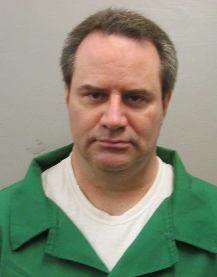
The state of Alabama put Andrew Reed Lackey to death by lethal injection Thursday evening, ending the life of a 29-year-old inmate who had spent years on death row for the brutal Halloween night murder of an 80-year-old World War II veteran. Lackey had no final words, offering only a quiet “No, sir” when asked by the warden if he had anything to say
Within minutes, the lethal drugs began to flow at Holman Correctional Facility in Atmore, and Lackey was pronounced dead at 6:25 p.m. The execution, the first in Alabama in nearly two years, carried out a sentence that Lackey himself had eagerly sought, having written to the courts asking them to set a date for his death.
 The crime that led to this moment began on October 31, 2005, in Athens, Alabama. Charles Newman, an 80-year-old retired paratrooper who had survived the D-Day invasion as a member of the 101st Airborne Division, was at home in his pajamas when Lackey forced his way inside.
A 911 call captured the desperate struggle. Newman’s trembling voice pleaded, “Don’t do that. Leave me alone.
What do you want?” In the background, Lackey demanded only one thing: “Where’s the vault? Where’s the vault?”
The intruder was driven by a story told by Newman’s own grandson, Derek, who had described the old man as a miser hiding cash and gold.
Newman fought back, retrieving a pistol and firing at Lackey. The bullet struck the intruder, but instead of stopping the attack, it enraged him. Lackey pulled a knife and stabbed Newman more than 70 times with such force that the blade broke, leaving its tip lodged in the victim’s skull.
He then picked up Newman’s own gun and shot him in the chest.
When police arrived, they found Newman lying between a couch and a green chair, surrounded by a pool of blood. The veteran who had once parachuted into Nazi‑occupied Europe had been slaughtered in his own living room by a young man from his own community.
Lackey fled the scene, bleeding from the wound Newman had inflicted. He drove to a Chevron gas station, where he called for medical help. Paramedics and police arrived quickly, and the story he gave about how he was shot quickly unraveled.
Investigators found a . 38‑caliber Rossi revolver registered in his name.
Forensic evidence sealed the case. Blood on Lackey’s jeans matched Newman’s DNA. His shoe prints matched those inside the ransacked home.
Metal fragments from the scene were consistent with items connected to Lackey. The 911 call placed his voice demanding the vault at the center of the crime. The evidence was overwhelming.
 Andrew Reed Lackey was born on October 29, 1983, in Alabama. His mother Sharon later testified that from infancy he seemed to live in a world she called “Andrew Land,” a quiet, withdrawn place. He refused to breastfeed and nearly starved, surviving only after being switched to bottle‑feeding while turned away from his mother.
Growing up, Lackey was ambidextrous, but a physician suggested that using both hands equally might be straining his brain development. The solution was unusual: let him play computer games to force a dominant hand. By age five, Lackey spent hours alone in front of an Atari console, deepening his isolation.
Family and teachers described him as passive, non‑violent, but painfully asocial. Psychologists later believed he showed signs of autism spectrum disorder, possibly Asperger syndrome. Though his IQ was average and he understood right from wrong, his emotional world was stunted, leaving him easily led and desperate for belonging.
That vulnerability placed him in the orbit of Derek Newman, Charles Newman’s grandson and a friend since fourth grade. Derek told Andrew that his grandfather was mean and rich, hoarding gold bars and cash inside a vault. Andrew believed him.
To a young man locked inside his own head, the idea of a vault full of treasure became an adventure.
The trial unfolded in 2008 in the Limestone County Courthouse. Prosecutors painted Lackey as a calculating robber who stalked his victim and murdered him for greed. The defense argued mental illness and manipulation by Derek Newman.
The jury deliberated less than two hours before returning a guilty verdict on all counts, including capital murder.
During the penalty phase, Sharon Lackey pleaded for her son’s life, reminding the jury he had no prior history of violence. But the brutality of the crime outweighed every plea for mercy. The jury voted 11 to 1 in favor of death.
Lackey, then 24, was sentenced to die by lethal injection.
After sentencing, Lackey was sent to Holman Correctional Facility’s death row. While other inmates fought for appeals, Lackey seemed resigned. He rarely asked about legal updates, admitted his crime, and showed little interest in fighting for his life.
 His quiet acceptance unnerved guards and family alike.
Over time, something darker surfaced. Lackey did not want appeals. He began writing letters to the courts asking them to set an execution date.
Mental health advocates argued he was not competent to make that decision, pointing to his autism‑like traits and history of withdrawal. But Lackey was adamant.
Depression consumed him. He attempted suicide while incarcerated, a bid to escape the guilt and isolation. The attempt failed but revealed the depth of his despair.
He wasn’t fighting for life. He was already letting go. In the eyes of the state, he remained competent, aware of his crime, and fit to be executed.
On the morning of July 25, 2013, Andrew Lackey woke up knowing it was his last sunrise. He was offered turkey, bologna, French fries, and grilled cheese. He ate quietly, without comment.
The meal was simple, almost childlike, the kind you might grab from a roadside diner, not the kind expected before death.
As evening drew near, the ritual began. Lackey was led into the death chamber, a cold room with a gurney at its center. He was strapped down, IV lines prepared by silent medical staff.
Then, with the push of a button, a curtain opened. Behind the glass sat two groups divided by grief.
On one side sat Lackey’s parents, watching their son die by the hands of the state. On the other, three family members of Charles Newman. Two families bound forever by one violent act, staring into the face of finality.
 Lackey slowly raised his head, scanned the room, and then turned away.
When asked for final words, he replied, “No, sir.” There was no apology, no explanation. He stayed silent as the executioner prepared the lethal cocktail.
His chest rose and fell once, twice, then slowed. At 6:25 p. m.
, Andrew Reed Lackey was pronounced dead.
The execution raises difficult questions. Lackey was put to death at just 29 despite documented signs of mental instability, including a failed suicide attempt and a history of possible autism spectrum disorder. He had actively sought his own execution, waving his right to appeals.
Was justice truly served, or did the state allow a deeply troubled man to choose death before proper mental evaluation and treatment? Executing someone who may not have been fully stable challenges the balance between justice for victims and compassion for offenders.
Justice must punish, but it should never abandon humanity. When mercy is absent, justice risks becoming vengeance. For the Newman family, the execution marked a grim closure.
For the Lackeys, it was the confirmation of a nightmare they had lived since their son was an infant.
Andrew Lackey’s story is one of a boy who never fully entered the world, who was led astray by manipulation and his own fragile mind, and who finally found peace only when the state ended his life. The silence of his last words speaks volumes about the tragedy that unfolded in an Alabama living room on Halloween night.