The phone began ringing beneath a table just as the restaurant manager told Daniel Mercer he had five minutes to leave.
It was nearly midnight, and the dining room had been empty for an hour. Chairs were stacked upside down. The kitchen lights were off. Rain hammered the windows hard enough to blur the city beyond them.
Daniel was on his knees, wiping spilled wine from the floor after a private corporate dinner, when the manager’s polished shoes stopped beside his hand.
“Daniel,” Victor Hale said, looking down at him, “the event ended forty minutes ago.”
“I know. One of the guests knocked over a bottle near the back table.”
“And the cleaning crew can handle it tomorrow.”
Daniel wrung out the cloth and stood slowly. His lower back had been aching since the afternoon, but he kept his face neutral.
“The wine was seeping into the wood.”
Victor glanced at his watch.
“That is not your problem. Your problem is that you keep finding reasons to stay on the clock.”
Daniel did not answer.
Victor had recently become general manager of the Hawthorne Hotel, one of the most expensive properties in downtown Boston. He spoke to employees as if each word were a deduction from his own bank account.
“You already asked for extra shifts this month,” Victor continued. “This hotel is not a charity.”
“I never said it was.”
Victor’s eyes narrowed.
Daniel regretted the sentence immediately.
He needed the job.
His eight-year-old daughter, Sophie, needed braces. Her school had raised tuition for the aftercare program. The transmission in Daniel’s twelve-year-old car had begun slipping whenever he drove uphill.
He could not afford pride.
“I’ll clock out now,” Daniel said.
“You should have clocked out forty minutes ago.”
Victor turned and walked away.
Daniel picked up the last wineglass, carried it to the service station, and reached beneath the back table for his bag.
That was when the ringing started.
A soft electronic chime came from under the heavy linen cloth.
Daniel bent down and found a phone wedged near the wall.
It was not an ordinary phone. The case was dark green leather with a gold monogram pressed into one corner: E.W.
The screen lit up again.
Daniel froze.
The lock screen showed two teenagers standing in front of a red brick school building.
A girl with long dark hair was laughing at the camera.
Beside her stood a seventeen-year-old version of Daniel Mercer.
He knew the photo immediately.
He remembered the gray hooded sweatshirt he had worn that day. He remembered the girl’s hand gripping his arm. He remembered the cheap disposable camera her friend had brought to their final football game.
He had not seen that picture in eighteen years.
The name on the incoming call appeared at the top of the screen.
Board Chairman
Daniel stared at the photograph until the call stopped.
Then he looked across the empty dining room.
The private dinner had been hosted by Elena Ward, founder and CEO of Ward Hospitality Group—the company that had purchased the Hawthorne Hotel six months earlier.
Daniel had seen Elena only from a distance that evening.
She had arrived surrounded by executives, lawyers, and investors. She wore a cream-colored suit and spoke with the calm authority of someone who never needed to repeat herself.
He had recognized her the moment she entered the room.
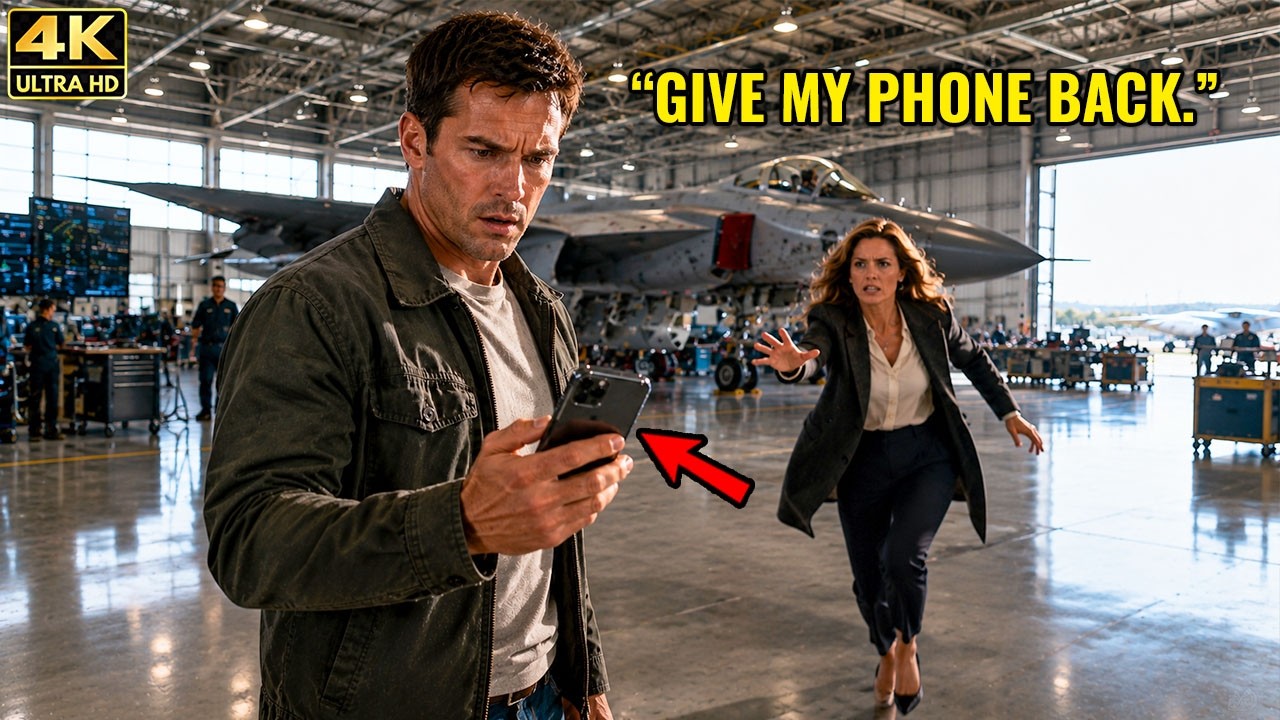
Of course he had.
But Elena had not looked at him once.
Daniel had told himself she probably did not remember him.
People like Elena Ward gave interviews to business magazines. Her company owned hotels in twelve cities. Her face appeared in airport advertisements beneath headlines about innovation and leadership.
Daniel delivered room-service trays and cleared banquet tables.
Eighteen years was a long time.
Long enough for one person to become a CEO.
Long enough for another to become invisible.
The phone rang again.
This time the screen displayed a woman’s name Daniel did not recognize.
He picked it up carefully.
For several seconds, he considered leaving it with security.
That would have been the simplest choice.
But the security desk was managed by Victor’s cousin, and Daniel had watched lost wallets sit unattended behind the counter for hours. This phone likely contained confidential company information.
So Daniel slipped it into his jacket pocket and walked toward Victor’s office.
The door was still open.
Victor was seated behind his desk, entering something into a spreadsheet.
“I found a phone under table fourteen,” Daniel said.
Victor barely looked up. “Leave it at security.”
“I think it belongs to Ms. Ward.”
That got his attention.
Victor stood immediately.
“Give it to me.”
Daniel did not move.
Victor held out his hand.
“I said give it to me.”
“The phone has been receiving calls from the board chairman. I thought it might be better to contact her assistant directly.”
Victor’s expression changed.
Not dramatically.
Just enough.
His shoulders tightened, and his voice became quieter.
“You thought?”
Daniel recognized the tone. Victor used it whenever an employee stepped outside the role he had assigned them.
“Yes.”
“Your job is to serve food and clear tables. It is not to make decisions about executive property.”
Daniel looked at the phone in his hand.
“Then I’ll take it to the front desk and ask them to call her room.”
Victor walked around the desk.
“You are not taking anything anywhere.”
He grabbed for the phone.
Daniel stepped back.
The movement was small, but Victor saw it as defiance.
“You have already violated policy by carrying a guest’s property around the building,” Victor said. “Now you are refusing a direct instruction.”
“I’m trying to return it.”
“And I am the general manager. I will return it.”
Daniel knew Victor well enough to understand what would happen next.
Victor would deliver the phone personally.
He would describe how he had found it, secured it, and protected the CEO’s privacy.
By morning, the story would have lost Daniel entirely.
Normally, Daniel would have let him have the credit.
He had let Victor take credit for repairing a broken reservation system during the hotel’s busiest weekend.
He had stayed silent when Victor claimed Daniel’s idea for reducing kitchen waste as his own.
He had watched Victor accept praise for reorganizing the banquet staffing schedule after Daniel spent three nights building it.
But this was different.
The photo on the lock screen had unsettled him.
It meant Elena had kept something from their past.
Something Daniel had assumed meant nothing to her anymore.
“I’ll return it myself,” he said.
Victor’s face hardened.
“No, you will not.”
A voice behind them interrupted.
“Return what?”
Both men turned.
A woman stood in the doorway wearing a charcoal coat over her cream suit. Her dark hair was damp from the rain.
Elena Ward looked exactly as she had during dinner—composed, focused, impossible to ignore.
But the moment she saw the phone in Daniel’s hand, her expression broke.
Then she saw Daniel.
For a second, no one spoke.
Elena’s eyes moved from his face to the phone and back again.
“Daniel?”
Victor looked at him.
Then at her.
“You know him?” he asked.
Elena walked into the office slowly.
“I’ve known him since I was sixteen.”
The room became painfully quiet.
Daniel held out the phone.
“You left this under table fourteen.”
Elena took it, but her fingers remained on the case a moment longer than necessary.
“You found it?”
“Yes.”
“Did you see the screen?”
Daniel met her eyes.
“I did.”
A faint color rose in her face.
Victor forced a laugh.
“Well, fortunately, our management procedures worked exactly as designed. Daniel brought the phone directly to me, and I was preparing to—”
“No,” Elena said.
Victor stopped.
Elena did not raise her voice.
She did not need to.
“I asked Daniel a question.”
Victor closed his mouth.
Elena looked at Daniel again. “You work here?”
“For three years.”
Her eyes shifted to the name badge on his jacket, as if she needed physical proof.
“Why didn’t I know?”
Daniel almost smiled.
“Because CEOs usually don’t review the banquet staff list.”
Something passed across her face.
Pain, perhaps.
Or embarrassment.
Victor stepped forward. “Ms. Ward, Daniel is one of our temporary banquet employees. He is not part of senior operations.”
“I’m full-time,” Daniel said.
Victor glanced sharply at him.
Elena noticed.
“How long have you been full-time?”
“Twenty-two months.”
“And what is your position?”
“Banquet server. Sometimes night supervisor when they’re short.”
Elena looked at Victor.
“Sometimes?”
Victor straightened his tie. “Daniel helps with additional responsibilities when necessary.”
“Does he receive supervisor pay?”
Victor hesitated.
Daniel answered for him.
“No.”
Elena’s gaze remained on Victor.
The silence lasted long enough to make him shift his weight.
“We can review payroll records tomorrow,” he said.
“We will.”
Daniel expected that to be the end of it.
He reached for his bag.
“I should go. My daughter is with a neighbor.”
Elena turned back to him.
“You have a daughter?”
“Sophie. She’s eight.”
For the first time that night, Elena smiled.
It was not the controlled smile she used in photographs.
It was the same crooked smile Daniel remembered from high school.
“You became a father.”
“A long time ago.”
“And her mother?”
The question was gentle, but Daniel felt it land.
“She died four years ago.”
Elena’s smile disappeared.
“I’m sorry.”
Daniel nodded once.
He did not want sympathy in Victor’s office.
He had spent four years learning how to survive without being treated as fragile.
“I really need to get home.”
Elena glanced at the rain outside.
“I’ll have a car take you.”
“That’s not necessary.”
“It’s after midnight.”
“I drove.”
Elena paused. “Of course.”
Victor stepped in again, eager to regain control.
“I can handle the rest, Ms. Ward. Daniel has already exceeded his scheduled hours, and we have strict overtime policies.”
Elena looked at Daniel.
“Were you still working when you found the phone?”
“Yes.”
“Were you clocked in?”
Daniel said nothing.
Victor answered quickly. “He should have clocked out earlier.”
“That wasn’t my question.”
Daniel could feel Victor watching him.
“No,” Daniel said. “I had already clocked out.”
Elena’s expression sharpened.
“Why were you working after clocking out?”
“The floor needed cleaning.”
“Was there no cleaning staff?”
“They were sent home early.”
“By whom?”
Victor’s jaw tightened.
“It was a quiet evening.”
Elena turned toward him.
“You hosted forty-two executives and investors in this dining room tonight.”
“After the event, it became quiet.”
“And you sent the cleaning crew home before the room was cleared?”
Victor’s confidence began to crack.
“They were approaching overtime.”
“So Daniel completed the work unpaid.”
“It was his choice.”
Elena looked at Daniel. “Was it?”
Daniel had spent years avoiding conflict.
He had learned that employers often praised honesty until honesty became inconvenient.
But he also remembered the photograph on Elena’s phone.
He remembered a seventeen-year-old girl sitting beside him on the school roof after her mother lost their apartment.
He remembered her saying, “One day, I’ll build a company where nobody gets treated like they’re disposable.”
He wondered whether she remembered saying it.
“No,” Daniel said. “It wasn’t.”
Victor’s face went still.
Elena asked, “How often does this happen?”
Daniel looked at the floor.
“Daniel.”
“Most events.”
Victor scoffed. “That is completely misleading.”
Elena raised a hand without looking at him.
Victor fell silent.
“How many unpaid hours?” she asked.
“I don’t know.”
“Estimate.”
“Five or six a week.”
Elena stared at him.
“For how long?”
“Maybe a year.”
Victor’s voice rose. “This is absurd. He is making accusations because I corrected his performance tonight.”
Daniel looked at him.
“You told me the hotel wasn’t a charity.”
“It isn’t.”
“No,” Elena said. “It is a business. Which means it follows labor law.”
Victor’s face lost color.
Elena unlocked her phone and called someone.
“Marisol, I need payroll, security access logs, and timecard edits for the Hawthorne staff for the past eighteen months. Freeze all management-level changes until legal reviews them.”
Victor took a step forward.
“Ms. Ward, surely we don’t need to escalate a misunderstanding.”
Elena turned the phone away from her mouth.
“If it is a misunderstanding, the records will show that.”
She resumed the call.
“And send someone from compliance tonight.”
Victor stared at Daniel.
There was no anger in his face now.
There was fear.
Daniel had seen that expression before.
It appeared on people at the exact moment they realized the person they had dismissed had access to a door they did not know existed.
Elena ended the call.
“You should go home,” she told Daniel. “You’ll be paid for every minute you worked tonight.”
Victor tried to speak.
Elena did not look at him.
“And every unpaid minute before tonight, if the records confirm what you said.”
Daniel nodded.
He walked toward the door.
“Daniel,” Elena said.
He stopped.
She held up the phone.
“I kept the picture.”
“I noticed.”
“There’s a reason.”
Victor remained in the office, listening.
Daniel did not want to have this conversation in front of him.
Elena seemed to understand.
“Tomorrow,” she said. “Please.”
Daniel studied her face.
“Tomorrow.”
He left the hotel without looking back.
By nine the next morning, Victor’s office was sealed.
Compliance officers occupied the conference room. Payroll reports covered the table. Security records showed dozens of employees entering work areas after their timecards had been manually edited.
Daniel was not the only one.
Housekeepers had lost hours.
Kitchen staff had been told to clock out before finishing inventory.
Maintenance workers had answered overnight calls without being paid.
Victor had not merely tolerated the practice.
He had built a system around it.
He adjusted schedules to avoid overtime, pressured employees to work after clocking out, and coded missing hours as “voluntary service corrections.”
The phrase appeared in internal notes thirty-seven times.
By noon, Victor Hale was suspended.
By three, his company laptop had been collected.
At four fifteen, he was escorted through the lobby in front of the same employees he had warned not to “cause scenes.”
No one said a word as he passed.
That made it worse.
Victor walked quickly, carrying a cardboard box against his chest. His face was rigid until he saw Daniel standing near the reception desk.
Then he stopped.
His eyes moved across the lobby.
Housekeepers.
Servers.
Bell staff.
Cooks.
People whose names he had rarely used.
They were all watching him.
Victor opened his mouth, but nothing came out.
For the first time since Daniel had known him, he had no instruction to give.
The automatic doors opened behind him.
Rain blew into the lobby.
Victor lowered his eyes and walked out.
The investigation eventually uncovered more than $218,000 in unpaid wages across the hotel.
Every affected employee received back pay, penalties, and a written apology from Ward Hospitality Group.
Three regional managers who had ignored complaints were dismissed.
The hotel created an anonymous reporting system managed by an outside firm.
Daniel expected his role in the matter to end there.
It did not.
Two days later, Elena asked him to meet in the rooftop conference room.
She was standing by the window when he arrived, holding two cups of coffee.
“I remembered you took yours without sugar,” she said.
“I still do.”
She handed him a cup.
For a moment, they stood in the same awkward silence that had existed between them in Victor’s office.
Then Elena placed her phone on the table.
The old photo filled the screen.
“I found it in a box after my father died,” she said. “I scanned it and kept it because it reminded me of the worst year of my life.”
Daniel waited.
“You were the only person at school who knew we had been evicted,” she continued. “Everyone else thought we moved because my mother got a better job.”
“I remember.”
“You brought groceries to the motel.”
“My father brought groceries.”
“You carried them up three flights of stairs.”
Daniel looked down at his coffee.
“It wasn’t a big thing.”
“It was to me.”
Elena turned the phone toward him.
“That picture was taken the week after you gave me the application for the scholarship program.”
Daniel looked at her.
He had forgotten.
“You filled out half of it for me,” she said. “You convinced the guidance counselor to extend the deadline. That scholarship paid for my first year at Northeastern.”
“You would have found another way.”
“Maybe.”
She shook her head.
“But I didn’t need another way. You gave me one.”
Daniel sat across from her.
“Why didn’t you ever contact me?”
Elena’s expression changed.
“I did.”
He frowned.
“I sent letters to your old address. Then I found your email through the alumni directory.”
“I never got them.”
“I eventually heard you had joined the Navy.”
“My father got sick. I came back after two years.”
“I heard you got married.”
“I did.”
Elena looked toward the window.
“I told myself contacting you would complicate your life.”
Daniel understood then.
The photo was not evidence of obsession or some secret romantic plan.
It was gratitude.
A record of the person Elena had been before the interviews, the hotels, and the boardrooms.
A reminder that someone had helped her when he had nothing to gain.
“I used that picture as my lock screen whenever I was making a decision I was afraid of,” she said. “It reminded me that being powerless is temporary.”
Daniel looked at the two teenagers on the screen.
“And then you found me clearing tables in one of your hotels.”
Elena met his eyes.
“No. I found you protecting my property after your manager had already humiliated you, and then telling the truth when staying quiet would have been easier.”
She opened a folder on the table.
Daniel immediately shook his head.
“I don’t want a reward.”
“It isn’t a reward.”
She slid the first page toward him.
It was a job description.
Director of Employee Experience and Operations Integrity—Northeast Region.
Daniel almost laughed.
“I’m a banquet server.”
“You rebuilt our event staffing schedule.”
Daniel’s smile disappeared.
“You knew about that?”
“Compliance found the original file under your login. Victor changed the author field before sending it to corporate.”
Elena turned another page.
“You also designed the kitchen waste system he presented at the regional meeting.”
Daniel said nothing.
“And you identified the reservation problem last December.”
“He told you that?”
“The system logs did.”
Daniel stared at the folder.
Elena leaned forward.
“I am not offering you this role because we went to high school together. I’m offering it because you understand what happens inside a hotel when executives only listen upward.”
“I don’t have a degree.”
“You have three years of operational experience here, six years in logistics, military service, and a documented record of solving problems above your pay grade.”
Daniel looked at the salary.
It was nearly three times what he currently earned.
His first thought was Sophie.
Braces.
A safer car.
A savings account that did not vanish every time something broke.
His second thought was the employees downstairs.
People like him who had become experts at enduring problems no executive ever saw.
“What would I actually be allowed to change?” he asked.
Elena smiled.
“That is the right first question.”
Daniel accepted the job the following Monday.
His first policy change required every regional executive to spend two full shifts each quarter working alongside hourly employees.
Not observing.
Working.
They made beds, carried luggage, washed dishes, and closed banquet rooms.
The second change gave employees direct access to timecard records and automatic alerts whenever a manager edited their hours.
The third created a promotion path for workers who had operational experience but no college degree.
Within a year, employee turnover at the Hawthorne fell by nearly half.
Guest satisfaction rose.
So did profit.
Not because Daniel had discovered a miracle strategy.
Because people worked differently when they knew they would not be treated as disposable.
One Friday afternoon, Sophie visited the hotel after school.
She sat in Daniel’s new office, spinning slowly in his chair while he finished a call.
A framed copy of the old high school photograph rested on the shelf behind his desk.
Sophie pointed at it.
“Is that you?”
Daniel turned.
“Unfortunately.”
“You had terrible hair.”
“I know.”
“Who’s the girl?”
Before Daniel could answer, Elena appeared in the doorway.
“The girl had excellent hair,” she said.
Sophie looked from Elena to the photograph.
Then back to her father.
“Is she your boss?”
Daniel smiled.
“Technically.”
Elena folded her arms.
“Temporarily.”
Sophie frowned. “What does that mean?”
“It means your father is very good at his job.”
Daniel glanced at Elena.
Eighteen years earlier, he had helped a frightened teenager complete a scholarship application because it seemed like the decent thing to do.
He had not expected repayment.
He had not imagined she would build a company.
He certainly had not imagined that one forgotten phone would expose years of stolen wages and change the direction of his life.
But kindness rarely returns according to schedule.
Sometimes it disappears for years.
Sometimes it survives inside an old photograph.
And sometimes, on the night the world has almost convinced you that nobody sees your value, it lights up on a screen and proves that someone remembered all along.