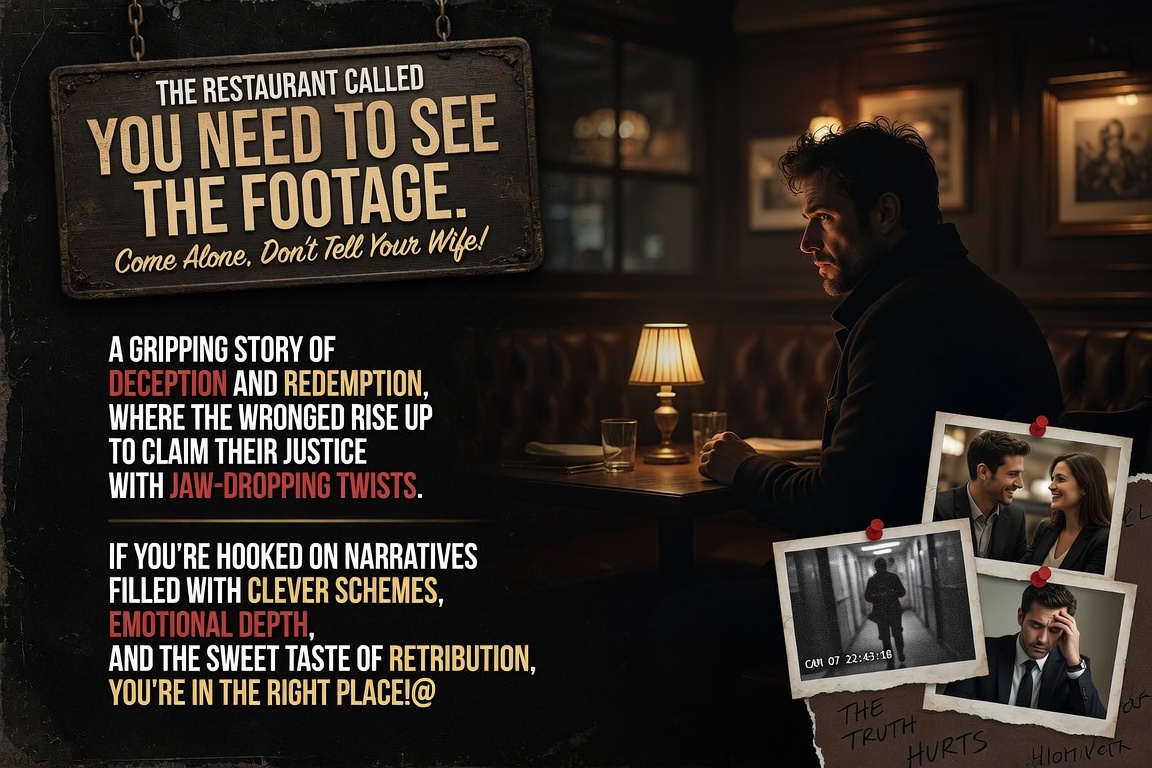
The Restaurant Called: “You Need to See the Footage. Come Alone. Don’t Tell Your Wife.”
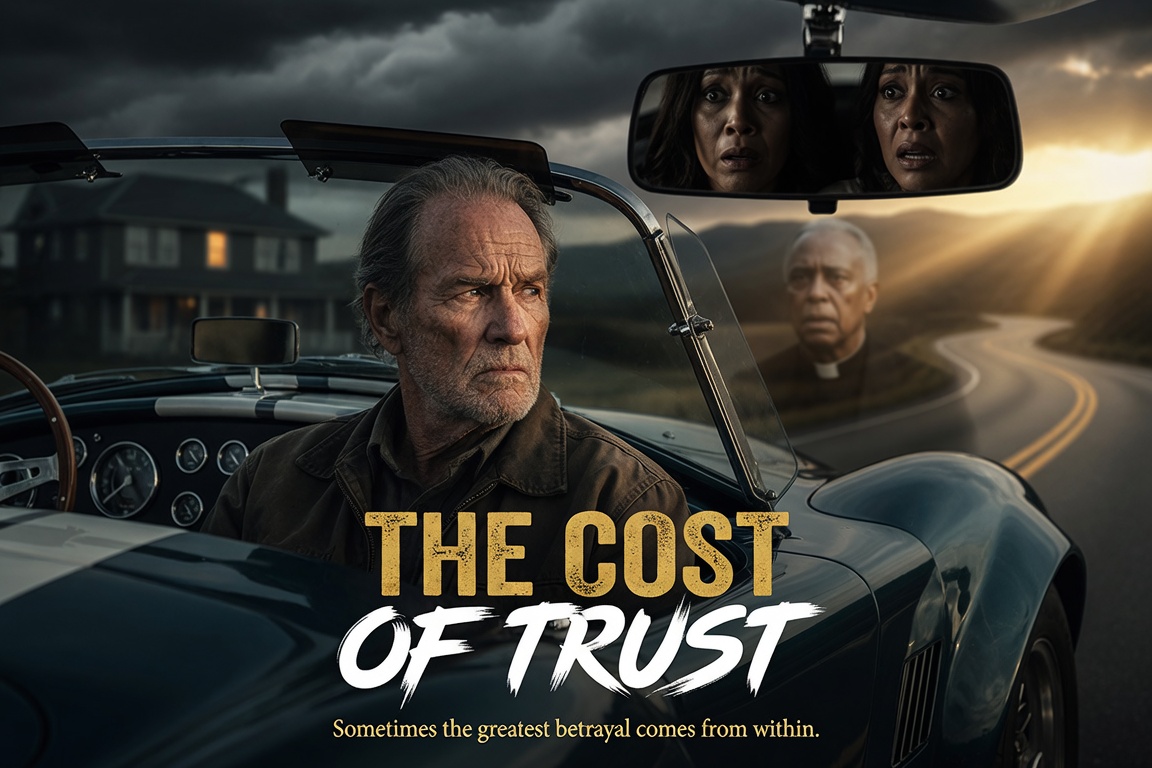
At 11:52 on a rain-soaked Friday night, a security officer reached into Nathan Cole’s overcoat and pulled out a gold watch worth more than Nathan’s first house.
The private dining room went silent.
Beyond the floor-to-ceiling windows, Chicago glittered beneath a storm. Inside Arden & Ash, sixty candles trembled in amber glass, a jazz trio played downstairs, and three generations of the Voss family stared at Nathan as if they had finally caught him becoming the man they had always claimed he was.
A thief.
The security officer held the watch beneath the chandelier.
Its engraved face flashed once.
MALCOLM VOSS — FOR THE EMPIRE YOU BUILT.
Malcolm Voss remained seated at the head of the table. Seventy years old, silver-haired and straight-backed, he had the kind of stillness that made other people lower their voices.
“That,” Malcolm said, “was in my jacket when I arrived.”
Nathan looked at the watch.
Then at Malcolm’s son, Julian, who was standing beside the wine cabinet with one hand in his pocket.
Then at his wife.
Claire Voss-Cole sat six feet away in a black silk dress, her spine rigid against the chair. At forty-four, she had her father’s controlled expression and her late mother’s gray-green eyes. Those eyes had once made Nathan feel seen.
Now they would not meet his.
“Claire,” Nathan said.
Her fingers tightened around the stem of her glass.
For one second, something moved across her face. Fear. Calculation. Shame.
Then it disappeared.
“Nathan,” she said quietly, “just go home.”
The words struck harder than the accusation.
Around the table, nobody protested.
Not Claire’s aunt, who had spent dinner making jokes about Nathan’s “little woodworking business.”
Not the board members who had shaken his hand while calling him “Mr. Claire Voss.”
Not Julian, who had raised a glass twenty minutes earlier and said, “To family—the one investment you can never fully write off.”
Even Nathan’s twenty-two-year-old daughter, Lily, looked frozen at the far end of the table, her face drained of color.
Nathan did not argue.
That was what the Voss family expected from him.
He was the quiet one. The patient one. The man who repaired broken doors instead of slamming them.
He took his coat from the security officer, placed it over his arm, and walked past thirty people who suddenly found the tablecloth fascinating.
As the elevator doors closed, he saw Claire rise from her chair.
For one reckless moment, he thought she might come after him.
She didn’t.
Outside, November rain hit the sidewalk in silver needles.
Nathan crossed West Wacker without opening his umbrella. Water ran down the collar of his suit and into the old burn scar along his left shoulder. A cab sprayed dirty water across his trousers, but he barely noticed.
He had spent twenty-three years defending Claire’s family.
When friends said Malcolm treated him like hired help, Nathan said Malcolm came from another generation.
When Julian mocked his work, Nathan said Julian was insecure.
When Claire missed anniversaries because the company needed her, Nathan told Lily that leadership required sacrifice.
Nathan had built explanations the way other men built walls.
Tonight, Claire had stood behind every one of them and watched them collapse.
His phone rang as he reached the parking garage.
Unknown number.
Nathan almost ignored it.
Then it rang again.
He answered without speaking.
“Mr. Cole?”
The woman’s voice was low and hurried.
“Yes.”
“This is Dani Alvarez. I’m the general manager at Arden & Ash.”
Nathan stopped beneath a leaking concrete beam.
“We met earlier,” she continued. “I’m sorry to call this late, but you need to come back.”
“I don’t think your restaurant wants me back.”
“This isn’t about the watch.”
Rainwater dripped from Nathan’s hair onto the phone.
Dani lowered her voice.
“You need to see the footage.”
Nathan’s grip tightened.
“What footage?”
“The cameras in the private dining room.”
A car alarm chirped somewhere behind him.
“Mr. Cole, come through the service entrance on Lower Water Street. Come alone.”
She hesitated.
“And don’t tell your wife.”
Twenty minutes later, Nathan entered Arden & Ash through a steel door between the loading dock and the recycling bins.
The restaurant felt different from the back.
The polished walnut, candlelight, and linen vanished. Here there were rubber mats, stainless-steel shelves, dented carts, and the smell of bleach mixing with roasted garlic.
A dishwasher sprayed plates beneath fluorescent lights. Two line cooks scraped down a grill. Somewhere in the building, the jazz trio finished its final song.
Dani waited beside the manager’s office.
She was thirty-nine, with dark hair tied at the nape of her neck and sleeves rolled above her elbows. Nathan remembered her from dinner. She had greeted Malcolm with professional warmth but thanked every busser by name.
Now she looked angry.
Not dramatic anger.
The quieter kind—the kind that had survived a long shift and found one final thing it refused to tolerate.
“Thank you for coming,” she said.
“Who else has seen it?”
“My night security supervisor and one server.”
“Does Malcolm know?”
“No.”
“Claire?”
“No.”
Dani opened the office door.
Three camera feeds glowed across a wide monitor. One showed the restaurant entrance. Another showed the corridor outside the private room.
The third looked down on Malcolm’s dinner table from above the temperature-controlled wine wall.
Nathan recognized the angle.
Claire had selected their seats herself.
Dani sat at the keyboard and moved the recording back to 10:41 p.m.
Onscreen, Nathan left the dining room to take a call from one of his employees.
The moment the door closed behind him, Julian crossed the room.
He glanced toward the hallway.
Then he lifted Nathan’s overcoat from the back of the chair and slid Malcolm’s watch into the inside pocket.
The movement took less than four seconds.
Julian returned to the wine cabinet and checked his reflection in the glass.
Nathan felt no surprise.
Only a cold, clean confirmation.
“Keep watching,” Dani said.
Claire appeared in the frame.
She had seen Julian.
There was no question.
She looked directly at her brother, then at Nathan’s coat.
Julian said something the camera could not capture.
Claire’s jaw tightened.
But she did not remove the watch.
She did not call Nathan back.
Instead, she walked toward Nathan’s chair and reached beneath the table.
Nathan leaned closer to the screen.
A weathered cedar box rested beside his chair—the box he had brought at Malcolm’s request.
It had belonged to Nathan’s mother, Ruth.
For thirty years, it had sat in Nathan’s workshop wrapped in a flour-stained dish towel. Its corners were scorched from the 1996 fire that destroyed the original Voss restaurant. Inside were handwritten recipes, old photographs, supplier cards, and fragments of a history Malcolm preferred to tell without mentioning Ruth’s name.
Three weeks earlier, Malcolm had asked Nathan to bring the box to his birthday dinner.
“We’re building a heritage display,” Malcolm had said. “It’s time Ruth’s contribution was recognized.”
Nathan had believed him.
On the screen, Claire lifted the cedar box and carried it to a man near the service door.
Victor Sloane.
The Voss family attorney.
Sloane opened his briefcase.
Claire placed the box inside.
A minute later, Sloane handed her an identical one.
Nathan stared at the screen.
They had swapped it.
Dani stopped the footage.
“There’s more.”
She advanced the recording by twelve minutes.
Malcolm stood beside Claire near the window. Their backs were partly turned from the room.
The camera had no sound, but their faces were clear.
Malcolm said something.
Claire shook her head.
He gripped her elbow.
She pulled away.
Then Malcolm leaned close and formed six words Nathan could read from his lips.
By Monday, it won’t matter what he remembers.
The video ended.
Nathan remained standing behind Dani’s chair.
His face reflected faintly in the monitor. Rain-dark hair. Hollow eyes. A thin white scar crossing his right palm where a sheet of burning metal had sliced him at seventeen.
Dani turned.
“What was in the box?”
“My mother’s life.”
“I mean legally.”
“I don’t know.”
Dani studied him.
“Your brother-in-law didn’t plant a ten-thousand-dollar watch because of recipes.”
“No.”
“And your wife didn’t exchange boxes because of photographs.”
Nathan looked at the frozen image of Claire’s hand closing Victor Sloane’s briefcase.
“No.”
Dani copied the footage to two encrypted drives.
She gave one to Nathan and placed the other inside the restaurant safe.
“If anyone asks, tonight’s system backup failed during the storm.”
“Why are you helping me?”
Dani looked through the office window toward the kitchen.
“My father worked thirty-one years for a hotel company. When it was sold, the owners called the pension fund an accounting inconvenience.”
She folded her arms.
“They left with bonuses. He left with an envelope.”
“This could cost you your job.”
“So could staying quiet.”
Nathan slipped the drive into his pocket.
Before he left, Dani touched his sleeve.
“Mr. Cole.”
He looked back.
“Your wife knew where the camera was.”
Claire was awake when Nathan returned to their home in Oak Park.
The kitchen lights were off, but she sat at the island in the darkness, still wearing the black dress from dinner. Her shoes rested on the floor beside her. A glass of water stood untouched between her hands.
Nathan entered through the mudroom.
“Where did you go?” she asked.
“My workshop.”
“At one in the morning?”
“I needed to check something.”
Claire watched him hang his coat.
“Did you take the watch?”
Nathan turned slowly.
She flinched before his face changed.
“No.”
“I didn’t think you did.”
“You didn’t say that at the restaurant.”
“Not everything can be handled in public.”
“Being called a thief was public.”
“I was trying to stop it from getting worse.”
He almost laughed.
The sound caught in his throat.
“How much worse was the plan?”
Claire’s gaze sharpened.
“What does that mean?”
Nathan walked past her and filled a glass from the faucet. His hands were steady. That was one of the things Malcolm hated about him. Nathan became quieter under pressure.
He drank, set the glass down, and looked at the woman he had married beneath an elm tree nineteen years earlier.
Claire had been thirty minutes late to their wedding because she had stopped to help a caterer whose van had broken down. She had arrived with icing on one sleeve and laughed through her vows.
Nathan had loved that woman with embarrassing certainty.
He could no longer tell whether she still existed or whether he had invented her because he needed to believe somebody in the Voss family had chosen him without an agenda.
“Where’s my mother’s cedar box?” he asked.
For the first time, Claire lost control of her face.
Only for a second.
But Nathan saw it.
“In your truck, I assume.”
“No. The box in my truck is a copy.”
Silence pressed against the kitchen windows.
Claire stood.
“You’re exhausted.”
“Where is it?”
“I don’t know what you think you saw.”
“I didn’t say I saw anything.”
Her mouth opened, then closed.
Nathan picked up his keys.
“Where are you going?”
“Somewhere I can sleep without wondering what’s being taken from me.”
“Nathan.”
He stopped at the mudroom door.
Claire’s voice broke around his name.
He waited.
She could have told him then.
She could have crossed the room, placed both hands on the island, and opened whatever locked chamber she had been living inside.
Instead, she whispered, “Please don’t do anything until Monday.”
Nathan looked over his shoulder.
“That depends on what you were planning to do to me on Monday.”
He left before she answered.
Nathan’s workshop occupied an old trolley repair building on the west side.
By dawn, freezing rain rattled against the high windows. The air smelled of cedar dust, machine oil, and coffee burned down to black syrup.
Nathan placed the copied box beneath a work lamp.
To most people, it looked perfect.
Same scorch marks. Same brass hinges. Same uneven stain where Ruth had once spilled cherry reduction across the lid.
But Nathan had restored furniture for twenty-six years.
He knew that old wood did not merely have color. It had memory.
The copy’s left hinge sat half a millimeter too high. The brass screws had machine-cut slots. The original screws had been filed by hand.
More importantly, a narrow panel was missing from the back.
Nathan had removed that panel six months earlier after humidity caused it to bow. Malcolm’s people had copied the box from photographs, never realizing one piece remained in Nathan’s workshop.
He found the panel on a shelf wrapped in brown paper.
It was six inches wide, dark with smoke, and ordinary enough to be thrown away.
Nathan carried it to his bench and ran a thumb along the edge.
Something clicked inside.
He froze.
Ruth had built the box herself. She had believed a good container should reveal nothing to impatient hands.
Nathan pressed the warped corner.
A sliver of wood lifted.
Inside the panel lay a brass key and a strip of paper folded so tightly it resembled a matchstick.
The paper cracked as Nathan opened it.
Ruth’s handwriting appeared in faded blue ink.
Nate—
A man who owns the room will still fear the person who remembers how it was built.
Take this to Mae Bishop. Do not take it to Malcolm.
Love, Mom.
Beneath her name, Ruth had written a bank box number.
Nathan read the note three times.
Then he sat on the edge of the workbench because his knees had stopped cooperating.
Ruth had been dead for twenty-nine years.
She had left him no fortune. No grand speech. No polished explanation of the past.
She had left a key inside a burned piece of wood and trusted that one day her son would look closely enough to find it.
At eight that morning, Nathan called Mae Bishop.
She answered on the fourth ring.
“Nathan?”
He had not spoken to her in almost a decade.
Mae had been the accountant for the original Voss restaurant. She was seventy-six now and lived in a retirement community near Evanston.
“Mae, I found a key.”
The silence on the line lasted so long Nathan thought the call had dropped.
Then Mae exhaled.
“Is Malcolm selling the company?”
“He’s announcing the merger on Monday.”
Another silence.
This one felt like a door opening.
“Come get me,” Mae said. “And bring identification.”
The safe-deposit room beneath the First Lakeshore Bank had no windows and no cell service.
A bank officer placed a narrow metal box on the table, then left Nathan and Mae alone.
Mae wore a camel-colored coat and walked with a polished black cane. Age had thinned her body but not her attention. Her eyes missed nothing.
Nathan inserted Ruth’s key.
Inside the box were three envelopes, two stock certificates, a miniature cassette tape, and a ledger wrapped in waxed cloth.
Mae placed one hand over her mouth.
“She kept everything.”
“What is it?”
“The part of the company history Malcolm paid people to forget.”
Nathan unfolded the first document.
At the top were three names.
Malcolm Voss. Elaine Voss. Ruth Cole.
The agreement was dated March 14, 1991.
Mae pointed to the signatures.
“Your mother created the kitchen systems, recipes, supplier network, and employee training model. Elaine created the brand and dining concept. Malcolm raised the capital.”
“Malcolm always said Mom was the first chef.”
“She was a founder.”
Nathan read further.
Ruth owned twenty percent of the original company.
A separate document established the Lantern Workers Trust, holding thirty-one percent of voting shares on behalf of the first restaurant’s employees.
Ruth was listed as trustee.
Nathan found the succession clause.
If Ruth died or became incapacitated, trusteeship passed to her adult child.
His name was typed below hers.
Nathan looked at Mae.
“This says I control fifty-one percent.”
“You don’t own all of it,” Mae corrected. “Thirty-one percent belongs to the workers and their descendants. But you hold the voting authority until a new trustee board is elected.”
“Why wasn’t I told?”
“Because after the fire, Ruth was in the hospital and Elaine was dead. Malcolm filed minutes claiming the trust had dissolved.”
“Could he do that?”
“No.”
“Then how did he get away with it?”
“People were grieving. Records disappeared. Employees were offered small checks and told the company was nearly bankrupt.”
Mae tapped the ledger.
“Malcolm did save the restaurant. That part is true. He refinanced everything. Worked day and night. Kept eighty-seven people employed.”
Nathan watched her carefully.
“But?”
“He decided saving the company meant he deserved to own the people who built it.”
The ledger contained payroll deductions, profit distributions, and handwritten votes. Every page contradicted the official history repeated in magazines, documentaries, and Malcolm’s bestselling business memoir.
At the bottom of the box, Nathan found an envelope marked with his name.
Inside was a letter from Ruth.
He unfolded it carefully.
Nate,
Malcolm is not a monster. That will make him harder to fight. Monsters know when they are destroying something. Malcolm believes anything that survives belongs to the person strong enough to control it.
You are not like him.
That does not mean you should let him take from you.
Silence can be dignity. It can also become permission. Learn the difference.
Nathan closed his eyes.
For years, he had remembered Ruth through fragments.
Her palms dusted with flour.
The low song she hummed while sharpening knives.
The smell of smoke in her hair the night of the fire.
He had been seventeen when he pulled her through a kitchen window and tore open his hand on a sheet of metal. She survived another four months, long enough to watch Malcolm reopen the restaurant without her.
Nathan had always believed she died thinking her life’s work was safe.
Now he understood.
She had died preparing for the day it would need to be reclaimed.
By Saturday afternoon, the edited security video was online.
It showed the gold watch being discovered in Nathan’s coat.
It did not show Julian planting it.
The clip appeared first on a Chicago business gossip account. Within hours, it had spread through local news feeds beneath headlines about “family tensions” and “questions surrounding the Voss merger.”
Nathan’s name was never accompanied by the word thief.
It did not need to be.
On Monday morning, two clients postponed restoration projects. A third canceled outright.
At nine fifteen, Lily called.
Nathan stood alone beside a half-restored church altar when his daughter’s name lit the phone.
“Dad?”
Her voice sounded small.
“Hey, kiddo.”
“Did Grandpa’s security people search you?”
“Yes.”
“Did they find the watch?”
“Yes.”
Lily stopped breathing for a moment.
“Did you take it?”
Nathan lowered his head.
He had prepared himself for lawyers, headlines, and Malcolm.
Not that question.
“No.”
“Okay.”
The answer came quickly, but not quickly enough to erase the pause before it.
“Your mother knows that,” Nathan said.
“Then why isn’t she saying anything?”
He looked across the workshop at Ruth’s letter resting beneath glass.
“That’s something she’ll have to explain.”
“Mom called me last night. She said I should stay out of it.”
“Probably good advice.”
“No. It’s what people say when the truth is dangerous.”
Nathan heard Claire in those words.
Not the woman at the dinner table.
The younger Claire—the woman who once challenged a bank president during a charity banquet because he had called a dishwasher “the help.”
“I’m sorry you’re in the middle,” Nathan said.
“I’m not in the middle. I’m your daughter.”
His throat tightened.
“Then believe this. I didn’t take the watch.”
“I believe you.”
This time, there was no pause.
Before they hung up, Lily said, “Dad?”
“Yeah?”
“Grandpa scheduled a livestream for the merger announcement tonight. The whole family will be there.”
“I know.”
“Are you going?”
Nathan looked at the stock certificates beside Ruth’s letter.
“Yes.”
“What are you going to do?”
He picked up a chisel and turned it beneath the light.
For most of his life, he had used sharp tools to repair damaged things.
Tonight would require a different kind of edge.
“I’m going to stop asking people for permission to know who I am.”
Malcolm met Nathan that afternoon in the shuttered original Lantern restaurant.
The building stood beneath the elevated train on Halsted Street, squeezed between a pharmacy and a luxury condominium tower. Voss Table Group kept it as a private museum, preserved for investor tours and anniversary features.
The dining room still had red vinyl booths.
Black-and-white photographs lined the walls.
In every photograph, Malcolm stood at the center.
Ruth appeared only twice.
In one image, she was blurred behind a swinging kitchen door.
Malcolm sat in booth seven with two cups of coffee.
“No lawyers?” he asked.
“Not yet.”
Nathan slid into the opposite seat.
Malcolm pushed a cup toward him.
Nathan did not touch it.
“You look like your mother when you’re angry,” Malcolm said.
“You remember her?”
Malcolm’s eyes hardened.
“I remember everything.”
“Then say her name.”
“This isn’t a courtroom.”
“Not yet.”
Malcolm leaned back.
The train passed overhead, shaking dust from the old light fixtures.
“Stonebridge’s offer keeps sixty-eight restaurants open,” Malcolm said. “It protects pensions, preserves management, and saves thousands of jobs.”
“By selling control to a private equity firm.”
“By accepting reality.”
“Was framing me part of reality?”
Malcolm’s gaze did not move.
“Julian panicked.”
“Julian put your watch in my coat.”
“I didn’t tell him to do that.”
“You only created a room where he knew you would approve.”
For the first time, Malcolm looked away.
Nathan placed a copy of the 1991 founder agreement on the table.
Malcolm stared at it.
His face barely changed, but his right thumb stopped rubbing the edge of his wedding ring.
“You found the box,” he said.
“I found what was worth stealing.”
Malcolm looked up.
“Your mother was brilliant. She was also stubborn enough to let the business die rather than change.”
“She wanted employees to keep what they earned.”
“She wanted cooks voting on expansion loans.”
“She wanted the people taking the risk to have a voice.”
“I took the risk,” Malcolm snapped.
The force of his voice filled the empty restaurant.
A light above the counter flickered.
Malcolm lowered his tone.
“When Elaine died in that fire, I had two children, a burned building, a million dollars in debt, and reporters asking whether our kitchen had killed her. Ruth refused to sign the restructuring agreement. Investors were leaving. The bank was preparing to seize everything.”
“So you erased her.”
“I kept the doors open.”
“You could have done both.”
“No.” Malcolm leaned forward. “That is what men like you never understand. You think decency survives every decision. It doesn’t. Sometimes you choose what can live and accept what must be buried.”
Nathan studied him.
This was not a confession from a villain.
It was a sermon from a man who had repeated the same lie until it became his religion.
“How much?” Malcolm asked.
“For what?”
“Your signature. Your silence. Your shares.”
“They aren’t all mine.”
“Five million.”
Nathan said nothing.
“Ten.”
The number hung between them.
Malcolm’s voice softened.
“You could protect Lily. Expand your workshop. Never worry about a contract again.”
“You told people I stole a watch.”
“Because people understand a thief wanting money.”
Malcolm’s eyes held his.
“They don’t understand a son wanting his mother back.”
Something inside Nathan went still.
Malcolm slid a settlement agreement across the table.
“Sign tonight. The footage disappears. The rumors stop. Claire remains chief operating officer. Your family survives.”
“My family survived me being humiliated in a room full of people.”
“Barely.”
Nathan rose.
Malcolm remained seated.
At the end of the booth, Nathan stopped.
“Did Claire know about the trust?”
Malcolm’s silence answered him.
Nathan turned.
“How long?”
“She found references during merger due diligence.”
“And instead of telling me, she gave you the box.”
“She understands what leadership costs.”
Nathan folded the settlement agreement once.
Then tore it down the center.
“No,” he said. “She understands what your approval costs.”
He dropped the pieces beside the untouched coffee.
For the first time since Nathan had known him, Malcolm Voss looked old.
“Walk into that announcement tonight,” Malcolm said, “and you won’t just destroy me.”
Nathan looked at the photographs lining the wall.
“You should have considered that before you built an empire on people you expected to remain invisible.”
Arden & Ash had been transformed for the merger announcement.
Television lights washed the dining room in white. Reporters gathered beneath chandeliers. Stonebridge executives stood near the bar while servers moved through the crowd with champagne.
Behind the stage, a forty-foot screen displayed the Voss Table Group logo.
FAMILY BUILT. FUTURE READY.
Nathan entered through the front doors at seven fifty-eight.
Conversations faltered as he crossed the room.
He wore the same navy suit from Malcolm’s birthday dinner. The cleaners had removed the rain stains, but Nathan had left a pale wine mark on the cuff.
Julian saw him first.
His face tightened.
Claire stood beside the stage in a cream-colored suit, speaking with Stonebridge’s general counsel. When she noticed Nathan, the color left her cheeks.
She crossed the room quickly.
“You shouldn’t be here.”
“You invited me.”
“I sent that before Friday.”
“You still need my signature.”
Claire lowered her voice.
“Nathan, listen to me. There are things happening that you don’t understand.”
“I understand someone replaced my mother’s box.”
Her eyes flicked toward Malcolm.
“I can explain after tonight.”
“You’ve had nineteen years to explain who you become in rooms with your father.”
“That isn’t fair.”
“No.”
Nathan looked at her wedding ring.
“What happened Friday wasn’t fair.”
Pain tightened the skin around Claire’s eyes.
“I know.”
“Do you?”
“I need you to trust me for fifteen more minutes.”
Nathan almost smiled.
“You used my trust like a company credit card, Claire. You kept spending because you assumed the limit would never arrive.”
Malcolm stepped onto the stage.
Applause rose.
Claire grabbed Nathan’s wrist.
“Please.”
He looked down at her hand.
She released him.
Onstage, Malcolm spoke about legacy, resilience, and the sacred obligation to protect employees.
Nathan watched servers stand along the walls holding empty trays.
He wondered how many knew their grandparents had once owned part of the company.
Malcolm invited Claire, Julian, and the Stonebridge executives onto the stage.
Then he looked toward Nathan.
“As many of you know,” Malcolm said, “our company has always been strengthened by family—even when family relationships become difficult.”
A ripple moved through the crowd.
Nathan felt every phone turn toward him.
Malcolm extended one hand.
“Nathan, would you join us?”
Nathan walked to the stage.
Victor Sloane waited beside a table holding the merger documents.
The family attorney placed a pen beside a highlighted signature line.
“This is a standard spousal and successor waiver,” Sloane said.
Nathan picked up the pen.
Camera shutters clicked.
Julian’s shoulders loosened.
Malcolm smiled.
Then every screen in the room went black.
A timestamp appeared.
FRIDAY — 10:41 P.M.
The camera footage from the private dining room began to play.
Julian crossed the screen.
He lifted Nathan’s coat.
He planted the watch.
A collective gasp rolled through the restaurant.
Julian’s face collapsed.
“That’s manipulated,” he said.
No one looked at him.
The footage continued.
Claire lifted the cedar box and handed it to Victor Sloane.
The attorney onstage took one step backward.
Reporters began shouting questions.
Malcolm moved toward the control booth.
“Turn it off.”
Dani Alvarez stood beside the sound engineer.
“No,” she said.
Malcolm stopped.
For a man who had commanded thousands of employees, the word seemed to strike him as unnatural.
“Ms. Alvarez,” he said, “you are fired.”
Dani folded her hands in front of her.
“Then I have nothing left to lose.”
The final portion of the footage played.
Malcolm gripped Claire’s elbow.
His lips formed the words:
By Monday, it won’t matter what he remembers.
The video froze.
For three seconds, the only sound in Arden & Ash was the hum of the television lights.
Then Malcolm turned toward Nathan.
“This proves Julian made a stupid decision.”
“It proves more than that,” Nathan said.
Claire stepped forward.
“Yes,” she said. “It does.”
Everyone looked at her.
Claire removed the microphone from its stand.
Her fingers trembled once before becoming still.
“Six months ago, Stonebridge’s legal team discovered inconsistencies in our original capitalization records,” she said. “My father instructed Victor Sloane to remove those references from due diligence.”
Sloane shook his head.
“Claire, be very careful.”
“I was careful.”
She looked toward the sound booth.
A second file appeared onscreen.
Emails.
Internal memos.
Scanned accounting records.
“Copies have been sent to Stonebridge’s board, outside counsel, the Department of Labor, and an independent forensic auditor,” Claire continued. “They show that Voss Table Group concealed a worker ownership trust, altered historic board minutes, and redirected profit distributions for nearly three decades.”
Malcolm stared at his daughter.
“What have you done?”
Claire faced him.
“The thing Mom was too afraid to do.”
His expression changed.
Not anger.
Wounded disbelief.
“You planned this?”
Claire swallowed.
“I found the trust eight months ago. When I confronted you, you threatened to shut down the employee pension plan, declare a restructuring emergency, and blame Nathan’s claim for the collapse.”
Malcolm’s jaw tightened.
“I warned you what would happen.”
“You taught me to believe control was the same as protection.”
She looked at Nathan.
“I believed you.”
The room seemed to narrow around them.
Claire’s voice dropped.
“I knew Julian was planning to create an incident at the birthday dinner. I moved our table beneath the only camera that recorded continuously. I asked Dani to preserve whatever happened.”
Nathan felt the truth settle into place.
Dani’s words from Friday returned to him.
Your wife knew where the camera was.
Claire had not been caught by accident.
She had built the trap.
The audience shifted, sensing a heroic turn.
But Nathan saw the part they did not.
“You knew he would plant the watch,” he said.
Claire met his eyes.
“I knew he was planning something.”
“And you let it happen.”
“I needed proof they couldn’t explain away.”
“You let my daughter watch me get searched.”
Claire’s face tightened.
“Nathan—”
“You let me walk out alone.”
Her chin trembled.
“I thought if I warned you, you would confront them before the evidence was secured.”
“You thought I couldn’t be trusted with my own life.”
“I thought you were too honest to survive what they would do.”
A murmur moved through the crowd.
Nathan stepped closer.
“So you decided to do it to me first.”
Claire closed her eyes.
When she opened them, there was nowhere left for her to hide.
“Yes.”
The word barely reached the back of the room.
But everyone heard it.
Claire reached beneath the document table and lifted Ruth’s original cedar box.
She placed it in Nathan’s hands.
“I told myself I was protecting you,” she said. “I was protecting the company. Then I told myself I was protecting the employees.”
Her voice cracked.
“The truth is, I was protecting my ability to control the outcome.”
She turned toward the board members.
“I resign as chief operating officer, effective immediately. I waive my severance, merger bonus, and voting proxy. I will cooperate with every investigation.”
Malcolm stared at her as if she had struck him.
“You are handing this company to him?”
Claire looked at Nathan.
“No.”
She removed her wedding ring.
Then she placed it on the table beside the unsigned waiver.
“I’m returning what I took and accepting that he may never forgive me.”
Nathan held the box against his chest.
Part of him wanted Claire’s confession to repair something.
It did not.
Truth could clean a wound.
It could not make the cut disappear.
Malcolm recovered first.
“This spectacle changes nothing,” he said. “Any claim Ruth Cole once held was canceled during the 1997 restructuring.”
Nathan set the cedar box down.
“Victor prepared that argument for you?”
Malcolm’s eyes narrowed.
“The shares are invalid.”
“The documents you stole were invalid.”
Silence fell again.
Nathan looked at Claire.
For the first time that night, surprise crossed her face.
“The papers inside the box were copies,” Nathan said.
Malcolm’s lips parted.
“My mother knew you would come for it one day. The original certificates were kept in a safe-deposit box under the authority of the Lantern Workers Trust.”
Two attorneys entered from the restaurant foyer.
Behind them came a court officer carrying a sealed envelope.
One attorney approached Stonebridge’s general counsel and handed her a file.
The other gave Malcolm the court order.
Nathan faced the cameras.
“At four twenty this afternoon, a Cook County judge issued a temporary injunction blocking the merger and recognizing an active dispute over fifty-one percent of Voss Table Group’s voting authority.”
Malcolm looked down at the order.
His hand began to shake.
Nathan continued.
“My mother owned twenty percent of the original company. She was also trustee for thirty-one percent held on behalf of the first restaurant’s cooks, servers, cleaners, dishwashers, and maintenance workers.”
Along the walls, employees began to look at one another.
“The trust was never legally dissolved. Its shares were never lawfully canceled. Under the succession clause, I became trustee when I turned twenty-one.”
Julian shook his head.
“This is insane.”
“No,” Nathan said. “This is accounting.”
A few people laughed.
The sound was brief and sharp.
Nathan turned toward the board.
“Effective immediately, the Lantern Workers Trust is exercising its voting rights. Malcolm Voss and Julian Voss are suspended pending independent investigation. Victor Sloane’s authority as company counsel is terminated.”
Sloane stepped forward.
“You cannot remove executive officers from a stage.”
Nathan gestured toward the attorneys.
“I didn’t. The emergency board resolution was filed thirty minutes ago with enough proxy support to act.”
Malcolm looked toward the board members.
One by one, they lowered their eyes.
They had already chosen.
Not justice.
Survival.
The great Malcolm Voss stood beneath the words FAMILY BUILT while his family, his board, and his buyer moved away from him.
His gaze drifted past Nathan toward the frozen image on the screen.
Dani had replaced the security footage with an old photograph from the first Lantern kitchen.
Ruth Cole stood beside Elaine Voss.
Both women wore aprons. Ruth held a tray in one hand. Elaine had flour on her cheek. Behind them, young cooks, servers, and dishwashers crowded together beneath a hand-painted sign.
Malcolm was in the photograph too.
He stood near the edge, smiling, his sleeves rolled up.
Before the tailored suits.
Before the private jets.
Before he began mistaking possession for worth.
Malcolm’s eyes stopped on Ruth.
His shoulders lowered.
The court order slipped from his fingers and landed on the stage.
For the first time in Nathan’s memory, Malcolm had no speech.
No justification.
No version of history large enough to hide inside.
Around the restaurant, employees watched him in silence.
That was the moment he understood.
Not when the merger collapsed.
Not when his daughter resigned.
Not when the board abandoned him.
He understood when he looked at the people along the walls and realized the empire had remembered their names.
The Stonebridge merger died before midnight.
By the end of the week, the full restaurant footage had replaced the edited clip online. Arden & Ash issued a public statement confirming that Nathan had been framed.
Julian resigned before the board could remove him. Investigators later discovered that he had used company credit lines to conceal losses from three failed acquisitions. He accepted a plea agreement for evidence tampering and financial misconduct, avoiding prison but losing his professional licenses.
Victor Sloane was disbarred eighteen months later.
Malcolm stepped down from every executive position.
He was not led away in handcuffs. Life rarely arranged justice that neatly.
Instead, he endured something he feared more.
He lived long enough to watch other people tell the true story.
The independent audit restored decades of distributions to the Lantern Workers Trust. Former employees received checks based on service records preserved in Ruth’s ledger. Some were modest.
Others changed families.
Dani Alvarez was offered a corporate role after the investigation.
She declined.
Instead, she became general manager of the reopened Lantern, with equity held through the worker trust.
Nathan never became CEO.
Reporters could not understand that decision.
They asked why a man with fifty-one percent voting control would turn management over to an independent leadership team.
Nathan gave them the same answer each time.
“Because control was never the inheritance my mother wanted me to keep.”
He remained trustee for one year, long enough to create an elected council of workers and retirees. Then he transferred authority to them.
His restoration company survived.
The clients who had abandoned him returned with apologies. Nathan accepted some and declined others.
He had learned that forgiveness did not require reopening every door.
Claire moved out of their Oak Park home two days after the merger announcement.
She did not ask Nathan to defend her.
She testified during the investigations, surrendered her bonus, and sold part of her personal Voss holdings to fund employee restitution.
She and Nathan met with a mediator three months later.
There were no raised voices.
No smashed glasses.
No theatrical accusations.
Only two people sitting across a maple table, examining what remained after love had been used as leverage.
“I thought saving the company would save us,” Claire said.
Nathan looked at the pale line where her wedding ring had been.
“You can’t save something by deciding one person is disposable.”
“I know.”
“I don’t think you did then.”
“No.”
Claire’s eyes filled, but she did not look away.
“I loved you,” she said.
Nathan felt the old reflex rise—the instinct to protect her from the consequences of her own sentence.
This time, he let the silence remain.
“I believe you,” he said. “That was part of the problem. You loved me and still believed you had the right to use me.”
Their divorce was finalized the following spring.
It did not erase nineteen years.
It did not turn Claire into a stranger or Nathan into a man untouched by grief.
They remained parents to Lily. They attended her culinary school graduation from separate rows and stood together for one photograph afterward.
Claire spent the next year working with a nonprofit that helped employees recover stolen pensions. She gave no interviews.
For once, she did something without controlling how it would be seen.
On the first anniversary of the merger collapse, the original Lantern reopened as an employee-owned training restaurant.
Nathan restored every booth by hand.
He left the scratches, cigarette burns, and initials carved into the tables. History, he had learned, became dangerous when polished until nobody could see what it cost.
Near the entrance stood Ruth’s cedar box beneath glass.
Not as a treasure.
As evidence.
Beside it hung a photograph of Ruth and Elaine in the kitchen, surrounded by the workers whose names now covered an entire brick wall.
Lily created the reopening menu from their handwritten recipes.
At six in the evening, she found Nathan alone beneath the old Lantern sign, tightening the final brass screw.
“You know it’s already straight,” she said.
Nathan stepped down from the ladder.
“It was off by a sixteenth.”
“Nobody could see that.”
“I could.”
Lily smiled.
Through the front windows, former employees arrived with children and grandchildren. Some carried photographs. Others carried stories.
Dani opened the doors.
Warm light spilled onto the sidewalk.
Across the street, Nathan noticed Claire standing beneath an elm tree.
She wore a gray coat and held no umbrella, though a light rain had begun to fall.
Their eyes met.
Claire did not approach.
She placed one hand over her heart, nodded once, and walked away.
Nathan watched her until she disappeared around the corner.
Then he turned toward the restaurant.
Inside, a retired dishwasher named Hector Salazar was showing his granddaughter the place where his name appeared on the trust wall. The little girl traced the letters with one finger as if they belonged in a museum.
For decades, Malcolm Voss had believed value came from ownership.
He had been wrong.
Value lived in the hands that stayed late, the voices nobody recorded, the names powerful people assumed would eventually be forgotten.
Nathan opened the door and stepped inside.
Because a family name may buy the building—but sooner or later, every stolen seat at the table belongs to the people who built it.