25 Experts Failed, But the Poor Maid Solved It in 1 Minute—Leaving the Mafia Boss Speechless
The twenty-fifth expert had been inside the library for eleven minutes when the shouting began.
“No.”
The word came through two inches of carved walnut, low and controlled.
Then came the crash.
A crystal tumbler struck the fireplace and exploded against black marble. Amber liquor ran down the stone like varnished blood.
Outside the library, every servant in the Bellandi mansion stopped moving.
A footman froze with a tray of espresso cups balanced against his palm. The chef lowered a copper pan without turning off the flame. Near the grand staircase, Elena Marquez stood with a dust cloth in one hand and a silver bucket at her feet.
Rain hammered the windows of the Long Island estate. Beyond the glass, the Atlantic was a sheet of hammered iron, and the bare trees leaned toward the house as if listening.
Inside the library, Vittorio Bellandi spoke again.
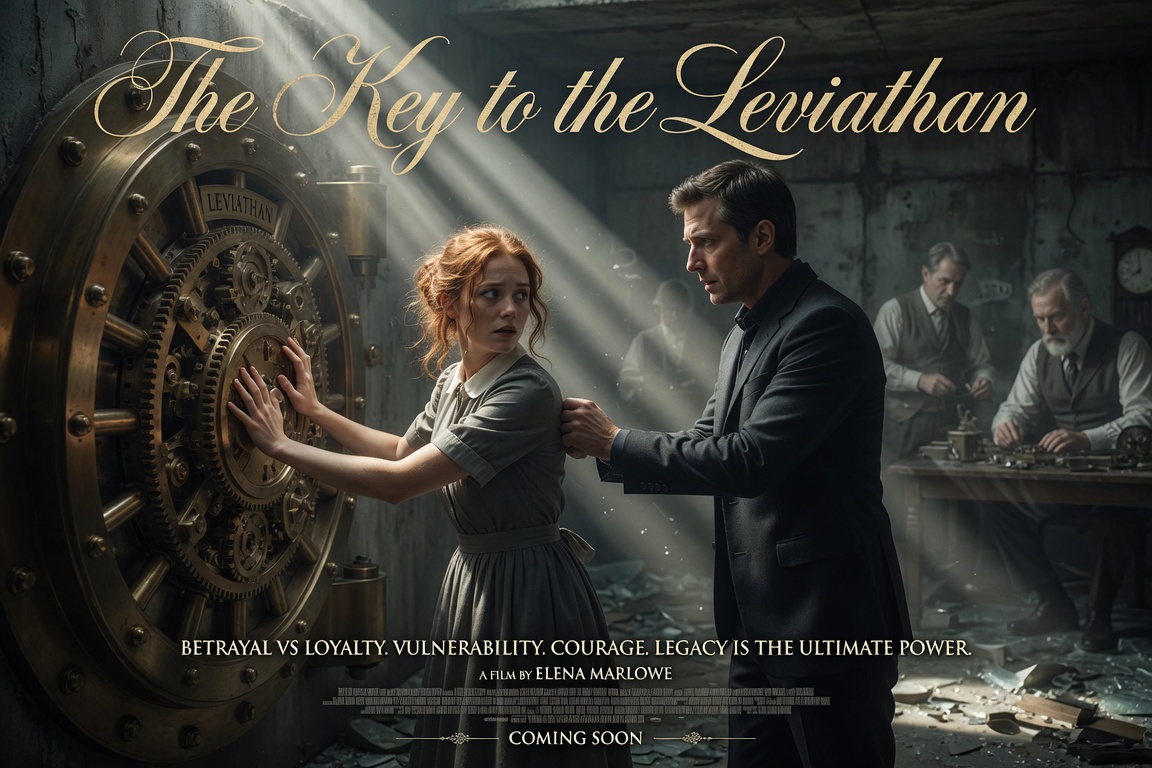
“I paid you to fix it.”
The expert’s reply came thinner.
“Mr. Bellandi, I told your assistant before I came. This mechanism is unlike anything manufactured in Switzerland, England, or the United States. The damage isn’t merely mechanical.”
“Then what is it?”
A pause.
“I believe someone altered it deliberately.”
The library door opened.
Dr. Simon Vale stepped into the corridor carrying a black leather case against his chest. He was sixty, silver-haired, and famous enough to appear in luxury watch magazines beneath headlines about preserving history. Now his face had gone the color of old paper.
Behind him stood Vittorio Bellandi.
At fifty-eight, Vittorio had the hard, immaculate presence of a man who never needed to repeat an instruction. His charcoal suit had been cut in Milan. His dark hair was brushed straight back from a widow’s peak. A pale scar crossed his chin, nearly hidden unless the light struck it from the side.
People in New York newspapers called him a real estate investor.
Federal prosecutors had used other words.
None of those words had ever been proven in court.
Vittorio’s gaze moved past the expert and settled on the row of servants.
“Who was in this room last night?”
No one answered.
His younger brother, Carlo, emerged from behind him, adjusting the cuffs of a blue silk shirt. Carlo was forty-six, broad-shouldered, expensively tanned, and possessed the easy smile of a man who enjoyed watching fear travel across another person’s face.
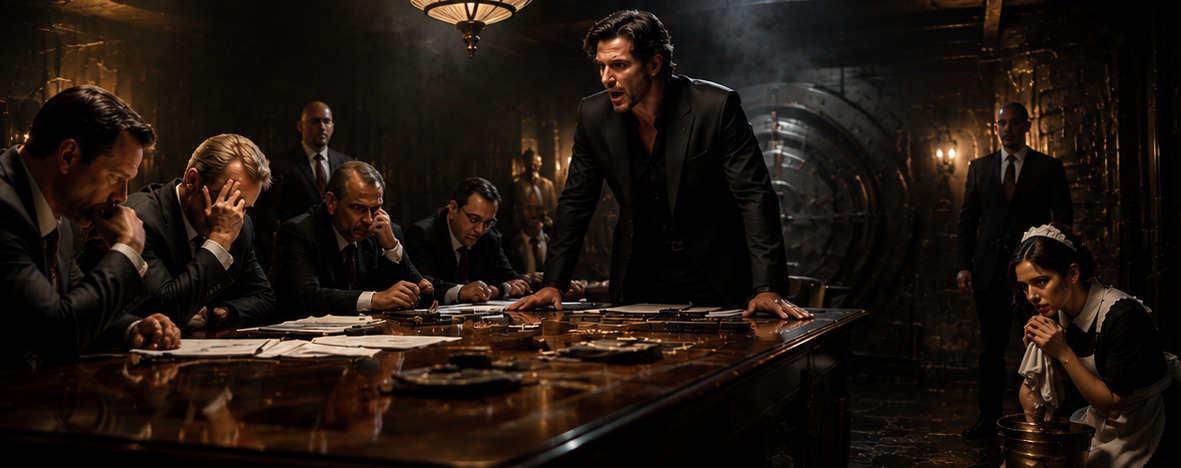
“All of them were questioned,” Carlo said. “Security footage shows nobody entering after midnight.”
Vittorio did not look at him.
“I asked who was in the room.”
The head housekeeper, Mrs. Donnelly, cleared her throat. “I was, sir. Two footmen. Elena finished the downstairs cleaning.”
Carlo’s eyes landed on Elena.
“Of course she did.”
Elena lowered her gaze, not from submission but calculation. She had learned years ago that proud men revealed more when they believed a woman was afraid to look at them.
She was thirty-nine, though exhaustion sometimes added a decade to her reflection. A narrow white scar ran along her left wrist. Her black hair was pinned beneath a plain gray cap, and her shoes had been resoled twice by a cobbler in Queens who accepted payment in installments.
She had worked in the Bellandi mansion for fourteen months.
In fourteen months, Carlo had never once called her by name.
“The maid was alone down here at eleven-forty,” he said. “Wasn’t she?”
Mrs. Donnelly stiffened. “She was polishing the hall.”
“That wasn’t my question.”
Elena raised her head.
“I didn’t enter the library.”
Carlo smiled.
He approached slowly, hands in his pockets.
The other servants watched him cross the corridor. No one stepped back, but the air seemed to make room for him.
“You expect us to believe a woman with access to every room in this house never got curious?”
Elena’s fingers tightened around the dust cloth.
“I expect you to check the camera.”
“The camera cuts out for seven minutes.”
“I know.”
Carlo stopped.
For the first time, his smile weakened.
“How do you know that?”
“Because Mr. Sutter from security complained about it yesterday. He said the storm damaged the west-side circuit.”
Carlo glanced toward Vittorio.
Vittorio’s face remained unreadable.
On the table inside the library sat the object that had brought twenty-five experts from six countries to the Bellandi estate.
It was not the most expensive thing in the house.
The paintings were worth more. So were the diamonds locked in the upstairs safe and the collection of rare automobiles beneath the east wing.
But the watch had belonged to Vittorio and Carlo’s father.
Aurelio Bellandi had carried it every day for forty-one years.
It was a heavy pocket watch with a dark gold case, a moon-phase dial, and a faint engraving of an olive branch on the back. The hands had stopped at 3:17 three nights earlier—the exact minute Aurelio Bellandi had died twenty-two years ago.
That coincidence had frightened Vittorio more than he admitted.
Then the watch began ticking again.
Backward.
By morning, it had stopped completely.
Twenty-five specialists had opened it, examined it, photographed it, scanned it, and failed to explain why.
Now the final expert was leaving.
Carlo turned to Elena.
“Empty your pockets.”
Mrs. Donnelly inhaled sharply.
Elena did not move.
Carlo stepped closer. “Did you hear me?”
Vittorio’s voice cut across the corridor.
“Enough.”
Carlo looked back. “You said yourself someone tampered with it.”
“I said enough.”
For one second, something passed between the brothers—old resentment, old obedience, old blood.
Then Carlo shrugged.
“Fine. Let her clean around it. Perhaps the watch will confess.”
A few servants lowered their eyes to hide their reaction.
Carlo noticed.
His smile disappeared.
Vittorio returned to the library and stood beside the long table. The watch lay beneath a brass lamp, surrounded by white gloves, magnifying lenses, and miniature tools abandoned by men who charged more per hour than Elena earned in a week.
Dr. Vale placed his hat on his head.
“My invoice will be sent to your office.”
Carlo laughed once. “For failing?”
“For identifying deliberate interference.”
“You identified nothing.”
Vale’s face reddened.
Elena watched him close his case. One of the velvet compartments inside held a narrow brass key, no longer than a sewing needle.
Her eyes moved to the watch.
Then to the key.
Then to a nearly invisible scratch beside the winding crown.
Her breathing changed.
Only slightly.
Vittorio saw it.
“What?”
Elena looked away.
He took one step toward her.
“You saw something.”
“No, sir.”
Carlo gave a soft, delighted chuckle. “Now she’s lying.”
Elena’s stomach clenched.
Her son’s hospital bill waited unopened in her kitchen drawer. Her landlord had taped a red notice to her apartment door three days earlier. She could not afford pride. She could not afford honesty. Most of all, she could not afford the attention of men whose names made witnesses forget what they had seen.
Vittorio lifted the watch.
“What did you see?”
Elena looked at the stopped hands.
3:17.
The time had been chosen.
Not by a ghost.
Not by a damaged gear.
By someone who understood what it meant to the Bellandi family.
She placed the dust cloth on the table.
“May I hold it?”
Carlo stared at her.
Then he laughed so loudly that the footman in the hallway flinched.
Dr. Vale turned at the door.
Vittorio did not laugh.
“You know watches?”
Elena looked at the object in his hand. “I know mistakes.”
Carlo’s smile sharpened. “That may be the first honest thing she’s said.”
Vittorio extended the watch.
Elena did not take it immediately.
She removed her thin cotton cleaning gloves and laid them beside the lamp. Then she washed her hands in the small bar sink near the library cabinet, dried them carefully, and returned.
The room had gone quiet enough for everyone to hear the rain striking the chimney.
Elena accepted the watch.
Its weight pulled at her fingers.
She turned it once beneath the lamp.
The gold case was warm from Vittorio’s hand. Fine scratches spread across the back, the evidence of decades spent in a pocket beside keys, coins, and folded notes. The olive branch engraving had been worn smooth at the edges.
Elena pressed the release.
The case opened.
Dr. Vale stepped closer. “You should not—”
She tilted the watch toward the light.
There.
A crescent-shaped mark inside the hinge.
Fresh.
She lifted the magnifying glass, examined the winding crown, then looked at the brass key in Vale’s case.
“Did you use that?”
Vale frowned. “It is a universal micro-adjustment key.”
“It’s too small.”
“Excuse me?”
“The original key would be wider at the shoulder.”
Carlo folded his arms. “One minute ago, she was cleaning baseboards.”
Elena ignored him.
She brought the watch closer to her ear.
Nothing.
Then she tapped the outer case with her fingernail.
Once.
Twice.
On the third tap, a faint metallic rattle answered from beneath the movement.
Elena’s pulse jumped.
She knew that sound.
She had not heard it in seventeen years, but the body remembers certain noises the way skin remembers fire.
Her father’s workshop in San Juan.
Rain drumming on corrugated roofing.
Tiny gears arranged in porcelain bowls.
His hands guiding hers beneath a yellow lamp.
Never force what was built to open, mija. A good mechanism protects itself from impatient men.
Elena set the watch flat.
She pressed the winding crown inward, rotated it halfway counterclockwise, and held it.
Nothing happened.
Carlo exhaled through his nose.
Vittorio’s eyes remained fixed on her fingers.
Elena turned the moon-phase dial until the silver moon sat directly beneath the number seven.
A soft click came from inside the watch.
Dr. Vale leaned forward.
Elena slid her thumbnail beneath the inner rim.
A hidden plate lifted less than a millimeter.
The room changed.
Not loudly.
No one gasped. No music rose from the walls.
But every person standing there understood that twenty-five experts had missed something the maid had found in less than a minute.
Elena raised the plate.
Beneath it was a second mechanism—and a strip of microfilm curled around a narrow spindle.
Vittorio Bellandi stopped breathing.
Carlo’s arms fell to his sides.
Dr. Vale whispered, “That’s impossible.”
Elena looked up.
“No,” she said. “It was designed to look impossible.”
For several seconds, no one moved.
Then Carlo crossed the room.
“Give me that.”
His hand reached for the watch.
Vittorio caught his wrist in midair.
The movement was so fast that Carlo’s face emptied of expression.
“Don’t,” Vittorio said.
Carlo glanced down at his brother’s hand.
Something old and dangerous entered his eyes.
Then it vanished.
“Of course,” he said softly. “You should be the one to examine it.”
Vittorio released him.
Elena could feel her heart beating in the scar along her wrist.
She lowered the hidden plate and placed the watch on the table.
Vittorio looked at her as though the gray uniform had become a disguise.
“Who are you?”
The question was not loud.
That made it worse.
Elena stepped back.
“Your employee.”
“No.”
His gaze moved to the watch.
“You knew where to press. You knew how to align the dial. You recognized a hidden movement no specialist has ever documented.”
He looked at her again.
“Who are you?”
Carlo leaned against the desk, watching with sudden interest.
Elena swallowed.
“My father repaired clocks.”
“Where?”
“Puerto Rico.”
“His name?”
She hesitated.
Carlo saw it.
“Now we’re getting somewhere.”
Elena’s eyes remained on Vittorio.
“Rafael Marquez.”
The name landed without effect.
Then Dr. Vale’s leather case slipped from his hand.
It struck the carpet and opened.
Tiny tools scattered across the floor.
Vittorio looked at him.
Vale’s mouth had gone dry.
“You know the name,” Vittorio said.
Vale bent too quickly, gathering his tools. “I may have encountered it in an old trade journal.”
“That isn’t what your face said.”
Vale forced a laugh. “Mr. Bellandi, I assure you—”
The library doors closed behind him.
One of Vittorio’s security men stood in front of them.
Vale straightened slowly.
Vittorio pointed to a chair.
“Sit.”
Outside, thunder rolled across the water.
Dr. Vale sat.
Elena remained beside the table, aware of every exit and every man between her and them.
Vittorio lifted the watch but did not open the hidden plate.
“What was Rafael Marquez doing in a trade journal?”
Vale looked at Elena.
She stared back.
Seventeen years collapsed into the space between them.
Her father being led from his workshop in handcuffs.
Neighbors crowding beneath umbrellas.
Boxes of watch parts carried out by federal agents.
A newspaper photograph of him shielding his face.
The trial that lasted three days.
The word counterfeiter printed above his name.
The prison call two months later.
His final words to Elena, spoken through static and shame.
I made something for a man who promised it would protect his family. I did not know what else it would protect.
Then he was found dead in his cell.
Officially, a heart attack.
Elena had spent half her life refusing to wonder whether official explanations were simply lies wearing clean shirts.
Vale rubbed his palms on his trousers.
“Rafael Marquez was a gifted independent horologist.”
Carlo smiled without humor. “Speak English.”
“He built mechanical devices.”
“Counterfeit watches,” Carlo said.
Elena’s jaw tightened.
Vale glanced at her. “That was the conviction.”
“Not the question,” Vittorio said.
Vale looked toward the closed doors.
Vittorio waited.
At last, the expert lowered his voice.
“In the late 1990s, collectors began hearing rumors about a watchmaker in San Juan who could build concealed compartments inside ordinary movements. Not crude compartments. Mechanical locks. Cipher systems. Devices that responded only when the owner performed a precise sequence.”
Vittorio’s thumb moved across the olive branch engraving.
“My father knew him.”
Vale nodded.
“He may have commissioned this watch.”
Carlo stepped away from the desk. “Our father bought it in Geneva.”
“No,” Elena said.
Every face turned toward her.
She had spoken before deciding to.
The room seemed to narrow.
Carlo’s voice hardened. “What did you say?”
Elena looked at the watch.
“My father made the olive branch uneven on purpose. The left side has seven leaves. The right side has six.”
Vittorio turned the case beneath the light.
Seven on one side.
Six on the other.
“My parents were married on July sixth,” Elena said. “He used the pattern as a signature on pieces he never intended to sell.”
Vittorio’s eyes lifted.
“Why would he put his wedding date on my father’s watch?”
Elena felt the first crack in a wall she had spent seventeen years building.
“Because he wanted someone to know who made it.”
Carlo’s voice dropped. “Or because he wanted someone to find you.”
The idea hung in the air.
Elena looked at him.
For the first time since she had entered the Bellandi house, Carlo was not amused.
Vittorio motioned toward the microfilm.
“Can you remove it?”
“Yes.”
“Do it.”
Elena shook her head.
Carlo laughed sharply. “The maid has terms now.”
“The spindle is tension-loaded,” she said. “Pull it wrong and the film tears. We need a darkroom, archival fluid, and a proper reader.”
Vale nodded despite himself. “She’s right.”
Vittorio looked toward his security chief.
“Get everything.”
The man touched an earpiece and left.
Carlo paced to the window. Rain streaked his reflection until his face appeared split into pieces.
“What could Father have hidden for twenty-two years?”
Vittorio said nothing.
Elena noticed that his left hand had closed into a fist.
Whatever the brothers showed the world, Aurelio Bellandi’s memory still held both of them by the throat.
Within forty minutes, the library had become a laboratory.
Blackout curtains covered the windows. A portable microfilm reader arrived from one of Vittorio’s offices in Manhattan. Archival gloves, tools, chemicals, and a digital scanner were arranged beneath white task lights.
No one was permitted to leave.
The servants remained in the corridor until Vittorio sent them away, but rumors moved through the mansion faster than footsteps.
By noon, everyone knew the maid had opened the watch.
By twelve-fifteen, the story had become that Elena had built it herself.
By twelve-thirty, someone in the kitchen claimed she was secretly related to the Bellandis.
Elena heard none of it.
She sat at the library table with a jeweler’s loupe pressed to her eye.
Across from her, Vittorio watched.
Carlo stood near the bar.
Dr. Vale occupied the chair beside the fireplace under the supervision of two security men.
Elena released the spring tension one tooth at a time.
Her father’s design revealed itself through touch.
A softened edge here.
A false screw there.
Tiny decisions invisible to anyone who had not watched Rafael Marquez work through the night with salsa music playing low and a cup of coffee growing cold beside his hand.
Her throat tightened.
She could almost smell machine oil and cinnamon.
“You miss him.”
Vittorio’s voice was quiet.
Elena did not look up. “Do you?”
A silence followed.
Carlo turned from the window.
No employee spoke to Vittorio Bellandi that way.
Elena expected correction.
Instead, Vittorio said, “Every day.”
She lifted the spindle.
The microfilm came free.
It was no wider than a ribbon and dark as smoked glass.
Aurelio Bellandi had hidden more than a message.
Frame after frame contained typed documents, handwritten ledgers, photographs, account numbers, shipping dates, and names.
Some belonged to politicians.
Some belonged to judges.
Some belonged to men whose obituaries Elena remembered reading.
At the end of the strip appeared a video transcription and a still image of Aurelio Bellandi sitting beside Rafael Marquez.
Elena’s hands went cold.
Her father looked younger than she remembered him.
He wore a white linen shirt with the sleeves rolled above his elbows. Aurelio sat beside him in a dark suit, one hand resting on the table. Between them lay the unfinished watch.
Beneath the image was a typed sentence.
IF THIS HAS BEEN OPENED, THEN ONE OF MY SONS HAS FAILED THE OTHER.
Carlo moved first.
He reached toward the reader.
Vittorio placed one hand on the machine.
“No.”
“We both have a right to see it.”
“You will.”
“Then move your hand.”
Vittorio’s gaze sharpened.
Carlo stared back.
The brothers stood less than three feet apart, but twenty-two years crowded the distance between them.
Elena looked at the next frame.
A list of companies appeared.
Bellandi Construction.
Harbor Crest Development.
North Meridian Imports.
The first two were real.
The third had been dissolved in 2001.
Beside it was a handwritten note.
C.B. continued shipments after my order to stop.
Vittorio read the initials.
His face did not change.
Carlo’s did.
Only for a fraction of a second.
A small pull at the left corner of his mouth. A tightening beneath one eye.
Elena saw it.
So did Vittorio.
Carlo stepped back.
“C.B. could mean anyone.”
Vittorio advanced the film.
Another document appeared.
Aurelio’s letter began without greeting.
Vittorio,
If you are reading this, I failed to correct the worst mistake of my life.
I taught you that loyalty was blood.
It is not.
Loyalty is the person who refuses to profit from your destruction, even when doing so would save them.
Carlo poured himself a drink.
The decanter struck the rim of the glass.
Once.
Twice.
On the third attempt, he steadied his hand.
The letter continued.
In 2000, I discovered that Carlo had reopened the North Meridian route without my permission. The containers were registered as imported stone. They carried weapons.
Carlo gave a humorless smile.
“Our father was sick at the end.”
Vittorio did not look at him.
The film advanced.
Photographs showed shipping manifests. Warehouse doors. Crates beneath blue tarps. A younger Carlo speaking to two men on a dock in Newark.
Elena remembered his confidence that morning.
The lazy way he had ordered her to empty her pockets.
Now his shoulders had risen, barely perceptible, as if his suit had become too tight.
Vittorio read the next lines.
When Rafael discovered the compartment records, Carlo accused him of creating counterfeit instruments and paid two investigators to build the case.
Elena stopped breathing.
The words blurred.
She leaned toward the reader, one palm flattening against the table.
Vittorio looked at her.
Carlo did not.
The room dissolved into fragments.
Her father behind scratched prison glass.
His gray uniform.
The bruise beneath his ear.
His fingers pressed to the telephone receiver.
I am sorry, mija.
She had believed he was apologizing for shaming the family.
He had been apologizing for trusting the wrong one.
Elena turned toward Carlo.
He lifted his drink.
“Your father went to prison because a jury convicted him.”
Her chair scraped the floor as she stood.
“You paid them.”
Carlo took a sip.
“You think people like your father need to be framed? He built secret compartments for criminals.”
“He built one for your family.”
“And look how well that ended.”
Vittorio rose.
The temperature in the room seemed to fall.
“Put the glass down.”
Carlo looked at his brother.
For a moment, neither moved.
Then Carlo placed the drink on the bar.
Very carefully.
Vittorio advanced the film.
The next section contained bank transfers from North Meridian to Dr. Simon Vale.
Everyone turned toward the expert.
Vale’s lips parted.
Carlo closed his eyes once.
Not in surprise.
In irritation.
Vittorio crossed the room and stopped in front of Vale.
“You were paid twenty-two years ago.”
Vale looked at Carlo.
That was enough.
Vittorio’s voice became almost gentle.
“What did you do?”
Vale pressed himself back into the chair.
“I authenticated the counterfeit components for the prosecution.”
Elena stared at him.
“You testified that my father made them.”
“I was told he did.”
“You were paid before the trial.”
Vale’s mouth trembled.
“I had debts.”
Elena’s hand moved to the scar on her wrist.
The night her father died, she had smashed every unfinished watch in his workshop. One case split open beneath the hammer and sliced her skin to the tendon.
She had carried the mark through seventeen years of restaurant kitchens, hotel laundries, office buildings, and rich people’s homes.
The scar had always felt like proof of her father’s guilt.
Now it burned with another meaning.
Vittorio returned to the microfilm.
The final pages contained a sworn statement from Aurelio.
He had intended to turn over the evidence to a federal prosecutor.
He never did.
Three days after recording the statement, he died in his sleep at 3:17 a.m.
The death certificate listed cardiac arrest.
Elena looked at the watch.
The hands had not stopped at 3:17 by accident.
Someone had set them there.
Someone wanted the family to remember the night Aurelio died.
Vittorio’s eyes shifted to Carlo.
“So this wasn’t the first time you opened it.”
Carlo said nothing.
“You found the outer trigger,” Vittorio continued. “You made the hands move backward. You set them to 3:17. But you could not open the inner plate.”
Carlo’s expression hardened.
Vittorio took another step.
“You brought in experts because you needed one of them to destroy the compartment without appearing to do it.”
“That is a theory.”
“You paid Vale to come last.”
Vale bent forward, covering his face.
Carlo looked at him with disgust. “Pathetic.”
Vittorio’s voice sharpened. “Answer me.”
Carlo turned toward the rain-streaked windows.
When he spoke, the arrogance had gone out of his voice.
“You were going to sell the company.”
Vittorio remained still.
“You were going to take the legitimate assets, cut off everything else, and leave me with nothing.”
“I was leaving you forty million dollars.”
“You were leaving me a pension.”
“I was keeping you out of prison.”
Carlo spun around.
“No. You were rewriting the family as if you built it alone.”
His face had changed.
The charming younger brother had disappeared. In his place stood a man who had spent decades smiling while swallowing humiliation.
“You were Father’s chosen son,” Carlo said. “You got the meetings. You got the properties. You sat at his right hand while I was sent to warehouses and docks. Every dirty dollar that built your clean towers passed through men like me.”
Vittorio’s jaw tightened.
“You moved weapons after he ordered you to stop.”
“I kept us alive.”
“You destroyed an innocent man.”
Carlo looked at Elena.
For the first time, he seemed to see more than a uniform.
Something flickered across his face.
Not remorse.
Recognition.
That was worse.
“He found records he was never meant to see,” Carlo said.
Elena’s voice came out low. “So you buried him.”
“I offered him money.”
“My father would not take it.”
“No,” Carlo said. “He believed truth protected people.”
A tired bitterness entered his smile.
“Truth protects no one. Power decides which truth survives.”
Elena stepped closer.
“My father died in prison.”
Carlo’s eyes shifted away.
Only briefly.
But the movement was visible.
Vittorio saw it.
“What did you do?”
Carlo’s head snapped back. “Nothing.”
“What did you do to Rafael Marquez?”
“I said nothing.”
Vittorio seized him by the jacket.
The glass on the bar rattled.
Security moved, then stopped, uncertain whom they were expected to protect.
Carlo did not resist.
He looked into his brother’s face and smiled with one side of his mouth.
“Careful,” he whispered. “The staff is watching.”
Vittorio released him as if burned.
In the corridor beyond the closed doors, servants had gathered again.
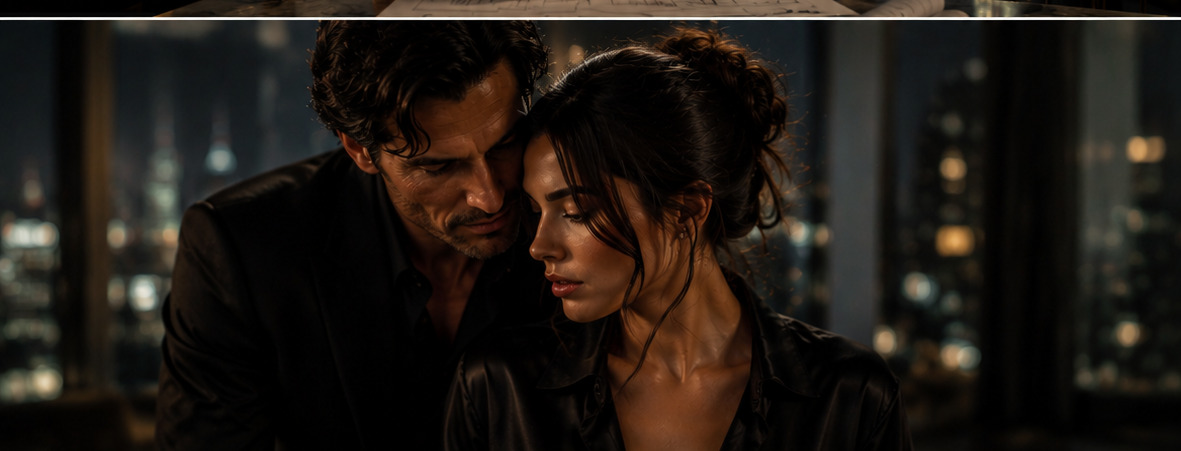
Mrs. Donnelly stood closest.
The footman held the untouched espresso tray.
No one pretended not to listen now.
Vittorio looked toward them.
Then back at the microfilm.
A final frame remained.
Elena advanced it.
The image showed Aurelio Bellandi alone.
He sat in the library where they now stood, older and thinner than in the earlier photograph. His eyes appeared swollen from lack of sleep.
Beneath the still image was a transcript of his final recorded statement.
Carlo believes I will expose him.
Vittorio believes I will protect him.
Both are wrong.
I am protecting their children from inheriting the consequences of our sins.
The assets listed below were separated from Bellandi holdings and placed in a trust. Trustee: Rafael Marquez.
Elena frowned.
She read the line twice.
Carlo moved toward the reader.
“What assets?”
The next frame displayed addresses.
Three apartment buildings in Queens.
A commercial property in Brooklyn.
A warehouse in Red Hook.
Two parcels of waterfront land in Jersey City.
A trust account.
Vittorio stared at the list.
Elena recognized one address.
Her own building.
The six-story brick apartment block where the radiators clanged all winter and the kitchen ceiling leaked each spring.
Her landlord had claimed ownership through a shell company called Morrow Residential.
The trust documents listed another beneficial owner.
Marquez Family Preservation Trust.
Elena’s knees weakened.
Vittorio caught the back of her chair before it tipped.
Carlo read over her shoulder.
“This cannot be valid.”
Vale looked up. “If properly executed, it may be.”
Vittorio advanced to the final legal instruction.
Upon the death of Rafael Marquez, trusteeship transfers to his lawful heir, Elena Sofia Marquez.
Silence filled the library.
Not the frightened silence Carlo usually created.
This silence had weight.
It moved from the screen to Elena, from Elena to the gray uniform, from the uniform to the bucket still waiting in the hall.
Mrs. Donnelly covered her mouth.
The footman slowly lowered the tray.
Elena stared at her name.
The watch had not revealed a few hidden dollars.
It had revealed assets now worth more than one hundred and eighty million.
Properties that had been managed, refinanced, and quietly profited from for over two decades.
Properties controlled through companies linked to Carlo Bellandi.
The same man who had ordered her to empty her pockets had spent years collecting money from buildings that legally belonged to her.
Carlo’s face lost all color.
His lips parted.
No sound came out.
Elena turned.
He looked at her uniform.
Then at the microfilm.
Then at Vittorio.
His gaze moved again to Elena’s hands—the hands he had watched polish banisters, carry trays, scrub wine from carpets.
The recognition arrived slowly.
It began around his eyes.
The skin tightened.
His pupils shifted toward the open library doors, where the staff stood watching. He saw Mrs. Donnelly’s expression. The footman’s stillness. The security guards avoiding his gaze.
His mouth closed.
His shoulders lowered by less than an inch.
But everyone saw it.
For the first time in that house, Carlo Bellandi understood that the poorest person in the room held power over him.
Elena removed her gray cap.
She placed it on the table beside the watch.
Carlo found his voice.
“You knew.”
She shook her head.
“You came into this house because of the trust.”
“I came because your agency paid fourteen dollars an hour.”
“That is not believable.”
“It was enough for you yesterday.”
The words struck harder than shouting.
No one moved.
Elena unpinned her hair. It fell to her shoulders, dark and streaked with silver near the temples.
Vittorio watched her transformation, though nothing about her had truly changed.
Only the room’s understanding had.
Carlo pointed toward the microfilm.
“Those documents are decades old. The trust may have expired. The assets may have been transferred legally.”
Vittorio looked at him.
“Were they?”
Carlo’s hand dropped.
The answer was in his face.
Vittorio turned to his security chief.
“Lock the estate.”
Carlo laughed, but the sound cracked in the middle.
“You cannot detain me.”
“No,” Vittorio said. “But federal agents can.”
He removed his phone.
Carlo’s expression sharpened. “Think carefully.”
“I have been thinking carefully for twenty-two years.”
“You call them, and everything comes down. The company. The family. Your name.”
Vittorio looked at the photograph of their father.
“Maybe it should.”
Carlo stepped closer.
“You believe this cleans you? You signed papers. You took money. You knew enough not to ask where it came from.”
Pain moved across Vittorio’s face.
Not surprise.
Truth.
Elena saw then that Carlo was right about one thing.
No one in the room was innocent simply because another man was guiltier.
Vittorio looked at the servants gathered beyond the door, then at Elena.
“I knew the old businesses were dirty,” he said. “I told myself I was turning them legitimate. I did not ask what had already been done in my name.”
Carlo smiled faintly. “There he is.”
Vittorio continued, “And I allowed you to remain beside me because exposing you meant exposing myself.”
The smile vanished.
Vittorio placed the call.
He did not use a private number.
He did not ask for a favor.
He called the federal prosecutor listed in Aurelio’s records, now retired, and requested the office that had inherited the case.
Carlo watched him speak.
When Vittorio ended the call, the mansion seemed to release a breath.
“You chose a maid over your brother,” Carlo said.
Vittorio shook his head.
“I chose the man you buried.”
Carlo looked at Elena.
There was hatred in his eyes, but beneath it lay something more revealing.
Fear.
“What do you want?”
The question was directed at her now.
Not Vittorio.
Not the lawyers who would come.
Not the agents already driving through the storm.
Elena looked at the watch her father had built.
For seventeen years, she had imagined what she would say to the people responsible for his death.
In those fantasies, her voice had thundered. Men had begged. Courtrooms had applauded.
Reality felt quieter.
Her son still needed surgery.
Her rent notice still hung on the apartment door.
Her father was still dead.
Nothing in the room could return one minute of his life.
“I want the original trial reopened,” she said. “I want every payment disclosed. I want my father’s conviction vacated in public.”
Carlo’s jaw tightened.
“And the money?”
Elena met his gaze.
“The tenants in those buildings paid you for homes that belonged to a trust you stole. Every eviction, every illegal fee, every repair you ignored will be audited.”
She glanced toward the servants.
“And every employee in this house will be interviewed without your lawyers present.”
Carlo stared at her.
“You think wealth makes you powerful?”
“No.”
Elena looked down at her worn shoes.
Then back at him.
“I think evidence makes it harder for powerful men to call poor people liars.”
The first federal vehicles arrived before sunset.
Their headlights swept across the rain-soaked lawn and climbed the mansion walls. Black coats moved through the foyer. Radios crackled beneath the chandelier. Evidence cases crossed the marble floor where Elena had spent months erasing footprints.
Dr. Vale was taken first.
He had begun cooperating before the agents finished reading his rights.
Carlo remained composed until they asked him to turn around.
Then he looked toward the staircase.
The household staff stood there in silence.
Not one person lowered their eyes.
Mrs. Donnelly met his gaze.
The footman who had carried the espresso tray folded his arms.
The chef stood with flour still dusting one sleeve.
Carlo searched the faces for the obedience he had mistaken for respect.
He found none.
His eyes finally landed on Elena.
For one second, the mansion held still.
Then an agent closed the handcuffs around his wrists.
The click was small.
Almost delicate.
Carlo looked down at the steel.
His throat moved.
Elena watched the realization settle over him: not that he had been outsmarted by a maid, but that the woman he had treated as invisible had been watching, remembering, and understanding far more than he ever imagined.
He opened his mouth.
No words came.
The agents led him outside into the rain.
Three months later, Rafael Marquez’s conviction was vacated.
The hearing took place in a federal courtroom in Brooklyn beneath cold fluorescent lights. Elena sat in the front row with her twenty-year-old son, Mateo, beside her.
Mateo had his father’s height and Rafael’s careful hands. A hospital bracelet still circled his wrist after surgery paid for not by an emergency loan, but by the first lawful distribution from the trust.
When the judge stated that Rafael Marquez had been wrongfully prosecuted on fabricated evidence, Elena did not cry.
She held her breath until the final words entered the record.
Then Mateo reached for her hand.
The scar on her wrist rested against his fingers.
Only then did the tears come.
Vittorio sat three rows behind them.
He had resigned from Bellandi Holdings. Prosecutors did not charge him in the original conspiracy, but he entered a civil agreement surrendering assets tied to illegal operations and agreed to testify against his brother.
The newspapers called it the fall of a dynasty.
Elena disliked the phrase.
Dynasties sounded grand.
What she had seen was smaller and uglier: frightened men protecting themselves one document at a time.
Carlo accepted a plea deal after six former employees testified. Dr. Vale lost his licenses and admitted falsifying evidence. Two retired investigators were indicted for perjury and obstruction.
The Marquez trust recovered most of its properties.
Elena sold none of the apartment buildings.
Instead, she created a tenant board, froze rents for two years, and hired local contractors to repair heating systems, elevators, roofs, and plumbing. The first building meeting lasted four hours because tenants had spent decades believing nobody wanted to hear them.
Elena stayed until the last person spoke.
She also reopened her father’s workshop in San Juan.
Not as a luxury boutique.
As a school.
Young apprentices learned mechanical repair at long wooden tables beneath warm yellow lamps. On one wall hung Rafael’s exoneration order. On another hung his old rule, handwritten in Spanish and English.
Never force what was built to open.
Vittorio visited once.
He arrived without security and stood in the doorway while students bent over trays of gears and springs.
Elena found him looking at the restored Bellandi watch.
She had repaired the backward mechanism but left the hidden compartment empty.
“You should keep it,” he said.
“It belongs to your family.”
“My family used it to hide the truth.”
“My father built it to preserve the truth.”
Vittorio looked at her.
“What is the difference?”
Elena closed the watch and placed it in his palm.
“The person holding it.”
He turned the gold case over.
The uneven olive branch caught the light.
Seven leaves on one side.
Six on the other.
“I spent my life believing my father’s greatest inheritance was his empire,” Vittorio said.
Elena looked around the workshop.
At the students.
At Mateo adjusting a microscope for a fourteen-year-old apprentice.
At the tools Rafael had once used, cleaned and returned to their places.
“No,” she said. “His greatest inheritance was the chance to tell the truth before it was too late.”
Vittorio closed his fingers around the watch.
Outside, evening rain began tapping against the roof.
For a moment, neither spoke.
Then the old mechanism ticked.
Once.
Twice.
Forward.
A year earlier, Elena Marquez had entered the Bellandi mansion through the servants’ door carrying a bucket and wearing shoes repaired with borrowed money.
She left it as the lawful owner of properties worth millions.
But that was not the part people remembered.
They remembered the library.
The twenty-five experts.
The hidden plate.
The mafia boss standing speechless while a maid in a gray uniform uncovered the truth his money had failed to erase.
Because value does not appear the moment powerful people recognize it.
It was there all along—quietly working, quietly learning, and waiting for the one minute when the whole room would finally be forced to see it.