Three decades after the world lost Kurt Cobain, the man who once stood beside him on stage has finally broken his silence. Pat Smear, the guitarist who joined Nirvana during its final, turbulent year, has revealed a haunting detail that has weighed on him for thirty years: a missed phone call from Cobain in the days before his death. In exclusive interviews marking the anniversary, Smear disclosed that Cobain attempted to reach him shortly after fleeing a rehabilitation center in California.
Smear was not home when the call came, and the message left behind remained unheard until it was too late. The revelation, made in a series of candid conversations with music outlets, adds a deeply personal layer to a tragedy that has been dissected, mythologized, and questioned for decades.
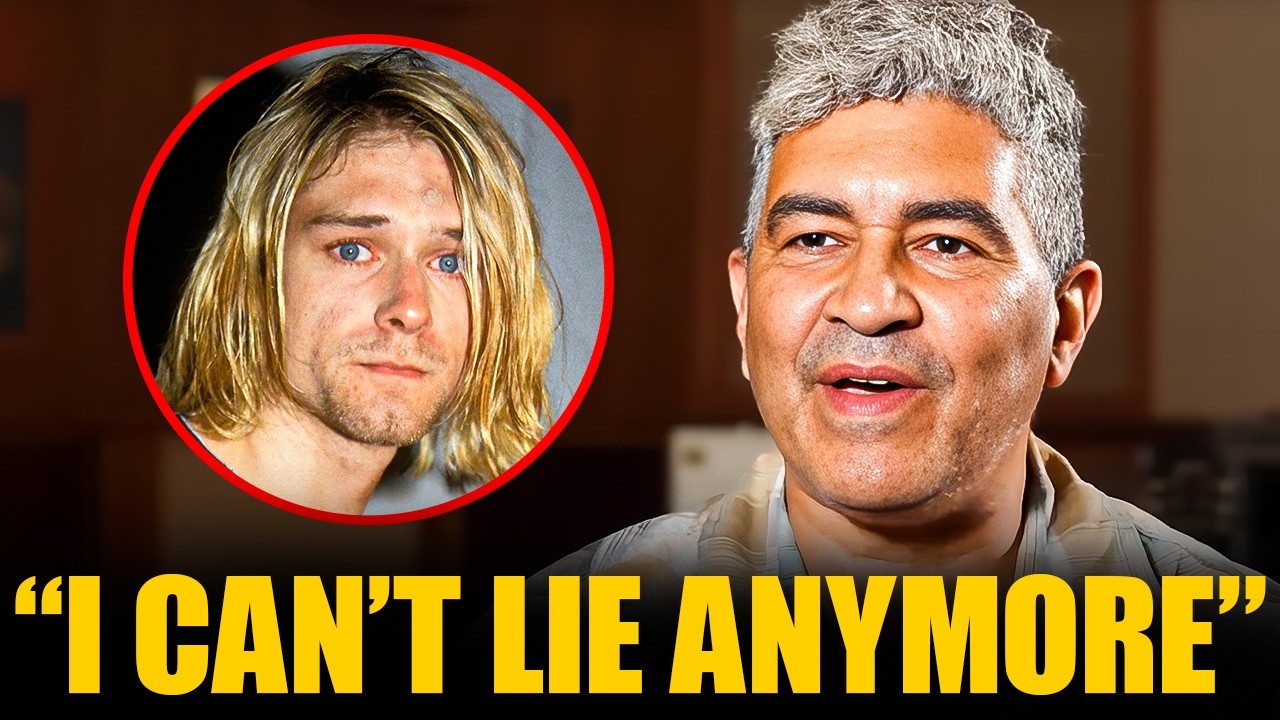 Smear described the moment as a “profound regret,” telling reporters that he believes Cobain may have been reaching out for help in his final moments of despair. “Whatever help he needed from me, I couldn’t give it,” Smear said, his voice heavy with emotion. The guitarist, now 65, has long avoided discussing the events surrounding Cobain’s death, but the 30th anniversary prompted him to share what he described as an “unbearable truth.”
The missed call occurred between April 1 and April 5, 1994, after Cobain escaped the Exodus Recovery Center in Marina del Rey and returned to Seattle. Smear discovered the voicemail only after Cobain’s body was found on April 8. The message, he said, was brief but chilling.
The revelations come as part of a broader wave of introspection within the Nirvana circle. Dave Grohl and Krist Novoselic have also participated in remembrances, but Smear’s account stands out because of its raw, unfiltered nature. He acknowledged that the trauma of Cobain’s suicide has lingered, affecting his own career and mental health.
Smear recalled the surreal fog that enveloped him in the days after the death, a state that left him disconnected from reality. It was only when Grohl invited him to join the Foo Fighters later that year that Smear began to emerge from the darkness. Yet even then, he admitted, “Touring with Foo in 1995 was maybe a little soon for me.
I was still pretty traumatized by the whole ordeal.”
 Smear joined Nirvana in September 1993 as a second guitarist for the In Utero tour. He had been a fixture of the Los Angeles punk scene as a founding member of the Germs, but his role in Nirvana placed him in the center of history. He played on the legendary MTV Unplugged session, performed at the band’s final concert in Munich on March 1, 1994, and was present during the chaotic days leading up to Cobain’s hospitalization in Rome.
In that incident, Cobain overdosed on Rohypnol and champagne, an event initially reported as an accident but later confirmed by Courtney Love as a suicide attempt. Smear flew to Rome to be with Cobain, believing his friend and bandmate would recover. The relief, however, was fleeting.
The missed phone call that followed weeks later has haunted Smear ever since. He described the guilt as inescapable, a constant reminder of how quickly things can slip away. In interviews, he emphasized that he would have done anything to be there for Cobain in that moment, but the call went unanswered.
The revelation has reignited discussions about the warning signs that preceded Cobain’s death, including the domestic disturbance in Seattle on March 18, 1994, when police confiscated firearms after Courtney Love reported Cobain had locked himself in a room with a gun. Just days before his death, Cobain had entered rehab but left after 24 hours. His whereabouts in the following week were largely unknown, even to those closest to him.
 Smear’s silence over the past three decades has been a source of frustration for many fans who sought closure. His decision to speak now, he said, is an effort to humanize Cobain, to move beyond the myth and acknowledge the profound suffering that lay beneath the genius. “He was brilliant, tortured, and desperately alone,” Smear told reporters.
“That memory is something I carry still.” The guitarist’s words come at a time when conspiracy theories surrounding Cobain’s death continue to circulate. Private investigator Tom Grant, hired by Courtney Love to locate Cobain before his death, has long argued that the evidence points to foul play, citing missing fingerprints on the shotgun, questions about the handwriting in the suicide note, and the high concentration of heroin in Cobain’s system.
Grant’s theories were dramatized in the 2015 documentary Soaked in Bleach, but law enforcement and forensic linguistics experts have consistently upheld the official conclusion of suicide.
Smear did not directly address the conspiracy theories in his recent remarks, but his focus on the missed call and his own emotional journey appears to underline the human cost of the tragedy rather than the forensic debates. He emphasized that his memories of Cobain are not about assigning blame but about honoring a friend whose pain he failed to fully understand at the time. In a conversation with Alternative Nation, Smear recalled the early Foo Fighters shows where he spray-painted thrift store T-shirts to sell as band merchandise, a desperate attempt to regain a sense of normalcy and control amid grief.
 These small acts, he said, were a way of processing the loss, but the weight of Cobain’s absence never fully lifted.
The 30th anniversary of Cobain’s death has also prompted a renewed examination of Nirvana’s legacy. The band was inducted into the Rock and Roll Hall of Fame in 2014, and their music continues to resonate with new generations. Cobain’s struggles with addiction, chronic stomach pain, and depression have become central to discussions about mental health in the music industry.
Smear’s reflections add a deeply personal dimension to that conversation, reminding the world that behind the icon was a human being who reached out one last time—and that the person who could have answered was not there.
As Smear continues his career with the Foo Fighters, he said he still keeps Cobain’s memory alive, not through public displays but through quiet remembrance. He and Grohl and Novoselic have shared moments of reflection, acknowledging that they are older now but that Cobain’s absence remains acute. For Smear, the decision to speak after three decades of silence is a form of closure, but also a warning.
“Grief can last a lifetime,” he said. “It doesn’t go away. You just learn to carry it.”