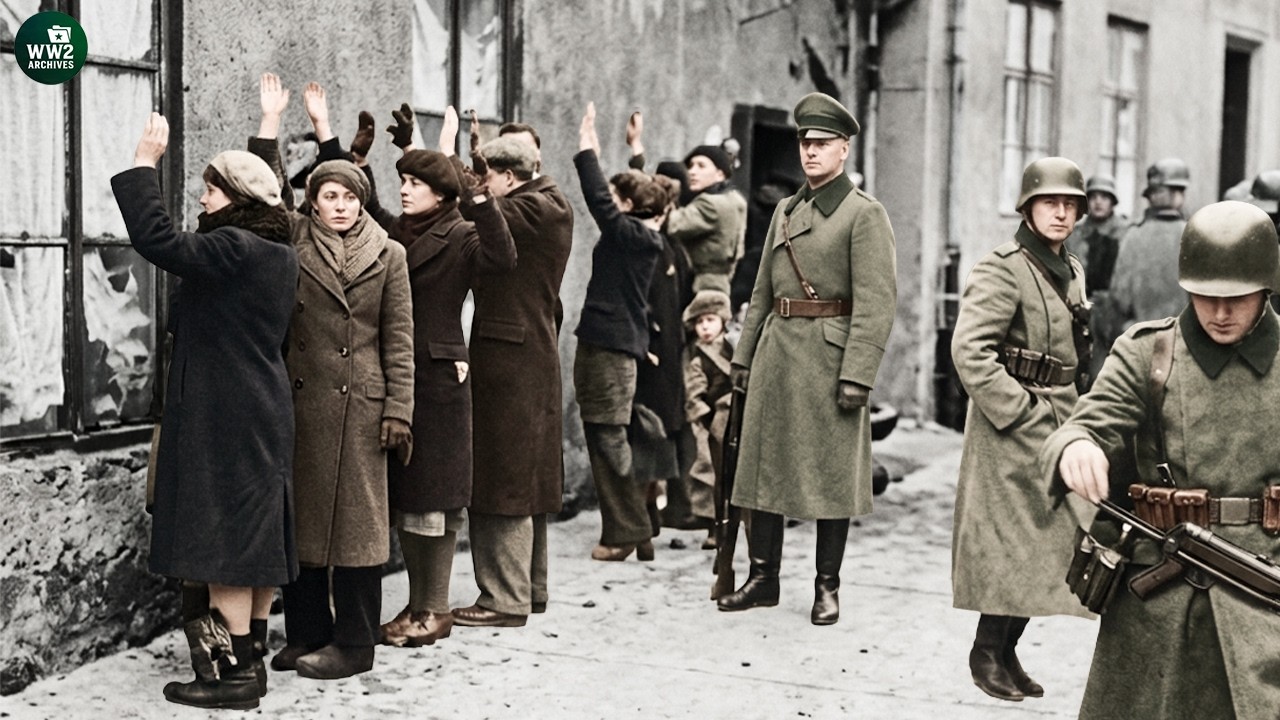
They thought the war was over on May 8, 1945.
Across Europe, people believed the nightmare had finally ended.
The flags of Nazi Germany were falling.
The armies that had brought destruction across the continent were retreating.
Families who had hidden for years finally stepped into the streets.
People cried.
They embraced strangers.
They believed the darkest chapter of their lives had closed.
But in Prague, the sound that followed victory was not celebration.
It was silence.
A terrifying silence.
The kind of silence that comes after something irreversible has happened.
Because while the world was celebrating liberation, another tragedy was unfolding.
A tragedy that would be hidden for decades.
A tragedy that would force people to ask an uncomfortable question:
What happens when victims become executioners?
In the final days of World War II, Prague was a city caught between collapse and revenge.
For years, Czechoslovakia had suffered under Nazi occupation.
The population had experienced arrests, executions, forced labor, and brutal repression.
Thousands had lost their homes.
Thousands had lost family members.
The memory of Nazi cruelty was not distant history.
It was personal.
It was written into the lives of ordinary people.
So when German forces finally began to collapse, emotions exploded.
For many Czechs, liberation brought relief.
But it also brought anger.
Years of humiliation.
Years of fear.
Years of watching others suffer.
And now the people who had represented that suffering were suddenly powerless.
The balance of power had changed.
The hunted became the hunters.
And in moments like this, humanity faces one of its greatest tests.
What do people do when they finally have power over those who once controlled them?
Among the chaos were men whose own histories were complicated.
Some had collaborated with the Nazi occupation.
Some had supported German authorities.
Some had worn uniforms connected to the old regime.
Others had simply survived by making compromises in a brutal time.
But after Germany’s defeat, the line between guilt and revenge became dangerously blurred.
For some, punishment was not enough.
They wanted humiliation.
They wanted suffering.
They wanted the people associated with the enemy to experience the same fear they had endured.
And that desire created a new kind of violence.
One of the darkest incidents connected to the aftermath of Prague’s liberation involved a group of German civilians and suspected collaborators.
According to accounts that emerged later, dozens of people were taken from a cinema building.
Among them was at least one woman.
They were not taken to a courtroom.
There was no judge.
No defense.
No evidence presented.
No opportunity to speak.
They were simply removed.
The war had ended.
But for those people, another nightmare was beginning.
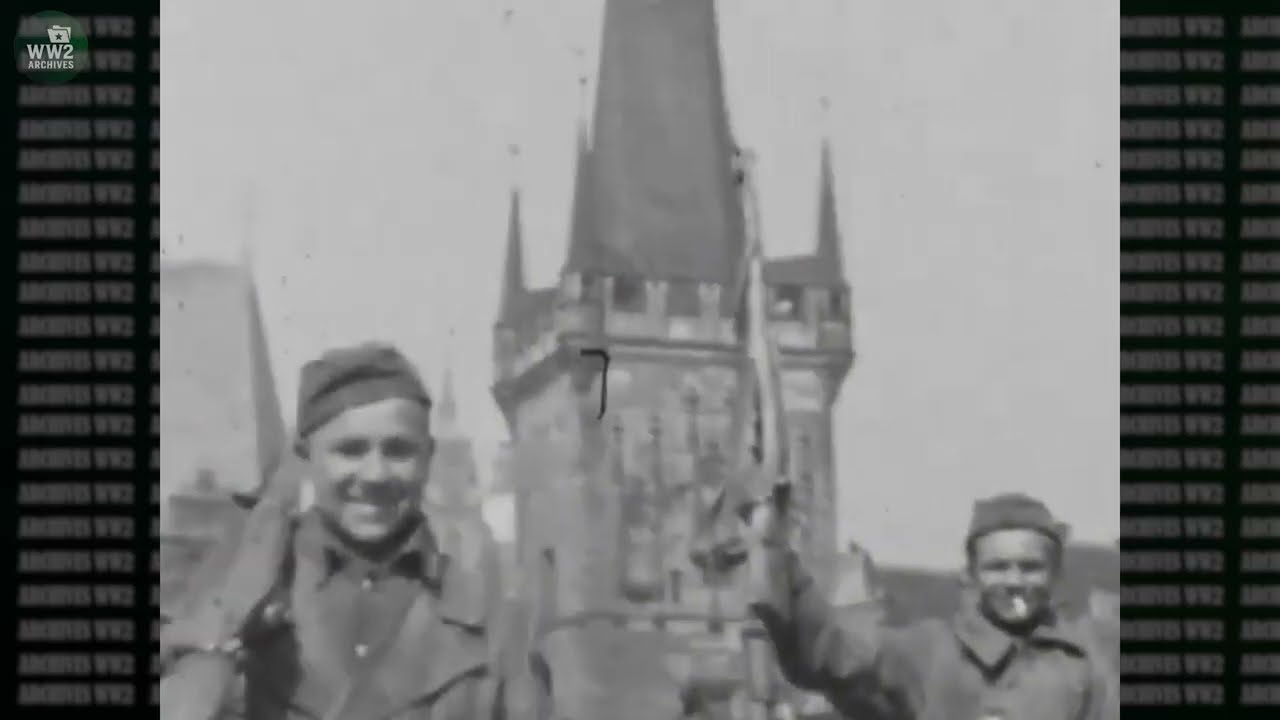 They were brought to a location where a wall stood waiting.
A lime-covered wall.
A place that would become a scene of horror.
The men holding weapons were not Nazi execution squads.
They were on the side that had defeated Nazi Germany.
They were supposed to represent freedom.
They were supposed to represent justice.
But justice requires rules.
Justice requires evidence.
Justice requires restraint.
What happened instead was something much darker.
A punishment without a trial.
A sentence without a verdict.
A killing without accountability.
The first shots rang out.
The sound echoed through the streets.
When the gunfire stopped, the scene was not what the shooters expected.
Some victims were still alive.
Some were wounded.
Some were lying on the ground, unable to move.
And then came the moment that would haunt the memory of the massacre.
A vehicle moved forward.
The wounded were not given medical help.
They were not taken away.
The violence continued.
The people who had survived the bullets were crushed beneath the machinery of revenge.
It was not a battlefield.
It was not a military engagement.
It was a moment when hatred replaced law.
But perhaps the most disturbing part was not only who died.
It was who participated.
Among the people involved were individuals whose own pasts were connected to collaboration.
Men who had once benefited from Nazi power.
Men who had lived under the system they now claimed to oppose.
Now they were using the defeat of Germany as a way to erase suspicion about themselves.
For some observers, the violence became more than revenge.
It became a performance.
A way to prove loyalty to the new order.
A way to say:
“Look at what I am doing to them. I cannot be one of them.”
But history remembers something important.
Changing sides does not automatically change a person’s actions.
A person can fight against evil for the wrong reasons.
A person can punish criminals and still commit crimes.
The victims disappeared into history.
Their names were not celebrated.
Their stories were not widely told.
Their families were left with unanswered questions.
Where were they taken?
Why were they killed?
Who gave the order?
Who pulled the triggers?
For decades, many questions remained buried.
The new political reality after the war made certain stories uncomfortable.
Especially stories that complicated the image of liberation.
Because nations often prefer simple stories.
Heroes.
Villains.
Victory.
Defeat.
But history is rarely that clean.
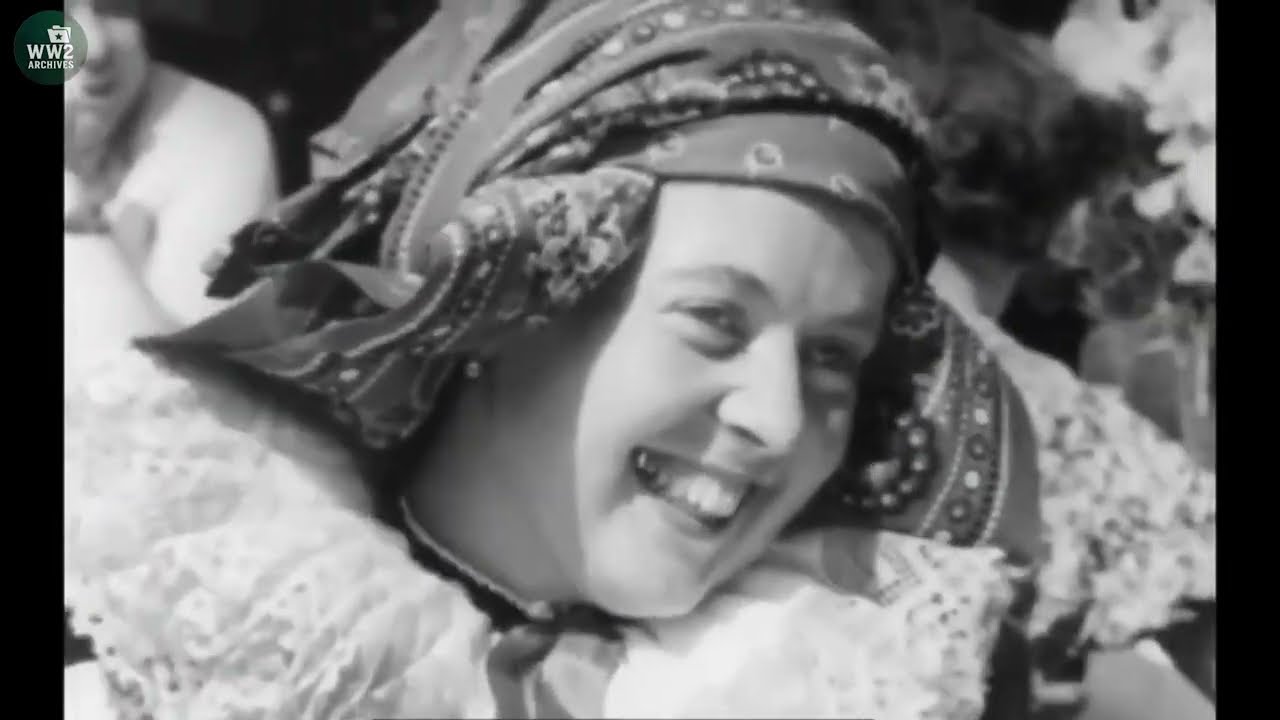 Then came the existence of a hidden piece of evidence.
A film reel.
A fragile strip of images that captured what some people wanted forgotten.
The cameraman who recorded it understood the danger.
In the wrong hands, the footage could be destroyed.
It could disappear forever.
The new authorities had little interest in showing evidence that complicated the official narrative.
A victorious government does not always want reminders that victory can contain tragedy.
So the film became something dangerous.
Not because it showed the enemy’s crimes.
But because it showed something harder to accept.
The possibility that those who defeat evil can also commit terrible acts.
For years, hidden evidence like this survived because ordinary people made difficult choices.
Someone hid a document.
Someone protected a photograph.
Someone saved a film.
Someone decided that the truth mattered more than safety.
History often depends on people who refuse to let uncomfortable stories disappear.
The Prague massacre raises a question that has haunted humanity for generations.
When people fight against monsters, what happens if they begin using the same methods?
When a society suffers injustice, how does it prevent revenge from becoming another form of injustice?
When hatred is justified by past suffering, where does morality disappear?
These are not easy questions.
Because the desire for revenge is deeply human.
When people experience terrible pain, they want someone to pay.
They want balance restored.
They want the world to recognize their suffering.
But revenge and justice are not the same thing.
Justice asks:
“What happened?”
“Who is responsible?”
“What punishment is fair?”
Revenge asks only:
“Who can suffer now?”
The tragedy of postwar Prague was not that people forgot the crimes of Nazi Germany.
They should never have forgotten.
The crimes were real.
The victims deserved justice.
The perpetrators deserved accountability.
But the lesson of history is that justice loses its meaning when it abandons humanity.
Because once a person believes cruelty is acceptable because they are on the “right side,” the door opens to endless violence.
Every generation faces this danger.
Every conflict creates the temptation to believe:
“Our suffering makes our actions acceptable.”
But history repeatedly proves otherwise.
The men who carried weapons that day may have believed they were helping create a better world.
They may have believed the enemy deserved whatever happened.
They may have believed history would understand.
But history remembers differently.
It remembers not only who started wars.
It remembers what people did after the wars ended.
It remembers moments when people had a choice.
The hidden film reel survived because someone believed the truth mattered.
Not a convenient truth.
Not a comfortable truth.
The complete truth.
The kind of truth that forces people to confront uncomfortable contradictions.
The kind of truth that shows humanity at its best and worst.
Because history is not only about remembering what evil people did.
It is also about understanding how easily ordinary people can become part of violence when they stop seeing their enemies as human.
The war ended on May 8, 1945.
But for some victims, peace never arrived.
Their final moments were not spent facing the Nazi regime.
They were spent facing the consequences of a world where hatred had survived the collapse of the people who created it.
And beneath the peaceful landscapes of Prague, beneath streets where people now walk without fear, lies a reminder.
A reminder that defeating an enemy is not the same as defeating hatred.
Because the hardest battle after any war is not against the person who was defeated.
It is against the darkness that victory can awaken inside ourselves.
And perhaps the most dangerous question history asks is not:
“How do we destroy the monsters?”
It is:
“How do we make sure we do not become them while trying to destroy them?”
The most dangerous moment in history is not always when a tyrant rises.
Sometimes, it is the moment after the tyrant falls.
Because when a cruel system collapses, it leaves behind something more complicated than ruins.
It leaves behind pain.
Millions of people carrying memories that cannot be erased.
Families searching for loved ones who would never return.
Survivors waking up every morning wondering why they lived while others did not.
And inside that pain exists a powerful emotion.
The desire for justice.
But also the temptation for revenge.
The difference between those two emotions can determine the future of an entire society.
In the days after Prague was liberated, the city was not simply celebrating freedom.
It was trying to process years of trauma.
The Nazi occupation had changed everyday life.
People had learned to whisper.
They learned which neighbors could be trusted.
They learned which conversations could bring danger.
They learned how quickly an ordinary street could become a place of fear.
The occupation did not only control territory.
It controlled psychology.
It forced people to live with uncertainty.
Would someone report them?
Would a friend betray them?
Would a family member disappear overnight?
That kind of fear does not disappear the moment soldiers leave.
The enemy can be defeated.
But the damage left inside people can remain.
For many survivors of Nazi occupation, seeing German soldiers and collaborators lose power created a moment they had imagined for years.
The people who once seemed untouchable were suddenly vulnerable.
The men who carried weapons were suddenly prisoners.
The officials who gave orders were suddenly hiding.
The uniforms that once represented fear became symbols of defeat.
For people who had suffered, this was an emotionally overwhelming moment.
Some felt relief.
Some felt satisfaction.
Some felt a desire to make those responsible experience the same fear they had created.
And that is where history enters one of its darkest moral questions.
What happens when suffering demands an answer?
A person who has never experienced oppression may find revenge difficult to understand.
But a person who has lost everything may see revenge as the only language left.
They may think:
“They did not show us mercy.”
“Why should we show them mercy?”
“They took everything from us.”
“Why should they receive justice?”
These emotions are deeply human.
But history shows that human emotions, even understandable ones, can lead people into terrible places.
Because once a society accepts the idea that some people no longer deserve basic rights, the same thinking used by one oppressive system can return under a different flag.
That was the uncomfortable reality of postwar Europe.
The world had defeated Nazi Germany.
But it had not automatically defeated every idea that allowed cruelty to happen.
Hatred does not disappear when a dictator falls.
It survives in memories.
It survives in anger.
It survives in people who believe their pain gives them permission.
That is why the aftermath of war can be as morally challenging as war itself.
During battle, people know who the enemy is.
After victory, the lines become much harder to see.
The hidden film reel connected to the Prague killings became powerful because it captured something that official stories often avoid.
Human beings are complicated.
A nation can be both a victim and a participant in violence.
A person can suffer injustice and still commit injustice.
A liberating army can bring freedom while individuals within that victory commit wrongdoing.
These contradictions make history uncomfortable.
But they also make it honest.
For decades, many societies preferred simpler stories.
They wanted clear heroes.
Clear villains.
Clear endings.
A war begins.
The evil side loses.
The good side wins.
The story is finished.
But real history does not end when the fighting stops.
The hardest questions often begin afterward.
How do societies remember?
How do they punish?
How do they rebuild trust?
How do they prevent victims from becoming future perpetrators?
The people who survived Nazi occupation faced an impossible challenge.
They needed justice.
But they also needed a future.
And a future built entirely on revenge could never truly become free.
Because revenge keeps people connected to the violence they experienced.
It allows the past to continue controlling the present.
Justice looks backward to understand what happened.
But it also looks forward to create something better.
The tragedy of incidents like the Prague massacre is not only about the victims.
It is also about the moment when people who had suffered entered a dangerous psychological space.
The space where morality becomes dependent on identity.
Where actions are judged not by what they are, but by who performs them.
A killing committed by the enemy is called a crime.
A killing committed by our side is called necessary.
That is one of humanity’s oldest dangers.
Throughout history, people have found ways to justify violence.
They say:
“We had no choice.”
“They deserved it.”
“It was necessary.”
“It was for a greater purpose.”
These phrases appear again and again in different countries, different conflicts, and different centuries.
The names change.
The uniforms change.
The flags change.
But the logic remains.
And that is why history must be remembered honestly.
Not because the past can be changed.
But because the future depends on recognizing patterns before they repeat.
The survivors who carried memories of Dachau, Auschwitz, and Nazi occupation understood something important.
They understood the cost of treating human beings as less than human.
They had seen where that road led.
They had seen entire populations destroyed because a government decided certain lives mattered less.
That knowledge created a responsibility.
A responsibility to ensure that suffering did not become an excuse to create more suffering.
The cameraman who preserved the evidence of the Prague killings made a choice that many people would consider impossible.
He chose truth over safety.
At a time when revealing uncomfortable information could bring consequences, he protected the record.
He understood something powerful:
The truth does not belong only to the winners.
It belongs to everyone.
Including the victims.
Including the forgotten.
Including the people whose names disappeared.
The nameless graves beneath Prague represent more than a historical mystery.
They represent a warning.
Because forgotten victims are not only victims of the original violence.
They can become victims of silence.
When societies refuse to remember uncomfortable moments, those moments become easier to repeat.
Memory is not about protecting the reputation of nations.
Memory is about protecting human beings.
The greatest test of any society is not how it treats its enemies when it is weak.
It is how it treats them when it is powerful.
Anyone can show restraint when they have no choice.
The real measure of character appears when revenge is possible.
When punishment is easy.
When anger has public support.
That is when humanity must make its hardest decision.
Will we repeat the cruelty we suffered?
Or will we build something different?
The men standing beside that wall in Prague believed they were closing a chapter.
They believed they were delivering the final judgment against those connected to the old regime.
But history revealed something else.
They were creating another chapter.
A chapter about the dangers of unchecked revenge.
A chapter about how quickly justice can disappear when emotion replaces law.
A chapter about the fact that defeating evil requires more than defeating the people who represent it.
It requires defeating the ideas that allow cruelty to return.
The victims taken from the cinema did not receive trials.
They did not receive the protection of law.
Their stories were almost erased.
But decades later, their existence continued to challenge the world.
Because every forgotten victim asks the same question:
Did my life matter?
The answer must always be yes.
Not because someone was innocent.
Not because someone belonged to the right group.
Not because someone shared our beliefs.
But because they were human.
That is the lesson hidden inside the darkest moments after war.
A civilization is not measured only by how it defeats its enemies.
It is measured by what it refuses to become after victory.
Because victory gives people power.
And power reveals character.
The easiest thing in the world is to justify cruelty when you believe you are on the correct side.
The hardest thing is to remain human when anger gives you permission not to.
The war ended in 1945.
The weapons eventually became silent.
The armies went home.
The flags changed.
But the questions remained.
What separates justice from revenge?
What prevents victims from becoming perpetrators?
What protects humanity when people believe their hatred is justified?
Those questions are not only about Prague.
They are about every conflict.
Every generation.
Every society.
Because history does not only ask us to remember what happened.
It asks us to understand why it happened.
And perhaps the most important lesson is this:
The moment we believe cruelty is acceptable because we are fighting against cruelty, we have already begun losing the battle.