A prominent content creator has sparked a fierce debate across the streaming community by declaring that the now-viral “Streamer University” event has laid bare the depths to which many online personalities will sink for views, followers, and money. In an unscripted, impassioned monologue that has already been clipped and shared millions of times, the creator—who spoke under the handle “Pete” on a livestream—accused his peers of abandoning their morals, faking personas, and doing things on camera they would never do in private. The rant, which emerged late Tuesday, has reignited a long-simmering conflict between authenticity and performance in the creator economy, as audiences and industry insiders grapple with what is real and what is manufactured for clicks.
The Streamer University, a controversial content-driven event that has drawn hundreds of up-and-coming and established streamers to a single location, was intended to foster collaboration and explosive content. Instead, critics argue it has become a petri dish for the worst impulses of internet fame. “It ain’t making me mad.
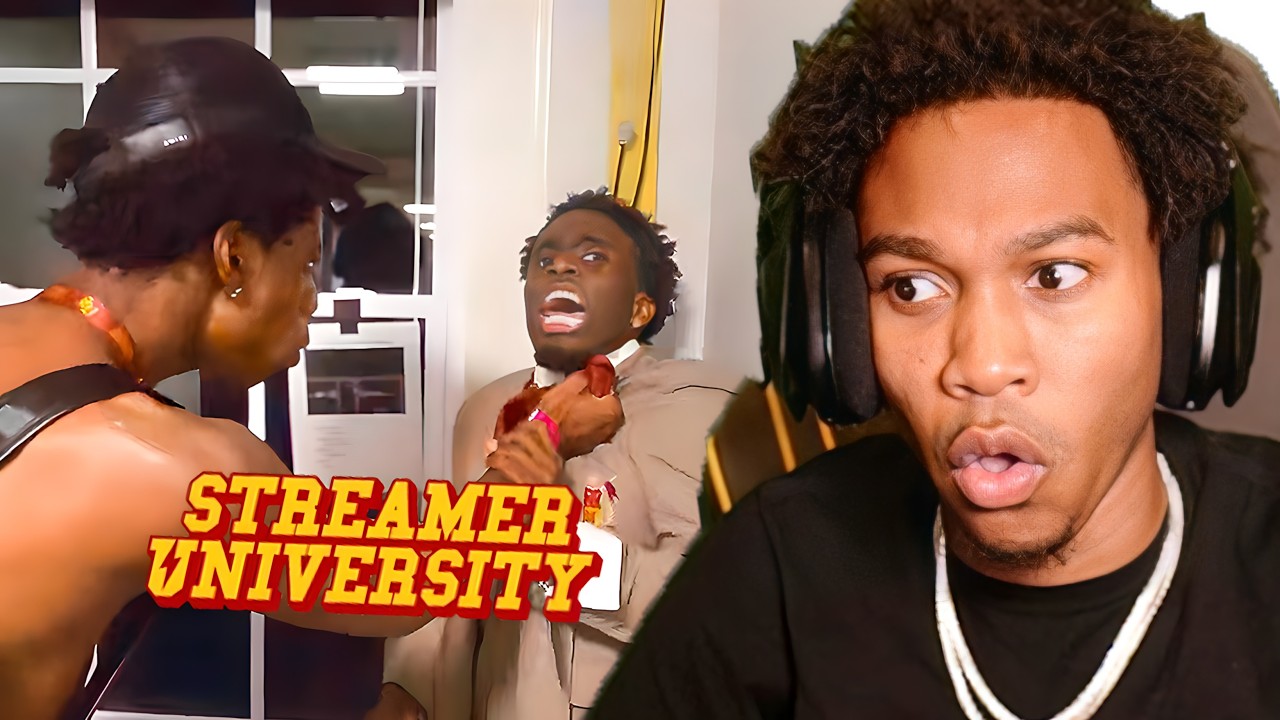 Content creators are disgusting for sure,” the creator said, his voice dripping with frustration. “I am a content creator myself, but you will never catch me doing some [expletive] that I don’t want to do just because it’s going to boost my numbers up.” The statement, delivered as he paced in front of his streaming setup, resonated with thousands of viewers who have grown weary of staged drama, manufactured beefs, and self-degrading stunts.
The creator did not hold back on specific examples. He pointed to a confrontation between a streamer known as “OJ” and Blackboy Max, a well-known figure in the community. At Streamer University, OJ approached Max during a live broadcast and called him a “demon” while criticizing his behavior.
The incident was instantly clipped and spread across TikTok, Instagram, and Twitter, generating massive engagement. But the ranting creator argued that such public humiliation was not about genuine concern—it was about chasing viral moments. “That was disrespectful,” he said.
“A lot of these grown ass men at Streamer University would get their booty played in if enough ad revenue, subs, and views were attached to it.” He speculated that if someone offered a deal to boost view counts in exchange for degrading acts, many would accept without hesitation. “That’s crazy work,” he added.
“I believe that though.”
The heart of the critique lies in what the creator calls the “clip peasant” mentality: content creators who become slaves to TikTok and short-form platforms, reshaping their entire personalities to fit what will generate the most engagement. He described watching streamers jump into fountains, start fights, disrespect women, and break property—all for the sake of a five-second clip. “They wouldn’t be doing all this extra [expletive] if nobody was recording,” he insisted.
“Even the small streamers that are in there, if the cameras aren’t recording, they’ll be straight dick eating all those content creators there. They fans of all them [expletive] there. But since everybody’s recording, they walking up to them randomly with a phone in their hand like they’re tough.”
 The creator did not exempt himself from the conversation, acknowledging that he, too, is a content creator with nearly 870,000 subscribers and 7 million monthly views. He stressed that he would rather remain at that level than “sell his soul” by performing acts that make him uncomfortable. “I will take the long route,” he said.
“If it takes me until I’m 40, 50, 60 years old until I get to the amount of money I truly want—$100 million—that’s just how long it’s going to take, bro. But I’m not changing up my morals.” His words mark a stark contrast to the behavior he condemns, and they have drawn both praise and skepticism from viewers who question whether any streaming personality can truly remain authentic in an algorithmic age.
The controversy also spotlights the case of Blackboy Max, who the creator says once publicly stated he would never engage in certain “gay games” or go against his morals. Yet months later, at Streamer University, Max engaged in behavior that mirrored those very actions. “A year later he’s on stream doing the exact same things that he said he was just uncomfortable with, which I think personally could be a reason why he even cried about that situation in the first place,” the creator argued.
He suggested that the emotional outburst from Max during the public confrontation—when OJ called him out—was a result of internal conflict between his true identity and the character he feels pressured to play for an audience. “It’s better to have 100,000 followers and 10,000 views per video being yourself than to have 10 million followers and a million views being somebody completely different,” he concluded.
The creator’s rant also addressed the blurred line between performance and reality. He acknowledged that streamers naturally transform into a character when the camera is on, much like actors in films. But he drew a crucial distinction: a movie actor goes home after the shoot, while a streamer often stays in character 24/7, livestreaming for hours on end.
“Imagine having to be somebody else 24/7. Some of these [expletive] streaming 24 hours a damn day,” he said. “When they just play the game, when they just do reactions, when they just talk and speak their truth—nobody wants to watch them.
 But when they acting like they gay or when they acting like a fake version of themself, that [expletive] can be depressing as hell.”
The criticism has struck a nerve because Streamer University has become a lightning rod for debates about authenticity, exploitation, and the mental health toll of online fame. The event, initially celebrated as a gathering of creators, has been described by insiders as a “content feeding frenzy” where participants are incentivized to escalate behavior to stand out. The creator noted that even small streamers—those with few viewers—act differently when they know cameras are rolling.
“You wouldn’t even act like that if nobody was recording, bro,” he repeated. “Because you know somebody’s going to clip it up and be like ‘Tyler 07 disrespects Kai in his own university.’ That [expletive] will get 500,000 likes—they know that’s going to happen.”
The conversation also turned to the larger ecosystem of platforms that profit from this behavior. The creator briefly referenced the recent lawsuit against Meta and YouTube, where a jury ordered the companies to pay millions for their role in designing addictive platforms that can cause anxiety and depression in young users. “They know that their apps can cause anxiety, depression, or body image issues, but they never shared those risks with us,” he said.
The mention of legal accountability adds another layer to the discussion, suggesting that the pressure to create extreme content is not just a personal failing but a systemic outcome of algorithms that reward shock over substance.
Despite the heated critique, the creator made a point to single out a few streamers he believes have maintained integrity, including “Speed,” the popular streamer known for his over-the-top personality. “Speed does what the [expletive] he wants to do when he wants to do it,” the creator said. “He’s going to Croatia, scuba diving, playing games—he’s living his life.
 He plays a character, but he’s doing what he loves. That’s different from being a slave to the clip.”
As the clip of the rant continues to circulate, with major commentary channels and news outlets picking it up, the sentiment is resonating with a growing number of viewers who feel disillusioned by the constant escalation of behavior on live streams. The creator himself emphasized that he is not a “woke” person who believes all successful streamers sold their souls; he acknowledged that instant success can happen legitimately. But he drew a hard line: “You are supposed to transform into a character when the camera comes on—but the problem comes when you just become overly extra.
When you just doing things you wouldn’t do if you weren’t on stream.”
The broader implication of the rant is that the content creator economy may be approaching a watershed moment. Audiences are becoming more aware of the artificiality behind the entertainment they consume, and creators like the one who spoke out are offering a counternarrative: that some level of authenticity is still possible, but only if creators are willing to accept smaller numbers in exchange for self-respect. “I would rather chill with the small amount of people that I be streaming with than be fake as hell and have thousands of people on my stream,” he said, his voice rising with conviction.
“All these content creators are just clip peasants. They’re just slaves to TikTok clips.”
Whether this call for authenticity will lead to actual change or be forgotten in the next viral wave remains an open question. But for now, Streamer University has become a symbol of everything the creator despises about the industry. The rant has already sparked dozens of response streams, heated debates on social media, and even a few apologies from creators who felt personally called out.
The conversation shows no signs of cooling down, and the creator’s final words echo across the platform: “If you ever catch me doing something I don’t want to do just to boost my numbers up, you’ve got it twisted. That’s not happening. I’ll figure out a way the long route—without changing up my morals.”
The truth at Streamer University, it seems, is that many creators are still deciding which route to take.