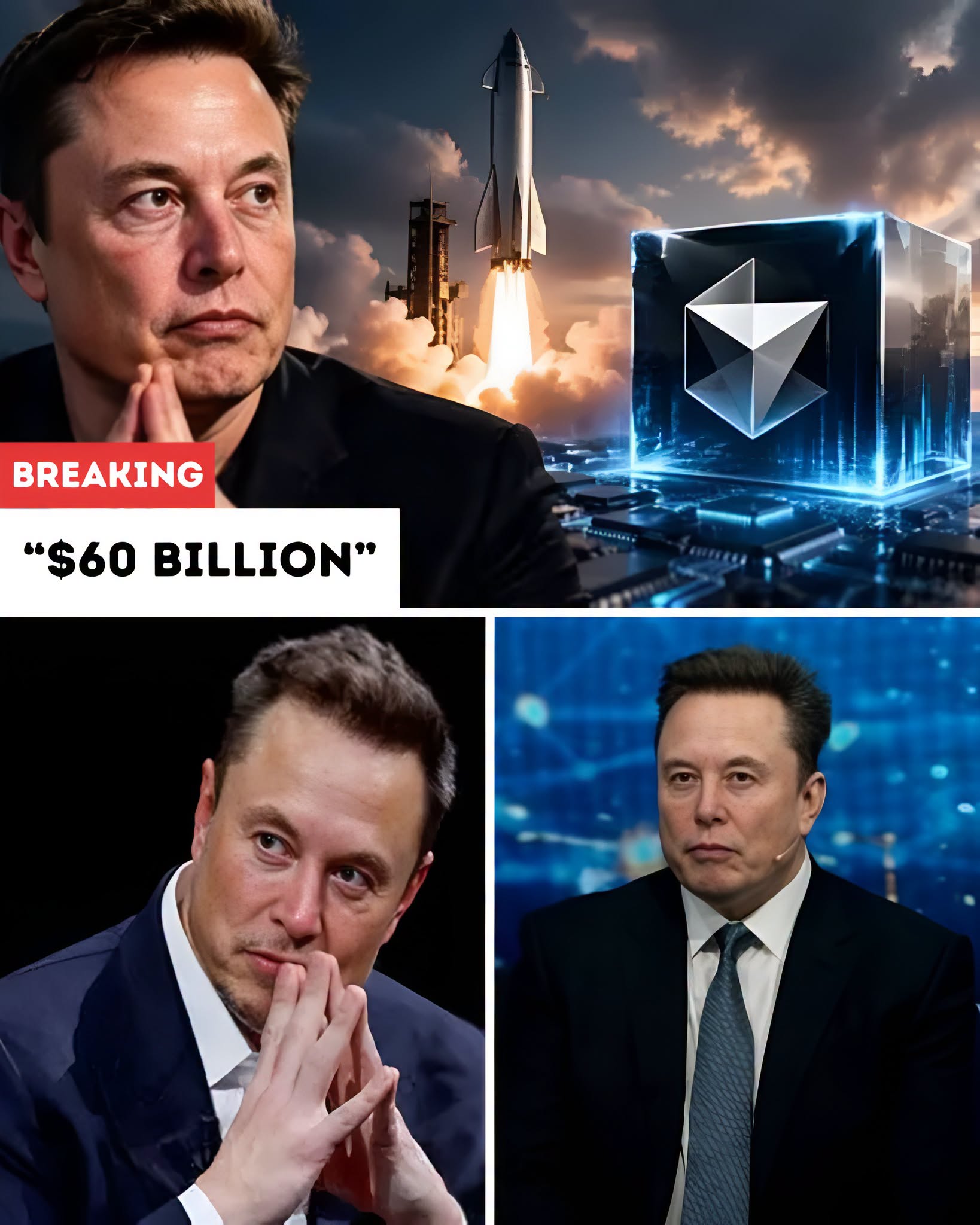
Two months after SpaceX’s landmark IPO, Elon Musk closed a deal so large that it immediately forced Silicon Valley to reconsider what the company was becoming.
The price: $60 billion.
The target wasn’t a rocket manufacturer.
It wasn’t a satellite company.
It was Cursor—the AI coding startup that had built its reputation by helping programmers write software faster.
When the acquisition officially closed, Musk posted a brief message welcoming the team.
“It is an honor to have such a great team join SpaceX.”
It sounded almost understated for one of the largest technology acquisitions in recent memory.
But the number wasn’t the most interesting part of the deal.
Neither was the announcement.
The real story was what SpaceX appeared to be assembling behind the scenes.
And why a company famous for rockets was willing to spend $60 billion on a tool that began with something as ordinary as helping developers complete the next few lines of code.
For years, Cursor had occupied a strange position in the AI race.
To casual users, it looked like an unusually smart programming editor.
You typed code.
Cursor predicted what came next.
Developers could ask questions about their projects, generate functions, repair errors and increasingly delegate larger pieces of work to AI.
Useful?
Absolutely.
But from the outside, it was easy to see Cursor as just another application sitting on top of increasingly powerful AI models.
That assumption became harder to defend as the product evolved.
Cursor’s ambitions were moving beyond autocomplete.
Its developers were talking about AI systems that could be given actual engineering work—not simply suggestions for the human sitting at the keyboard.
The software was becoming less like a tool a programmer used and more like a digital teammate a programmer supervised.
And that distinction mattered.
Because somewhere else in the technology industry, Elon Musk was pursuing a much bigger version of the same idea.
SpaceX had already been expanding aggressively into artificial intelligence.
Its AI operations included the Grok model family and, after absorbing xAI earlier in the year, an increasingly broad collection of models, infrastructure and products.
The company was no longer simply asking how AI could answer questions.
It was asking where AI could do useful work.
Software engineering offered an obvious answer.
Every ambitious technology company faces the same bottleneck.
Ideas can be abundant.
Engineering time is not.

A company can hire more programmers, build bigger teams and buy faster computers, but sophisticated software still takes people an enormous amount of time to design, test, debug and maintain.
If AI could take over meaningful portions of that work, the implications would stretch far beyond creating a better coding editor.
SpaceX apparently understood that.
The relationship with Cursor began taking formal shape in April.
SpaceX secured an option to purchase the startup while the two sides announced a partnership focused on accelerating model training.
At that stage, there was still enough uncertainty for outsiders to treat the arrangement cautiously.
Partnerships happen all the time.
Acquisitions are different.
Then, in June, SpaceX committed to the takeover.
The number attached to it—$60 billion—made the technology industry pay attention.
Suddenly, Cursor was no longer simply another promising AI startup.
SpaceX was placing a valuation on what it believed the company could become when combined with enormous computing resources and a rapidly expanding AI ecosystem.
But one detail remained frustratingly unclear.
What exactly did Musk plan to do with it?
During an earnings call earlier this month, he refused to provide detailed integration plans.
There was a practical reason.
The transaction had not formally closed, and discussing the future structure too aggressively before regulatory review was complete could create unnecessary complications.
So he stayed quiet.
That silence created a vacuum.
People could speculate about whether Cursor would remain independent.
Whether it would be folded into Grok.
Whether SpaceX had overpaid.
Whether the company really needed an AI coding business at all.
Then the transaction closed.
And Cursor published its announcement.
The engineering team would officially become part of SpaceX’s AI organization.
Work would continue around the standalone Cursor editor, but the company would also help accelerate development across products including Grok Build, Grok Bot and Grok API.
The language was deliberately ambitious.
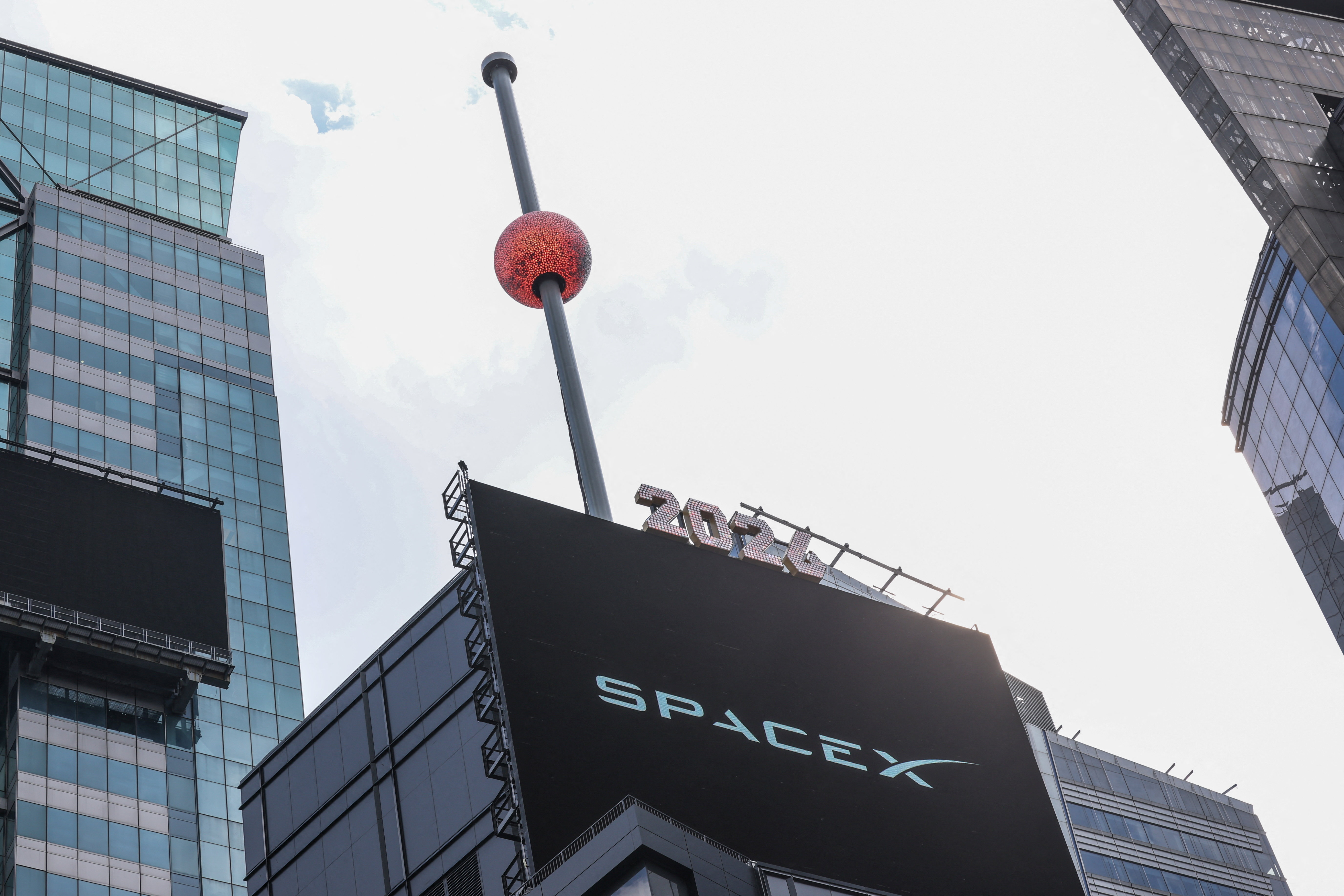
“Cursor is now part of SpaceX,” the company said.
Then came the line that explained the direction of the deal.
Cursor would help SpaceX move faster toward what it described as “the world’s most useful AI,” beginning with software engineering and eventually expanding into knowledge work.
That second half was easy to overlook.
“Expanding into knowledge work.”
This wasn’t being described as an acquisition designed only to make programmers type faster.
Cursor was becoming an entry point into a much broader attempt to make AI perform economically valuable tasks.
And inside Cursor, the opportunity had changed just as dramatically.
The company explained that when it started, improving AI models steadily increased what users could build.
At first, Cursor could predict the next several lines of code.
Then it became capable of larger edits.
Then increasingly autonomous tasks.
Eventually, its team began describing AI “teammates” that could be given real work.
But there was always a constraint hanging over that ambition.
Compute.
Building powerful frontier AI systems requires staggering amounts of processing capacity.
Training them requires even more.
Serving those models to millions of customers at an affordable price creates another challenge entirely.
A software startup can have brilliant engineers and an excellent product while still being limited by how much computing infrastructure it can obtain.
That was the problem SpaceX could potentially change overnight.
In its acquisition announcement, Cursor pointed directly at the advantage.
Together with SpaceX, the company said, it would gain access to what it described as the largest fleet of GPUs in the world.
That computing capacity could be used not only to create stronger models but also to make those models cheaper to operate.
Cursor said the result could be straightforward for customers:
More capable AI.
Lower costs.
Faster development.
At first glance, that sounds like the standard promise attached to almost every technology acquisition.
Then came the detail that changed how the entire $60 billion deal could be viewed.
Because SpaceX hadn’t necessarily spent $60 billion simply to own a coding application.
It had acquired one of the places where its enormous investment in artificial intelligence could immediately become useful to real people doing real work.
That was the twist.
For months, observers could look at the transaction and ask why a company associated with rockets, satellites and massive engineering projects needed a coding startup.
But look at the deal from the opposite direction.
SpaceX was building computing capacity.
It was building AI models.
It had Grok.
It had infrastructure.
It had absorbed xAI.
What it still needed were environments where increasingly powerful intelligence could turn into practical output.
Cursor already had one.
Developers were already sitting inside the product for hours every day.
They were already trusting it with codebases.
They were already learning how to delegate work to AI.
Instead of building that relationship from zero, SpaceX could acquire it.
And Cursor gained something equally difficult to create independently: access to immense computing infrastructure.
The two assets solved different halves of the same problem.
One side had intelligence and compute at enormous scale.
The other had a place where that intelligence could be turned into productive work.
Suddenly, the $60 billion figure looked less like the price of a code editor.
It looked like a bet on the interface between humans and increasingly autonomous AI workers.
Cursor even pointed to Grok 4.6, released Wednesday, as an early indication of what the combined teams could build.
Its announcement described SpaceX as constructing the computing capacity required to scale intelligence far beyond existing levels.
Then it offered perhaps the clearest description of Cursor’s role in the new organization:
Cursor would be one of the places where that intelligence became useful.
That sentence revealed more than any corporate organizational chart could have.
Think about what happens if the strategy works.
Today, a developer asks an AI system to repair a bug.
Tomorrow, an engineer assigns it a feature.
Later, an entire team could delegate hours—or days—of technical work to software agents.
And if the same underlying approach moves beyond software development, the target becomes much larger.
Research.
Analysis.
Documentation.
Operations.
Design.
Other forms of knowledge work that currently require enormous amounts of human attention.
Cursor’s team made clear that its original mission had not disappeared.
It still wanted people with ambitious ideas to spend less time manually writing code and more time solving difficult problems.
But the scale around that mission had changed.
Before the acquisition, Cursor was a fast-growing AI company trying to build increasingly capable engineering agents.
After the acquisition, it became part of an organization with ambitions spanning advanced AI models, massive computing infrastructure and some of the most technically demanding engineering projects on the planet.
The balance of power changed immediately.
Competitors that had been comparing Cursor with other AI coding products now had to compare it with something much larger.
Customers evaluating coding assistants were no longer simply evaluating features inside an editor.
They were potentially choosing an interface connected to one of the most aggressively scaled AI infrastructures in the technology industry.
And the people who had looked at the purchase price and wondered how a coding startup could possibly justify $60 billion were forced to confront another possibility.
Perhaps coding was only the first market.
You can picture the moment the implication became obvious.
The acquisition announcement was public.
The integration plans were no longer hypothetical.
Cursor’s engineers were joining SpaceX AI.
Grok products were part of the roadmap.
Massive GPU capacity was part of the equation.
And “knowledge work” was explicitly being named as the horizon beyond programming.
The question shifted.
It was no longer:
Why would SpaceX buy Cursor?
It became:
What is SpaceX planning to turn Cursor into?
That is a very different question.
For Elon Musk, the closing announcement required only a few words.
For Cursor’s engineers, it marked the end of one chapter and the beginning of a far larger experiment.
For the rest of Silicon Valley, it offered a reminder about how quickly categories can become obsolete during a technological shift.
A company that looks like a coding editor today may actually be building an AI workforce interface.
A company known for rockets may quietly become one of the world’s largest AI infrastructure operators.
And a $60 billion acquisition that initially looks excessive can make much more sense when you realize the buyer may not be paying for what the product is today.
It may be paying for where the product sits in tomorrow’s economy.
The biggest technology deals are rarely about buying what already exists.
They are about controlling the doorway to what comes next.
And if SpaceX’s bet on Cursor succeeds, the most important part of this $60 billion acquisition won’t be that AI learned how to write more code.
It will be the moment the technology industry realized that code was only the beginning.


