The river was no real obstacle. Shallow in most places, maybe two hundred meters across, lined with reeds and small islands. The Germans had planned for it for months. They had aerial photographs, precise maps, and assault boats already positioned in the darkness.
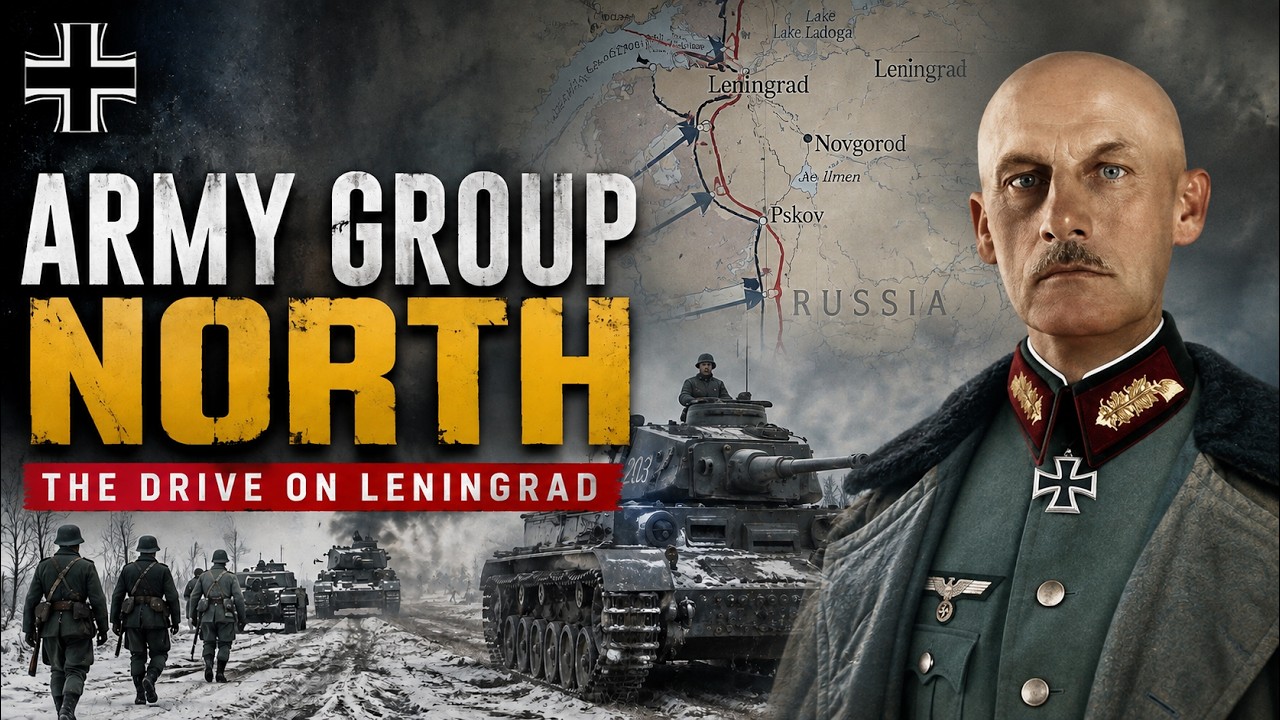
The crossing was meant to be a formality. It was not. By the summer of 1941, the myth of the unstoppable drive had already begun to crack in places the high command refused to look. The Panzer divisions of Army Group North had moved with terrifying speed through Lithuania and Latvia, covering distances in weeks that planners had estimated in months.
The cities fell: Kaunas, Riga, Pskov. They rolled through villages where the populations were too stunned to flee, scattering Soviet units that had not yet even finished digging their defensive positions. The idea of a swift war, a clean campaign concluded before autumn, seemed to be proving itself true. The Luga River, lying south of Leningrad, was different.
It was not a major waterway. It was not a fortress line. It was simply a stretch of water with marshes on either side, and a forest that grew too dense for easy movement. It was a place where the roads became fewer and worse, and where the local defenders, drawn from the factories and streets of Leningrad itself, had decided that they would not fall back any further.
The Germans pushed against the line through late July and into August. They probed for weak points. They sent reconnaissance units into the swamps. They launched attacks against the river crossings, sometimes succeeding in establishing small bridgeheads on the eastern bank.
But the progress was different here. It was slow. It was costly. The Panzer crews, accustomed to bypassing strong points and driving deep into enemy territory, found themselves battering against positions that did not melt away.
The guns on the other side had been positioned by men who knew this ground, who had grown up in these forests, and who understood exactly which bends in the river could be held. The soldiers in those defensive lines were not the regular infantry of the Red Army, or not only them. They were workers, schoolteachers, cadets from the military academies. They were old men who had fought in the civil war.
They were women who had dug the trenches for weeks, and who now stood in them with rifles they had only just learned to load. They had no tanks, no aircraft, no artillery in anything like the German quantity. What they had was the knowledge that if they broke, the city behind them would fall. The city behind them was Leningrad.
The drive had carried the German armies to the very gates, and then it had stopped. At Hitler’s headquarters, the decision had been made, not to storm the city, but to encircle it. The reasoning was practical: urban combat would consume soldiers and ammunition that the drive had already stretched too thin. The reasoning was also ideological, in the coldest and most terrible sense of that word.
The city was to be erased, not through battle, but through blockade. It was to be starved until it ceased to exist as a functioning place. The soldiers on the perimeter were told to dig in. They were told to hold.
They were told to wait. What the soldiers of Army Group North did not yet understand, as they began the labor of entrenchment, was the distance between waiting and dying. They had marched through summer dust and autumn mud. They had seen their comrades fall to sniper fire and exhaustion and the infections that followed even small wounds.
They had written letters home in which they described the monotony, the hunger, the strange beauty of the northern forests. They had grown tired in ways that sleep could not cure, and they had grown quiet in ways that words could not express. The initial jubilation of the summer, the sense of participating in a great and necessary triumph, had curdled into something more ambiguous. They were a siege army now.
They were designed for movement and they were standing still, and the stillness had begun to eat at them. The supply system that had sustained the advance now strained to sustain a static front. Rations came irregularly. fuel was rationed.
The clothing that had been adequate for the summer heat was useless against the frost that began to form in September, and by October, the soldiers were wrapping themselves in whatever they could find. The horses of the supply trains, which neither side had ever fully abandoned, began to die from cold and overwork. The men began to slaughter them for food. Across the perimeter, the Soviets were preparing for a different kind of endurance.
The encirclement had been completed on September 8th, when the fortress of Shlisselburg fell, sealing the last overland corridor to the east. The water of Lake Ladoga, which separated the city from the open land beyond the German lines, was still navigable in the autumn months, and a desperate evacuation had begun. Boats crossed the lake by night, carrying out civilians and wounded, and bringing in whatever supplies could be obtained. The curators of the Hermitage had already packed and evacuated over a million treasures, the paintings and sculptures that represented centuries of European culture, sending them east by rail to keep them out of German hands.
The empty walls of the great galleries stood as a kind of monument, not just to war, but to a particular loss that was impossible to restore. The city itself had swelled to nearly three million souls as refugees poured in from the surrounding countryside. The factories had converted to war production, working around the clock. The streets had been transformed into defensive barriers.
And the population, those who were not already in uniform, had been mobilized to dig. They dug anti-tank ditches and trenches, they built barricades, they erected wooden palisades. They worked in endless shifts under the summer sun and into the perpetual twilight of the northern nights, and when the cold came, they kept digging, because digging was the only thing that offered any sense of control. The soldiers on the perimeter, both German and Soviet, settled into a strange shared stillness.
The front was not quiet. The artillery exchanges continued, and the sniper duels in the forests were relentless. But the movement had stopped. The great offensive had lost its momentum, and the men who had ridden that momentum were now trapped in the mud and the frost, guarding a line that had become the boundary not just between two armies, but between two different kinds of suffering.
For the Germans, the suffering was one of cold and uncertainty and the slow dawning realization that the war they had been promised was not the war they were fighting. For the Soviets, the suffering was one that had not yet reached its peak, but which was already visible in the growing lists of the missing, the wounded, and the dead. The medical services on both sides were overwhelmed long before the winter even began. German field hospital tents were filled with the casualties of the campaign: the wounded, the feverish, the frostbitten.
The surgeons worked without rest as the supplies of antiseptic and bandages ran short. The Soviet hospitals within Leningrad were no better. They were overflowing with civilians injured in the bombing, with soldiers wounded at the front, with the first cases of the hunger that was beginning to spread through the city as the ration cards were cut and cut again. The human cost of the drive had become impossible to comprehend from the perspective of any individual, and so the individuals on both sides retreated into their own small worlds.
The German soldier wrote home to his family in Bremen that the forests never ended, that the roads were rivers of mud when it rained, that he was tired and cold and that he hoped the war would end before the next winter. The Soviet soldier wrote home to his mother in Leningrad that he was well, that she should not worry, that the Germans would never get through the line. The letters were censored, and they were filled with lies of omission, but they were also, in some way, the most honest documents of the entire war. They were the voices of men who did not know what was coming, and who could not have endured it if they had.
By December, the first snows had fallen. The ground froze. The lakes around the perimeter turned to ice, and the German soldiers, who had been told that the campaign would be finished long before this, began the terrible labor of wintering in positions that were never designed to be held through winter. The Soviet soldiers on the other side, who had been told that the city would never be surrendered, faced the even more terrible realization that they were now trapped inside it.
The water of Lake Ladoga had frozen solid, and the boats that had carried out the last evacuees were now useless. The ice was not yet thick enough for heavy vehicles, and so for several weeks, there was no road in or out. The city was sealed off from the world, and the world, which was in chaos of its own, could do nothing about it. The trail of the drive to Leningrad was a road of bones, from the frontier of Lithuania to the suburbs of a city that had not been conquered.
The German soldiers who had marched with such confidence in June had become the inhabitants of a frozen limbo, their momentum gone, their supplies thin, their reasons for fighting growing harder to articulate with each passing day. The cost of the campaign had been laid out not just in the casualty lists, but in the quiet silences of the men who had witnessed what speed could do to a landscape and a people. The bridges built and destroyed, the villages burned, the forests scarred with tank tracks. The civilians who had been caught between the armies, who had fled east with the Soviets or west with the Germans, who had been pressed into labor battalions, who had disappeared into the gulags of the Soviet rear or the camps of the German occupation.
The Jews of the Baltic cities, whose communities had been destroyed in the first weeks of the advance by the killing units that followed the front line. The refugees who had died on the roads, or in the overcrowded trains, or simply in the cold. And yet, despite all of this, the drive had not succeeded. It had reached the gates of its objective, and it had stopped.
The German soldiers looked at the city on the horizon, a city they would never enter, and the Soviet soldiers looked at the forest that held the enemy, a forest they would never cleanse. The winter began to settle in, and in its silence, the true shape of the campaign was finally revealed. Not as a lightning strike, but as a long, grinding, and inexorable starvation. As a siege.
As two great armies, locked together in an embrace that neither could break, and both unable to escape.