The silence that defined Tony Dorsett’s post-football life has been shattered, not by a roar of the crowd, but by the quiet, terrifying tremor of a failing mind. At 72 years old, the Pro Football Hall of Fame running back is finally speaking out, revealing the harrowing personal tragedies and the brutal physical toll that accompanied his legendary career. For decades, the world saw the touchdowns, the Super Bowl rings, and the highlight-reel runs, but behind the curtain of gridiron glory was a life marked by financial ruin, family heartbreak, and a diagnosis that would forever change the conversation about football.
Dorsett’s story begins not in the bright lights of Dallas, but in the gritty, unforgiving steel towns of Western Pennsylvania. Born in Rochester and raised in Hopewell Township, his childhood was defined by the exhausting shifts his father, Wesley, worked at the massive Jones & Laughlin Steel Mill. The family’s economic hardship was a constant pressure, but for young Tony, the local sandlots became more than a playground; they were his escape route.
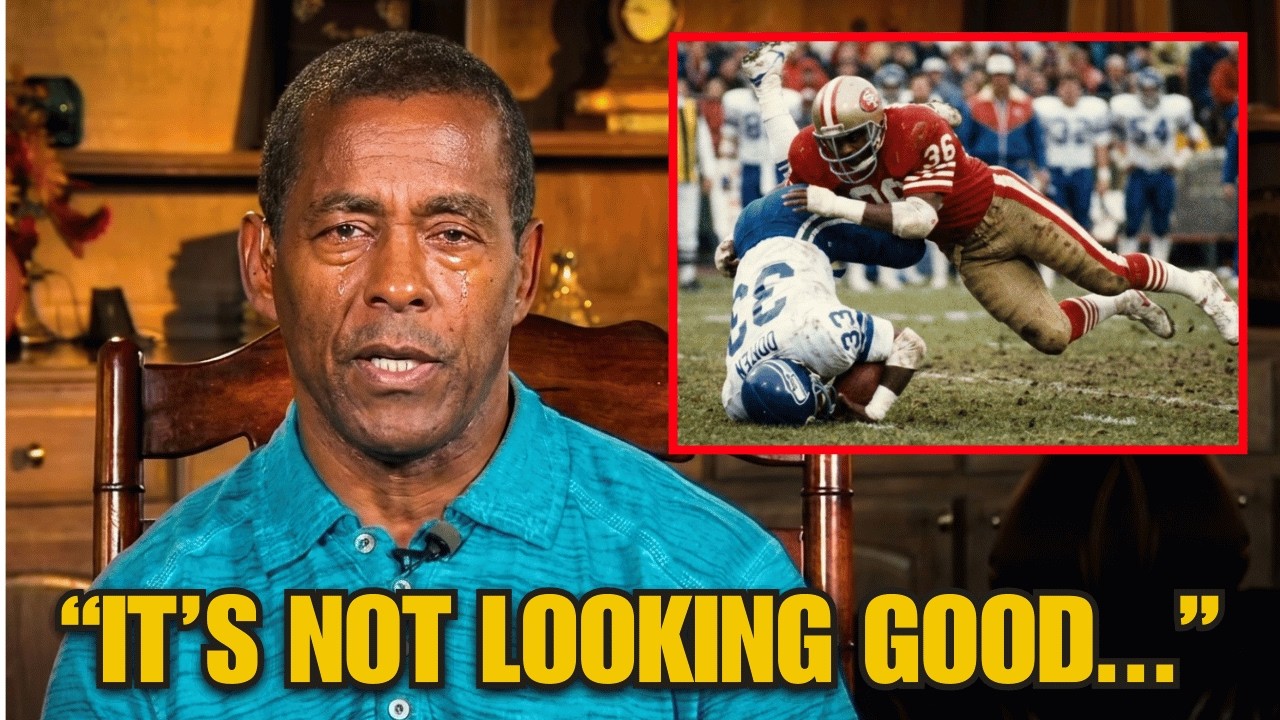 It was on those rough, dirt fields that he forged an explosive burst of speed and a fierce competitive edge, a talent that quickly made him an all-state running back at Hopewell High School. Yet, even then, the path was fraught with doubt, as college recruiters across the nation hesitated, worried that his lean frame would not withstand the brutal punishment of top-tier college football.
He proved the skeptics wrong by signing with the University of Pittsburgh in 1973, but that same year brought a life-altering challenge that no playbook could prepare him for. On September 14th, just as his freshman season was kicking off, a 19-year-old Dorsett and his then-girlfriend Karen Castelo welcomed their son, Anthony Dorsett Jr. Overnight, he was thrust into the reality of teenage fatherhood, secretly carrying the immense weight of providing for a newborn while trying to make a name for himself in a major college program.
The emotional burden, combined with the grueling physical training and intense homesickness, nearly broke him. During his very first semester, he was so overwhelmed that he nearly packed his bags and returned home to the comfort of his family, saved only by honest conversations with his mother and the relentless encouragement of the Pitt coaching staff.
Once he committed fully, his performance on the field was nothing short of miraculous. He had an incredible 1,686-yard freshman season, immediately silencing the critics who claimed he was too small for the big time. But while fans cheered his game-changing runs, the financial and emotional struggles of fatherhood remained an unspoken weight he carried when the cameras were off.
As college defenses struggled to contain his lightning-fast speed, an even bigger national stage was preparing to turn the spotlight directly on him.
At the University of Pittsburgh, Dorsett accomplished what no college running back had ever done before. From 1973 through 1976, he dominated the game week after week, becoming the first player in NCAA history to rush for at least 1,000 yards in four straight seasons. Every week, opposing defenses knew he was getting the ball, yet nobody could figure out how to slow him down.
He set a national benchmark with 33 different games where he ran for over 100 yards and became the very first college player to gain 1,500 rushing yards in three separate seasons. Everything culminated in a dominant senior year in 1976, where he rushed for 1,948 yards and scored 21 touchdowns, leading the Pitt Panthers to an undefeated record and a national championship. This historic run swept the awards season, earning him the 1976 Heisman Trophy, the Maxwell Award, the Walter Camp Award, and first-team All-American honors in all four of his college seasons.
He wrapped up his time at Pitt with 6,082 total rushing yards, setting an all-time NCAA rushing record that stood untouched for 22 years. The University of Pittsburgh officially retired his famous number 33 jersey, cementing his college legacy forever.
With the college game conquered, the NFL draft was next, but professional scouts still harbored serious doubts about whether his slender build could handle the hits in the pros. In the 1977 NFL draft, the Tampa Bay Buccaneers held the first overall pick but decided to pass on him, worried that at 192 pounds, he wasn’t big enough for a full professional season. Seeing a golden opportunity, Dallas Cowboys head coach Tom Landry made a big move, trading four valuable draft picks to the Seattle Seahawks just to get the second overall pick and draft Tony for Dallas.
To secure their new star, Dallas signed him to an amazing five-year rookie contract worth $1. 1 million, making him the very first player in Cowboys history to sign a contract for over a million dollars. However, adjusting to the team was far from smooth.
 Coach Landry ran a famously rigid offensive system known as the flex offense, which demanded that running backs hit very specific pre-planned holes on every single play. But Tony was a different kind of athlete who relied on his natural instincts, quick moves, and open space to make defenders miss. This difference immediately caused tension on the practice field.
Yet, Landry was a smart coach who quickly realized Tony had a special talent that couldn’t be taught. In an unexpected move, Landry adjusted his own coaching approach, telling his offensive linemen to hold their blocks for as long as possible and telling Tony to use his own vision to pick his running lanes. This simple adjustment completely changed the Dallas offense and allowed Tony to play without second-guessing himself.
He exploded onto the league, finishing his 1977 debut season with 1,007 rushing yards and 12 touchdowns, helping to lead the team through the end of the season. This outstanding performance earned him the Associated Press NFL Offensive Rookie of the Year Award and set a Cowboys rookie rushing record that stood for 39 years. In January 1978, he finished his remarkable first year by leading the Dallas Cowboys to a big 27-10 win over the Denver Broncos in Super Bowl 12.
With that win, Tony became the first football player ever to win a college national championship and an NFL Super Bowl in two back-to-back years. He went on to rush for over 1,000 yards in eight of his first nine seasons, with his absolute peak coming in 1981 when he ran for a career-high 1,646 rushing yards. Even with all his award-winning seasons, Tony made his most famous career play on January 3rd, 1983, during a televised Monday Night Football game against the Minnesota Vikings.
Backed up to their own 1-yard line, the original play call was supposed to be a quick fullback dive, but fullback Ron Springs had taken his helmet off, assuming the team was going to punt. Quarterback Danny White looked at the clock, realized they were running out of time, and called a sweep to Tony with only 10 guys on the field. Tony took the handoff inside his own end zone, found a seam along the left sideline, and outran the entire Vikings defense for a 99-yard touchdown.
That single play set a record for the longest rushing touchdown in NFL history, a mark that can only ever be tied, but never broken.
Tony had reached the absolute top of professional sports stardom, but behind the bright stadium lights, big problems were starting to brew in his personal life and finances. Like many star athletes of the 1970s and 1980s, Tony trusted professional financial advisers to manage his growing wealth. These advisers convinced him to invest heavily in aggressive tax shelters tied to oil, gas, and real estate projects.
However, the plan backfired completely when the Internal Revenue Service officially said those tax shelters weren’t allowed and began looking into his past financial records. In 1985, federal tax officials hit him with a huge financial blow, filing official tax liens that added up to over $400,000 in unpaid taxes, accumulated interest, and severe penalties. Federal authorities placed tax liens directly on both of his residential homes in the Dallas area and started taking his game paychecks directly from the Dallas Cowboys organization.
To make things worse, Tony didn’t have a safety net of big corporate endorsement deals to help cover the sudden debt, as ongoing rumors in the media about his wild personal life stopped national sponsors from offering him lucrative commercial deals. Feeling trapped and believing he was severely underpaid, he staged a tense contract holdout before the 1985 season, creating serious tension between him and the team’s leaders.
 In 1984, Tony faced a double wave of personal loss that shook his entire life. First, his marriage to his wife, Julianne, came to an end in divorce. Shortly after that painful separation, his father, Wesley Dorsett, passed away.
Wesley had been Tony’s absolute hero and moral anchor, and losing him left Tony feeling deeply isolated during one of the most stressful periods of his life. Even as he grieved privately, he was still expected to show up every week and carry the huge responsibility of leading the Dallas Cowboys. Soon enough, things on the football field became as chaotic as his personal life.
In 1986, the Cowboys signed superstar running back Herschel Walker, and head coach Tom Landry tried to use both talented runners by creating a shared two-back system. While this strategy seemed good for the team, it significantly reduced Tony’s carries, touches, and playing time. For a proud star who was used to being the main focus of the offense, sitting on the bench during important plays was incredibly difficult.
He openly voiced his discontent in interviews, and the growing tension clearly showed that his legendary time in Dallas was coming to an end. In 1988, after 11 amazing seasons, 12,036 rushing yards, and a Super Bowl title with the Cowboys, the team officially traded Tony to the Denver Broncos for a fifth-round draft pick. Moving to Colorado gave Tony a chance to clear his head and restart his career in a fresh environment.
When Tony joined the Denver Broncos in 1988, he immediately showed everyone he could still play at the highest level, leading Denver that season with 703 rushing yards and scoring five touchdowns. During that impressive season, Tony passed the legendary Hall of Famer Jim Brown to become the second leading rusher in NFL history at that time, with only Walter Payton ahead of him. But then, disaster struck unexpectedly during a regular training camp practice in August 1989.
While making a sharp cut on the field, Tony completely tore the anterior cruciate ligament in his left knee. This severe injury required major reconstructive knee surgery followed by months of painful physical therapy. Despite fighting hard to rebuild his leg strength, the surgery couldn’t bring back the explosive speed and quick cuts that made his game so special.
Facing the reality that his body couldn’t perform at an elite level anymore, Tony officially announced his retirement from professional football in 1989. He walked away from the game with 12,739 rushing yards, 398 pass receptions, 16,326 total scrimmage yards, and 91 touchdowns. His exceptional accomplishments were honored in 1994 when he was inducted into both the College Football Hall of Fame and the Pro Football Hall of Fame in a single year.
For years following his retirement, Tony enjoyed the honors and praise that came with being a true football legend. But, the long physical toll of absorbing thousands of hits as a running back was quietly building up beneath the surface. Years after leaving professional football, Tony started noticing scary changes in how his brain worked.
The most confusing part of his condition was how strangely his memory loss worked. Tony could easily describe specific play calls and exact game moments from his 1977 rookie season with complete accuracy, yet just 5 minutes after having a normal conversation with his family, he could not remember what they had talked about. As his brain struggled to process simple daily routines, his mood began to shift in ways he could not control.
 He started experiencing sudden, unprovoked outbursts of anger and frustration over minor everyday issues. On several terrifying occasions, Tony got into his car to drive to familiar places and suddenly lost his sense of direction, unable to figure out how to drive back home. Living with that constant state of confusion brought on heavy bouts of depression, and he admitted to loved ones that he was battling dark persistent thoughts of ending it all.
Later on, Tony came to the painful realization that his symptoms were not just a normal part of getting older. They were the direct result of repetitive sub-concussive brain trauma absorbed over 16 years of playing football.
In November 2013, the NFL legend traveled to the University of California, Los Angeles to participate in groundbreaking brain evaluations. Joining him were fellow NFL veterans Joe Delamielleure and Leonard Marshall. For 3 months, leading medical researchers ran specialized brain imaging tests and clinical evaluations on these former athletes.
Once the results were out, the diagnosis was very clear. The imaging scans revealed cellular markers and protein buildups consistent with chronic traumatic encephalopathy, a progressive brain disease better known as CTE. For years, scientists could only confirm CTE during postmortem autopsies, making these test results a major medical milestone.
Rather than keeping the medical report private, Tony decided to step forward and share his diagnosis with the public. In interviews with reporters, Tony spoke with absolute honesty about the personal toll of his career. He plainly stated, “There’s no doubt in my mind that what I went through as a football player is taking an effect on me today.
There’s no ifs, ands, or buts about that. I’m just hoping and praying I can find a way to cut it off at the pass.” He quickly turned his personal diagnosis into active health advocacy, teaming up with hundreds of other retired players who were pushing the league for real accountability, complete medical care, and better safety standards for future generations.
Now, in the later years of his life, Tony faces his toughest fight yet. At 72, managing the daily realities of CTE means he needs a lot of help to get through the day, like calendar reminders and special memory aids all over his house. He found lasting love and partnership when he married his wife Janet in 2000, and his three daughters, Mia, Jasmine, and Madison, remain his steady support system.
Looking back on his career, Tony maintains a completely honest perspective on the sport he loved. He freely acknowledges that football provided him with fame, financial security, and lifetime opportunities, but he never hides the physical and mental price tag that came with those achievements. This balanced perspective has turned him into a key public voice for youth sports safety, actively speaking out in favor of reducing head contact for young players and funding advanced medical research on brain injuries.
By speaking openly about his memory loss, mood struggles, and depression, he has helped remove the shame surrounding mental health for retired athletes everywhere. His name is forever etched into the Dallas Cowboys Ring of Honor and enshrined inside the Pro Football Hall of Fame, but his true legacy stretches far beyond trophies and stadium banners. Tony is a powerful example of strength, showing how a true champion handles life when the cheering stops and the real struggle begins.
His story is a heroic, tragic reminder of the human sacrifice behind NFL glory, and his willingness to speak up transformed player safety from a quiet medical issue into an urgent national conversation, making an impact that will protect future generations of athletes.