The roar of the crowd at the Dorothy Chandler Pavilion was a physical force, a wall of sound that crashed over the stage as Warren Beatty gripped the Oscar for Best Director. It was the spring of 1982, and the 44-year-old filmmaker had just conquered Hollywood with Reds, a three-hour epic that had nearly destroyed him. But as he stood at the microphone, the man who had been linked to some of the most famous women of the 20th century delivered a message that almost no one in the room understood.
He never said her name, but one woman watching from across the Atlantic knew exactly what he meant. She wasn’t his date, wasn’t in the building, and hadn’t been part of his life for years. The tribute was a ghost, a whisper from a past that had shaped him more than any tabloid romance ever could.
 For decades, the public narrative of Warren Beatty has been defined by a relentless, almost mythic bachelorhood. The names read like a roll call of 20th-century glamour: Natalie Wood, Joan Collins, Madonna, Goldie Hawn, Carly Simon, Brigitte Bardot. Estimates of his romantic conquests have ranged into the thousands, a legend fueled by his own restless energy and a Hollywood system that rewarded his magnetic chaos.
Yet, the evidence points elsewhere. The real story, the one that biographers and close friends have slowly pieced together, centers on a quiet British actress who turned down the two biggest things he ever offered anyone: a role and, according to those who knew them, a life together. The woman was Julie Christie, and the tribute hidden inside his greatest triumph was for her.
The film that won him that Oscar was not a story about a communist journalist, despite its surface narrative about John Reed and the Russian Revolution. It was a love letter, a monument built over 13 years of obsessive struggle, funded partly by selling his own Beverly Hills home when studios balked at the budget. The project was born in 1969, when Christie traveled with Beatty to the Soviet Union.
It was there, wandering the country and asking strangers about the revolution, that the seed of Reds was planted. Christie wasn’t just his girlfriend during that decade; she was present at the exact moment his most personal project was conceived, watching him fall in love with an idea he wouldn’t finish chasing for another 13 years. That trip, and the woman beside him, became the emotional core of everything that followed.
The relationship between Beatty and Christie was less a conventional romance than a decade-long orbit that neither ever quite escaped. They made three films together across the 1970s—McCabe and Mrs. Miller, Shampoo, and Heaven Can Wait—a run that earned them 14 Oscar nominations combined and made Christie his single most frequent screen partner of the era.
Friends who knew them both said the connection ran deeper than the film sets they shared. One person close to Beatty put it plainly years later: if he hadn’t made Bonnie and Clyde, the movie that turned him into a producer and a power player almost overnight, he likely would have married Julie Christie instead of chasing the career that came with staying single and unattached.
Christie, for her part, had said publicly more than once that she didn’t believe in being tied down to one person, describing herself as someone who needed to stay free rather than settled. Beatty, with his characteristic deflection, called long-term relationships “more painful than short ones,” an odd thing to say about the woman most people around him assumed he’d eventually settle down with. The assumption turned out to be wrong, but not because the relationship simply faded quietly into the background without a fight.
By the time Beatty was finally ready to make Reds in the late 1970s, the two had already broken up, ending their relationship sometime in the mid-1970s without a public scandal or a messy tabloid war to mark the end. It was a quiet mutual parting, the kind of ending that leaves no headlines behind for anyone to later dig up.
 But Beatty had never stopped picturing her in the role of Louise Bryant, the journalist at the center of his epic. He’d been planning it since before the breakup, shaping the character in his head with her voice and her presence long before a single page of the script was finished. When production finally started, years after the two of them had split, he offered her the part anyway.
Christie said no. She reportedly felt the role should go to an American actress rather than a British one, a professional judgment rather than a personal snub. The kind of principled stand that had always defined how she approached her work.
Beatty gave the part to Diane Keaton instead, and the two of them became a couple during filming, a relationship complicated from the start by exactly how much the project meant to him.
Keaton later described it plainly. She adored him, but the movie was the real passion of that period in his life, more than any romance running alongside it. She has said she never really believed the two of them would be remembered as one of the great Hollywood romances, precisely because Reds itself was always the thing he loved most urgently during those years.
By the time the film wrapped, Keaton has said the two of them weren’t really a couple in any meaningful sense anymore, even though the relationship technically continued a while longer after the cameras stopped, drifting rather than ending in any single dramatic moment. The production itself became its own kind of legend, with Beatty interviewing more than a hundred people across the Soviet Union to get the history right and refusing to trim a single minute from the finished film’s three-hour-plus runtime.
The dedication on the finished film was a quiet bombshell for those in the know. He dedicated Reds to the woman who said no. It was a gesture that spoke volumes, a public acknowledgment that the film’s true inspiration was not the actress on screen, but the woman who had stood beside him in Russia a decade earlier.
When he stood at the Oscars in 1982, he referenced her again in his acceptance speech, a subtle nod that most of the audience missed entirely but that people who knew their history understood perfectly. He’d built his life’s most personal project around an idea she’d witnessed being born, cast another actress to play the part written with her in mind, and still found a way to give her credit in front of the entire industry watching at home. That’s not the behavior of a man honoring a forgotten ex-girlfriend; that’s the behavior of a man marking the one relationship he never fully got over.
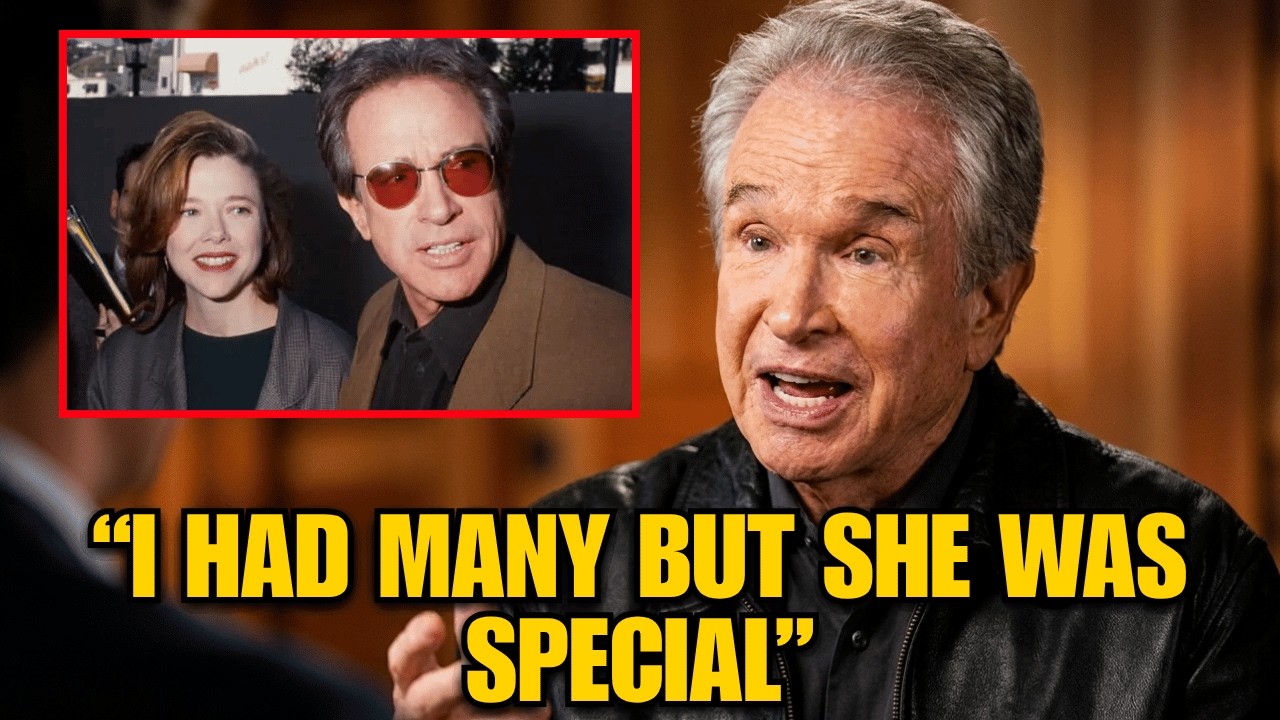
 The contrast with his later life is stark. Beatty didn’t marry until 1992, at 55 years old, when he met actress Annette Bening on the set of Bugsy. He proposed within days of shooting starting, a stunning turnaround for a man who’d spent three decades avoiding exactly this kind of commitment and had reportedly once called marriage a “dead institution.”
Friends who’d watched him cycle through relationship after relationship for 30 years were reportedly stunned at how quickly he settled into the role of husband once Bening entered his life, as though something in him had simply been waiting for the right person to finally stop moving for. The two of them went on to have four children, and the marriage has lasted more than three decades, by far the longest relationship of his adult life and longer than every other relationship on this list combined.
Bening gave him the home and the roots that decades of headlines suggested he’d never actually wanted. But that eventual marriage didn’t erase the significance of what came before it. If anything, it gives the earlier relationship a more complicated place in the story.
Christie wasn’t the woman he eventually married, and she wasn’t the person who built the family he spent the second half of his life protecting. Bening clearly became something different: the lasting partnership, the home, the person with whom he finally chose permanence. But permanence and significance aren’t always the same thing.
Some relationships become the life you build, while others become the memory you keep returning to when you look back at the person you were before that life existed. And for Beatty, Christie appears to have remained firmly attached to that earlier version of himself.
In a 2016 interview, at 79 years old, Beatty was asked directly about the women who’d shaped his life before Bening, part of a wider press tour built around his final film as director. He spoke warmly about nearly all of them, praising Diane Keaton’s humor and intelligence without hesitation, calling her a combination of integrity, fairness, and beauty in the same breath. The kind of generous, unguarded answer he gave about almost every other name that came up that afternoon.
When the subject turned to Christie specifically, his tone shifted into something quieter and noticeably more careful. He didn’t reach for the same easy list of compliments he’d used for everyone else. He described the relationship in exactly two words: “Very respectful.”
 It’s a strange, almost clipped answer for a man otherwise happy to talk at length about the brilliant, beautiful women who’d passed through his life. And the restraint itself says something the longer answers never quite managed to.
Some things apparently still weren’t easy for him to talk about even decades later in front of a reporter with his wife of over 20 years likely reading the finished piece. Maybe that is the most revealing part of the entire story. Beatty had no reason by then to perform heartbreak.
There was no career advantage in making Christie sound important, no romantic image left to protect and no obvious reason to hide behind a vague answer if the relationship truly meant nothing anymore. He was an older man looking back on a life that had already settled into its final shape. He had a wife, children, decades of success behind him and a history crowded with famous names.
Yet when Christie came up, the answer became smaller rather than bigger. Two words instead of a story, respect instead of nostalgia, almost as if saying too much would have required him to explain something he had spent decades allowing the work to say for him.
The evidence of his true feelings is not in what he said, but in what he did. He spent 13 years and a fortune of his own money to make a film that was, at its heart, a tribute to a moment he shared with Christie. He wrote a role for her, and when she turned it down, he dedicated the finished product to her anyway.
He never did that for anyone else. The thousands of rumored relationships never produced a second dedicated film. The one lasting marriage came only after Christie had long since moved on with her own life and career.
And the guarded two-word answer he gave decades later when a reporter finally asked him directly, face to face with nowhere left to hide behind a script, speaks louder than any grand confession. Compare that to how easily he talked about Keaton, about Karen, about nearly everyone else who’d passed through his life without a second thought, and the silence around Christie becomes the loudest part of the whole story.
The love of Warren Beatty’s life was never really a mystery, and it was never a secret he was hiding out of shame or scandal, the way tabloids love to suggest. It was simply spoken once, quietly at exactly the right moment in front of an audience of millions who had no idea what they were watching. He gave Julie Christie the two things a man like him almost never gives anyone: a role built entirely around her and full credit in front of the industry that made him famous.
Offered up at the exact moment he had the least reason left to still be thinking about her at all. Decades of headlines chasing Madonna, Goldie Hawn, and a thousand other names never came close to matching that single gesture made once in 1982 and never really repeated for anyone else who came after her. The public may have been looking at the wrong women all along, but the man himself knew exactly where his heart had always been.