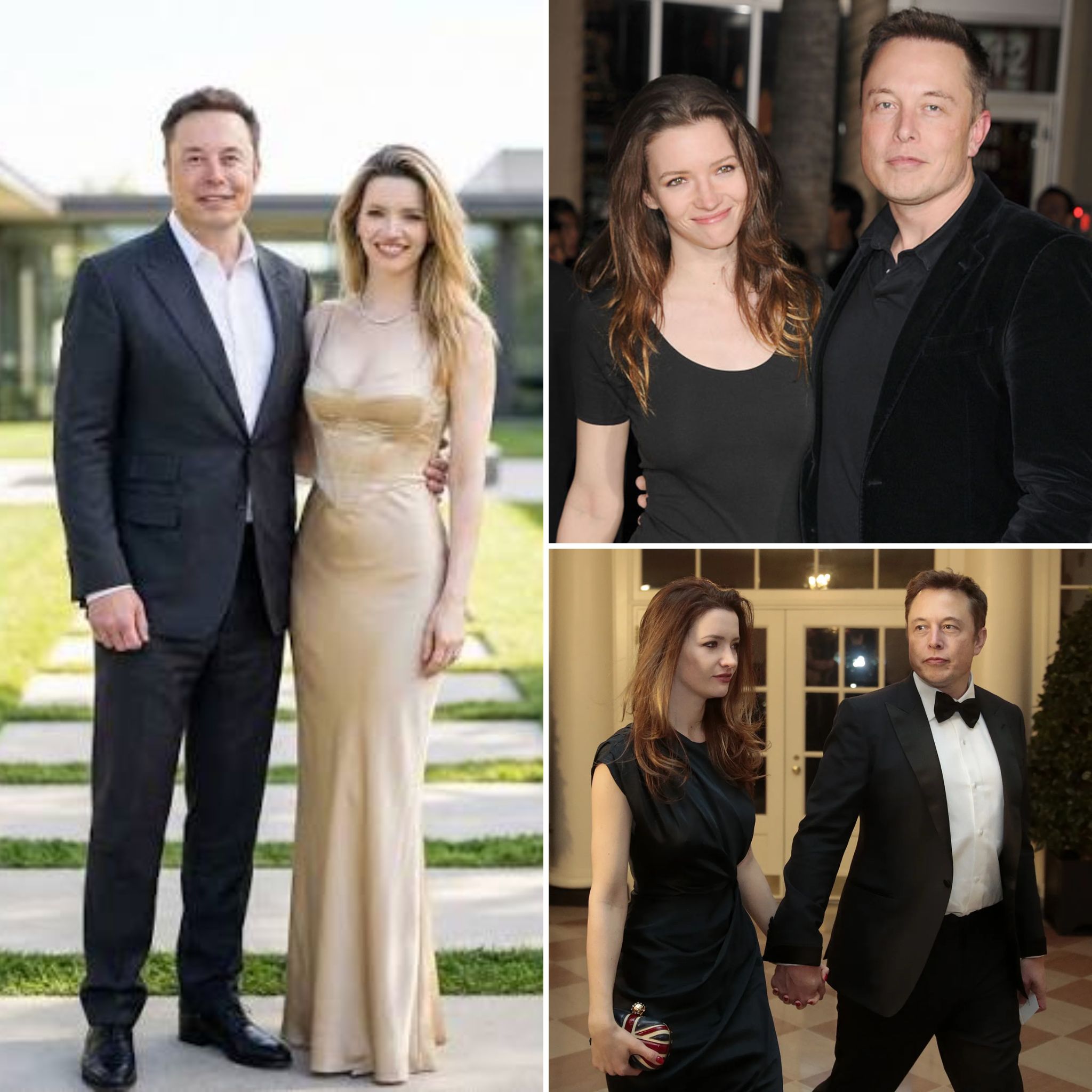
When Elon Musk’s Private Twitter Texts Became Public, One Mysterious Contact Stood Out — Then People Learned Who “TJ” Really Was
When thousands of Elon Musk’s private text messages spilled into public view during his $44 billion legal fight over Twitter, most people expected the same names.
Bankers.
Investors.
Silicon Valley executives.
Media moguls.
People offering money, strategy, introductions and advice about one of the biggest technology deals in history.
And many of them were there.

But buried among the messages was another voice.
The contact was identified only as “TJ.”
This person wasn’t talking like an investment banker trying to finance a takeover.
There were no spreadsheets.
No complicated valuation models.
No discussion about debt packages or shareholder returns.
Instead, “TJ” sent Elon Musk a remarkably direct suggestion:
“Can you buy Twitter and then delete it, please!? xx”
It looked almost like a joke.
Almost.
But as more messages emerged, it became clear that the person behind “TJ” cared deeply about what was happening on the platform.
The mysterious texter had opinions about Twitter’s moderation policies.
About free speech.
About political culture.
About accounts being suspended.
And whoever “TJ” was, this person apparently felt comfortable speaking to Elon Musk in a way very few people could.
Not as an employee.
Not as a business partner.
Not as someone trying to impress the world’s richest man.
But as someone who knew him personally.
Someone from his life before the Twitter drama.
And when the identity behind those initials was finally reported, the story suddenly looked very different.
But first, you have to understand what was happening around Elon Musk in early 2022.
Twitter had become more than a social-media company.
It was a cultural battlefield.
Politicians used it.
Journalists lived on it.
Executives made announcements through it.
Activists organized on it.
Celebrities fought on it.
Ordinary people could go from unknown to globally visible in a matter of hours.
And Elon Musk himself was one of its most powerful users.
He had tens of millions of followers.
A single post from him could move markets, dominate headlines or trigger days of debate.
But Musk had also become increasingly critical of Twitter itself.
He publicly questioned whether the platform was properly protecting free expression.
He criticized content moderation.
He ran polls.
He wondered aloud whether Twitter was fulfilling what he considered its role as a digital public square.
Then the conversation stopped being theoretical.
Musk began buying Twitter shares.
Soon, he became the company’s largest individual shareholder.
There was briefly discussion of him joining Twitter’s board.
Then he declined the board seat.
And shortly afterward came the move almost nobody had predicted:
Elon Musk offered to buy the entire company.
The number was staggering.
Approximately $44 billion.
He offered shareholders $54.20 per share.
Twitter eventually accepted.
For a moment, it appeared that one of the world’s most influential communications platforms was about to become the private property of one billionaire.
Then everything began to unravel.
Musk raised questions about spam accounts and bots.
He argued that Twitter had not adequately demonstrated that fake or spam accounts represented fewer than 5 percent of the platform’s monetizable daily active users.
Twitter defended its disclosures.
Musk moved toward terminating the deal.
Twitter sued him.
And suddenly, a business acquisition became a courtroom war.
Twitter wanted a judge to force Musk to honor the agreement he had signed.
Musk wanted out.
The case headed toward Delaware’s Court of Chancery.
Lawyers began digging through evidence.
And that meant private communications.
Texts.
Emails.
Conversations that the people involved almost certainly never expected millions of strangers to read.
One by one, names began appearing.
Jack Dorsey.
Larry Ellison.
Joe Rogan.
Marc Andreessen.
Sam Bankman-Fried and intermediaries discussing possible investment.
Media figures.
Entrepreneurs.
Political voices.
People suggesting business models.
People proposing themselves for jobs.
People telling Musk what Twitter should become.
Some offered money.
Others offered advice.
Others apparently saw Musk’s potential purchase as an opportunity to redesign not merely a company, but an entire system of public conversation.
It was one of the strangest windows the public had ever received into how power actually communicates behind closed doors.
Because the messages didn’t always sound like official corporate discussions.
Sometimes they sounded casual.
Sometimes enthusiastic.
Sometimes awkward.
Sometimes people appeared to be pitching ideas directly into Musk’s phone.
And somewhere inside those conversations was “TJ.”
On March 23, before Musk had formally announced his takeover offer, the mysterious contact sent the message asking whether he could simply buy Twitter and delete it.
There was humor in the wording.
But the next messages suggested a genuine frustration underneath it.
“TJ” brought up the suspension of The Babylon Bee, a conservative Christian satire publication.
The Babylon Bee had been suspended by Twitter after posting a tweet naming Rachel Levine, a transgender Biden administration health official, its “Man of the Year.”
Twitter said the post violated its rules.
The Babylon Bee refused to delete it.
The suspension became part of a much larger argument about moderation, satire, gender identity and the limits of speech on social-media platforms.
To some people, Twitter was simply enforcing rules against content it considered hateful or harmful.
To others, the suspension became evidence that the platform’s moderation policies had become ideological and overly restrictive.
“TJ” clearly fell into the second camp.
The person described the situation as “crazy” and complained that people had become too puritanical.
Another name appeared in the conversation: Raiyah.
According to reporting on the texts, this referred to Princess Raiyah bint Al-Hussein of Jordan.
Now the mystery became even stranger.
Who was texting Elon Musk about buying Twitter while casually mentioning a Jordanian princess?
This was not the normal structure of a corporate acquisition.
But perhaps that was the point.
The Twitter deal was never just a corporate acquisition.
At least not to the people around Musk.
Traditional investors could analyze Twitter’s revenue, advertising business and share price.
But many of the private messages showed that people were also thinking about something much larger.
Control.
Influence.
Speech.
Culture.
Who gets banned.
Who gets amplified.
Who decides the rules.
For Musk, the argument about Twitter had increasingly become philosophical.
For the mysterious “TJ,” it seemed personal as well.
And still, the initials sat there.
TJ.
A person close enough to Musk to joke with him.
Connected enough to mention royalty casually.
Interested enough in cultural politics to argue about moderation decisions.
Who was it?
The answer was hiding in plain sight.
Because the “J” mattered.
According to Bloomberg, citing people familiar with the matter, “TJ” was Talulah Jane Riley.
Talulah Riley.
Actress.
Writer.
And Elon Musk’s ex-wife.
Suddenly, the entire exchange made sense.
Riley was not some random political strategist whispering into Musk’s ear.
She wasn’t a Wall Street executive chasing a transaction fee.
She wasn’t a technology founder trying to secure an investment.
She had known Elon Musk intimately for years.
In fact, she had married him.
Twice.
Musk and Riley first married in 2010.
They divorced in 2012.
Then, in one of the more unusual chapters of Musk’s personal life, they remarried in 2013.
Their second marriage also ended.
They divorced again in 2016.
By the time of the Twitter takeover battle, the romantic relationship was long over.
But the texts showed something people outside their relationship could not have known:
They were still communicating.
And Riley was comfortable enough to send Musk opinions about one of the most consequential decisions he was considering.
That was the twist hidden inside the court documents.
Behind the anonymous initials “TJ” was someone who had once shared a home and a marriage with the man attempting to buy Twitter.
And her message was not:
Be careful.
Think about the money.
Don’t risk it.
Her opening suggestion was essentially:
Buy it.
Then delete it.
The actress known to many viewers from Westworld and films including Inception had quietly become one of the voices in Musk’s inbox during the period when he was deciding what to do about one of the world’s most powerful social platforms.
She was not directing the transaction.
There is no evidence that Riley controlled Musk’s decision to pursue Twitter.
Dozens of people were messaging him, and Musk had already been publicly debating Twitter’s policies himself.
But the revelation showed how much wider the private conversation around the acquisition had become.
The decision was being discussed not only with financiers and technology executives.
It was being discussed with friends.
Former partners.
Cultural figures.
People with personal grievances about the platform.
People who thought Twitter was essential.
People who thought it was broken.
People who wanted Musk to fix it.
And apparently at least one ex-wife who joked that perhaps he should simply erase the entire thing.
Imagine the moment the initials were connected.
For days, the messages had been examined like artifacts.
Every name mattered.
Every introduction mattered.
Every suggestion raised questions about who might influence a future Musk-controlled Twitter.
Then “TJ” stopped being two letters on a legal exhibit.
The person became visible.
Talulah Jane Riley.
The same woman Musk had married, divorced, remarried and divorced again.
The revelation was a reminder that when powerful people make enormous decisions, the conversations behind those decisions are rarely as tidy as the public imagines.
From the outside, a $44 billion acquisition looks like lawyers and bankers sitting around polished conference tables.
And there certainly were lawyers and bankers.
But from the inside?
It could also be a text arriving on a phone.
A joke from an ex-wife.
A complaint about a suspended satire account.
A conversation about culture.
A friend offering an idea while billion-dollar decisions were unfolding in the background.
That was what made the released texts so fascinating.
They stripped away the polished language of corporate press releases.
Official statements had described financing conditions, regulatory filings and contractual obligations.
The texts sounded like human beings.
People got excited.
People complained.
People pitched themselves.
People forwarded articles.
People argued about politics.
People told Musk they could help him transform Twitter.
And then, when the deal began falling apart, all those casual conversations suddenly became potential evidence.
That is the part few people think about when typing something into a private message.
At the moment it is sent, it feels temporary.
Two people.
Two phones.
One conversation.
But lawsuits have a way of changing the meaning of the word “private.”
By the autumn of 2022, the fight between Musk and Twitter had turned the billionaire’s text history into public reading material.
Twitter was seeking to enforce the merger agreement.
Musk was trying to escape it.
A trial was approaching.
And attorneys wanted to understand what Musk had been thinking, who he had spoken to and how the transaction had developed.
Messages that once disappeared into a phone now appeared in legal filings.
The balance of power shifted instantly.
People who thought they were speaking only to Elon Musk were suddenly speaking to reporters, investors, lawyers and the public.
That included Talulah Riley.
There is an almost cinematic irony to it.
Years earlier, Riley had been part of Musk’s private family life.
Their marriage ended.
They moved on.
Then one day, Musk considered purchasing Twitter.
She sent him messages.
Those messages eventually became attached to litigation involving billions of dollars.
And strangers around the world learned what she had privately told her ex-husband.
Yet perhaps the most interesting part of the story isn’t Riley’s joke about deleting Twitter.
It is what the exchange reveals about influence.
We tend to imagine that important decisions come from formal rooms.
Boardrooms.
Cabinet meetings.
Executive retreats.
Investment committees.
But sometimes influence is much less dramatic.
It happens through a text.
A person someone trusts sends one sentence.
A friend mentions something that bothered them.
An ex-partner points toward an issue.
A conversation reinforces an idea already forming.
Nobody signs a document.
Nobody calls it a strategy meeting.
But the thought enters the room anyway.
That does not mean Talulah Riley caused Elon Musk to buy Twitter.
The evidence does not support that conclusion.
What it does show is more subtle.
When Musk was thinking about Twitter, the people around him were not neutral.
They had opinions.
Strong ones.
Some wanted him to transform the platform.
Some wanted him to protect free speech as they understood it.
Some wanted to invest.
Some wanted access.
Some simply wanted him to act.
And Riley was among them.
The Twitter acquisition became one of the most scrutinized business sagas of its era because almost every stage unfolded publicly.
First came the share purchases.
Then the board drama.
Then the takeover offer.
Then the agreement.
Then the bot dispute.
Then Musk’s attempt to terminate the deal.
Then Twitter’s lawsuit.
Then the private texts.
And through those texts, the public briefly saw something it almost never gets to see:
The informal circle around a man making a $44 billion decision.
The messages did not reveal a single mastermind.
They revealed something messier.
A network of people.
Different motives.
Different priorities.
Different visions for what Twitter should become.
Talulah Riley’s presence was surprising because it broke the stereotype of who belongs inside a mega-deal.
She wasn’t there because she represented a bank.
She was there because history had given her a different kind of access.
She knew the person making the decision.
And sometimes personal access can place someone closer to power than any official title ever could.
By the time the world discovered that “TJ” was Talulah Jane Riley, the texts had already escaped the private world where they were written.
The initials had become a name.
The joke had become a headline.
The ex-wife had become part of the takeover story.
And the people reading those messages were confronted with an uncomfortable truth about the digital age:
We speak casually through devices that remember almost everything.
Most messages vanish from our attention minutes after we send them.
But under the right circumstances — a lawsuit, an investigation, a subpoena, a public battle — the smallest private sentence can suddenly become part of history.
For Elon Musk, the Twitter fight exposed conversations with some of the most powerful people in business and technology.
For Talulah Riley, it exposed a conversation with the man she had once married twice.
And for everyone else, it revealed that even a $44 billion corporate battle can begin to look surprisingly ordinary when you read the messages behind it.
A phone buzzes.
Someone types a thought.
Someone else reads it.
And neither person knows who might eventually be watching.
The lesson wasn’t simply that Elon Musk’s ex-wife wanted him to change Twitter — it was that behind some of the world’s biggest decisions are private conversations nobody expects the world will ever see.