October 14, 1944. Field Marshal Erwin Rommel answered the door of his home in Herrlingen, Germany. Waiting for him were two generals sent by Hitler—one of them, General Wilhelm Burgdorf, the Führer’s chief adjutant. Burgdorf didn’t offer greetings.
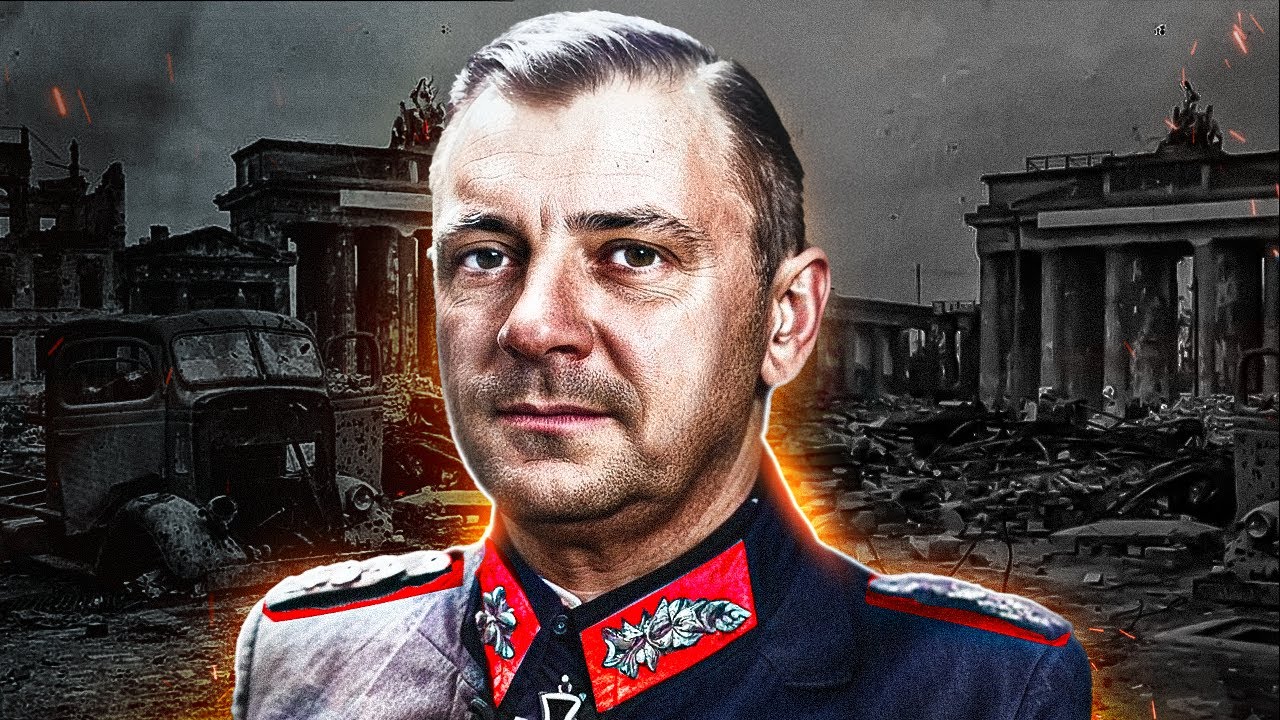
He delivered an ultimatum. Rommel could face a public trial for treason, where his family would be destroyed along with his reputation, or he could take a cyanide capsule, receive a state funeral, and have his family’s safety guaranteed. Rommel stared at the glass vial. He asked for a moment alone.
He said goodbye to his wife and son, then walked out with Burgdorf, swallowed the poison, and died within minutes. The public was told he had succumbed to injuries from an earlier air attack. This was Burgdorf’s true function. Not a battlefield strategist.
Not a hero. He was the man who made sure Hitler’s will was carried out, no matter who it destroyed. Born in 1895, Burgdorf joined the army during World War I and served as an infantry officer by 1915. He was dependable, rigidly obedient, and loyal to the institution.
After Germany’s defeat in 1918, he secured his place in the reduced army of the Weimar Republic and earned a promotion to captain in 1930, as the country sank into economic crisis and political extremism rose. When Hitler began rebuilding Germany’s armed forces in violation of the Treaty of Versailles, Burgdorf saw opportunity. Officers who embraced the new regime advanced. He aligned himself with that change.
In 1935, as a major, he became an instructor in tactics at Dresden’s military academy, shaping the thinking of Germany’s future officer corps. His lectures emphasized decisive leadership and unwavering resolve—language that echoed Nazi military doctrine while keeping the veneer of traditional army education. When war broke out in 1939, Burgdorf left the classroom for the battlefield. From May 1940 to April 1942, he commanded the 529th Infantry Regiment and impressed his superiors.
In May 1942, he joined the Army Personnel Office, first as deputy, then as chief. By 1944, he held two roles: head of military promotions and Hitler’s personal adjutant. These were positions of bureaucratic power, not military glory. But they placed him at the intersection of the German army and Nazi party control—exactly where Hitler needed someone he could trust as the war turned against him.
In October 1944, Burgdorf was appointed chief of the army personnel office and chief adjutant to Hitler himself. He was promoted to General of the Infantry by November, a rapid rise that gave him direct access to the Führer at a time when Hitler’s inner circle was shrinking. As Germany’s military situation deteriorated, Hitler demanded absolute loyalty. Burgdorf gave him exactly that.
He enforced extreme measures against anyone deemed disloyal. After the failed July 20 plot to assassinate Hitler, the regime launched a sweeping crackdown. Among the accused were senior military officers, aristocrats, and men within the army’s own leadership. Retribution was swift and merciless.
Burgdorf served on the Court of Honor, a military tribunal that wasn’t there to conduct trials. It existed to expel suspected conspirators from the army. Stripped of their ranks and protections under military law, those men were handed to the People’s Court, where Judge Roland Freisler presided over what were effectively show trials. Over 200 people, military and civilian, were put to death in the wake of the failed coup.
But some cases required a more delicate approach. Rommel was the most notable. His involvement in the conspiracy was uncertain, but he was too popular for a public trial. Hitler needed him removed quietly.
And once again, Burgdorf was the man for the task. Later, that same October, a comment from Burgdorf revealed how deeply he had internalized Nazi ideology. Shortly before the Battle of Berlin, Philip Freiherr von Boeselager, who had been active in anti-Nazi resistance throughout the war, overheard Burgdorf telling his fellow officers: “When the war is over, we will have to purge after the Jews, the Catholic officers in the army. ”
Germany stood on the brink of total defeat.
Yet Burgdorf was still imagining a future of more purges, more persecution. He felt safe saying this openly, expecting agreement or silence. His career trajectory reinforced this commitment. He rose through the ranks precisely as Germany’s military situation collapsed.
While capable commanders were dismissed for tactical retreats or disagreements with Hitler, Burgdorf advanced through demonstrations of loyalty, not military competence. For Burgdorf, admitting Germany’s defeat would have meant confronting the moral and practical bankruptcy of the cause to which he had devoted his entire identity. He chose not to look at reality. The bunker environment made that easier.
Daily situation conferences featured increasingly unrealistic assessments—phantom armies, imaginary victories, maps covered with arrows pointing toward divisions that no longer existed. Burgdorf stayed in that echo chamber, where fantasy replaced fact. By April 1945, Soviet forces encircled Berlin. Hitler and his closest associates faced a final decision: flee or stay.
Burgdorf chose to remain. He joined Hitler in the Führerbunker beneath the Reich Chancellery. That underground complex was a claustrophobic world of its own. Stale air heavy with cigarette smoke and sweat.
Low concrete ceilings that amplified the muffled sound of artillery overhead. No natural light, only harsh electric bulbs. Time distorted in that perpetual twilight. As military options disappeared, alcohol consumption increased.
Witnesses reported that Burgdorf drank heavily in those final days, perhaps to cope with the collapse of everything around him. Still, he maintained his position, participating in the twice-daily situation conferences where increasingly desperate reports arrived from every front. On April 29, Hitler prepared his final documents, finally recognizing that defeat was imminent. Burgdorf’s loyalty received its final recognition when he was chosen as an official witness to Hitler’s last will and testament.
He signed alongside Goebbels and Bormann, endorsing Hitler’s expulsion of Göring and Himmler for supposed treachery. Hitler died on April 30. Some officials in the bunker prepared to flee. Burgdorf stayed, even as escape became nearly impossible.
In a last desperate attempt at negotiation, General Hans Krebs ventured out to meet Soviet General Chukov, seeking terms for the new regime. The Soviets demanded unconditional surrender. Krebs didn’t have the authority to accept. He returned, and any remaining hope evaporated.
Facing this reality, Burgdorf made his final decision. In the early hours of May 2, 1945, he and General Krebs took their own lives with a gunshot to the head. Soviet forces captured the bunker later that day and found their bodies. Hitler and Goebbels had already chosen suicide over capture.
Burgdorf followed the same pattern. Rather than face interrogation and potential trial, he chose death on his own terms—a final act of loyalty to a cause that had died with its leader. Wilhelm Burgdorf died as he had lived: obedient, brutal, and blind to everything that stood in front of him.