Most Dutch schoolchildren couldn’t tell you which countries the Netherlands colonized. If they did their homework, they’d say Suriname or Indonesia. But what if I told you the Dutch once ruled a huge part of Brazil? For a brief period in the seventeenth century, a large stretch of present-day Brazil was under Dutch control, led by a man barely mentioned in Dutch history books—yet celebrated in Brazil to this day.
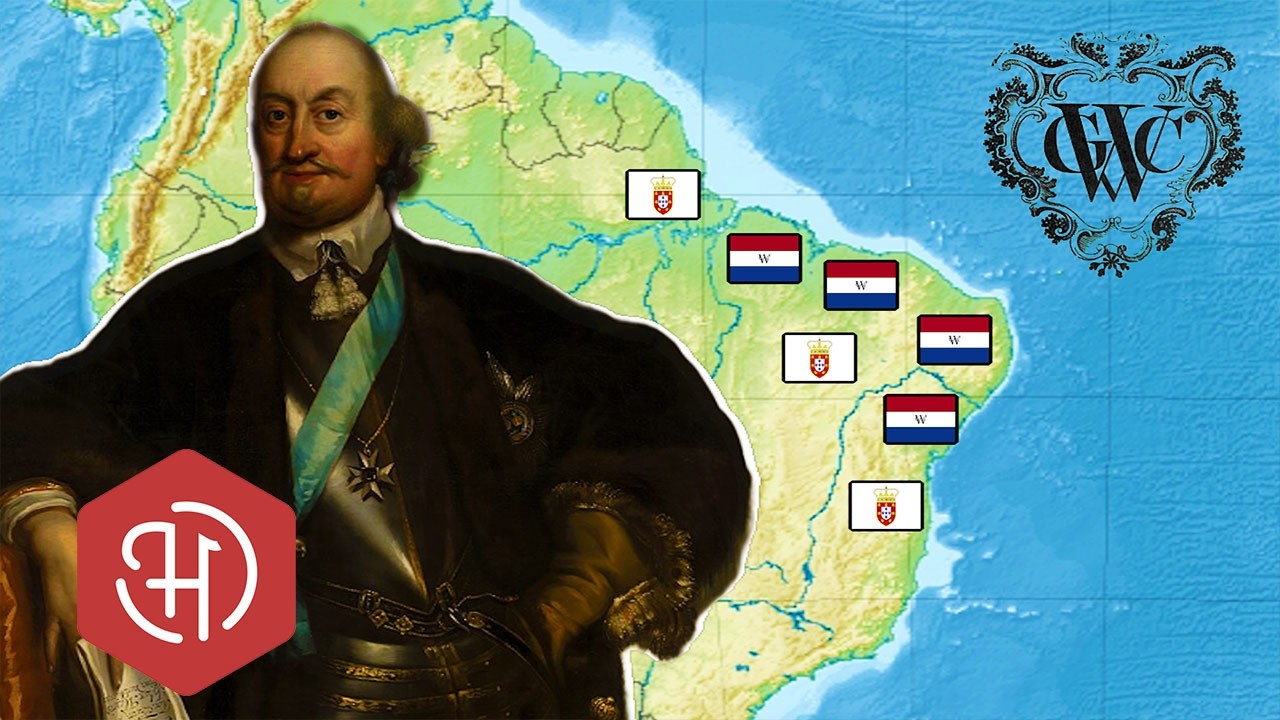
His name was Johan Maurits van Nassau-Siegen, and his story is one of conquest, tolerance, ambition, and a forgotten empire that collapsed almost as quickly as it rose. not only the sea. He called it Vrijburg, and around it he built a botanical garden, a zoo, even a museum–the first of its kind in the New World. In one room, everything was made of ivory, from the table to the candlesticks.
The city below, Mauritsstad, was planned like a European capital, with straight streets intersecting at right angles, a hospital, an orphanage, and a bridge crossing the strong river that the chief engineer had called impossible. Johan Maurits designed a wooden central section himself, and the bridge bore his name for centuries. He achieved military victories against the Portuguese, expanding Dutch territory. He brought order, tackled crime and corruption, introduced Amsterdam’s standard measurements, and rebuilt Recife into a fortified capital.
He revived the sugar economy by selling abandoned plantations back to the Portuguese, lending them the money to repay–because he understood that the colony could not succeed without them. The Dutch had little knowledge of sugar cultivation, anda few colonists came;the colony remained dependent on slavery. Johan Maurits strengthened the Dutch slave tradebysending a fleet to Fort Elmina in Africa. But his real legacy was tolerance.
He could not defeat the Portuguese outright, so he chose towin them over. He granted them equal rights, let them participate in city governance, and in 1640 he convened a meeting of Dutch and Portuguese representatives–later called the first parliament on the American continent. He granted religious freedom. Catholics could practice their faith openly; Jews built the first synagogue in South America.
I visited that synagogue in 2024–it still stands, now a museum. In contrast, the Dutch Republic at home denied Catholics the right to public worship. His scientists mapped tropical diseases, documented unknown plants and animals, and mapped the southern sky–groundbreaking work that would shape science for generations. But brutality also existed.
His soldiers committed atrocities during the conquest, particularly at Porto Calvo, where Dutch troops massacred Portuguese prisoners. In 1643, after his brother was killed, Johan Maurits carried out a brutal revenge campaign, razing towns and villages. His reputation for tolerance belied the violence that made his colony possible. The company reduced the garrison, and his successors lacked his diplomatic skill.
The Portuguese rebelled, and the Dutch lost control. In 1654, Brazil was lost for good. Mauritsstad–his proud city–was destroyed during the defense of Recife. By then, Johan Maurits was back in The Hague, living in the palace he had built before leaving, now called the Mauritshuis–today one of the Netherlands’ most famous museums.
He filled it with Brazilian objects, paintings of the colony, stuffed animals, and hosted parties featuring exotic drinks and Brazilian performers. His Brazilian legacy shaped European knowledge, but in the Netherlands he faded into obscurity. He never married, had no legitimate children, and died in 1679 in Germany, where he is buried. In Brazil, he remains a hero.
Schools, a bridge, a university carry his name; his bust stands by the governor’s house. In Germany, he is remembered for his parks and buildings. In the Netherlands, most people associate his name with his distant cousin, Prince Maurits of Orange, the leader of the Dutch Revolt. Johan Maurits, the man who once ruled a piece of Brazil, barely appears in Dutch schoolbooks–while Brazilian children learn his name.
The Dutch empire in Brazil lasted barely two decades, yet it left a mark that still divides memory: a hero in one country, a footnote in another. What remains is not just bricks or bridges, but a question: why do some empires remember their conquerors, while others forget them entirely?