The German tanks stopped fifteen kilometers from Dunkirk, and the Allied soldiers on the beach couldn’t believe it. They had been waiting for days under the roar of the Luftwaffe, watching the water, hoping for ships that might never come. Hundreds of thousands of British, French, and Belgian troops were trapped with their backs to the sea. The Germans had already crossed the last river in their path.
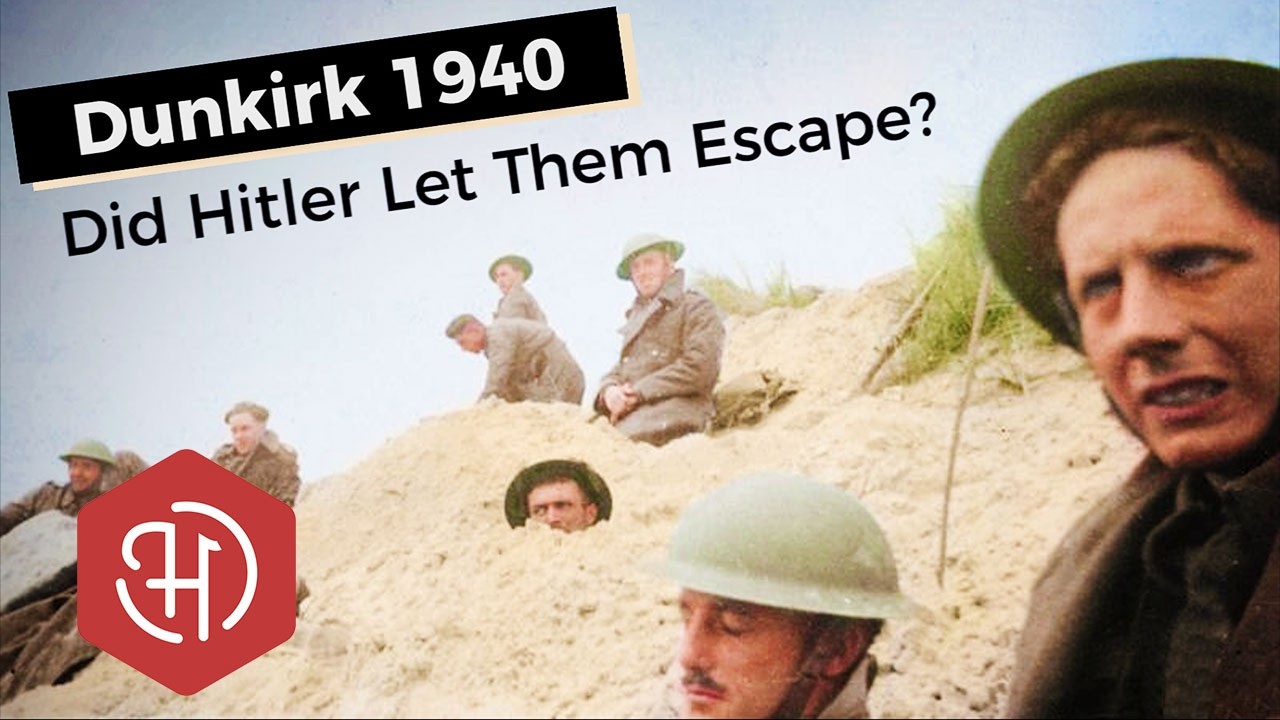
There were no Allied soldiers between the panzers and the port. It should have been a massacre. Instead, the tanks ground to a halt. For years, the story went that Hitler alone gave the order to stop, that he let the British escape.
But the truth is more complicated. The Führer didn’t create the halt order. By the time he got involved, the panzers had already been stopped by his own generals. The conflict inside the German command had been brewing for days.
The aggressive frontline tank commanders wanted to push forward without mercy and finish the job. They had broken through the Allied lines in days, something no one thought possible. They could see the coast. Victory was within reach.
But the more conservative army group commanders, especially Gerd von Rundstedt and Günther von Kluge, were terrified. They suffered from what the other generals called flank psychosis. They feared their tanks were stretched too thin and that a sudden Allied counterattack could cut them off and destroy everything they had won. The intelligence reports on the ground said no such counterattack existed.
The Allies were too disorganized to launch one. But the conservative commanders refused to believe it. The pause started a day before Hitler ever spoke. General Ewald von Kleist sent an urgent message about his tank losses, and Kluge suggested halting for twenty-four hours so the infantry could catch up.
Rundstedt eagerly agreed and issued the order for May 24th. The frontline generals were furious. Heinz Guderian argued that every hour of delay gave the Allies time to fortify the port and escape. He was right, but no one listened.
The Army High Command tried to fix the situation with a radical midnight move. They stripped Rundstedt of his armored divisions and reassigned the tanks to a more aggressive command structure. Then Hitler arrived the next morning. He was livid that the High Command had acted behind his back.
He shared Rundstedt’s cautious instincts, so he canceled the reassignment and confirmed the pause. He left the details and the duration up to Rundstedt, who had no intention of moving quickly. Hatred of the order spread through the German military. Chief of Staff Franz Halder was beside himself.
His entire invasion strategy had been thrown away. Other commanders called it absurd to keep superior armor idle while the Allied forces walked unhindered toward the coast. Some units openly disobeyed. The 7th SS Regiment crossed the canal anyway and seized the high ground outside Dunkirk.
Halder and Commander-in-Chief Walter von Brauchitsch tried everything to reverse the decision. Brauchitsch confronted Hitler directly, but the Führer unleashed a furious tirade about insubordination that shattered the general’s nerve. Halder then tried a subtler approach. He drafted a carefully worded directive that gave field commanders the green light to resume the advance.
Rundstedt refused to pass it down. He kept the tanks stationary through May 25th, stubbornly holding to his old-school fear of an exposed armored thrust. That stubbornness saved the British Expeditionary Force. While the German command bickered, the British and French built a defensive perimeter around Dunkirk and launched Operation Dynamo.
Hermann Göring assured Hitler that the Luftwaffe alone could destroy the trapped army from the air. He was wrong. The evacuation officially began on the night of May 26th. At first, the French wanted to hold Dunkirk as a fortress.
They did not agree to withdraw until May 28th. The Royal Navy mobilized everything it could, including hundreds of civilian pleasure boats that ferried soldiers from the shallow beaches out to the larger warships waiting in deeper water. The German Air Force struggled far more than Göring had promised. The Luftwaffe was still flying from bases in western Germany, which meant a long commute to the battlefield.
British pilots flew straight from England. The Royal Air Force failed to win complete control of the skies, but it managed to disrupt the German bombers badly enough. They shot down 240 enemy planes and lost 177 of their own. Hitler finally canceled the halt order on May 26th, but the damage was done.
Confusion and friction within the German command delayed their advance. The Germans did not even realize a mass evacuation was underway until May 30th. By the early hours of June 4th, the last British vessel slipped away from the harbor. The rescue was a triumph of heroism and logistics orchestrated by Admiral Ramsay and the Royal Navy.
With French help, they saved 338,000 soldiers, including 224,000 British troops. It was far beyond what anyone had expected. But the cost was real. Of the 760 British ships deployed, 228 were sunk, mostly smaller craft hit by air strikes.
The French lost 60 of their roughly 300 vessels. The operation ended in early June. France would surrender later that same month. On the beach where I am standing now, hundreds of thousands of men waited for a miracle.
They got one, not because the Germans were merciful, but because their commanders were scared of their own success.


