General Helmuth Weidling, the man who surrendered Berlin, signed the document in the very building behind me. But before that pen touched paper, the city had already become a nightmare of fire, rubble, and desperation. By April 29th, the Soviet noose had tightened around the government district. A desperate mix of SS troops, weary Wehrmacht soldiers, and elderly Volkssturm men held the last lines.
Inside the Führerbunker, a bizarre and grim ritual was unfolding. Hitler married Eva Braun just before midnight. Then, he dictated his final political testament, a document that dismantled his own position. Goebbels would become Reich Chancellor.
Admiral Dönitz would be Reich President. Martin Bormann would be party minister. Hitler wanted Goebbels to leave Berlin, but Goebbels refused, a strange act of loyalty to a dying cause. On the afternoon of April 30th, Hitler and his new wife took their own lives.
Their bodies were carried up to the Chancellery garden, placed in a shell crater, doused in petrol, and set alight. Goebbels and Bormann stood by, giving their final salutes to their Führer’s remains. Goebbels had already spoken of his own intentions, telling an SS officer, “I have also decided to bring my life to an end, but it is a very difficult moment. ”
The bunker then entered a chaotic twenty-four-hour period.
Bormann and others were determined to try and escape, while Goebbels, now the Reich Chancellor, seemed to entertain a delusion that he could negotiate a separate peace. On the night of April 30th, he dispatched General Krebs, Hitler’s last chief of staff, to the headquarters of Soviet General Vasily Chuikov. Krebs navigated the devastated southern streets of the city and arrived at Chuikov’s command post at 3:50 a. m.
on May 1st. He carried a message from Goebbels, which stated, “In accordance with the testament of the departed Führer, we empower General Krebs as follows. We inform the leader of the Soviet people that today at 15:30 minutes the Führer voluntarily quitted his life… I am empowered by Bormann to establish contact with the leader of the Soviet people. ”
Through Krebs, Goebbels requested that the Soviets allow the formation of a new German government to negotiate a more favorable peace.
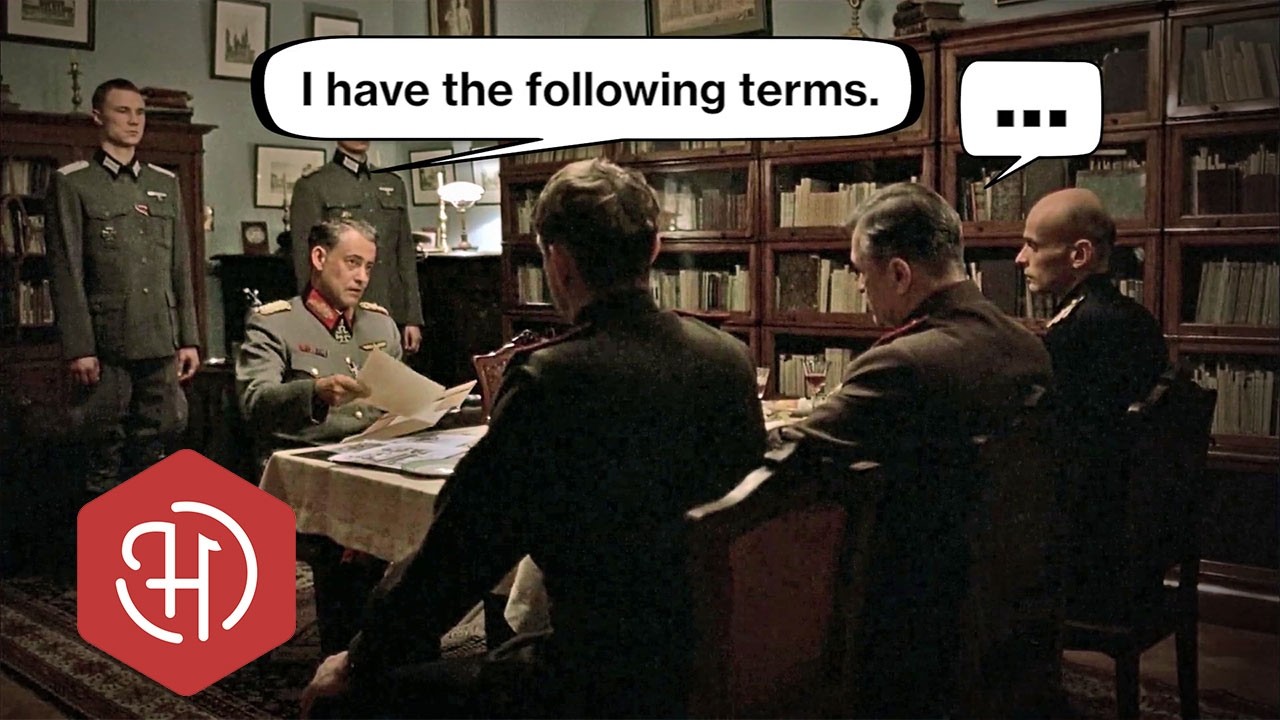
It was a futile, surreal request. The Red Army had no reason to concede anything to the remnants of the Nazi leadership. On his superior’s orders, Chuikov insisted on nothing less than unconditional surrender. Marshal Zhukov made it clear that if Goebbels and Bormann didn’t agree, he would blast Berlin into ruins.
At noon, Krebs returned to the bunker to consult with Goebbels. The outcome was already sealed. That afternoon, Goebbels sent a telegram to Dönitz informing him of Hitler’s death and his new position. The decision had been made.
Goebbels and his wife Magda had intended to take their lives the day before, but had faltered at the last moment. Magda was emotionally shattered. Yet, both were convinced that they and their six children should not live in the world that was coming. The bunker secretaries begged them to let the children live, even offering to take them away and care for them, but the Goebbels believed they were protecting their children by ending their lives.
Around 6:00 p. m. , SS doctor Ludwig Stumpfegger gave the children a sedative, followed by cyanide. Shortly after, Goebbels and Magda went up to the Chancellery garden and took cyanide capsules themselves.
Goebbels may have also shot himself. Their adjutant tried to burn their bodies, but there wasn’t enough petrol in the open air to do the job properly. At about 11:00 p. m.
, the remaining occupants of the bunker began their escape. They split into small groups and fled through the underground tunnels beneath the government district. A few made it, but most were captured by the advancing Soviet troops. Martin Bormann was killed near Lehrter Station in the early hours of May 2nd while attempting to escape along the railway tracks.
At 8:30 that same morning, General Helmuth Weidling formally surrendered the city of Berlin without conditions. Hitler was dead, and the Battle of Berlin was over. A Red Army soldier recorded what he saw: “Dreary, scruffy, often completely exhausted German soldiers and officers are laying their guns down everywhere in the streets and squares and giving themselves up in droves as prisoners to our troops. ”
Yet, the Third Reich did not collapse in a single day.
Several chaotic days followed. The first mass German surrender occurred on May 4th, on the Lüneburg Heath, bowing to British Field Marshal Montgomery. On May 7th, General Alfred Jodl signed the unconditional surrender of all German forces at Reims. On May 8th, the definitive surrender was signed in Berlin, delayed until after midnight on May 9th, Central European Time.
The rump Nazi government under Karl Dönitz limped on until May 23rd, when the Allies finally arrested its leaders. With that, the Third Reich was truly finished. The very last German soldiers didn’t surrender until September, on the Norwegian island of Svalbard, a few days after the Japanese surrender.
And as for Martin Bormann, his body was never conclusively found, sparking decades of theories that he escaped to South America.