
Here’s the article with images strategically placed throughout the content for enhanced visualization:
Here’s What Underwater Robots Are Finding at France’s Deepest Shipwreck, a 16th-Century Merchant Vessel Resting at the Bottom of the Mediterranean
Known as the “Camarat 4,” the ship was loaded with cannons, cauldrons, and hundreds of ceramics—which are still visible on the seafloor. Researchers are surveying the site and carefully recovering a small selection of artifacts.
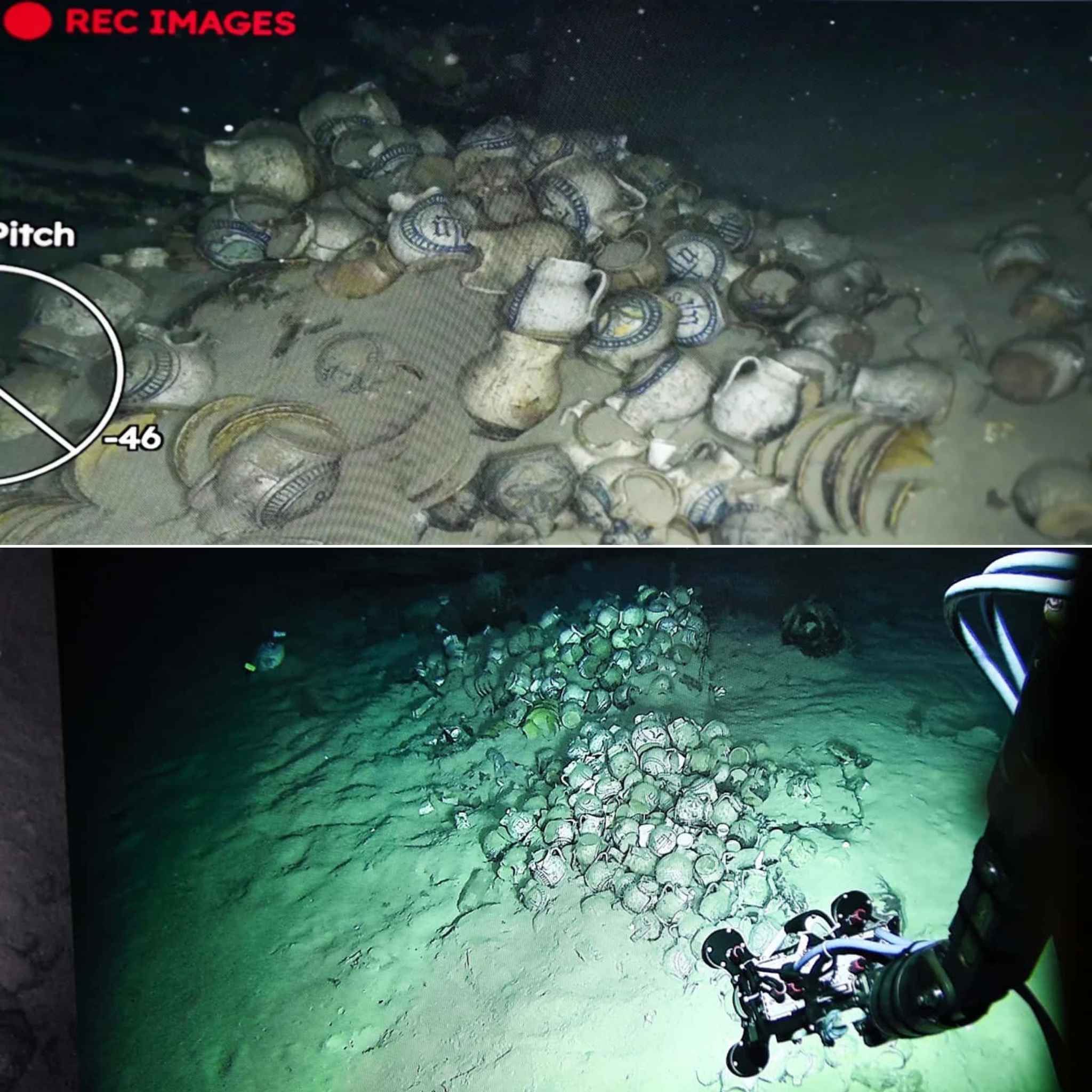
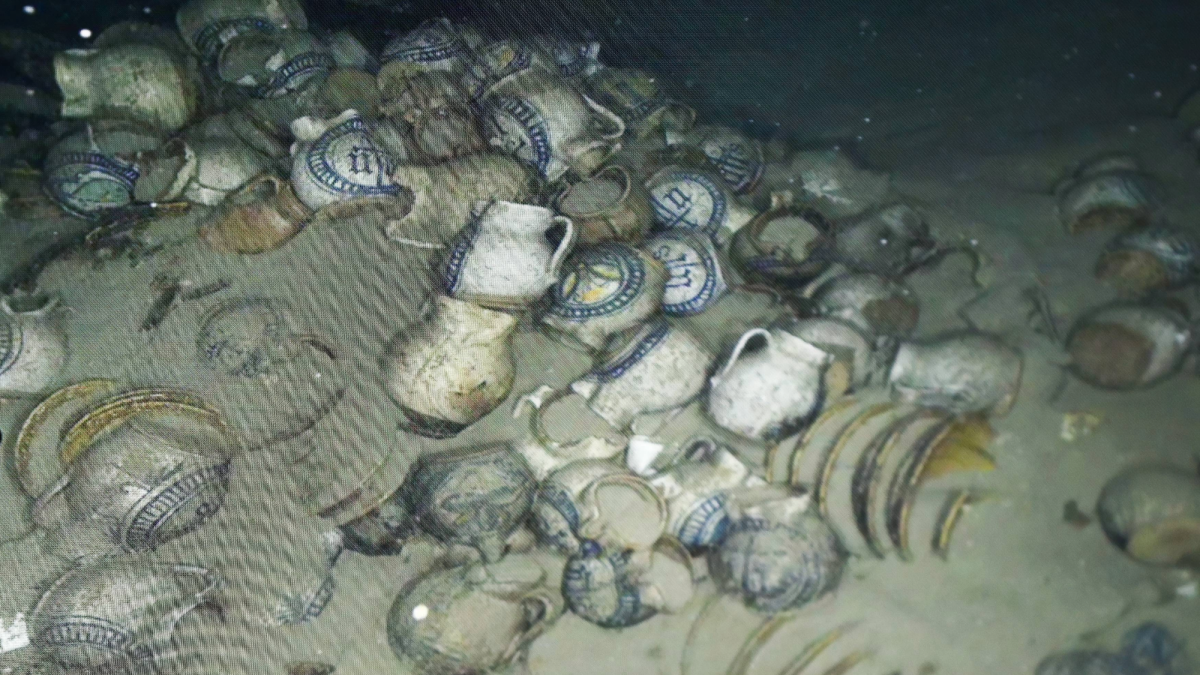
At least 400 years ago, a merchant ship was sailing across the Mediterranean Sea when it sank off the southeastern coast of France. Its cargo, hundreds of carefully crafted ceramic plates and jugs, tumbled into the watery darkness and settled onto the seafloor. The handmade treasures wouldn’t be seen again for centuries.
Then, in 2025, the French Navy stumbled across the ship while conducting an exploratory deep-sea operation. The vessel was resting more than 1.5 miles below the surface—making it the deepest known shipwreck in French territorial waters.
Researchers are now investigating the wreck, which they call the Camarat 4, after a nearby point on the French coastline. Over three days in April, they used an underwater robot to study the site and carefully recover a small selection of artifacts from the bottom of the Mediterranean.
“You have to be extremely precise so as not to damage the site, so as not to stir up sediment,” Sebastien, a navy officer who oversaw the first archaeological mission at the site, tells Agence France-Presse (AFP).
The remotely operated robot is the only one of its kind in France that’s capable of functioning at such great depths. The descent took an hour. In the hours that followed, its cameras captured eight pictures per second, producing 66,974 images that were then collated to generate a 3D model of the wreckage. The robots also installed topographic markers at the site, which will help them track any man-made or natural disturbances.
Clear water allowed the researchers to spot six cannons, two cauldrons, and an anchor. And then there were the ceramics, many adorned with intricate decorations, spread out along the seafloor. Some bore the letters “IHS,” the first three letters of Jesus Christ’s name in Greek.
From the surface, the researchers manipulated the robot’s pincers to carefully grasp artifacts and place them in buckets. This process can be quite nerve-racking. Marine Sadania, the lead archaeologist on the dig, tells AFP that generally, when ceramics are recovered from sea digs, many of them break.
During last month’s expeditions, completed after a site survey mapped each artifact’s location and orientation on the seafloor, the researchers successfully recovered three pitchers and a plate. One of these pitchers was a rounded vessel decorated with dark blue lines and yellow geometric designs. “It’s one of the deepest objects ever recovered from a wreck in France,” Sadania notes.
The wreck is located off the Ramatuelle coast in southeastern France, but its precise location will remain a secret, even though any curious amateur explorers likely wouldn’t be able to reach the ship because of its extreme depth.
“At this depth, the vessel has been preserved from all forms of degradation, most notably looting,” France’s Department of Underwater and Submarine Archaeological Research (DRASSM) said in a 2025 statement, per a translation from Artnet’s Richard Whiddington. “It represents a unique research opportunity.”
The cameras also revealed that modern-day trash—including beer cans, plastic bottles, fishing nets, and yogurt containers—had made its way to the wreckage. “After the awe of the discovery comes the sadness of finding such things,” Arnaud Schaumasse, the director of DRASSM, said last year, per Le Monde’s Sofia Fischer.
The researchers think the pottery on board the ship was made in Liguria, a region in northwest Italy, and the cannons would have been installed to protect the cargo. The ship’s destination is a mystery, but the researchers say it was likely heading west.
Sadania tells AFP that few historical records about 16th-century merchant ships survive. As such, the wreck site could provide valuable information about trade routes during that period.
/i.s3.glbimg.com/v1/AUTH_59edd422c0c84a879bd37670ae4f538a/internal_photos/bs/2025/m/4/ZfkUqRRySpL8WsOxRV4g/g1ma-crianca.jpg)

