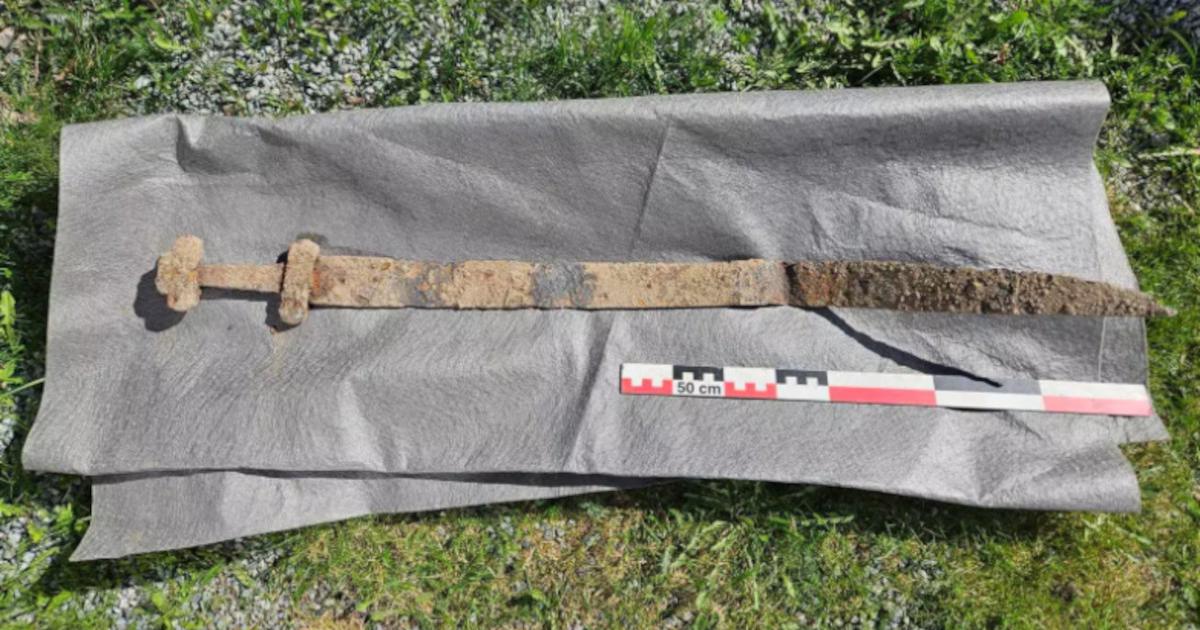
 What began as an ordinary school outing in rural Norway quickly turned into an extraordinary archaeological discovery after a six-year-old boy uncovered a remarkably preserved sword believed to date back around 1,300 years.
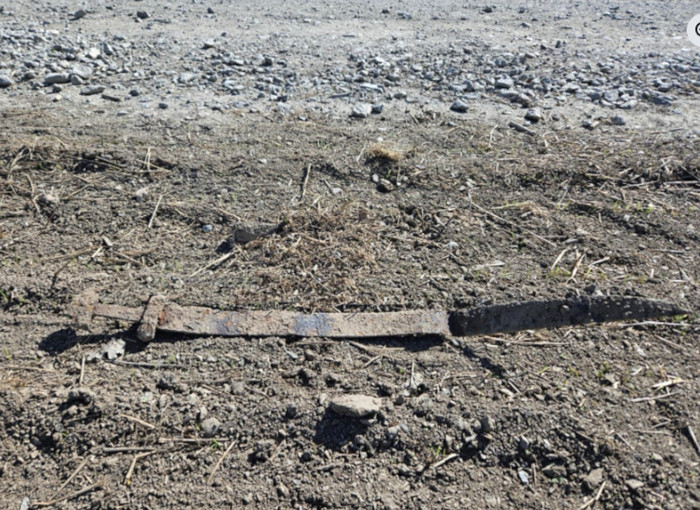
The discovery was made by Henrik Refsnes Mørtvedt, a first-grade student from Fredheim School, during a class field trip near Brandbu in the municipality of Gran. While walking through a recently plowed field with his classmates, Henrik noticed a strange object protruding from the soil. Curious, he pointed it out to his teachers — a moment that would soon capture the attention of archaeologists across Norway.
Experts later confirmed that the object was an ancient single-edged sword originating from the late Merovingian period or the very beginning of the Viking Age.
 A Rare Weapon From Scandinavia’s Early Warrior Era
According to cultural heritage authorities in Innlandet, the sword is estimated to be approximately 1,300 years old, placing it between roughly 550 and 800 AD — a transformative period in Scandinavian history before the height of the Viking expansions.
The weapon belongs to a category of single-edged blades often referred to as saxes or scramasaxes. Unlike later Viking swords sharpened on both sides, these blades were designed with only one cutting edge and were commonly used throughout northern Europe during the Merovingian era.
Archaeologists say the sword’s condition is especially remarkable considering its age and the fact that it had remained buried in farmland for centuries. The preservation may have been aided by soil conditions and the relatively undisturbed nature of the area.
A Historically Rich Region
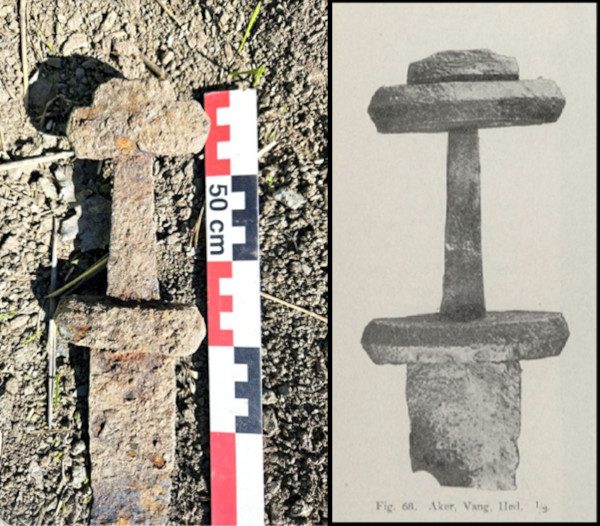
The location of the discovery adds further importance to the find. Gran lies within the historic district of Hadeland, a region with deep archaeological significance in Norwegian history. The name “Hadeland” is often translated as “Land of the Warriors,” reflecting its long association with Iron Age and early Viking culture.
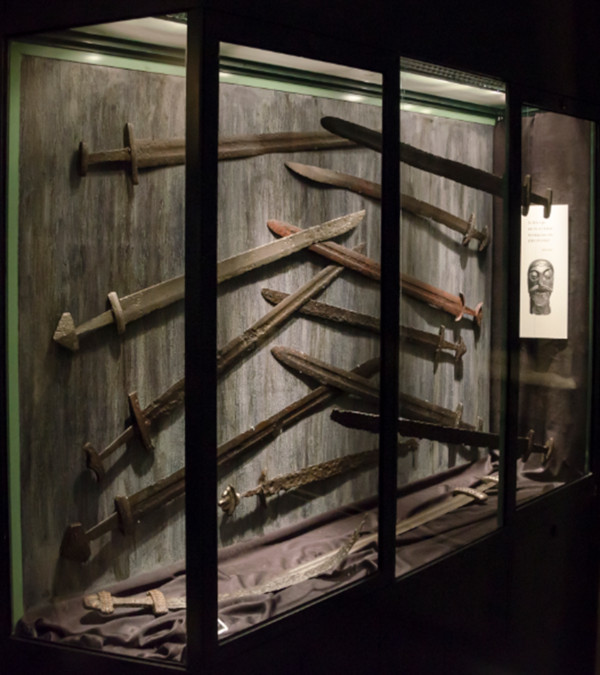
Over the years, archaeologists have uncovered numerous ancient artifacts throughout the region, including burial mounds, longhouses, tools, and ornate Viking-era weapons. The newly discovered sword adds another valuable piece to the growing picture of life in Scandinavia before the Viking Age fully emerged.
Researchers believe artifacts like this help historians better understand how warfare, craftsmanship, and social structures evolved during the centuries leading into the Viking period.
Teachers and Students Praised for Quick Thinking
Archaeologists have also praised the teachers and students of Fredheim School for how responsibly they handled the discovery.
Rather than attempting to clean or move the object extensively, the school immediately contacted local cultural heritage authorities and professional archaeologists. Officials later commended the children for recognizing that the object might be historically important.
In a public statement, cultural heritage authorities in Innlandet said they were “super proud” of the students for spotting the sword and doing exactly the right thing by notifying experts immediately.
The artifact has since been transferred to the Museum of Cultural History in Oslo, where specialists will conduct conservation work and further analysis.
A Discovery Henrik Will Never Forget
For young Henrik, the school trip became something far more memorable than anyone expected. What looked like a rusty piece of metal in a field turned out to be a rare link to Norway’s ancient past — one that had remained hidden underground for more than a millennium.
Archaeologists say discoveries like this serve as a reminder that history is still waiting to be uncovered in unexpected places, sometimes by the most unlikely explorers of all.