Malaria and the Making of Humanity: How a Deadly Disease Shaped Human Migration Across Africa for 70,000 Years
Long before cities rose from river valleys, before agriculture transformed landscapes, and before the first kingdoms emerged across Africa, an invisible force may already have been shaping the destiny of humanity.
For decades, archaeologists and anthropologists believed that prehistoric human migrations were driven primarily by climate change, shifting resources, and technological innovation. When populations moved across Africa, researchers often pointed to droughts, expanding grasslands, shrinking forests, or the pursuit of game animals as the main causes.
But new research suggests another powerful influence was quietly at work.
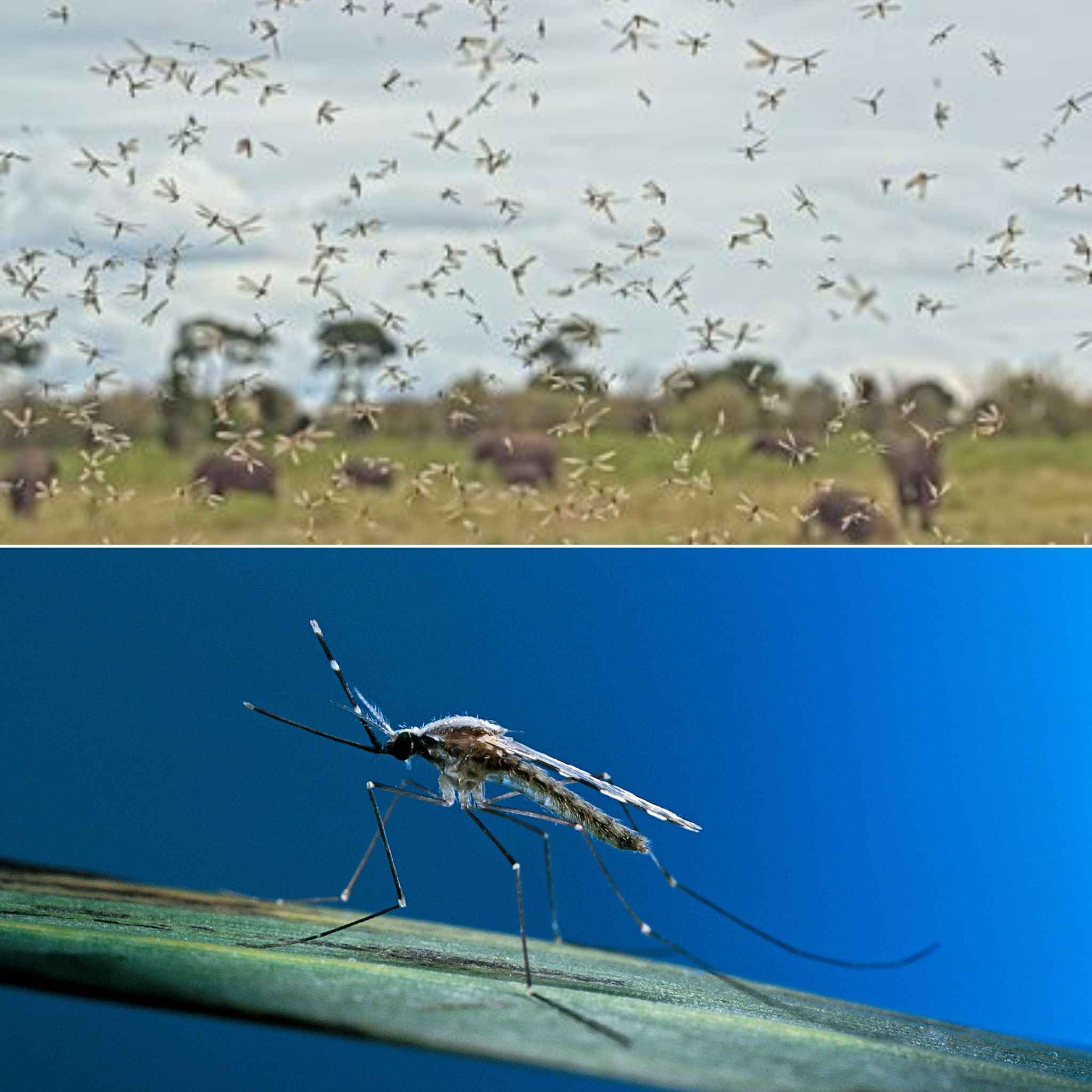
A disease that still kills hundreds of thousands of people every year may have been directing the movements of our ancestors tens of thousands of years before the invention of farming.
According to a groundbreaking study published in Science Advances, prehistoric humans appear to have deliberately avoided regions where malaria-carrying mosquitoes thrived. The findings suggest that the deadly disease influenced where people settled, how populations were distributed, and perhaps even how human genetic diversity evolved across Africa.
The implications are profound.
Rather than being a relatively recent problem associated with agriculture and dense settlements, malaria may have been shaping human history for at least 70,000 years.
As researchers continue exploring the relationship between disease and human evolution, a new picture is emerging—one in which pathogens are not merely background actors but powerful forces that helped determine where humanity could survive and flourish.
An Ancient Enemy
Today, malaria remains one of the world’s most dangerous infectious diseases.
According to the World Health Organization, hundreds of millions of infections occur every year, with the overwhelming majority concentrated in sub-Saharan Africa. Young children and pregnant women are particularly vulnerable, and despite decades of medical advances, malaria continues to claim hundreds of thousands of lives annually.
The disease is caused by parasites belonging to the genus Plasmodium, particularly Plasmodium falciparum, the deadliest form affecting humans.
Transmission occurs through the bite of infected female Anopheles mosquitoes.
Once inside the human body, the parasite attacks red blood cells, causing fever, chills, anemia, organ damage, and, in severe cases, death.
For modern populations, malaria is a familiar threat.
But how long has it influenced humanity?
Until recently, many scholars assumed malaria only became a major force after the rise of agriculture. Permanent settlements, irrigation systems, and growing population densities created ideal breeding grounds for mosquitoes, allowing the disease to spread more effectively.
The new study challenges that assumption.
Researchers now argue that malaria was already influencing human behavior thousands of years before farming appeared.
Reconstructing a Forgotten Landscape
To understand malaria’s impact on prehistoric populations, researchers faced a difficult challenge.
No written records exist from Africa’s deep past.
Ancient DNA evidence from many regions and time periods remains extremely limited.
How, then, can scientists determine whether malaria influenced people who lived tens of thousands of years ago?
The answer lies in combining multiple scientific disciplines.
Researchers gathered data from previous studies that reconstructed environmental and climatic conditions across sub-Saharan Africa over the past 74,000 years.
These reconstructions allowed them to estimate rainfall patterns, temperatures, vegetation, and ecological conditions at intervals ranging from 1,000 to 2,000 years.
Using this information, the team created what they called a “malaria stability index.”
This index estimated how suitable different regions would have been for Anopheles mosquitoes and malaria transmission.
Areas with warm temperatures, sufficient rainfall, and favorable mosquito habitats received higher scores, indicating a greater likelihood of persistent malaria.
Researchers then compared these malaria-risk maps with archaeological evidence showing where prehistoric humans lived during different periods.
The results revealed a striking pattern.
Again and again, human populations appeared to avoid regions where malaria risk was highest.
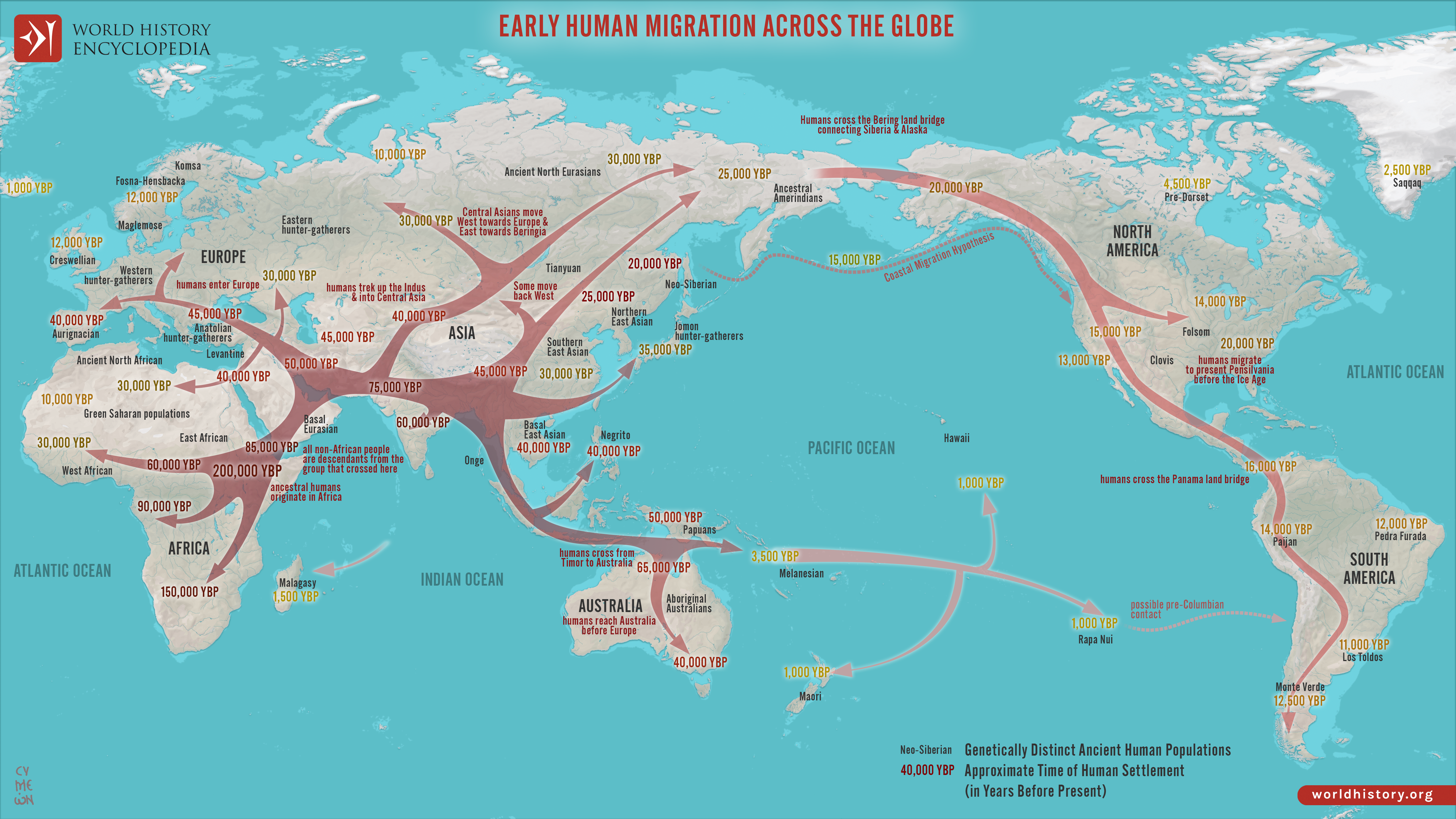
Caption: New climate-based models suggest that ancient malaria zones influenced where early humans settled across sub-Saharan Africa.
Following the Disease
The study found evidence that prehistoric hunter-gatherers consistently avoided areas where malaria was likely endemic.
This pattern extended far back into the Late Pleistocene, long before agriculture emerged in Africa.
In some cases, populations appeared to cluster around ecological boundaries that separated lower-risk and higher-risk malaria zones.
The researchers suggest that disease pressure may have influenced settlement decisions just as strongly as food availability or climate conditions.
Eleanor Scerri, an archaeological scientist at the Max Planck Institute of Geoanthropology and one of the study’s authors, believes the findings require a major reassessment of human prehistory.
“For a long time, it was thought that infectious diseases only really became a problem with the advent of farming,” Scerri explained.
The new evidence suggests otherwise.
Rather than emerging as a consequence of civilization, malaria may have been shaping human behavior throughout much of our species’ existence.
The disease appears to have been so influential that it helped structure populations across Africa thousands of years before the first crops were planted.
Why Malaria Matters
The impact of malaria extends far beyond illness.
A disease capable of killing large numbers of people can influence virtually every aspect of society.
Populations living in high-risk regions may experience slower growth.
Migration routes may shift.
Communities may become fragmented.
Social networks may reorganize.
Genetic adaptations may emerge.
Modern examples demonstrate these effects clearly.
In regions where malaria is common, natural selection has favored genetic traits that provide partial resistance to infection.
The most famous example is the sickle-cell trait.
Individuals carrying one copy of the sickle-cell mutation gain protection against severe malaria, increasing their chances of survival.
This genetic adaptation remains common in parts of Africa today precisely because malaria has exerted such strong evolutionary pressure.
The new study suggests similar processes may have been occurring for tens of thousands of years.
Malaria was not merely a health problem.
It was an evolutionary force.
Central West Africa: A Persistent Hotspot
One of the most important findings concerns Central West Africa.
The researchers identified this region as one of the most stable malaria hotspots throughout much of the last 74,000 years.
Remarkably, it remains a major malaria center today.
This long-term persistence may help explain some puzzling archaeological patterns.
Compared with other parts of Africa, archaeological evidence from Central West Africa often suggests highly fragmented populations and limited long-distance interaction.
While multiple factors undoubtedly contributed to these patterns, malaria may have played a significant role.
High disease burdens could have restricted movement, reduced population growth, and discouraged settlement in certain areas.
According to study co-author Andrea Manica of the University of Cambridge, the findings align well with existing archaeological observations.
Areas heavily affected by malaria appear to have supported smaller, more isolated populations.
These communities may have faced unique challenges that shaped their cultural and demographic development.
Rethinking Human Migration
For decades, climate has dominated discussions of prehistoric migration.
Researchers have carefully documented how changing rainfall patterns, shifting deserts, and fluctuating ecosystems influenced human movement.
Climate remains enormously important.
However, the new study suggests that climate may not tell the entire story.
Disease often follows climate.
Warm temperatures and abundant water create ideal mosquito habitats.
As environmental conditions changed, malaria risk would have shifted as well.
In many cases, populations may have been responding not only to changing landscapes but also to changing disease threats.
This adds a new layer of complexity to our understanding of human migration.
People were not simply searching for food and water.
They may also have been trying to avoid deadly pathogens.
The Missing Piece in Human Evolution
One reason disease has received relatively little attention in prehistoric research is the lack of direct evidence.
Unlike bones, tools, or pottery, pathogens rarely leave obvious traces in the archaeological record.
Ancient DNA studies have begun revealing evidence of diseases such as plague, tuberculosis, and hepatitis in more recent periods.
But tracing diseases back tens of thousands of years remains extremely difficult.
As a result, researchers often focused on environmental explanations for population change.
Scerri argues that this approach may have overlooked a critical factor.
The new methodology demonstrates that disease can be studied indirectly through ecological modeling.
By identifying habitats suitable for disease vectors such as mosquitoes, scientists can estimate historical disease risks even when direct biological evidence is unavailable.
This represents a major breakthrough.
Caption: Female Anopheles mosquitoes have transmitted malaria parasites for tens of thousands of years, potentially influencing human settlement patterns across Africa.
Disease as a Driver of Evolution
The implications extend beyond archaeology.
If malaria influenced where people lived, it also influenced whom they met, married, and reproduced with.
Over thousands of generations, this would affect genetic diversity.
Population isolation can lead to genetic differentiation.
Migration barriers can shape evolutionary trajectories.
Natural selection can favor disease-resistant traits.
Together, these processes contribute to the formation of distinct human populations.
In this sense, malaria may have helped shape not only where humans lived but also who humans became.
The disease could have influenced the development of genetic adaptations that remain visible today.
It may even have affected cultural traditions, trade networks, and patterns of technological exchange.
The story of human evolution is therefore not just a story of climate and environment.
It is also a story of pathogens.
Before Agriculture Changed Everything
The study does not suggest agriculture was unimportant.
In fact, researchers believe farming likely intensified malaria’s impact dramatically.
Permanent settlements create ideal breeding conditions for mosquitoes.
Stored water, irrigation systems, and increased population density allow diseases to spread more efficiently.
As communities became larger and more sedentary, malaria transmission likely increased.
The disease may have shifted from a persistent background threat to a major public health crisis.
This transition probably explains why malaria remains so devastating in many agricultural regions today.
Yet the key finding is that malaria did not begin with farming.
The disease was already influencing human populations long before crops and villages appeared.
Agriculture merely amplified an ancient problem.
A New Frontier in Archaeology
The researchers believe their methods can be applied to many other diseases.
Mosquitoes are only one type of disease vector.
Ticks, fleas, flies, and other organisms have transmitted pathogens throughout human history.
By combining environmental models with archaeological evidence, scientists may be able to reconstruct the historical influence of numerous diseases.
This could open an entirely new field of inquiry.
Instead of viewing disease as a consequence of social development, researchers may begin treating it as a major driver of human history.
Questions that once seemed impossible to answer may become accessible.
How did diseases influence migration?
Did pathogens contribute to cultural boundaries?
Could epidemics explain population collapses previously attributed solely to climate?
The possibilities are enormous.
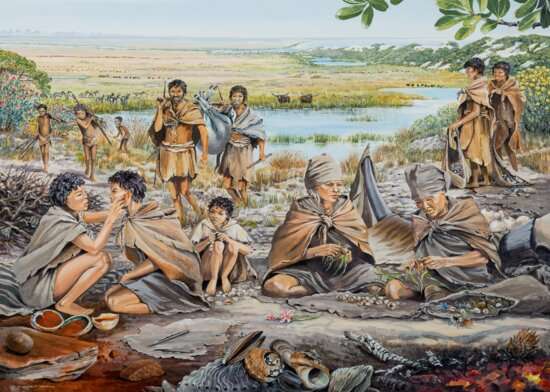
Caption: Early human groups may have selected migration routes and settlement areas partly to avoid regions heavily affected by malaria.
Lessons for the Present
The study’s findings also carry modern relevance.
Today, climate change is altering disease distributions worldwide.
As temperatures rise and rainfall patterns shift, mosquito habitats are expanding into new regions.
Public health officials already monitor how climate influences diseases such as malaria, dengue fever, and Zika virus.
The new research demonstrates that climate-driven disease dynamics have influenced human societies for tens of thousands of years.
Understanding these long-term interactions may help scientists predict future challenges.
Humanity has always adapted to changing disease environments.
The difference today is that environmental change is occurring at unprecedented speed.
Humanity’s Invisible Companion
For much of history, humans viewed diseases as mysterious forces beyond comprehension.
Only in recent centuries have scientists uncovered the biological mechanisms behind infections.
Yet pathogens have accompanied our species from the beginning.
They traveled with us as we spread across continents.
They influenced where we settled.
They shaped our genes.
They altered our societies.
The new study suggests malaria belongs among the most important of these ancient companions.
Far from being a recent scourge, it may have quietly directed the course of human history for more than 70,000 years.
Its influence can still be seen today—in genetic adaptations, population distributions, and persistent disease hotspots across Africa.
Rewriting the Story of Human Origins
The traditional story of human migration emphasizes climate, technology, and resource availability.
Those factors remain fundamental.
But the emerging evidence reveals a more complicated picture.
Ancient humans did not move through empty landscapes.
They navigated environments filled with predators, competitors, and pathogens.
Disease was part of the equation.
Malaria, in particular, appears to have acted as a powerful ecological barrier that influenced settlement patterns across vast regions of Africa.
The discovery forces researchers to rethink long-held assumptions about humanity’s past.
As Eleanor Scerri observed, diseases cannot be ignored in deep prehistory.
They were not minor influences operating at the margins of human experience.
They were transformative forces.
And among them, malaria may have been one of the most influential of all.
For tens of thousands of years, long before the first cities, kingdoms, or empires appeared, humanity’s journey across Africa may have been guided not only by rivers, forests, and grasslands—but also by an invisible enemy carried on the wings of mosquitoes.