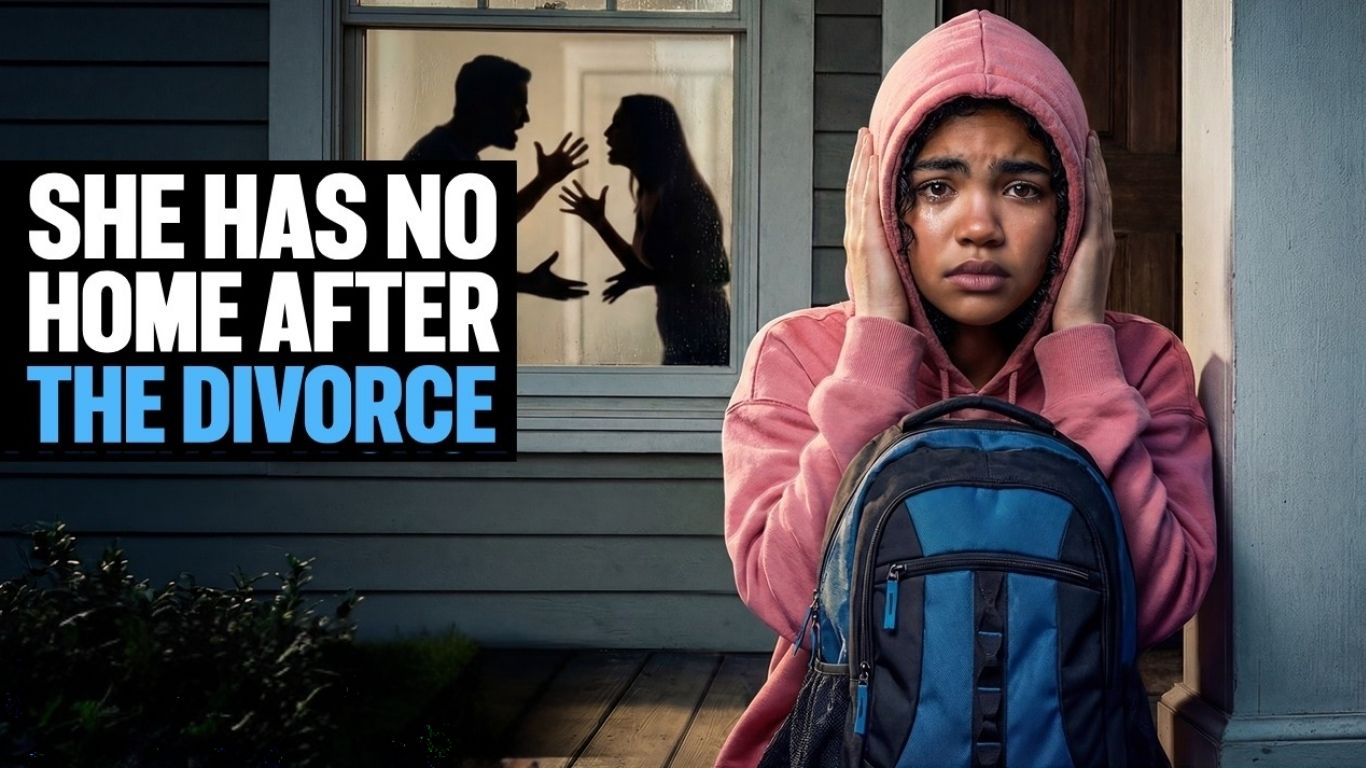
Sarah Realized She Had No Home the Day Both Her Parents Forgot Her Birthday.
Not because they were cruel.
Not because they didn’t love her.
Because they were too busy loving everything else.
Her mother loved work.
Her father loved art.
And somewhere between deadlines and exhibitions, they stopped noticing their daughter was disappearing.
By the time they finally looked up, Sarah was already gone.
And a man twice her age had convinced her that exploitation was the same thing as opportunity.
Sarah Mitchell was fifteen when her parents divorced.
The separation wasn’t dramatic.
No screaming matches.
No police.
No courtroom spectacle.
Just two exhausted adults deciding they couldn’t make each other happy anymore.
Her mother, Jennifer, became a senior executive at a growing tech company.
Her days started before sunrise and often ended after midnight.
Her father, Daniel, threw himself into his art career.
After years of struggling, galleries were finally paying attention.
For the first time, his paintings were selling.
Both parents promised Sarah the same thing.
“This won’t change how much we love you.”
They meant it.
The problem was that love and attention are not the same thing.
And Sarah was about to learn the difference.
At first, the arrangement seemed manageable.
One week with Mom.
One week with Dad.
Alternating holidays.
Alternating weekends.
Alternating lives.
But as months passed, something strange happened.
Neither parent seemed fully present.
At her mother’s apartment, Jennifer was always on conference calls.
Even during dinner.
Even during movies.
Even during conversations.
“Just one second, sweetheart.”
One second often lasted an hour.
At her father’s loft, Daniel was physically there but mentally somewhere else.
Every blank canvas felt more urgent than anything else.
Every exhibition mattered.
Every new project demanded attention.
Sarah learned not to interrupt.
Because she always seemed to be interrupting something important.
The loneliness arrived gradually.
A missed school event here.
A forgotten parent meeting there.
An unanswered text.
A canceled weekend.
Small disappointments that accumulated into something heavier.
Neither parent noticed.
Because neither parent was paying enough attention to see the pattern.
Sarah stopped mentioning things.
Stopped asking for rides.
Stopped sharing stories about school.
Stopped expecting anyone to listen.
Life became easier that way.
Quieter.
Smaller.
The breaking point came on her sixteenth birthday.
Sarah wasn’t asking for much.
Just dinner.
Together.
One evening.
One meal.
One moment where she felt like the most important thing in someone’s life.
Instead, Jennifer called from an airport.
A business emergency.
She promised they’d celebrate later.
Daniel texted from another city.
A gallery opportunity had come up unexpectedly.
He promised they’d celebrate next weekend.
Neither realized the other had canceled.
Neither realized Sarah spent her birthday alone.
Neither realized she sat in a dark apartment eating a grocery-store cupcake by herself.
Neither realized she cried herself to sleep.
Because nobody called again.
Three weeks later, Sarah ran away.
Not dramatically.
Not with a note.
Not with a plan.
She simply packed a backpack and left.
At first she thought someone would notice immediately.
A phone call.
A text.
A search.
Something.
But hours passed.
Then a day.
Then another.
And nothing happened.
The silence hurt more than anything.
Because it seemed to confirm her worst fear.
Nobody was looking.
The first few days were terrifying.
Sarah slept wherever she could.
Bus stations.
Shelters.
Public parks.
Fast-food restaurants.
Anywhere warm.
Anywhere safe.
Or what she thought was safe.
Then she met Victor.
Victor owned a nightclub downtown.
He looked successful.
Expensive clothes.
Nice car.
Perfect smile.
He introduced himself as someone who helped talented young performers.
Sarah mentioned she liked singing.
Victor immediately showed interest.
The attention felt incredible.
Someone was finally listening.
Someone was finally noticing her.
Someone was finally making her feel important.
That should have been a warning.
But loneliness often disguises danger.
Victor offered her a place to stay.
A room above the club.
Food.
Money.
Opportunities.
In return, she would sing.
Nothing complicated.
Nothing suspicious.
At least not initially.
Sarah agreed.
Because she was sixteen.
Alone.
Scared.
And desperate to belong somewhere.
The club performances began innocently enough.
Early evening crowds.
Small audiences.
Simple songs.
People applauded.
Complimented her voice.
For the first time in months, Sarah felt valued.
Victor constantly praised her.
“You have star potential.”
“You could be famous.”
“You’re lucky I found you.”
The words felt comforting.
Until they didn’t.
Gradually, the conditions changed.
Longer hours.
Later performances.
More demanding schedules.
Less pay.
More pressure.
Victor controlled everything.
Where she stayed.
When she performed.
Who she talked to.
When she rested.
Whenever Sarah complained, he reminded her of everything he’d done for her.
The room.
The food.
The opportunity.
The guilt worked.
For a while.
Then the threats started.
Subtle at first.
Then obvious.
“You don’t have anywhere else to go.”
“You need me.”
“No one is looking for you.”
That last sentence hurt the most.
Because part of her believed it.
Back home, something unexpected finally happened.
Jennifer tried calling.
No answer.
She assumed Sarah was with Daniel.
Daniel assumed Sarah was with Jennifer.
The misunderstanding lasted nearly two days.
Then panic arrived.
Fast.
The realization hit both parents simultaneously.
Nobody knew where Sarah was.
Nobody had seen her.
Nobody had spoken to her.
The silence suddenly became terrifying.
The police became involved.
Friends were contacted.
Schools were contacted.
Social media exploded.
Search efforts expanded.
And for the first time in years, Jennifer and Daniel sat in the same room focused on exactly one thing.
Their daughter.
Not work.
Not art.
Not themselves.
Sarah.
The guilt was overwhelming.
Every missed call.
Every canceled plan.
Every forgotten moment replayed endlessly.
The signs had been there.
They just hadn’t looked.
Three weeks into the search, a breakthrough came.
One of Sarah’s classmates recognized her in a social media clip filmed inside a nightclub.
The video was blurry.
Brief.
But unmistakable.
Police immediately investigated.
What they discovered was far worse than expected.
Several minors had been performing illegally.
Labor violations.
Housing violations.
Exploitation.
Victor’s operation was already under investigation for unrelated complaints.
Sarah had become part of something much darker than she understood.
The rescue happened on a Thursday night.
Police entered the club.
Inspectors followed.
Several teenagers were removed from the property.
Including Sarah.
When she walked outside, flashing lights illuminated the street.
Crowds gathered behind barriers.
Officers moved everywhere.
Then she saw them.
Her parents.
Standing together.
For the first time in years.
Jennifer looked exhausted.
Daniel looked broken.
Both looked terrified.
And both immediately started crying.
Sarah froze.
Part of her wanted to run.
Part of her wanted to scream.
Part of her wanted to collapse.
Instead she stood there.
Motionless.
Jennifer reached her first.
Then stopped.
Almost afraid.
As if she wasn’t sure she deserved a hug.
Daniel looked the same.
The silence stretched.
Then Sarah asked a question.
A simple one.
But devastating.
“Did you even know I was gone?”
The words landed like a punch.
Neither parent could answer immediately.
Because the truthful answer was painful.
Not right away.
Not soon enough.
Not the way they should have.
Jennifer covered her mouth.
Daniel lowered his head.
The guilt was visible on both faces.
Then something changed.
Not through speeches.
Not through promises.
Through honesty.
Jennifer stepped forward.
Tears streaming down her face.
“We failed you.”
No excuses.
No explanations.
No blame.
Just truth.
Daniel nodded.
“We thought providing for you was enough.”
His voice cracked.
“It wasn’t.”
Sarah stared at them.
The crowd disappeared.
The noise disappeared.
Everything disappeared except those words.
Because for the first time, they weren’t defending themselves.
They were finally listening.
The road back wasn’t easy.
Trust never returns overnight.
Neither does family.
But Jennifer started leaving work on time.
Not occasionally.
Consistently.
Daniel reorganized his entire schedule.
Exhibitions became secondary.
Parenting became first.
Both attended counseling.
Family therapy.
School meetings.
Everything.
Not because they were trying to erase the past.
Because they were finally showing up in the present.
Months later, Sarah performed again.
Not in a nightclub.
Not for money.
Not for someone exploiting her talent.
She stood onstage at a community arts showcase.
Her parents sat in the front row.
Together.
Not as husband and wife.
Those days were over.
But as parents.
Fully present.
Fully attentive.
Fully there.
When the performance ended, the audience applauded.
But Sarah wasn’t looking at them.
She was looking at the two people in the front row.
The two people who finally understood something they should have known all along.
Children don’t measure love by what you say.
They measure it by whether you show up.
Because no promotion is worth missing your child’s life.
No dream is worth losing your family.
And no amount of love matters if the people who need it most never get to feel it.