The words came out over pot roast.
Not during an argument. Not after slammed doors. Not in the middle of some dramatic family crisis where people could later claim emotions had run too hot and language had gotten away from them.
No.
My father said it while passing the green beans.
“Your sister’s family comes first, Mia.”
My mother did not correct him.
She sat at the other end of the dining table in her cream cardigan, folding her napkin into smaller and smaller squares beside her plate. My sister, Lauren, looked down at her phone, but the corner of her mouth moved. Her husband, Eric, kept chewing like nothing unusual had happened. Their two children were in the living room watching cartoons too loudly, the laugh track bleeding through the wall every few seconds.
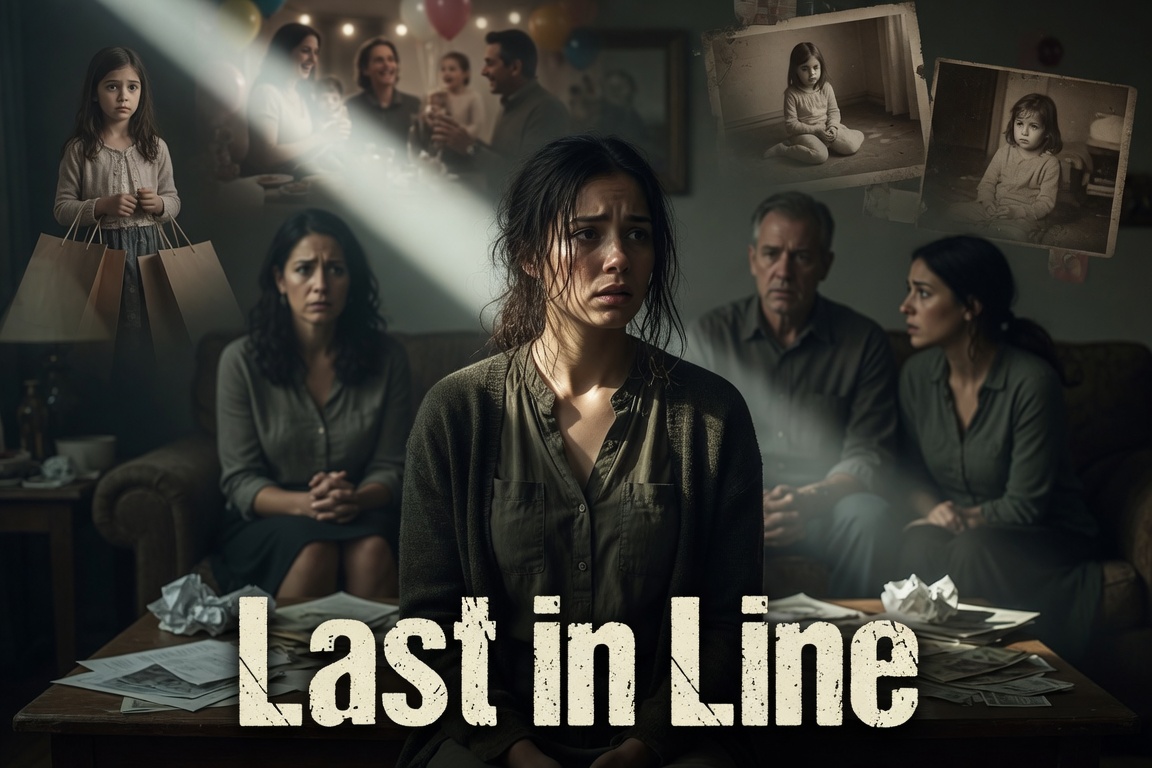
The kitchen smelled of rosemary, butter, roasted carrots, and the rain that had followed everyone inside. Water streaked the windows behind my father’s chair. The old brass chandelier hummed faintly above us, casting warm light over a room where I had spent thirty-nine years learning exactly how little warmth meant when it came without protection.
I looked at my father.
“What did you say?”
He sighed the way men sigh when they believe repeating cruelty is an inconvenience.
“I said Lauren’s family comes first.”
My fork rested untouched beside the mashed potatoes.
“And I’m what?”
My mother closed her eyes.
“Mia, don’t make it sound uglier than it is.”
I turned to her.
“Then make it prettier.”
She opened her eyes, and for one second I saw the plea there.
Not for me.
For herself.
For the dinner.
For the house.
For the version of family she still wanted framed above the fireplace.
Lauren finally put down her phone.
“Mia, come on. You know what Dad means.”
I leaned back in my chair.
“No. I want him to say it clearly.”
My father’s jaw tightened. His name was Richard Calloway, retired insurance broker, church treasurer, lawn perfectionist, and a man who believed volume was unnecessary when disappointment could do the work. His gray hair was neatly combed. His shirt sleeves were rolled up once, precisely. He looked calm.
That was what made it worse.
He wiped his mouth with a napkin.
“Lauren has children. A mortgage. Real responsibilities. You’re single. You have flexibility. We all have to prioritize.”
There it was.
The old math.
My life was smaller because no one depended on me.
Except they did.
All of them did.
They depended on me to answer late-night calls. To cover bills before they became emergencies. To drive Mom to appointments when Dad “couldn’t miss golf.” To lend Lauren money she called temporary and forgot permanently. To be strong enough that nobody had to feel guilty for leaning.
“And where do I come in?” I asked.
The rain tapped harder against the glass.
My mother whispered, “Mia.”
But my father answered.
His eyes met mine across the table.
“You’re always last. That’s just how it has to be.”
The cartoons in the living room erupted in canned laughter.
Lauren looked at me then, really looked, waiting for the familiar sequence.
My face would fall.
Mom would get teary.
Dad would soften just enough to say, “You know we love you.”
Lauren would make a joke about me being dramatic.
I would swallow the hurt, help clear the table, and probably leave behind the check I had brought because Mom had mentioned the property tax shortage twice that week.
Instead, I picked up my water glass and took one slow sip.
The room waited.
My mother’s fingers stopped folding the napkin.
My father frowned.
I set the glass down.
“Good to know,” I said.
That was all.
Not loud.
Not sharp.
Just four words.
Then I stood, carried my untouched plate to the kitchen, scraped the food into the trash, rinsed the dish, placed it in the dishwasher, and picked up my coat from the back of the chair.
Lauren blinked.
“You’re leaving?”
“Yes.”
Dad pushed his chair back slightly.
“Mia, don’t be childish.”
I slipped one arm into my coat.
“I’m not.”
Mom rose halfway from her chair.
“Honey, your father didn’t mean it like that.”
I looked at her.
She sat back down.
Because she knew he had.
At the door, I paused.
There was an envelope in my purse with a cashier’s check for $4,800. Enough to cover the property taxes my parents had “accidentally underestimated.” I had planned to hand it over after dinner, quietly, without making them ask directly.
I left it in my purse.
Outside, rain fell cold against my face.
Inside, no one followed.
By the time I reached my car, my phone buzzed.
Lauren: Seriously?
Then Mom: Please don’t make this a thing.
Then Dad: You’re proving my point.
I sat behind the wheel and watched the house through the windshield.
The porch light glowed gold. The curtains were drawn. In the upstairs window, one of Lauren’s children pressed a hand to the glass, then vanished.
My family’s home looked warm from the outside.
That was always how they got people to come in.
I started the car.
The check stayed in my purse.
And for the first time in my life, I decided being last meant I was finally free to leave the line.
My name is Mia Calloway.
At thirty-nine, I had become the kind of woman people described with practical compliments.
Reliable.
Capable.
Grounded.
Organized.
Strong.
They said strong the way people say furniture is sturdy before loading it with boxes.
I worked as a forensic accountant for a regional healthcare network, which meant I spent my days reading numbers other people hoped no one would notice. Duplicate vendor payments. Inflated invoices. Quiet payroll fraud. Senior managers who thought “reimbursement” was a synonym for “opportunity.”
My office was on the seventh floor of a building that overlooked the river. In winter, fog covered the water until the bridges looked unfinished. My desk held two monitors, a ceramic mug shaped like a fox, a photo of me and my college roommate Nina in Sedona, and a small paperweight engraved with a sentence my first boss gave me:
TRUST IS NOT A CONTROL SYSTEM.
I should have kept one at home.
My family had trained me early.
Lauren was three years younger, golden-haired, expressive, allergic to inconvenience, and gifted at making urgency feel like intimacy. When she needed something, she made you feel chosen for being asked. When she hurt you, she cried first.
Mom called her sensitive.
Dad called her spirited.
I called her exhausting, but only in my head.
Our mother, Patricia Calloway, built her life around preserving emotional weather. If Dad was irritated, she softened the room. If Lauren was upset, she redirected resources. If I was hurt, she asked me to understand. She was not cruel in the clean, obvious ways. She packed leftovers in labeled containers. She remembered birthdays. She sent newspaper clippings. She could sit beside a sickbed for hours.
But she believed peace was more important than truth.
And in our house, peace usually meant I stopped talking.
Dad believed in hierarchy. Not formally. He never said “men lead” or “children obey” like some old-fashioned tyrant. He was subtler than that. He believed those who had visible needs outranked those who did not. A crying child outranked a quiet one. A married daughter outranked a single one. A family with a mortgage outranked a woman with an apartment, even if that woman had paid her own rent since nineteen.
I was ten the first time I remember understanding it.
Lauren wanted dance lessons. I wanted summer science camp.
The money was not there for both.
Mom stood in the kitchen, opening and closing the same cabinet while Dad read the brochure for my camp. Lauren sat at the table with her chin trembling, ballet shoes in her lap.
“This camp could help Mia with scholarships later,” Mom said.
Dad rubbed his forehead.
“Lauren needs confidence.”
I looked at the brochure.
Rockets on the cover.
A girl in safety goggles smiling over a model engine.
Lauren sniffled.
Dad put the brochure down.
“Mia is already confident.”
I was not.
I was quiet.
Adults confused those all the time.
Lauren got dance.
I got a library card and a book about constellations.
Later that night, Mom came into my room and sat on the edge of my bed.
“You understand, don’t you?”
The question was shaped like a hug.
It was not a hug.
I nodded because she looked so tired.
She kissed my forehead.
“My strong girl.”
That was the first medal they pinned to me.
I spent the next thirty years trying not to notice it was also a leash.
The morning after the pot roast dinner, I went to the bank.
Not in anger.
Anger would have made me sloppy.
I wore a charcoal blazer, dark jeans, and the low black heels I used for audit meetings. The sky was still heavy from rain, the sidewalks shining under passing traffic. The bank lobby smelled of carpet cleaner and burnt coffee. A fake ficus leaned in the corner beside a stand of mortgage brochures.
A young teller named Jasmine smiled when I approached.
“Good morning. How can I help?”
“I need to close a linked transfer authorization.”
She tapped the keyboard.
“Sure. Account number?”
I slid my debit card and ID across the counter.
She pulled up the profile.
Her smile faded into professional concentration.
“You have two authorized external transfer recipients.”
“Yes.”
“Richard and Patricia Calloway?”
“My parents.”
“Do you want to remove both?”
“Yes.”
She typed.
“And there’s a recurring monthly transfer to Lauren and Eric Bennett?”
“Yes.”
“Cancel?”
“Yes.”
Her fingers paused above the keyboard.
Not judgment.
Surprise.
“How soon?”
“Immediately.”
She nodded and worked.
For years, those transfers had existed under gentler names.
Mom’s prescription buffer.
Dad’s home repair help.
Lauren’s bridge month.
The kids’ camp money.
Emergency grocery support.
Nobody called them dependence because dependence would require gratitude or accountability. They were “family help.” They were “just until things settle.” They were “Mia being Mia.”
Jasmine printed a confirmation form.
“Anything else?”
“Yes. I need to open a new checking account not linked to my existing family profile, change my primary savings password, and request alerts for any external account access attempts.”
Her eyes lifted.
This time there was a question in them.
I answered before she asked.
“Family boundary.”
Her face softened by half an inch.
“I understand.”
Something in the way she said it made me wonder what she had closed once.
While she processed the accounts, my phone buzzed.
Mom.
I declined.
Dad.
Declined.
Lauren.
Declined.
Text.
Lauren: Are you seriously ignoring Mom over dinner?
Another.
Mom: Your father feels awful. Please call.
Another.
Dad: We need to discuss your attitude.
I turned the phone face down.
Jasmine slid papers across the counter.
“Sign here, here, and here.”
My signature looked steady.
That pleased me.
By noon, I had changed passwords on my retirement accounts, removed my mother as emergency contact at work, canceled the family cellphone discount I had quietly funded, revoked Dad’s access to my warehouse club membership, and emailed my insurance agent to remove my parents’ address as any secondary mailing location.
At 2:15, I called my attorney.
Not because I expected legal war.
Because I knew my family.
People who benefit from your lack of boundaries often treat your first boundary like theft.
Denise Okafor answered on the fourth ring.
She had handled a contractor dispute for me two years earlier and sent a bill so detailed it made me trust her immediately.
“Mia Calloway,” she said. “Are we suing another man with a ladder and no license?”
“Not today.”
“Shame. I liked that one.”
“I need to update my estate documents and document financial transfers to family members.”
There was a pause.
“Voluntary transfers or alleged loans?”
“Both, depending on who’s telling the story.”
“Ah,” she said. “Family.”
In that one word was all the sympathy I needed.
For one week, nothing visible happened.
That was what made everyone nervous.
I did not announce anything. Did not post quotes about boundaries. Did not send long texts. Did not cry to Mom. Did not argue with Dad. Did not explain to Lauren that “always last” had landed in a place no apology could easily reach.
I simply stopped.
Stopped transferring.
Stopped answering every call.
Stopped being available before they stated what they needed.
Stopped making myself the emergency exit.
The first real sign came on Thursday.
Lauren texted:
Did you forget the kids’ piano payment?
I stared at it during lunch in my car, rain ticking softly against the windshield. My office building loomed ahead, gray and glassy. Across the street, a hot dog cart steamed beneath a blue umbrella.
For three years, I had paid half of Chloe and Mason’s piano lessons.
Not because anyone asked directly.
Because Lauren once cried in my kitchen and said the kids were “finally sticking with something” but money was tight. I had offered two months. It became permanent. When I tried to stop last year, Mom said, “Don’t punish the children.”
So I kept paying.
I replied:
No. I canceled it.
Three dots appeared immediately.
Lauren: Why would you do that?
Me: Because it’s not my bill.
Lauren: They’re your niece and nephew.
Me: Yes.
Lauren: So you’re punishing children because Dad said something awkward?
Me: No. I’m correcting a financial arrangement I should not have allowed to become expected.
No reply for six minutes.
Then:
Lauren: Wow. Good to know.
I almost laughed.
There it was.
My phrase, returned without understanding.
At 6:40 p.m., Mom called.
I let it go to voicemail.
“Mia, honey, Lauren is very upset. Chloe cried about piano. I know you and your father had a difficult moment, but this isn’t who you are. You don’t withdraw love to prove a point. Call me.”
Withdraw love.
Not money.
Love.
That was how they did it.
They braided support and payment so tightly that cutting one looked like cutting the other.
At 7:05, Dad texted:
You are hurting your mother.
At 7:12, Lauren:
Hope your spreadsheet keeps you company.
At 7:18, Eric:
Not cool dragging kids into adult drama.
Eric had not paid a piano invoice in three years.
I blocked him first.
It felt petty for approximately nine seconds.
Then it felt quiet.
The family emergency arrived ten days after the dinner.
It came wearing Lauren’s voice.
I was at work, reviewing a vendor audit, when my phone lit up with her name. I had unblocked her temporarily after Mom left a voicemail about “family communication healing,” which I regretted immediately.
I let it ring.
Then it rang again.
Then Mom.
Then Dad.
Then Lauren again.
At 3:04 p.m., the receptionist messaged me.
There is a woman named Lauren Bennett in the lobby. She says it’s urgent and she is your sister.
I closed my eyes.
My office window reflected my face back at me: brown hair twisted into a low knot, glasses sliding down my nose, tired eyes, mouth set too flat. Behind my reflection, the river moved under a gray sky.
I typed:
Please put her in Conference Room B. I’ll be down in five.
Then I saved my audit file, locked my computer, and took the stairs.
Conference Room B smelled of dry erase markers and burnt coffee. Lauren stood by the window in a camel coat, one hand pressed to her mouth. Her blonde hair was loose around her shoulders, damp from rain. Mascara had gathered beneath one eye.
For a second, she looked seventeen.
Then she saw me and became herself again.
“Finally.”
I entered and closed the door.
“What happened?”
She laughed once, frantic.
“What happened? Everything happened. Eric’s business account is frozen. The mortgage payment bounced. The kids’ school deposit is due Monday. Dad says the home equity line is maxed. Mom is spiraling. And you’re screening calls like some kind of corporate hostage negotiator.”
I sat.
She remained standing.
“Sit down, Lauren.”
“I don’t want to sit.”
“Then stand.”
Her face flushed.
“You’re enjoying this.”
“No.”
“Yes, you are. You’ve been waiting for us to need you so you could punish everyone.”
I looked at her.
The conference room lights hummed. Rain streaked the window behind her. Somewhere outside, a siren passed, faded, disappeared.
“What do you need?”
The question stopped her.
She blinked rapidly.
“I just told you.”
“No. You told me a list of problems. What are you asking me for?”
Her mouth opened.
Closed.
Then she said, quieter, “Money.”
“How much?”
She looked away.
“Mia.”
“How much?”
Her fingers gripped the back of a chair.
“Thirty-two thousand.”
I did not move.
Not because the number was small.
Because if I reacted, she would move into emotion before facts.
“Break it down.”
She stared at me.
“What?”
“Mortgage. School deposit. Business debt. Fees. Break it down.”
Her tears vanished behind anger.
“You’re really going to audit me right now?”
“Yes.”
“I’m your sister.”
“Yes.”
She leaned both hands on the table.
“My life is falling apart.”
“I believe you.”
“And you’re asking for categories?”
“I’m asking because money without categories is a hole.”
Her face twisted.
“You sound like such a cold person.”
There it was.
The family’s favorite weapon.
Cold.
Because warm people paid without questions.
Warm people stayed last.
Warm people took the leftovers and called it love.
I opened my notebook.
“Mortgage.”
Lauren stared.
Then, because panic outranked pride, she answered.
“Six thousand two hundred.”
“School deposit?”
“Four thousand.”
“Business account?”
She swallowed.
“Twenty-one thousand.”
“That totals thirty-one two.”
“There are fees.”
“What business account?”
She sat at last.
Her coat fell open. Beneath it, she wore a silk blouse and a necklace I recognized from last Christmas, when Mom said Lauren needed something beautiful after a hard year.
“Eric invested in a logistics franchise.”
“What logistics franchise?”
“I don’t know. Shipping. Last-mile something. He said it was a sure thing.”
“When?”
“Last year.”
I looked up.
“Last year, when you told me Eric’s hours were cut and asked me to cover piano?”
Her face went pale.
“I didn’t know then.”
“About the franchise?”
“No.”
“About the money?”
She looked down.
“I knew some.”
I closed the notebook.
“Mia, please.”
“Do Mom and Dad know?”
“Now.”
“Did they give you money?”
“They can’t.”
“Because the home equity line is maxed.”
“Yes.”
“Maxed for what?”
Her eyes filled again.
“Helping us.”
The room settled around that.
Helping us.
All roads led to the same house.
My parents had leveraged theirs for Lauren.
And now Lauren had come to me because the last pocket in the family system had zipped itself shut.
I sat back.
“I won’t give you thirty-two thousand dollars.”
She flinched like I had slapped her.
“Mia.”
“No.”
“We could lose the house.”
“I’m sorry.”
“The kids could lose school.”
“I’m sorry.”
“Mom said you have more than enough.”
There it was.
Mom said.
I looked at my sister.
“Mom doesn’t know what I have anymore.”
Lauren’s face shifted.
“What does that mean?”
“It means she no longer has access to my accounts, statements, passwords, or emergency funds.”
Lauren stared.
“You cut them off?”
“No. I removed access they should not have had.”
Her chair scraped back.
“Oh my God.”
I stood too.
The conversation was over.
“I’ll send you contact information for a nonprofit credit counselor and a bankruptcy attorney Denise recommends. If the kids need food, school supplies, or winter coats, send me the exact items and I’ll buy them directly. I will not transfer cash.”
Lauren’s mouth opened.
“You’re serious.”
“Yes.”
“What am I supposed to tell Mom?”
“The truth.”
Lauren laughed bitterly.
“That you’re abandoning us?”
“No,” I said. “That I’m finally unavailable for misuse.”
She stared at me for a long moment.
Then grabbed her purse.
At the door, she turned.
“You always wanted this.”
“No,” I said. “I always wanted you to not need this.”
That landed.
For half a second, something like shame moved across her face.
Then she left.
Through the glass wall, I watched her cross the lobby, phone already at her ear.
By the time I returned to my office, my mother had left three voicemails.
I deleted them without listening.
Then I reopened the vendor audit and kept working.
My hands shook for twenty minutes.
But I kept working.
That night, my parents came to my apartment.
Of course they did.
They had never needed the address when I hosted holidays, fixed their printer, or dropped off tax documents. But now, standing in my hallway at 8:30 p.m., they looked around as if the building itself had insulted them.
My apartment sat above a bookstore and a bakery on a narrow street lined with sycamores. In summer, the bakery vent pushed warm sugar into the stairwell. In winter, the old radiators clanged like ghosts throwing dishes. The place was small, expensive, and mine.
I saw them through the peephole.
Dad in his brown raincoat.
Mom clutching her purse with both hands.
No Lauren.
That meant they had come to do the soft work.
I opened the door but left the chain on.
Mom’s eyes dropped to it.
Pain crossed her face, and for a moment I hated myself.
Then I remembered pot roast.
Always last.
Good to know.
“Mia,” she said. “Can we come in?”
“No.”
Dad’s jaw tightened.
“We’re your parents.”
“I know.”
“This is humiliating,” Mom whispered.
“For who?”
She blinked.
Dad stepped closer.
“We need to talk like adults.”
“The hallway is fine.”
He looked like he wanted to argue, but something in my face stopped him.
Mom swallowed.
“Lauren came to see you.”
“Yes.”
“She said you refused to help.”
“I refused to hand her thirty-two thousand dollars.”
Dad rubbed his forehead.
“It wouldn’t be a handout. It would be a loan.”
“On what terms?”
He frowned.
“What?”
“Interest rate. Repayment schedule. Collateral. Default provisions. Written agreement. On what terms?”
Mom closed her eyes.
“Please don’t do this.”
“Do what?”
“Turn family into a business transaction.”
I stared at her through the narrow opening.
“You all turned me into a financial institution. I’m just adding paperwork.”
Dad’s face darkened.
“That’s unfair.”
“Is it?”
“Yes,” he snapped. “We have loved you your whole life.”
I felt the old reflex rise.
Apologize.
Reassure.
Make him less angry.
Instead, I held the door.
“You told me I was always last.”
Mom’s eyes filled.
“He didn’t mean—”
“He did.”
Dad looked away.
That mattered.
Mom looked at him.
“Richard.”
He exhaled through his nose.
“I said it badly.”
“No,” I said. “You said it clearly. I’m grateful for that.”
He looked back.
His expression shifted from irritation to uncertainty.
I continued.
“For years, this family benefited from me not knowing where I stood. Now I know.”
Mom’s tears spilled.
“Lauren has children.”
“I know.”
“Chloe and Mason could lose so much.”
“Then their parents need to make decisions.”
Dad said, “Eric made a mistake.”
“Eric made a private investment while his household accepted money from me, from you, and from Mom.”
“He was trying to build something for his family.”
“So was I.”
Silence.
That sentence entered the hallway and stayed there.
Mom wiped her face.
“Mia, what do you want?”
I almost laughed.
The question came decades late.
“I want my finances separate. I want no one using my name, income, credit, accounts, or expected help in their planning. I want no more emergencies dropped at my door after every other option has been drained. I want to be invited because I’m wanted, not because someone might need me later.”
Mom looked wounded.
“We want you.”
I let the silence answer.
She looked down.
Dad’s voice softened.
“Sweetheart—”
“No.”
He stopped.
My throat tightened.
“Don’t use sweetheart when you’re asking me to absorb something.”
His face folded.
The anger left him.
Without it, he looked older.
“What happens to Lauren?” he asked.
“That depends on Lauren.”
“And us?”
“That depends on you.”
Mom’s hands trembled around her purse.
“What does that mean?”
“It means I’m not cutting contact tonight. I’m setting terms.”
Dad looked at the chain.
“I suppose the chain is one of them.”
“Yes.”
He nodded slowly.
Mom whispered, “Can I hug you?”
Every part of my training wanted to say yes.
A hug would make the hallway less terrible.
A hug would let Mom leave feeling there was still a soft place to push next time.
“No,” I said.
She began crying harder.
Dad put one hand on her shoulder.
I stood there and let them be sad.
That was one of the hardest things I had ever done.
Not fixing sadness when I did not cause it.
Mom finally nodded.
“Okay.”
She had never looked smaller.
I did not open the door wider.
They left.
I closed the door and locked it.
Then I sat on the floor until the bakery downstairs turned off its ovens and the whole building smelled faintly of cooling bread.
The first crack in Lauren’s marriage appeared in a spreadsheet.
Not mine.
Eric’s.
He left his laptop open during a meeting with the bankruptcy attorney I recommended but did not pay for. Lauren saw a file named “Projected Family Contributions.” She opened it because by then suspicion had become her only available survival skill.
Inside was a three-year plan.
Column A: Source.
Column B: Amount.
Column C: Probability.
Richard/Patricia HELOC — $60,000 — high.
Mia personal savings — $75,000 — medium if emotional approach through Patricia.
Mia emergency loan — $25,000 — high if children referenced.
Patricia jewelry liquidation — $12,000 — medium.
Lauren 401k withdrawal — $18,000 — high.
Kids’ education fund — $9,500 — emergency only.
Lauren called me from her car.
I was in the grocery store, standing in front of canned tomatoes, when her name lit up my screen. I almost ignored it.
Something made me answer.
“He made a spreadsheet,” she said.
Her voice was flat.
No tears.
That scared me more.
“Who?”
“Eric.”
A cart squeaked behind me.
A woman reached around me for crushed tomatoes.
“What kind of spreadsheet?”
Lauren laughed once.
The sound was empty.
“A map. Of how much money he thought he could get out of everyone.”
I closed my eyes.
Tomato cans blurred into red blocks.
“Where are you?”
“Target parking lot.”
“Are the kids with you?”
“No. They’re at school.”
“Does Eric know you found it?”
“No.”
“Good.”
“Mia.”
“Yes?”
“My name was on it like a source.”
The grocery store felt suddenly too bright.
“I know.”
“I mean, not wife. Not partner. Source.”
I leaned against the shelf.
“Lauren, listen carefully. Do not confront him alone if you think he’ll get aggressive.”
“He won’t hit me.”
“I didn’t ask if he would hit you. I said aggressive.”
She went quiet.
People often imagine danger only counts when it leaves bruises. Account passwords count. Threats count. Blocking doors counts. Taking keys counts. So does convincing everyone a woman is too emotional to understand finances.
“I don’t know what to do,” she whispered.
That sentence was new from Lauren.
Not “fix it.”
Not “call Mom.”
Not “you’re better at this.”
I don’t know what to do.
A beginning.
“Call the attorney,” I said. “The bankruptcy one. Ask for a referral to a divorce attorney too. Take photos of the spreadsheet. Send them to a private email Eric can’t access. Change your banking passwords.”
Her breathing quickened.
“That sounds real.”
“It is real.”
“I thought he was just bad with money.”
“Maybe he is.”
“And?”
I looked at my cart.
Bread.
Eggs.
Coffee.
Tomatoes.
Ordinary things.
“And maybe bad with money became good at using people.”
Lauren began to cry then.
Quietly.
In a parking lot somewhere between the life she had performed and the one she had to survive.
I stood between grocery shelves and let her cry without offering money.
That was love too.
I was just learning it.
Thanksgiving arrived like a test nobody admitted they were taking.
Mom invited me three weeks early by text.
We’d love to have you for Thanksgiving. No pressure.
No pressure was new.
I waited a day before answering.
I’ll come for dessert. One hour.
She replied:
That would be wonderful.
No guilt.
Also new.
The family house smelled exactly the same when I arrived: turkey, sage, furniture polish, vanilla candles, old carpet warmed by forced air. Rain had given way to cold wind, and leaves scraped along the driveway. Through the front window, I saw the dining room table set with Mom’s brown transferware plates and the crystal glasses she used only when trying to convince herself nothing had changed.
Lauren was there with the kids.
No Eric.
That said enough.
Chloe ran to me first. She was eleven, all elbows and questions, hair escaping two braids.
“Aunt Mia!”
I hugged her.
Mason, eight, followed with a dinosaur in one hand.
“Mom says we’re doing cheaper Christmas this year.”
“Mason,” Lauren called from the kitchen.
“What? I like cheaper. People get less weird.”
I looked at him.
“You are wise.”
He nodded solemnly.
“I know.”
Lauren came out wiping her hands on a towel.
She looked tired. No makeup. Hair in a clip. The diamond ring was gone. Pale skin marked where it had been.
“Hi,” she said.
“Hi.”
For once, she did not hug first and ask later.
The space between us felt awkward.
Honest.
“Dessert is in the car,” I said. “Pumpkin cheesecake.”
Her eyes widened.
“You made it?”
“Bought it.”
“Thank God.”
We almost smiled at the same time.
Mom appeared behind her.
She looked at me carefully, like someone approaching a skittish animal while pretending not to.
“Mia.”
“Mom.”
“I’m glad you came.”
“I said I would.”
“Yes.” She nodded. “You did.”
Dad was in the living room by the fireplace, adding logs with too much concentration. He looked up when I entered.
“Hey, Mia.”
“Dad.”
He stood.
Then stopped himself from coming toward me too quickly.
“I’m glad you’re here.”
“Me too.”
It was not fully true.
But it was close enough to count as hope.
Dinner was already over, but the table had not been cleared. Plates sat with streaks of gravy. Napkins crumpled. The air held the fatigue of a holiday that had not gone perfectly but had not exploded.
Progress.
I helped carry coffee cups to the kitchen because I wanted to, not because anyone asked.
Mom noticed.
Her mouth trembled.
She looked away.
After dessert, Lauren asked if we could talk on the porch.
Cold air slapped us when we stepped outside. The porch light flickered. Across the yard, bare trees moved against a dark sky. Someone down the street had already put up Christmas lights, blinking red and green with desperate cheer.
Lauren wrapped her cardigan tighter.
“Eric moved out.”
“I figured.”
“He says I turned everyone against him.”
“Did you?”
“No.” She looked toward the yard. “His spreadsheet did.”
I nodded.
She laughed weakly.
“I’m filing for separation. Bankruptcy attorney says I may be able to protect the house if we restructure and sell the boat.”
“Boat?”
She closed her eyes.
“Yes, Mia. There was a boat.”
“Of course there was.”
“I didn’t know about that either.”
The wind moved between us.
Then she said, “I’m sorry.”
I leaned against the porch rail.
“For what part?”
She swallowed.
The old Lauren might have cried defensively.
This Lauren breathed and answered.
“For making you the backup plan. For thinking your life cost less because it looked quieter. For letting Mom and Dad believe my emergencies were more real than yours. For taking piano money and pretending it was about the kids when part of me knew I just didn’t want to give anything up.”
The porch light hummed.
Inside, Chloe laughed at something Mason said.
Lauren wiped beneath one eye.
“I was jealous of you.”
I looked at her.
That surprised me.
“You had freedom,” she said.
I almost laughed.
She held up one hand.
“I know. I know how that sounds. But you made choices. You had accounts nobody could touch, work nobody understood, friends who weren’t assigned by marriage or school pickup. I thought you were withholding from us. Maybe you were just… living.”
I watched my breath fog in the cold.
“Sometimes.”
She nodded.
“I don’t expect you to fix my life.”
“That’s good.”
A real laugh escaped her.
Then she looked at me, serious.
“I might ask for advice.”
“That’s different.”
“I’m learning.”
We stood together in the cold.
Not sisters healed by one apology.
Not childhood rewritten.
But two women looking at the family house from the outside and understanding, perhaps for the first time, that warmth through a window is not the same thing as safety inside.
When we went back in, Dad was washing dishes.
Dad never washed dishes on Thanksgiving.
Mom stood nearby, looking stunned, holding a towel.
He glanced over his shoulder.
“What?” he said.
No one answered.
But Lauren and I exchanged a look.
Some revolutions begin with soap.
The next emergency came from my parents.
Not Lauren.
Not Eric.
My parents.
In January, a pipe burst in their upstairs bathroom while they were visiting Aunt Carol in Richmond. Water ran for eighteen hours. The ceiling over the dining room collapsed. Hardwood buckled. Mold remediation started at fifteen thousand dollars before anyone said renovation.
The insurance company denied part of the claim because Dad had ignored a previous repair recommendation.
A recommendation I had forwarded to him twice.
Mom called me from a hotel room.
Her voice sounded hollow.
“I know we cannot ask you for money.”
That was how the conversation began.
Not “we need.”
Not “can you.”
I know we cannot.
I sat at my kitchen table with my laptop open and a bowl of soup steaming beside me. Outside, snow tapped against the window like sand.
“Okay.”
She breathed in shakily.
“I’m not asking. I just… I didn’t know who else to call.”
My first instinct was to solve.
Insurance appeal.
Contractor bids.
Temporary housing.
Cash flow.
My brain opened tabs before my heart could object.
Strong girl.
Reliable girl.
Last girl.
I closed my laptop.
“What do you need from this call?”
She was quiet.
Then gave a small, broken laugh.
“My therapist asks that.”
“I like her.”
“I hate when she’s right.”
“What do you need, Mom?”
“I need to be scared without turning it into your assignment.”
I leaned back.
The soup cooled between us.
That sentence changed something.
Not everything.
Something.
“I can listen for ten minutes,” I said.
She began to cry.
Not dramatically.
Not in a way that pulled.
Just fear leaving through sound.
She talked about the ceiling, the smell, the hotel room, Dad staring at contractor estimates like they were medical results. She talked about feeling foolish because they had spent so much helping Lauren and pretending they were fine. She talked about being ashamed.
I listened.
At minute nine, I said, “I can give you Denise’s insurance dispute contact.”
Mom sniffed.
“That would be helpful.”
“I will not lend money.”
“I know.”
The words came quickly.
Then slower.
“I know.”
I sent the contact.
She texted thank you.
Dad called the next day.
He sounded embarrassed.
“I owe you an apology.”
“You owe several.”
He exhaled.
“Yes.”
I waited.
“I told you Lauren’s family came first because I believed having dependents made her life more important. That was wrong.” His voice roughened. “I also think I liked believing you didn’t need us because it relieved me from noticing where I had failed you.”
I stared at the snow gathering on my fire escape.
“You did fail me.”
“Yes.”
No argument.
No defense.
Just yes.
The word hurt in a clean way.
“I don’t know what to do with that yet,” I said.
“I don’t expect you to.”
Another clean hurt.
“Your mother and I are selling the house,” he said.
I sat up.
“What?”
“We can’t maintain it. Not after the damage. Not with the debt. We should have downsized years ago, but…” He stopped. “But the house let us pretend we were still the kind of family people admired from the street.”
I closed my eyes.
The house.
The dining room.
The chandelier.
The pot roast.
Always last.
“Where will you go?”
“A townhouse. Smaller. One floor. Affordable.”
“Good.”
He laughed once.
“That’s it?”
“That’s a sound decision.”
“I suppose it is.”
For the first time, my father sounded like a man making a choice instead of defending an image.
That did not erase the past.
But I wrote it down in my mind under evidence of effort.
I was still an accountant.
Some habits could be put to good use.
The house sold in April.
I went one last time before closing.
Not because anyone asked me to help.
Because Mom asked if I wanted to walk through alone before they turned over the keys.
Alone.
That mattered.
The rooms were mostly empty. Without furniture, the house sounded different. Every step echoed. Sunlight fell through bare windows, exposing faded rectangles on walls where paintings had hung too long. The dining room chandelier remained, dusty now, less impressive without the table beneath it.
I stood in that room for a long time.
The pot roast night returned in fragments.
Dad passing green beans.
Mom folding the napkin.
Lauren’s half-smile.
Always last.
Good to know.
I walked to the exact place where my chair had been.
The floorboards creaked softly under my shoes.
For thirty-nine years, I thought being last meant waiting long enough and loving well enough that someone would eventually turn around and say, “Your turn.”
No one did.
Because families that arrange themselves around sacrifice rarely dismantle the altar voluntarily.
The sacrificed person has to step down.
In the kitchen, Mom had left a cardboard box on the counter labeled MIA in her careful handwriting.
Inside were small things.
My third-grade science fair ribbon.
A mug I made in summer art class.
A photo of me at ten holding the constellation book I received instead of science camp.
A stack of birthday cards from me to them.
At the bottom, an envelope.
Mia, written in Dad’s hand.
I opened it.
Inside was a cashier’s check for $4,800.
The exact amount I had planned to give them for taxes the night of the pot roast dinner.
A note from Mom and Dad:
We found the tax notice from that year. We know what you were going to do. We also know now how many times you did similar things without making us ask directly.
This is not repayment for everything. It is an acknowledgment of one night.
You left with your money and your dignity.
We are sorry it took us so long to understand which mattered more.
Mom & Dad
I sat on the kitchen floor and cried.
Not because the check fixed anything.
Because it did not try to.
It named one thing.
One clear thing.
Sometimes repair begins there.
Lauren found me twenty minutes later.
She stood in the doorway with a box of her own.
“I can come back.”
“No.”
She sat beside me on the floor.
The empty kitchen smelled faintly of dust, cardboard, and the lemon cleaner Mom used before showings.
Lauren saw the check.
“Wow.”
“Yeah.”
“I got Mom’s wedding china.”
“Do you want it?”
“No. But she asked before giving it to me, so I said yes out of respect for personal growth.”
I laughed through tears.
Lauren smiled.
Then her face softened.
“I found something too.”
She pulled a folded paper from her pocket.
A drawing.
Two girls in front of a house.
One taller, one smaller.
The smaller one wore a crown.
The taller one held a shield.
On top, in my childhood handwriting, I had written:
MIA PROTECTS EVERYBODY.
Lauren’s eyes filled.
“I think I liked that picture when we were kids.”
I stared at the shield in my crayon hand.
“I think I did too.”
“Do you still?”
I folded the paper carefully.
“No.”
Lauren nodded.
“Good.”
We sat on the empty kitchen floor until the sun shifted and the room cooled.
Then we stood, carried out our boxes, and locked the door behind us.
For the last time.
One year after the pot roast dinner, I hosted Sunday lunch.
Not Thanksgiving.
Not Christmas.
No symbolic holiday.
Just Sunday.
My apartment was too small for everyone, so I rented the community room above the bookstore downstairs. It had exposed brick walls, big windows, mismatched chairs, and the smell of old paper drifting up through the floorboards. I ordered food from the bakery and made coffee strong enough for Ruthless Honesty, as Maya called it.
Maya came.
Nina came from out of town.
Lauren brought Chloe and Mason.
Mom and Dad arrived together, carrying salad and no expectations.
Eric was not invited.
Lauren’s divorce was not final, but the house had been saved through restructuring, sale of the boat, and a budget that made her groan every time she opened it. She was working part-time at a library now, which surprised everyone except Chloe, who said, “Mom likes telling people where things go.”
Dad and Mom lived in their townhouse.
Dad had joined a men’s cooking class and become unbearable about knife skills.
Mom volunteered at a hospice reception desk, where her gift for soothing rooms had finally found a place that required no one in the family to disappear.
They were not transformed into saints.
Dad still corrected thermostat settings in other people’s homes.
Mom still said “just a thought” before offering fully formed opinions.
Lauren still occasionally began sentences with “I know you said no, but—” and then stopped herself when I raised one eyebrow.
We were not healed into a commercial.
We were practicing.
Before lunch, Dad stood near the coffee table, turning his paper cup in both hands.
“I want to say something,” he said.
Everyone looked at him.
He glanced at me.
“Not a speech.”
Maya whispered, “We’ll decide.”
Dad almost smiled.
Then he looked down.
“A year ago, I told Mia she was always last.” His voice caught. “I have replayed that sentence more times than I can count. I said it like it was practical. Like it was family order. What I meant was that we had arranged our comfort around her silence.”
Mom’s eyes filled.
Lauren looked at the floor.
Dad continued.
“I am sorry, Mia. Not just for saying it. For making it true so often that saying it out loud felt natural.”
The room stayed quiet.
He did not rush.
“I don’t expect you to tell me it’s okay.”
“Good,” I said softly.
A laugh moved through the room, gentle and relieved.
Dad nodded.
“Fair.”
Mom stepped beside him.
“I want to add that I spent years asking Mia to understand everyone else because I did not want to face what she understood about us.”
She looked at me.
“I am sorry.”
Lauren wiped one eye.
“My turn?”
Maya said, “By all means.”
Lauren exhaled.
“I’m sorry I confused being prioritized with being loved. I’m sorry I let my needs become the family emergency system. I’m sorry I treated your boundaries like abandonment because I didn’t know who I was when you stopped catching everything.”
Chloe, sitting beside the window with a book, looked up.
“Mom, is this why you made a budget board?”
Lauren blinked.
“Yes, baby.”
Chloe nodded.
“I like the stickers.”
Mason added, “I liked the boat.”
Lauren covered her face.
Everyone laughed.
Even me.
Especially me.
After lunch, Mom helped clear plates.
She asked first.
I said yes.
Dad took out the trash without announcing it.
Lauren handed me a folded paper before leaving.
It was the crayon drawing of me holding a shield.
She had framed it.
But she had added a small note at the bottom:
You don’t have to protect everybody to belong.
I stood by the window after they left, holding the frame.
Below, people moved in and out of the bookstore. The bakery sign glowed warm against the gray afternoon. Rain threatened again but had not started. My apartment waited upstairs with its locked door, my own accounts, my own silence, my own life.
My phone buzzed.
A message from Mom.
Thank you for inviting us. No need to respond.
I smiled.
No need to respond.
Small miracles have plain clothes.
I set the framed drawing on the table.
For years, I had been the strong daughter, the backup plan, the emergency fund, the one who understood, the one who waited, the one who came last because everyone assumed I could survive the position.
They were right about one thing.
I could survive it.
But survival was not a contract.
And once my father said the quiet part out loud, something in me finally heard the truth beneath the insult.
If I was always last in their line, I was free to step out of it.
Free to build another order.
Free to answer, good to know, and let knowledge become action.
Outside, rain began tapping the glass.
Not hard.
Not dramatic.
Just steady.
I looked at the framed girl with the shield.
Then at my reflection in the window.
No armor.
No waiting.
No line.
I turned off the lights, locked the community room, and went upstairs to my apartment.
The bakery downstairs smelled like sugar and warm bread.
My key turned smoothly in my own door.
Inside, everything was exactly where I had left it.
Mine.
Quiet.
Enough.