On April 1, 1945, the largest amphibious assault of the Pacific War began.
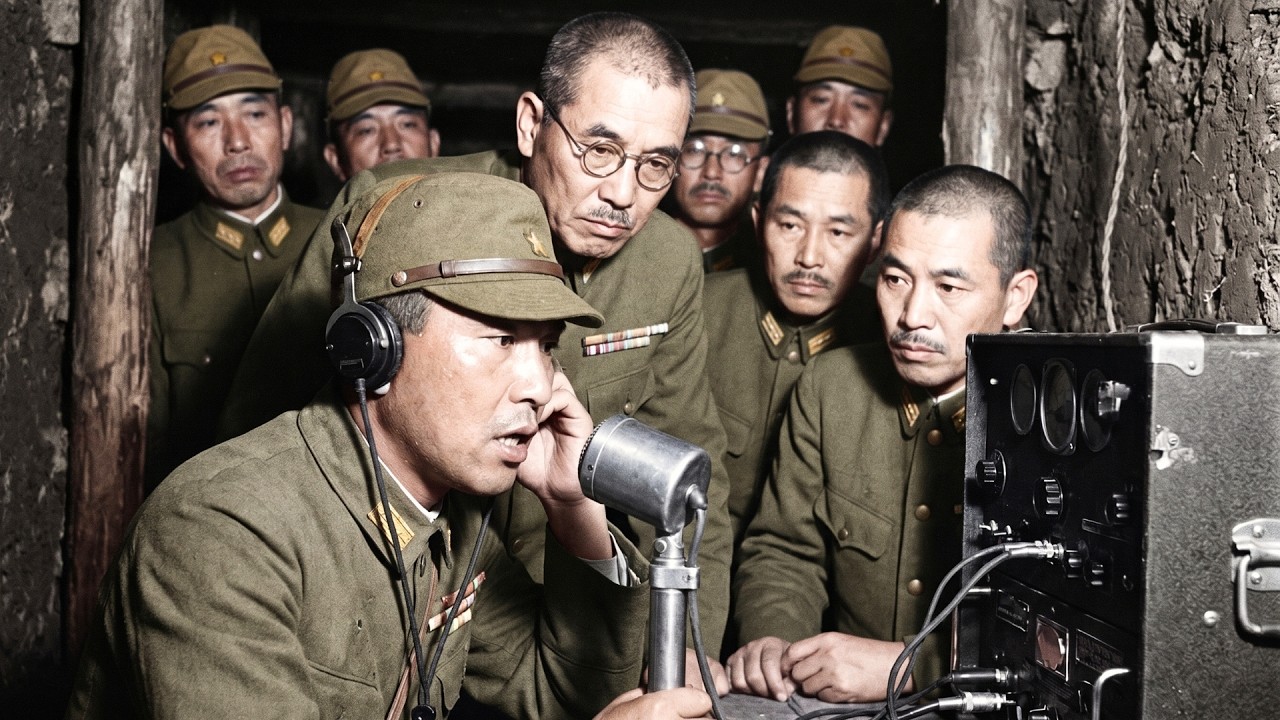
As the sun rose over Okinawa, thousands of American ships approached the island. The ocean was filled with landing craft, aircraft carriers, battleships, and destroyers. Above them, American aircraft dominated the sky.
For the soldiers watching from the Japanese defenses, the scene must have looked almost impossible.
An entire industrial nation was coming toward them.
But beneath the ancient Shuri Castle, deep inside tunnels carved through Okinawa’s coral rock, the Japanese command waited.
This underground headquarters was the brain of the Japanese 32nd Army.
Here, three men faced the impossible task of defending an island that had become the final shield before Japan itself.
Lieutenant General Mitsuru Ushijima commanded the army.
He was not a loud commander. He did not inspire through dramatic speeches or emotional displays. Those who served under him described him as calm, disciplined, and almost impossible to read.
But behind that quiet personality was a commander facing a terrible reality.
He knew Japan could not win a traditional battle against the United States.
The balance of power was overwhelming.
America had thousands of ships.
A massive air force.
Unlimited industrial production.
The ability to replace losses again and again.
Japan had courage.
But courage alone could not stop steel, aircraft, and artillery.
One officer understood this better than almost anyone else.
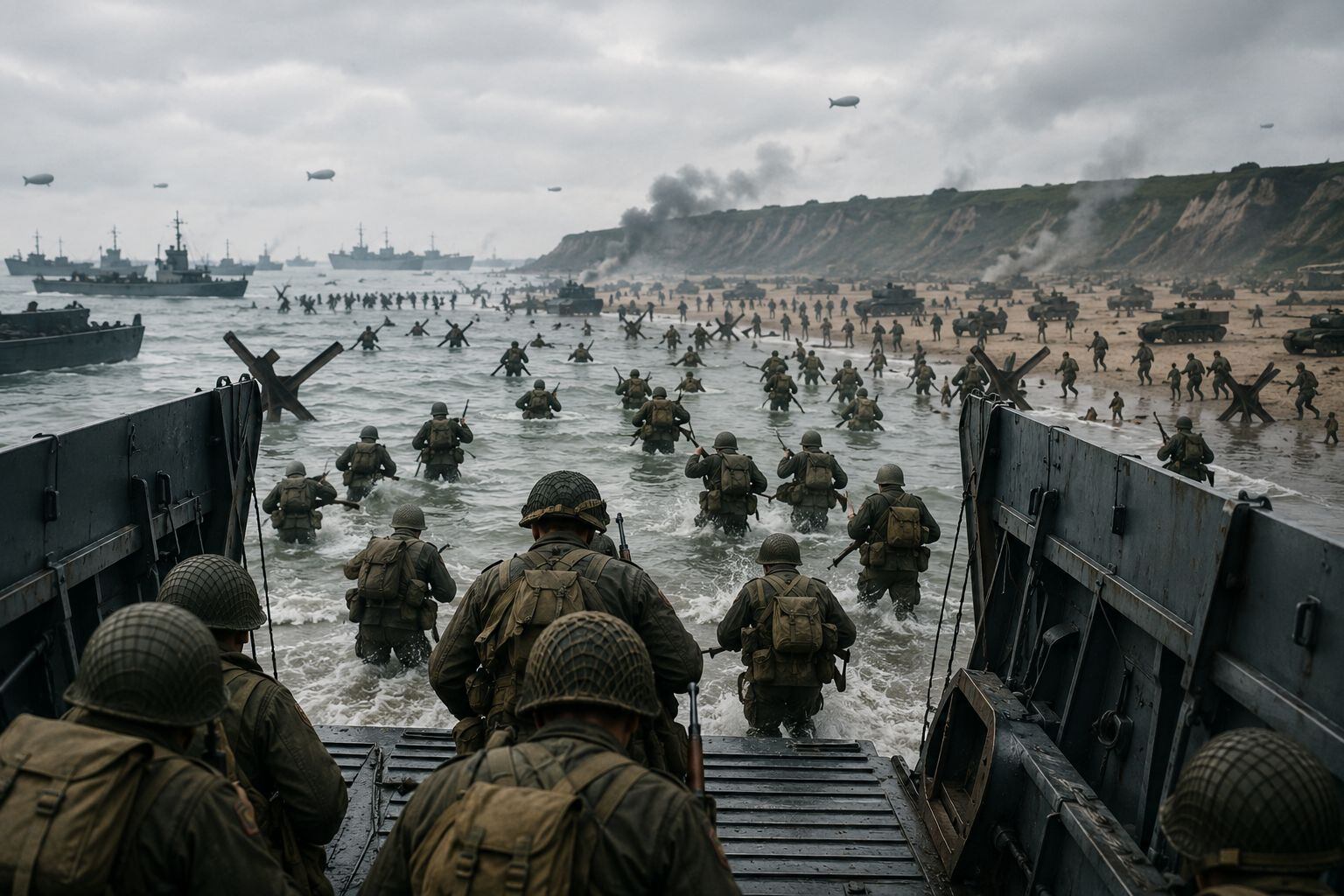
Colonel Hiromichi Yahara, the chief operations officer of the 32nd Army, had studied America closely. Unlike many Japanese officers who believed in spiritual strength above all else, Yahara understood the power of modern warfare.
He believed Japan’s only chance was not victory.
It was endurance.
His plan was simple but brutal:
Allow the Americans to land.
Allow them to advance.
Then force them to fight for every hill, every road, every cave, and every meter of ground.
The battle would not be won by destroying the American army.
It would be won by making the cost unbearable.
Time was the weapon.
But Yahara faced opposition from inside his own command.
Major General Isamu Cho, the army’s chief of staff, represented the traditional warrior mindset.
To Cho, a military force that refused direct confrontation was losing its honor.
The Japanese army had been built around ideas of sacrifice, courage, and offensive spirit. Retreating into caves and waiting for the enemy seemed almost shameful.
The conflict between Yahara and Cho was not only about tactics.
It was about two different visions of war.
One believed reality had to be accepted.
The other believed spirit could overcome reality.
Ushijima stood between them.
And slowly, carefully, he chose Yahara’s strategy.
The Japanese would not defend Okinawa’s beaches.
They would not waste their strength trying to stop the American landing.
Instead, they would disappear into the island itself.
The beaches of Hagushi were left open.
The airfields at Kadena and Yontan were abandoned.
American forces expected a major battle immediately.
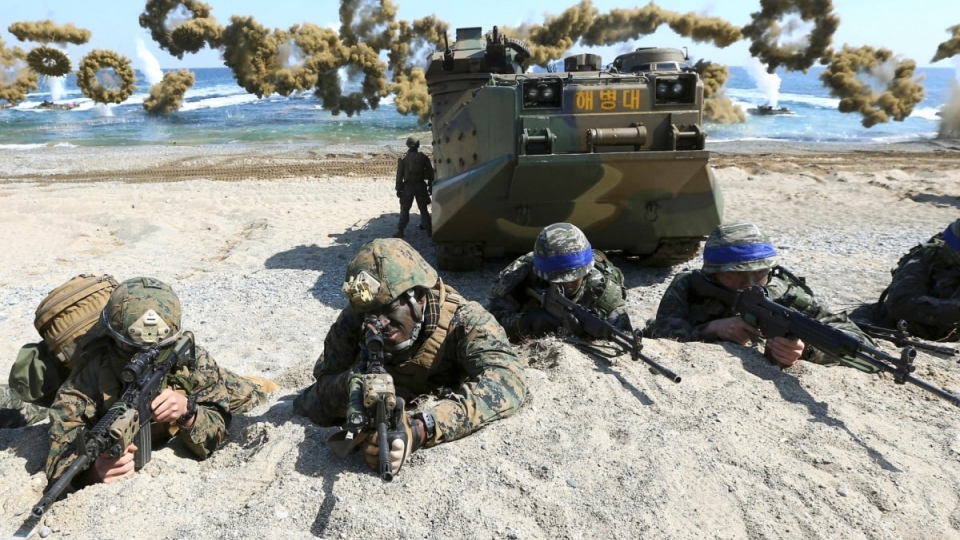
Instead, they found almost no resistance.
On the first day, thousands of American troops moved inland.
The advance was so easy that some commanders became suspicious.
They wondered if Japan was preparing a trap.
They were right.
The real battle was waiting farther south.
The Japanese had transformed the southern part of Okinawa into a fortress.
They built underground tunnels.
They placed artillery inside caves.
They created hidden machine-gun positions.
They prepared defensive lines where American soldiers would be exposed while Japanese troops remained protected.
The island itself became a weapon.
Every hill became a fortress.
Every cave became a firing position.
Every road became a killing zone.
The first major test came at Kakazu Ridge.
When American forces reached the area, they discovered the true nature of the Japanese defense.
The hills looked empty.
But they were not.
Hidden inside the rocky terrain were Japanese soldiers waiting for the right moment.
American troops moved forward.
Then the hills exploded with fire.
Machine guns opened.
Mortars struck.
Artillery shells fell from positions that were almost impossible to locate.
The Americans attacked repeatedly.
The Japanese refused to break.
For Yahara, Kakazu Ridge proved his theory.
The Japanese did not need to defeat the Americans in one massive battle.
They only needed to delay them.
Every day mattered.
Every casualty mattered.
Every delay bought more time.
But while Yahara saw strategy, others saw hesitation.
From Tokyo, pressure increased.
Japanese leaders wanted action.
They wanted attacks.
They wanted proof that Japan still possessed the fighting spirit they believed would save the nation.
The reality was different.
The American military machine continued moving forward.
The Japanese soldiers were running out of ammunition, supplies, and replacements.
Inside Shuri headquarters, the argument became more intense.
Cho pushed for a counterattack.
He believed the army had to strike before it was trapped.
Yahara disagreed.
He argued that leaving protected positions would only expose Japanese soldiers to overwhelming American firepower.
A Japanese soldier standing in open ground against American battleships and aircraft was not showing courage.
He was simply becoming a target.
Ushijima listened.
But the pressure continued.
The battle outside the tunnels was becoming a battle inside them.
By early May, the conflict reached its breaking point.
A major counterattack was approved.
Yahara opposed it.
He warned that the attack would destroy the very forces needed for the long defense.
But his warnings were ignored.
On May 4, Japanese troops moved forward.
At first, there were moments of success.
Some units pushed into American positions.
Some soldiers believed they were finally achieving the offensive victory they had wanted.
But daylight revealed the truth.
American aircraft spotted movement.
Naval guns opened fire.
Artillery destroyed exposed Japanese positions.
The attack collapsed.
Thousands of Japanese soldiers were killed.
The offensive had achieved almost nothing.
Instead of weakening America, it weakened Japan.
The failure was devastating.
Ushijima recognized the mistake.
According to accounts of the battle, he apologized to Yahara and accepted that the defensive strategy had been correct.
From that moment, the Japanese returned to the plan of delay.
But the situation had changed.
The army was weaker.
The Americans were closer.
And the final battle was approaching.
The next phase of Okinawa became a struggle for survival.
American troops attacked positions with overwhelming firepower.
The Japanese defended hills with almost impossible determination.
Places like Sugar Loaf Hill, Chocolate Drop Hill, and Conical Hill became symbols of the battle.
Each name represented days of fighting.
Each hill represented hundreds or thousands of casualties.
The Americans advanced slowly.
But they advanced.
Then the rain came.
The Okinawa rainy season transformed the battlefield into mud.
Vehicles became stuck.
Movement became difficult.
Soldiers fought through exhaustion, hunger, and constant bombardment.
But the weather affected both sides differently.
America could still receive supplies from the sea.
Japan could not.
Every shell fired by Japanese artillery was one less shell available later.
Every soldier lost was impossible to replace.
The fortress was slowly being crushed.
By late May, American forces began moving around the edges of the Shuri defenses.
The Japanese command realized something terrible:
Shuri was no longer protecting them.
It was becoming a trap.
A decision had to be made.
Stay and die.
Or retreat south.
On May 22, the Japanese leadership chose retreat.
The withdrawal began under darkness and heavy rain.
Thousands of soldiers moved south.
The wounded were carried by comrades.
Equipment was pulled through mud.
Units fought rear-guard actions to protect the retreat.
The weather gave Japan a brief advantage.
American aircraft could not easily operate.
The Japanese army escaped before the trap closed.
Militarily, it was one of the few successful movements of the final stage.
But the human cost was enormous.
The new defensive area in southern Okinawa contained thousands of civilians.
Families had hidden in caves.
Children were starving.
The elderly and wounded had nowhere to go.
The final battlefield was no longer just a fight between armies.
It became a disaster for an entire population.
For many Okinawans, the war brought suffering from both sides.
They were trapped between an invading army and a desperate defending army that saw civilians as part of the battlefield.
The idea of protecting the homeland had become inseparable from destroying the lives of those who lived there.
The Japanese army continued retreating toward the final defensive area near Mabuni.
By June 1945, the once-powerful 32nd Army had become a shattered force.
The soldiers remaining were exhausted.
Many were wounded.
Supplies were almost gone.
The final command post was no longer a fortress of confidence.
It was a place waiting for the end.
The Americans continued closing in.
Psychological warfare increased.
Leaflets were dropped.
Messages encouraged surrender.
Some Japanese soldiers began leaving their positions.
But many still believed surrender was impossible.
For years, they had been taught that surrender meant shame.
That belief continued even when survival was almost impossible.
On June 18, tragedy struck the American command.
Lieutenant General Simon Bolivar Buckner Jr., commander of the U.S. Tenth Army, was killed by Japanese artillery fire while visiting the front lines.
He became the highest-ranking American officer killed by enemy action during World War II.
But his death did not change the battle.
Okinawa was already lost.
Inside the final Japanese headquarters, Ushijima prepared for his final moments.
Documents were destroyed.
Military symbols were burned.
The last messages were sent.
But there was no final suicidal charge.
Instead, Ushijima gave a different order.
Those who survived were told to escape and continue resistance in scattered groups.
Then he gave Yahara the most important order of all.
Live.
Survive.
Tell the story.
In the early morning of June 23, Ushijima and Cho ended their lives.
The command of the Japanese 32nd Army disappeared.
The Battle of Okinawa was over.
But the consequences would continue long after the guns stopped.
The night of June 22, 1945, was quiet beneath the cliffs of Mabuni.
For the soldiers of the Japanese 32nd Army, the silence carried a terrible meaning.
The battle was ending.
The army that had once prepared to stop the greatest military force in the Pacific was now reduced to scattered groups hiding among caves, hills, and broken ground.
The great defensive plan created by Colonel Hiromichi Yahara had achieved its purpose.
The Americans had not taken Okinawa quickly.
They had paid an enormous price.
But Japan had paid a far greater one.
The final command center was no longer a symbol of control.
It was a shelter for men who knew there was no way out.
Inside the underground positions, Lieutenant General Mitsuru Ushijima prepared for his final hours.
He had spent months making decisions that sent thousands into battle. He had chosen defense over reckless attacks. He had trusted Yahara’s strategy of delaying the Americans as long as possible.
Now, there was nothing left to delay.
The island was lost.
The Japanese homeland was next.
Before the end, Ushijima destroyed documents and sent his final message. Unlike some Japanese commanders who demanded meaningless last charges, he gave a different order.
The remaining soldiers were not told to die in a hopeless attack.
They were told to disappear into the mountains and continue resistance where possible.
It was a final recognition that the war had already been decided.
Then came his last instruction to Yahara.
The operations officer who had spent months arguing for strategy over emotion was ordered to survive.
Ushijima understood something important.
A dead officer could become a symbol.
But a living witness could tell the truth.
In the early hours of June 23, Ushijima and General Isamu Cho carried out their final ritual.
The two men ended their own lives according to the military tradition they believed in.
The command of the Japanese 32nd Army was finished.
But Okinawa’s suffering was far from over.
For days and weeks afterward, isolated Japanese soldiers continued fighting.
Some refused to surrender.
Others hid in caves, believing capture meant humiliation or death.
The island remained dangerous even after the main battle had ended.
Meanwhile, thousands of civilians emerged from hiding.
Many had survived months of fear.
Some had lost entire families.
Others had witnessed their homes destroyed and their communities disappear.
The battle that was supposed to defend Okinawa had transformed the island into a place of unimaginable destruction.
The final numbers revealed the scale of the disaster.
Around 90,000 Japanese military personnel and Okinawan soldiers were killed.
American forces suffered more than 12,000 deaths or missing personnel, with many more wounded.
But the greatest tragedy belonged to civilians.
The people living on the island paid the highest price.
Okinawan civilians were caught between two armies.
They faced bombing, starvation, displacement, and violence.
Many had been forced into military preparations before the battle even began. Students, workers, and families were drawn into a war they had little control over.
The destruction of Okinawa shocked both sides.
For American commanders, the battle demonstrated how costly an invasion of Japan itself could become.
Okinawa was supposed to be the final step toward the Japanese mainland.
Instead, it became a warning.
If one island could produce such enormous casualties, what would happen during an invasion of Japan’s main islands?
This question became one of the major factors considered by American leaders during the final months of the war.
The experience of Okinawa influenced military calculations about Operation Downfall, the planned invasion of Japan.
American planners expected massive casualties among both soldiers and civilians.
The battle had shown that Japan’s military was willing to fight from caves, mountains, and underground positions until almost total destruction.
Then came August 1945.
The atomic bombs were dropped on Hiroshima and Nagasaki.
The Soviet Union entered the war against Japan.
On August 15, Emperor Hirohito announced Japan’s surrender.
The war that had consumed Asia and the Pacific for years was finally ending.
But for Okinawa, the memories remained.
The island had become one of the most heavily damaged places of the war.
Villages were destroyed.
Families disappeared.
The landscape itself carried the scars of battle.
Years later, Colonel Yahara became one of the most important witnesses of Okinawa.
After being captured by American forces, he was questioned about Japanese strategy.
The Americans quickly realized they had captured a unique figure:
The last surviving senior officer of the 32nd Army who understood the decisions made inside the Shuri command.
Yahara was eventually released after the war.
But he carried the responsibility Ushijima had given him.
Remember.
Explain.
Tell the story.
For decades, Yahara remained relatively quiet. He did not present Okinawa as a heroic final stand.
Instead, he described a tragedy created by decisions, ideology, and impossible circumstances.
He explained the debates inside the command bunker.
The arguments over attack and defense.
The pressure from Tokyo.
The failure of the May counterattack.
The retreat from Shuri.
And the terrible consequences for civilians.
His memoir became one of the most important accounts of the battle because it showed Okinawa not only as a military event, but as a human catastrophe.
The island itself also became a place of remembrance.
The caves beneath Shuri.
The cliffs of Mabuni.
The memorials listing the names of the dead.
They became reminders that the battle was not only about generals and armies.
It was about ordinary people.
Young soldiers sent into impossible situations.
Families trapped between military forces.
Children who experienced war before they understood the world.
Okinawa also changed how future generations viewed warfare.
It showed the danger of fighting based only on ideology.
The Japanese command knew they could not defeat America conventionally.
Yet they continued a war that brought destruction to their own population.
The battle demonstrated both military skill and human tragedy.
Yahara’s strategy was effective.
The Japanese defense delayed the Americans.
It inflicted heavy casualties.
It proved that geography and preparation could challenge even a stronger enemy.
But strategy could not change the final outcome.
Japan’s industrial weakness remained.
Its resources were exhausted.
Its military position was collapsing.
The war had become a struggle between a nation running out of everything and a nation with overwhelming production capacity.
Today, Okinawa remains one of the most powerful reminders of World War II.
It was a battle where courage existed on both sides.
Where soldiers endured unimaginable conditions.
But also where civilians suffered the consequences of decisions made far above them.
The tunnels beneath Shuri are still there.
The memorial stones at Mabuni still stand.
The names carved into black stone continue to remember those who never returned.
The story of Okinawa is not simply about who won.
It is about what war leaves behind.
A battlefield eventually becomes quiet.
The weapons disappear.
The soldiers are gone.
But the memories remain.
And on Okinawa, those memories continue to ask the same question:
How much destruction can humanity endure before choosing another path?