The phone rang at the Okaloosa County Sheriff’s Office dispatch center in Crestview, Florida, on the evening of September 11, 1998. The operator answered, and the voice on the other end delivered five words that would echo through the legal system for nearly three decades: “I just shot my family.” There was no panic, no desperation, no screaming.
Just a flat, quiet, devastating statement that set in motion one of the most haunting death penalty cases in modern Florida history.
 Deputies raced to a residential home on the outskirts of town, their sirens cutting through the humid Florida night. They did not know what they were walking into, but the call had already told them everything they needed to know, even if they did not yet realize it. When they stepped through the front door, they found a scene that would never leave them.
Four people lay dead inside that home. A mother and her three children, all killed by shotgun wounds. The man who made the call was still there, waiting calmly.
He was Jeffrey Hutchinson, a decorated U. S. Army Ranger who had served his country during the Gulf War.
To everyone who knew him, he was a disciplined soldier, someone who had faced danger in places most people only read about in newspapers.
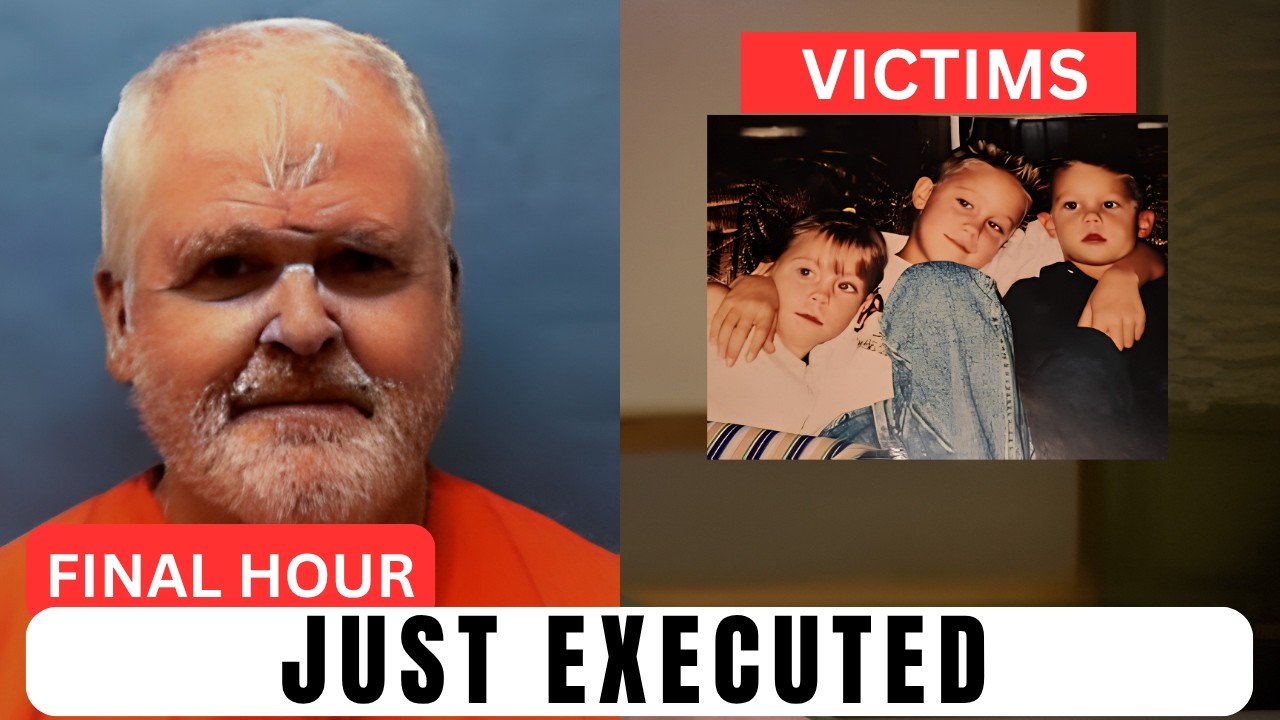
The woman whose home this was, Renee Flaherty, was a mother of three. Jeffrey, age nine, Amanda, age seven, and little Logan, just four years old. By all outward appearances, this was a family home, a woman building a life, children growing up, a man who had come back from war trying to find his footing in a quieter world.
But on this particular night, Jeffrey had a story to tell deputies.
Two unknown intruders, he said. They forced their way inside. There was a struggle.
He fought back, and they ran. That was his account. For a brief moment, it almost sounded believable.
Here is what makes this case so deeply unsettling and why it has stuck with investigators long after they first encountered it.
We place a certain kind of trust in people who have served. People who have worn a uniform, carried a weapon in defense of others, and come home carrying things they never asked to carry. There is an instinct, a very human one, to extend grace to someone like that.
Renee Flaherty extended that grace. She built a life with this man. She brought him into the home where her children slept at night.
That kind of trust is not weakness. It is one of the most natural things a person can do. But this case forces us to ask a question that is deeply uncomfortable.
How well do we ever truly know the person sharing our space, our home, our life? As this story developed, that question hit very differently.
Renee Flaherty was a mother first, everything else came second. Jeffrey was nine, the oldest, the one who had probably already started watching out for his younger siblings, the way oldest children do. Amanda was seven, right in that sweet spot of childhood where everything still feels like an adventure.
Logan was just four years old, barely old enough to understand the world around him.
Four people, one household, one address in Crestview, Florida. They were not statistics. They were not a case number.
They were a family, and they deserved far better than what September 11th, 1998 brought through their door. Jeffrey Hutchinson did not fit the profile most people associate with violent crime.
He was a U. S. Army Ranger, an elite designation that is not handed out freely.
Rangers are selected through one of the most physically and mentally demanding training programs in the American military. The fact that Jeffrey earned that title meant something. It spoke to discipline, resilience, and an ability to function under extreme pressure.
He had served during the Gulf War. He had come back, and like many who returned from combat, he carried things home with him that no one could fully see. Reported psychological struggles, claims of exposure to conditions that left lasting damage on his body and his mind.
By 1998, he was settled in Crestview, Florida, living with Renee, helping raise her children.
To the outside world, he was a good man trying to rebuild a normal life. That was the version of Jeffrey Hutchinson that Renee Flaherty believed in. September 11th, 1998 started like most evenings in that Crestview household, but somewhere during the course of that night, something shifted.
Jeffrey and Renee argued.
The details of what was said between them have never been fully made public. What is known is that the argument was significant enough to push Jeffrey out of the house. He packed some belongings, got into his vehicle, and drove to a local bar.
Witnesses at that bar later recalled that he seemed agitated, unsettled.
He spoke about the argument with Renee. Then, without much warning, he got up and left. That moment, the moment Jeffrey Hutchinson walked out of that bar, is where this story turns.
From that point, there is a window of approximately 40 minutes. Forty minutes that nobody outside that house can fully account for.
 Forty minutes that would become the most scrutinized and debated period of this entire case. What happened inside that home during those 40 minutes changed everything. At some point during those 40 minutes, a call was placed from inside the Flaherty home.
Not a call for help. Not a panicked voice screaming down the line about intruders.
Not someone desperately trying to save the people they loved. Just five words. I just shot my family.
Okaloosa County Sheriff’s deputies responded immediately. They moved fast, but fast was not going to be enough for the people inside that house. When they crossed that threshold, the scene that met them was devastating.
Renee Flaherty and two of her children, Amanda and little Logan, were found in the master bedroom. Jeffrey, her oldest, was found elsewhere in the house. All four had been killed by shotgun wounds.
A 12-gauge shotgun. And standing there, alive, present, and completely composed, was Jeffrey Hutchinson.
He was not fleeing. He was not frantic. He was waiting.
And he already had a story prepared for the moment those deputies walked through the door. There are crime scenes that investigators walk into and process professionally, cataloging evidence, taking photographs, doing the job. And then there are scenes that stay with you.
This was the second kind. Four people, a mother and her three children. The youngest barely old enough to start school.
All of them gone inside the very place that was supposed to keep them safe. Their home. Their walls.
Their rooms. The weapon used was a 12-gauge shotgun.
The shots were not random. They were not the chaotic result of a struggle gone wrong. Each victim had suffered fatal wounds.
The kind that told investigators this was not accidental. This was deliberate. There was no forced entry, no broken windows, no overturned furniture consistent with the violent struggle of unknown intruders forcing their way into an occupied home.
Just four lives extinguished in a place that should have been their sanctuary. Jeffrey Hutchinson looked those deputies in the eye and told them a story. Two intruders, he said, unknown men who had forced their way into the home.
He had fought them, struggled with them, and they had fled before he could stop them.
It was a detailed account delivered by a man trained to operate under pressure, trained to stay calm when everything around him was falling apart. And yet, something was off. A man who had just survived a violent struggle with two armed intruders should have looked a certain way.
Injuries, torn clothing, the physical evidence of a fight.
Jeffrey Hutchinson had none of that. The house showed none of that. The deputies standing in that room had the exact same question.
Here is where Jeffrey Hutchinson’s account began to collapse. Not because of opinion, not because of assumption, but because of science.
The first thing investigators found was gunshot residue on his hands. For those unfamiliar, gunshot residue is microscopic particle matter that transfers onto the hands of a person who has fired a weapon. It is not something you can fake.
It is not something that appears by coincidence. The second thing, biological material from one of the victims was found on him.
The kind of transfer that happens at close range. Not the kind consistent with someone who had been across the room struggling with intruders. Then, there was his body.
Jeffrey Hutchinson claimed he had physically fought two armed men inside that house. Yet deputies found no significant injuries on him.
No bruising consistent with a violent altercation. No marks that supported his version of events. Three separate layers of physical evidence, all pointing in the same direction, away from two unknown intruders, and directly toward Jeffrey Hutchinson.
But it was the 911 call that truly sealed it.
Investigators went back to that recording. Those five words delivered in a voice that was calm, flat, and utterly composed. And they did something straightforward.
 They played it for people who knew Jeffrey Hutchinson personally. The response was consistent across the board. That was his voice.
Friends, acquaintances, people who had spent time with this man, heard him speak, recognized the particular way he carried his words. One after another, they identified the caller as Jeffrey Hutchinson. Prosecutors did not treat this as a minor detail.
They treated it as exactly what it appeared to be, a confession.
Five words spoken into a phone before deputies arrived, before the intruder story was constructed, before Jeffrey had fully decided what version of events he was going to present to the world. In that unguarded moment, the truth had already escaped. The physical evidence pointed at him.
The biological evidence pointed at him. And now his own voice pointed at him.
There was nowhere left to hide. When Jeffrey Hutchinson’s trial finally began, prosecutors walked into that courtroom with something rarely afforded in murder cases, a near complete picture. They had the forensic evidence, gunshot residue, biological material, the absence of any injuries consistent with his claimed struggle.
They had witness testimony placing him at the bar that night, agitated, unsettled, and leaving abruptly in the direction of that house. And they had the 911 call. That recording was played inside the courtroom.
Those five words, delivered in that unmistakable voice, hung in the air before the jury.
Witnesses took the stand and confirmed what investigators had already determined. The voice on that call belonged to Jeffrey Hutchinson. Prosecutors laid each piece of evidence before the jury with one clear and singular argument.
This was not a home invasion. This was a man who left, came back, and made a deliberate choice to destroy the family living inside that house.
Jeffrey Hutchinson took a position that surprised many people following the case. He maintained his innocence completely and without compromise. The intruder story did not change.
He did not shift his account when the evidence mounted against him. He did not seek refuge in a mental health defense, despite the fact that his attorneys had grounds to raise one.
That decision to reject any argument centered on his psychological state was one that would follow him for the next 27 years. In 2001, the jury returned their verdict: guilty on four counts of first-degree murder. Jeffrey Hutchinson was sentenced to death.
This question divided people then, and it still divides people now.
Should a history of military trauma and untreated mental illness factor into a murder conviction? Twenty-seven years is a long time to sit with a death sentence. For most of that time, Jeffrey Hutchinson did two things simultaneously.
He fought the legal system through a series of appeals, and he never once wavered from his claim that he was an innocent man.
His attorneys argued repeatedly that his military service had left him with serious, documented psychological damage. That the courts had not given adequate weight to the mental health struggles he carried home from the Gulf War. That a man in his condition should not face execution.
Those arguments attracted attention beyond the courtroom.
Veterans groups took notice. Anti-death penalty advocates took up his cause. People who had never met Jeffrey Hutchinson were writing letters and making public appeals on his behalf.
Not because they could prove his innocence, but because they believed the system had failed to fully account for what war had done to him.
Meanwhile, Jeffrey himself had developed a belief that went far beyond claiming wrongful conviction. He was convinced the government was trying to silence him. According to Jeffrey, his prosecution was not about justice for Renee and her children.
It was about silencing a veteran who had been too vocal about Gulf War illnesses.
Too visible. Too dangerous to the people in power who wanted that conversation buried. Mental health experts who examined him cited these beliefs as evidence of a delusional disorder.
A psychological condition that had taken deep root over the years spent on death row. They argued that a man holding beliefs this disconnected from reality should not be executed.
The court saw it differently. Judges reviewed the evidence and reached a consistent conclusion. That despite his beliefs, Jeffrey Hutchinson understood he had been convicted of murder.
He understood why the state intended to execute him. And under the legal standard applied in the United States, that level of understanding was sufficient.
 Competent enough to execute. In April 2025, the Florida Supreme Court rejected his final appeal. Clearing the last legal obstacle standing between Jeffrey Hutchinson and the death chamber.
May 1st, 2025, Florida State Prison. Jeffrey Hutchinson woke up knowing exactly what the day held.
He received visits from spiritual advisers. He was given time the way condemned inmates always are on their final day to reflect, to prepare, to make whatever peace he could with what was coming. Then there was the final meal, salmon mahi-mahi, asparagus, a baked potato, iced tea.
A remarkably composed selection for a man hours away from execution.
No excess, no indulgence. The kind of meal that spoke to someone who had long since accepted the direction this was heading. Even if he never accepted the reason why.
The plate was cleared. The day continued to move forward. And the moment that had been 27 years in the making was drawing close.
When the moment came for Jeffrey Hutchinson to speak his final words, he said nothing. No statement. No acknowledgement of Renee Flaherty.
No words for Jeffrey, Amanda, or little Logan. No address to the family members who had waited 27 years for this day. No final claim of innocence delivered to the witnesses gathered in that room.
Just silence. And in many ways, that silence said everything his words never did. A man who spent 27 years loudly proclaiming his innocence chose silence at the one moment it mattered most.
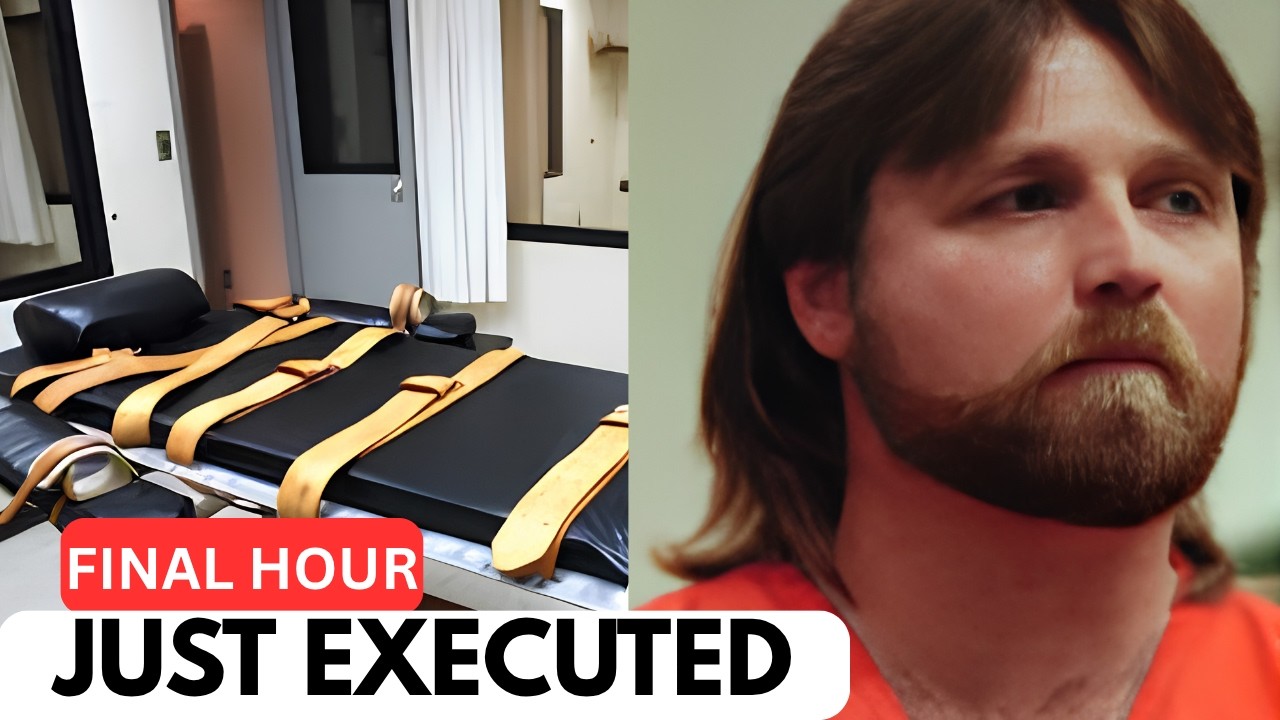
At Florida State Prison on the evening of May 1st, 2025, the state of Florida carried out the execution of Jeffrey Hutchinson by lethal injection.
Witnesses present in that room reported that as the procedure began, Hutchinson appeared to mumble quietly. Whatever those words were, they were not heard clearly by anyone in that room. They died with him.
There were brief involuntary physical movements after the drugs were administered, the kind that witnesses to executions sometimes describe, the body’s final automatic responses to what is being done to it.
The process lasted slightly more than 15 minutes. At 8:15 in the evening, prison officials pronounced Jeffrey Hutchinson dead. He was 62 years old.
His execution was Florida’s fourth of 2025, 27 years after Renee Flaherty and her three children were killed inside their home in Crestview.
The legal process that began on that September night finally reached its end. Whether that end represented justice or simply a conclusion is a question this case will never fully settle. This case is not just a story about a crime.
It is a story about what happens when trauma goes unaddressed and what it can cost the people closest to someone carrying it.
Jeffrey Hutchinson came home from war damaged. That much appears to be true. The psychological weight of combat, of exposure to conditions that left lasting marks on his body and mind, those things were real.
They were documented. They were raised repeatedly by people who genuinely believed they mattered.
But here is what this story forces us to confront directly. Trauma is not a justification for violence. It is an explanation, and explanations, however painful, do not bring back the people who are gone.
What it does demand urgently is that we pay attention to the people around us, to the tension building quietly inside households that look perfectly normal from the outside, because the warning signs are rarely invisible.
They are simply ignored. If someone in your life is carrying visible psychological damage, unaddressed anger, or a pattern of behavior that feels increasingly unstable, that is not something to quietly accommodate. That is something to act on.
Seeking help is not a betrayal. It is protection for them and for the people sharing their space.
Trust your instincts. Renee Flaherty trusted a man whose internal world was far more fractured than anything visible on the surface. We cannot always see what people carry, but we can pay attention to what they show us.
The children in this story had no voice and no choice.
They depended entirely on the adults around them for their safety. That responsibility, the responsibility adults carry toward the children in their care, is one that this story will not allow us to take lightly. Before we close, we come back to where this story truly lives, not in the courtroom, not on death row, not in the legal arguments that consumed 27 years.
Here, Renee Flaherty, a mother who loved her children and extended trust to someone she believed was worthy of it. Jeffrey Flaherty, 9 years old, the oldest, the one who was just beginning to figure out who he was going to become. Amanda Flaherty, 7 years old, still at the age where the world feels full of possibility.
Logan Flaherty, 4 years old, barely at the beginning of everything. Four people who deserved to grow old, who deserved ordinary Tuesdays and unremarkable years and the quiet dignity of a life fully lived. They did not get that, but they deserve to be remembered fully and by name every single time this story is told.