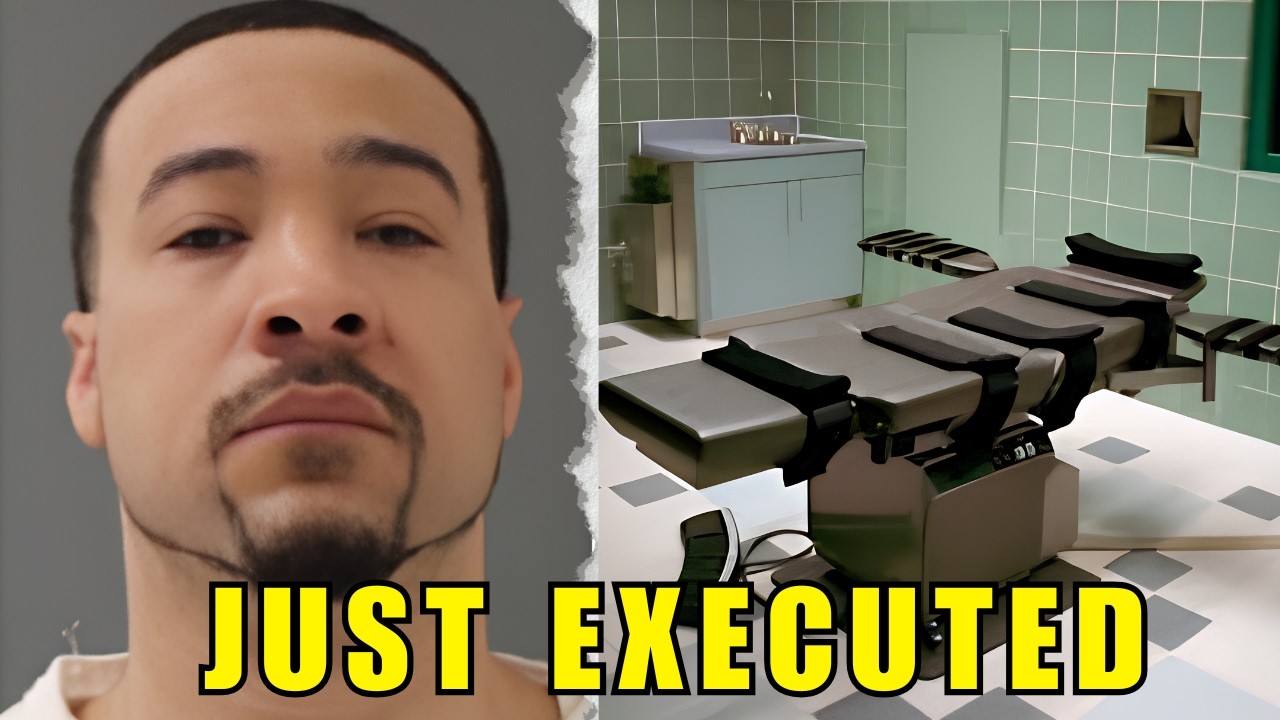
The state of Texas carried out the execution of James Broadnax on April 30, 2026, at 6:47 p. m. , ending a 17-year legal battle that has left an indelible mark on the death penalty debate.
The 37-year-old, who had maintained his innocence from the moment of his arrest, was pronounced dead at the Huntsville Unit after a lethal injection of pentobarbital. His wife, Tiana Krasniqi, a British law graduate who married him weeks earlier, cried out his name as the drugs entered his veins. Broadnax’s final words were a calm, unwavering assertion of innocence, a claim he had repeated for nearly two decades.
 The case began in 2008 when two men, Stephen Swan and Matthew Butler, were ambushed and shot dead in a parking lot outside a recording studio in Garland, Texas. The motive was a robbery for just $2. Broadnax, then 19, was convicted of capital murder and sentenced to death.
But the circumstances surrounding his conviction have drawn intense scrutiny, with critics pointing to a confession obtained under duress, questionable use of his rap lyrics as evidence, and a co-defendant who later recanted.
Demarius Cummings, Broadnax’s cousin and co-defendant in the murders, received a life sentence. Years later, he made a recorded statement claiming he, not Broadnax, fired the fatal shots. Cummings said Broadnax believed he would never face execution as a teenager.
That confession, however, was never enough to overturn the conviction. Courts repeatedly rejected appeals, and the Texas Board of Pardons and Paroles denied clemency. The U.
 S. Supreme Court declined to intervene.
Broadnax’s legal team argued that the confession was extracted when he was emotionally distressed and possibly under the influence. They also challenged the introduction of his rap lyrics as evidence of violent intent, calling it racially biased. Those lyrics, prosecutors said, were a window into the mind of a dangerous man.
The defense countered that using a young black man’s creative expression against him in a capital trial was legally questionable.
 In the final hours before his execution, Broadnax spent time with family and his wife. He did not rage. He asked for forgiveness from the families of Swan and Butler, acknowledging their pain.
Then he was moved to the execution chamber. As the lethal injection began, Krasniqi cried out. Broadnax looked at her and said he was innocent.
The witnesses observed in silence. The families of the victims had waited 18 years for this moment.
 The execution has reignited debates about the death penalty’s irreversibility and the fairness of the justice system. Broadnax’s case is one of the most controversial in Texas history, with questions that will not be settled by his death. The co-defendant’s recorded confession, the disputed confession, and the racial dynamics of the trial all remain unresolved.
The state of Texas has closed the case, but the conversation about whether justice was truly served is far from over.