====================
CONTENT:
The moment German troops crossed the border into the Baltic states in June 1941, everything changed. The Red Army, caught completely off guard, collapsed almost immediately. In some cities, like Kaunas and Vilnius, local nationalists managed to seize control before the Germans even arrived. Elsewhere, the Wehrmacht advanced with terrifying speed, and within weeks, the Soviet grip on Lithuania, Latvia, and Estonia was gone.
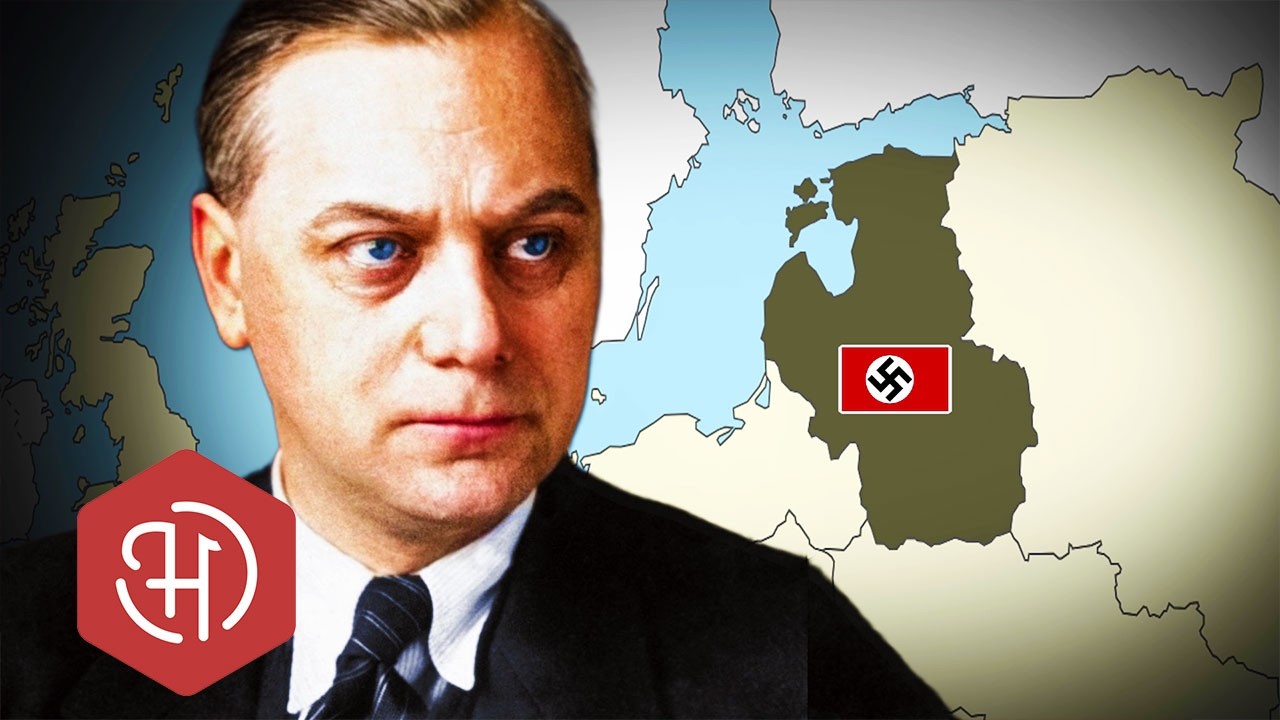
But the people soon realized that one brutal occupation had simply been replaced by another. The German plan for the East was vicious from the start. Hitler wanted living space, and he intended to take it by destroying, enslaving, or deporting the local populations, especially Slavs and Jews. Within the Nazi leadership, there were competing visions.
Alfred Rosenberg suggested using some non-Russian groups as partners under German control, but this was never about genuine independence. It was about domination. The administrative structure was set up quickly. The Reichskommissariat Ostland was established, with Heinrich Lohse appointed as its highest civil authority.
The territory was divided into four general districts: Estonia, Latvia, Lithuania, and White Ruthenia. Each was further split into smaller regions. But while the civil administration nominally held power, the SS controlled the military and security apparatus, and they did not play well with others. A power vacuum emerged, and the SS filled it with absolute authority, enforcing their will through terror and violence.
They only reluctantly handed over control to the civil administration in September 1941, and the friction between the two groups never really went away. Friedrich Jeckeln commanded the Einsatzgruppen death squads in the region. He was personally responsible for ordering the murder of over 100,000 Jews, Roma, and other so-called undesirables. His brutality was so reckless that even his own colleagues in the SS and the administration criticized him for corruption and violence.
He was hanged after the war. Meanwhile, Lohse announced the confiscation of all Soviet state property in Ostland. Some land that had been taken by the Soviets was returned to former owners, but the price was heavy. Farmers, shopkeepers, and business owners had to pay exorbitant taxes to the occupiers.
A state-owned company was created to manage the seized assets, and major German industrial giants like I. G. Farben and Siemens took over former Soviet enterprises. Every sector of the economy was looted for the benefit of the Reich.
The Germans needed hundreds of thousands of workers for agriculture and industry, and they intended to exploit the local population to get them. But the long-term plans for the Baltics were different from those for Ukraine or the Caucasus. Instead of outright destruction, the idea was to Germanize the region. Rosenberg claimed the Baltic peoples had a European character shaped by 700 years of history, and through racial assimilation, they could be merged into a uniform Germanic population.
After the war, German settlers were to be encouraged to move in, particularly to Estonia, which was seen as traditionally Germanic territory. The Dutch East Company even managed the settlement of Dutch colonists in the area. But before any of that could happen, the murder of the Jews began almost immediately after the invasion. By the time the Germans arrived in June 1941, there were nearly 480,000 Jews in Ostland.
First, prominent community leaders were targeted. Then the killings expanded. Men were shot. Women and children were rounded up.
Those who were not fit for work were killed on the spot, and many who survived the initial massacres were later murdered in mass shootings or in purpose-built extermination sites. Local collaborators were often involved. In the countryside, the Germans struggled constantly against partisans. The so-called infected zones, where resistance was active, stretched across 500 to 600 square kilometers around Minsk, Pinsk, Gomel, Smolensk, and Vitebsk.
Both German and local police forces were continuously deployed to crush these groups, but the partisans kept fighting, aided by the harsh conditions and the brutality of the occupation, which pushed more people into resistance. From 1943 onward, the tide of war turned. After Stalingrad, Kursk, and especially Operation Bagration, the Red Army pushed westward. Soviet troops retook White Ruthenia in 1944 and most of the Baltic states that same year.
As the front collapsed, the German civil administration of Ostland simply stopped functioning. By late 1944, almost the entire region had been reconquered. The last German holdout was the Courland Pocket in western Latvia, where a large German force was surrounded and remained trapped until Germany surrendered in May 1945. With that surrender, the Reichskommissariat Ostland disappeared, just as quickly as it had been created, the moment German military power collapsed.
Despite the brutality of the occupation, many Eastern Europeans collaborated with the Nazis. Some did so out of ideology, some out of hatred for Soviet rule, some out of pragmatism, and others under coercion. The choices they made were complicated and often deadly. But the end of Nazi rule did not bring freedom.
It only meant the return of the Soviets, and a new cycle of fear began. ====================